







































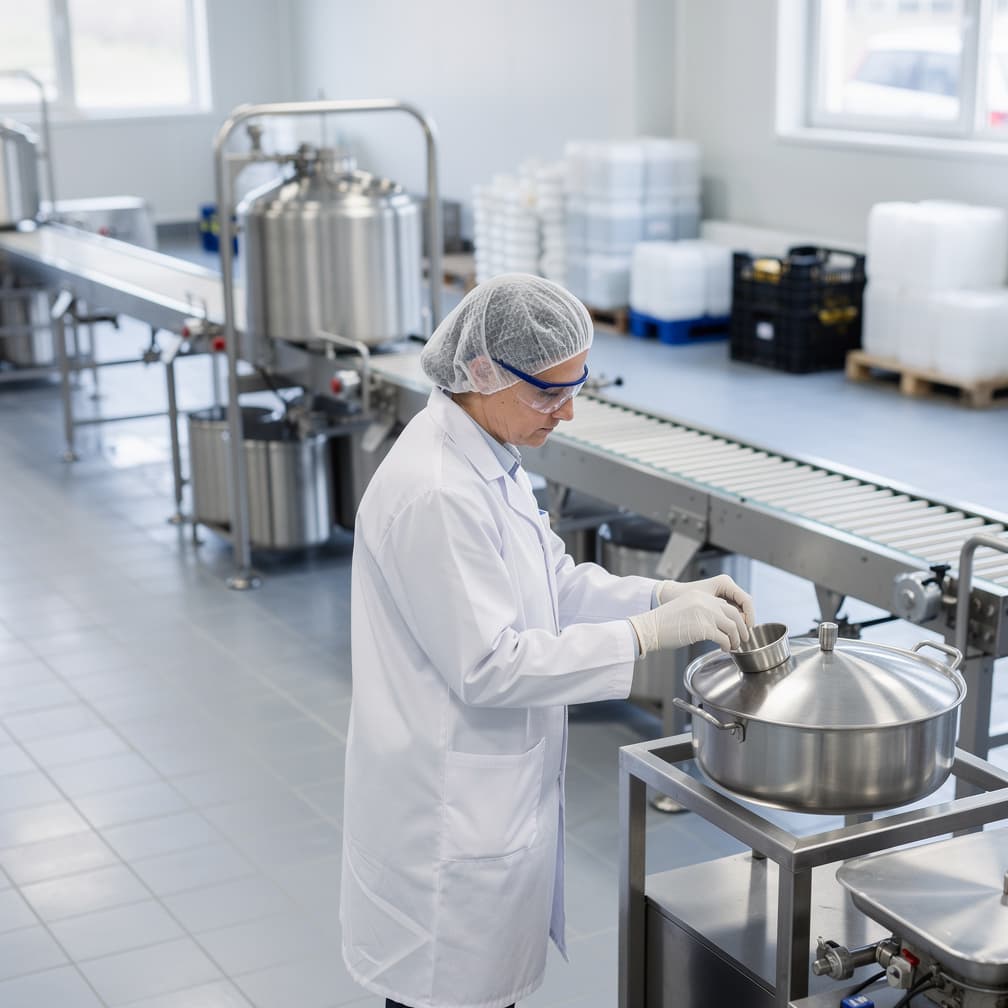

Someone slips on a wash-down floor, and the injury goes two different directions depending on who they are. A sanitation worker on your payroll is a workers compensation question. A delivery driver waiting at the dock is a liability question, and the two get priced from completely different information. Sorting that split is the first job before you compare food manufacturer insurance in Grand Rapids, because it decides which numbers you gather and which quotes even apply to you. Payroll by job class drives one side. Product type, volume, and where the goods end up drive the other. Wet floors, forklifts, and slicers keep both sides busy, which is why a plant with a clean record still gets asked for five years of history in Michigan.
What Makes Grand Rapids Different
Distribution reach separates two plants that look completely identical from the street outside. One sells inside Kent County and knows every buyer by name; the other ships into three states. A plant selling only locally still has enough accounts to lose sleep over on a bad week. Reach changes the claim map, since more geography means more courts, more contracts, and more notice requirements. Some carriers in Michigan ask where your product physically ends up before they will quote at all. Answer with the truth about your farthest account, because that answer shapes the form you get offered. A plant shipping out of state on a form written for local sales is carrying a mismatch. Find the mismatch while shopping rather than during a claim.
Local Risk Factors in Grand Rapids
Tornado and severe-storm damage tends to be sudden and partial, which is its own problem for a plant. A roof section opens over the packaging line, rain lands on cartons and equipment, and the production area is unusable while the rest of the building looks untouched. Partial losses argue about scope: what is contaminated, what is merely wet, and who gets to decide. Sanitation standards usually settle that in your favor and against your inventory. Commercial Property may respond to the storm damage itself in Grand Rapids, with the deductible coming off the top of any settlement. Photograph the room and the product before cleanup starts in Kent County, because the record built in the first hour does most of the work later.
What Coverage Does a Food Manufacturer in Grand Rapids Need?
General Liability
Buyers, landlords, and distributors ask for this one by name, and the certificate they want usually references it. It is meant for third-party claims: a visitor hurt on your floor, damage to someone else's property, and the legal defense that follows a complaint about product you shipped. Employee injuries sit elsewhere, and damage to your own equipment is no part of it.
Example: A delivery driver waiting at your dock slips on rinse water tracked out of the wash bay and breaks a wrist. The medical claim and the defense behind it may fall to this coverage.
Commercial Property
Tanks, fillers, sealers, cold rooms, and the finished pallets waiting on your dock are what this line is built around. Fire, storm, theft, and similar sudden causes are generally what trigger it. Flood typically sits outside it, and damage that starts inside a machine usually needs equipment breakdown wording added on purpose.
Example: A fire in the dry-blend room takes the mixer, a pallet of ingredient sacks, and two weeks of the schedule. Repair and replacement of the damaged property could be picked up here, subject to your limit and deductible.
Workers Compensation
Where liability wording looks after other people, this one looks after your crew. Medical care and a share of lost wages after a work injury are the core of it, whether that is a slip on a wash-down floor, a hand caught at a slicer, or a back strain moving a drum. Thresholds vary by state, and the Michigan Department of Insurance and Financial Services publishes the current requirements.
Example: A sanitation tech loses footing on a wet floor at the end of a shift and tears a shoulder. Treatment and part of the missed pay may be handled through this line.
Tools & Equipment (Inland Marine)
What a building policy leaves out is usually whatever moves. Portable scales, calibration kits, hand tools, pallet jacks, and gear you carry to a co-packer generally live here instead, insured on a schedule rather than by address. Wear, rust, and mechanical failure are typically excluded, because this line is about sudden loss rather than about age.
Example: A locked job box on the loading dock is cut open over a weekend, and the calibration kit and two scales are gone. Replacing scheduled items like those is what this coverage is intended to do.
Commercial Umbrella
When a buyer's contract demands a limit higher than your primary policy carries, this is often the less expensive way to reach it. It adds room above the liability sitting underneath, which matters when one bad lot produces several claimants at once. It follows the policy beneath it, so a gap down there stays a gap up here.
Example: One contaminated run reaches four accounts, and defense costs alone chew through the primary limit before any settlement gets discussed. The claims still open at that point are what this layer might take up.
How Much Does Food Manufacturer Insurance Cost in Grand Rapids?
Food Manufacturer Insurance is a bundle of separate policies, priced separately. The ranges below are typical figures for Grand Rapids for each line, except workers compensation, which is rated per $100 of payroll; a quote prices each one against your own operations.
| Coverage | Typical range | What moves your price |
|---|---|---|
| General Liability Insurance | $200 - $725 per month | Industry and risk classification, annual revenue, number of employees |
| Commercial Property Insurance | $190 - $725 per month | Building value and construction type, roof age and condition, fire protection class |
| Workers Compensation Insurance | $0.75 - $2.74 per $100 of payroll | Employee classification codes, total annual payroll, experience modification rate |
| Inland Marine Insurance | $30 - $140 per month | Total insured value of the scheduled property, type and age of the equipment, where it is stored and how far it travels |
| Commercial Umbrella Insurance | $95 - $370 per month | Umbrella limit requested, limits carried on the underlying policies, loss history on those underlying policies |
Prices shown are general estimates, not guaranteed rates or quotes. Your actual premium will depend on the insurer, coverage selected, business details, location, claims history, and other underwriting factors. Learn about our pricing methodology.
What Are the Insurance Requirements for a Food Manufacturer in Grand Rapids?
Workers' comp is generally required once you have your first employee. Michigan generally requires employers to carry workers' compensation at that point. Common exemptions include sole proprietors, partners, and corporate officers. Confirm current thresholds with your state's workers' compensation agency before you hire.
Flood damage is typically excluded from standard policies. Standard commercial property and builders-risk-type policies typically exclude flood damage. Flood exposure varies address by address, so check your premises in FEMA's Flood Map Service Center before deciding; if you sit in a mapped flood zone, a separate policy through the National Flood Insurance Program is the usual starting point.
Where to verify licensing and coverage rules. The Michigan Department of Insurance and Financial Services publishes consumer guidance and current insurance requirements for Michigan businesses. When a contract or lease demands specific wording, the Michigan Department of Insurance and Financial Services's guidance is the authoritative place to check.
Get Your Food Manufacturer Quote in Grand Rapids
Compare rates from multiple carriers. Free quotes, no obligation.
Operating in Grand Rapids
- Buyers change vendor requirements without warning, and the new insurance exhibit rides in with the renewal purchase order. A limit you met last year can fall short this year, and a Grand Rapids plant learns that with the order already in hand.
- Ingredient deliveries arrive on somebody else's schedule, and a late truck idles a full crew you already scheduled. Payroll runs whether or not the line does, which is why downtime shows up in your numbers well before it shows up in a claim.
- A buyer's compliance desk can hold your first shipment over a certificate that names your business slightly wrong, so the legal entity on your policy and on a Grand Rapids purchase order have to match character for character.
- Wash-down shifts put water on floors your day crew never walks, and a slip there is among the most common injuries in a plant. That claim usually starts with a supervisor's phone call in the middle of the night.
How to Buy: Advice for Grand Rapids Owners
Describe your product accurately even when it costs you something. Ready-to-eat, allergen-containing, and temperature-dependent items price differently from shelf-stable dry goods, and a vague application gets rated as the worst case in the file. Say what you make, how it is processed, and whether anyone eats it without cooking it further. General Liability for a food manufacturer turns on that answer far more than on your square footage. Where a buyer's contract demands limits above the primary, a Commercial Umbrella usually covers the distance for less than raising the base policy. The Michigan Department of Insurance and Financial Services publishes consumer guidance on how policy terms get described. Let participating carriers price the plant you actually run in Grand Rapids, because a quote built on a rounded-off description gets corrected at the claim, when correcting it hurts.
FAQ
Food Manufacturer Insurance in Grand Rapids: FAQ
There is no single answer, because pricing gets built from payroll, product type, production volume, and where the goods end up. A shelf-stable dry mix and a chilled ready-to-eat item price differently at identical revenue. Claim history and audit results move the number again. Two plants in Grand Rapids can sit far apart for reasons that are entirely visible in the paperwork.
Usually not. Recall expense, customer notification, freight back, and disposal typically sit outside a standard package, and that coverage gets added by endorsement or bought as its own policy. General Liability can respond to a third-party injury claim that follows contaminated product, which is a different thing from the cost of pulling stock off shelves. Ask for recall wording by name.
That claim generally lands on liability wording, which is intended to answer for bodily injury a third party suffers from your product, including legal defense. Defense can begin long before anyone proves anything, and it may erode your limit depending on the form. Check whether defense costs sit inside or outside the limit, since participating carriers in Michigan split on that point.
Often not under a standard property form. Damage starting inside a machine, like a failed compressor, a fried control board, or a boiler that quits, is commonly excluded, because the form is built around fire, storm, and similar outside causes. Equipment breakdown wording is what addresses it, and it may also pick up product spoiled while the room warmed. Ask for it specifically.
Expect revenue, product categories, payroll split by job class, an equipment schedule with replacement values, your sanitation and allergen controls, audit results, and the farthest point your product ships. Many underwriters also want a site visit before binding. Assembling that once turns a three-week email thread into an afternoon, and it keeps every quote describing the same plant in Grand Rapids.
Yes, and industrial leases routinely do. The exhibit usually names a limit, additional-insured status, and often a waiver of subrogation, and those terms get negotiated before signing or not at all. If the landlord behind a Grand Rapids shell asks for a limit above what you planned, that number becomes your floor. Read the exhibit before ordering equipment.
Sources
- 1.Michigan Department of Insurance and Financial Services(Michigan Department of Insurance and Financial Services publishes consumer guidance for insurance buyers.)
- 2.FEMA / FloodSmart(Flood coverage is typically purchased separately; FEMA administers the National Flood Insurance Program.)


