







































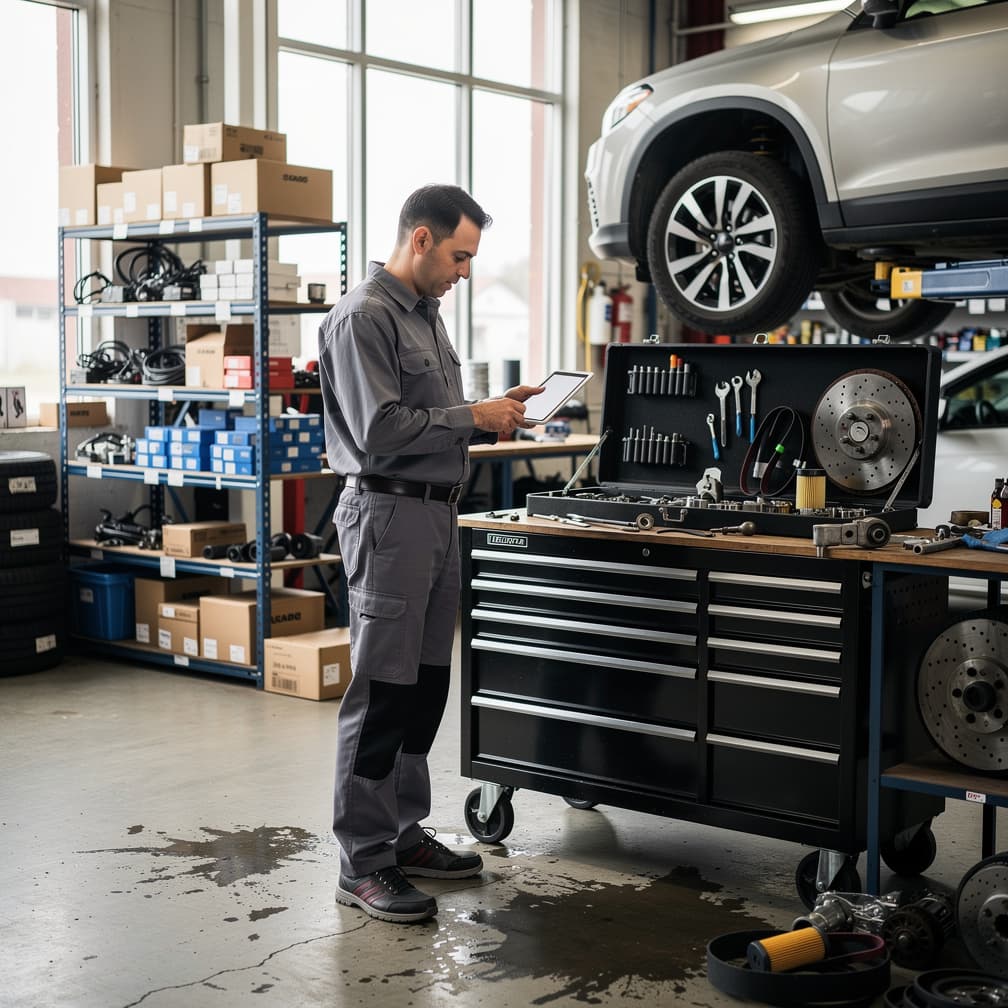

Water on the floor by the entryway is a claim waiting for a witness. Someone tracks in slush, a shopper hits the wet spot with a box of brake pads in both hands, and nobody saw the sign go missing. Auto parts store insurance in Sterling Heights exists mostly for the ten seconds after that. What comes next is paperwork: an incident report, a recorded statement, a demand letter that lands long after the bruise healed, sometimes years later depending on the filing deadlines that apply in Michigan. The store keeps selling parts the whole time, which is the part owners forget. Your defense costs start the day the letter arrives, not the day anyone decides anything. Below, the coverage lines are broken out one by one so you can see which one answers that letter.
What Makes Sterling Heights Different
Your aggregate limit is shared, and every claim in the policy year draws from the same pool. A busy sales floor can produce several small injury claims before anything serious ever happens there. Each one erodes the aggregate quietly, and defense costs may erode it further depending on the form. By the time a real claim arrives, the limit a Sterling Heights lease demanded may no longer exist. Contracts specify a limit at inception; they do not promise that limit is still there later. That is the argument nobody has until a landlord in Macomb County asks for a fresh certificate. Ask whether defense sits inside or outside your limits before you agree to a required number. The same limit means two different things on those two forms, and the difference is the store.
Local Risk Factors in Sterling Heights
Tornado damage is unevenly distributed by nature: one block loses a roof and the next block loses nothing at all. A parts store that takes a direct hit loses the building envelope, the racking, and the inventory in one event, and debris makes the stock unsellable even where it looks intact. Commercial Property may respond to that kind of wind and debris loss, subject to your deductible and to how the building was valued. What it will not do is restock the shelves; that depends on suppliers, and a widespread event in Macomb County puts every damaged business into the same queue. Ask how your policy values inventory before you need the answer in Sterling Heights.
What Coverage Does an Auto Parts Store in Sterling Heights Need?
General Liability
Landlords, suppliers, and fleet accounts ask for this one by name before they will deal with you at all. It aims at third parties: a shopper hurt in an aisle, a delivery driver injured on your dock, or a part that fails after it leaves the counter. It typically does nothing for your own stock or your own employees, which are separate purchases.
Example: A customer reaches past a top-shelf display, a case of rotors comes down on her shoulder, and a demand letter follows six weeks later. The policy may respond to the injury claim and to the defense behind it.
Commercial Property
Rising water sits outside this form, and so does wear and tear, and knowing that up front is half of buying it well. What sits inside is the building work you paid for, the racking, the counter, the register, and the stock on your shelves, against fire, theft, vandalism, and storm damage, subject to your deductible and to how the inventory was valued.
Example: A break-in through the back door empties a cage of batteries and alternators overnight, and the door frame goes with them. This line could pick up the stolen stock and the damage, less the deductible.
Workers Compensation
A stocker lifts batteries for six years and then cannot straighten up one morning. This line is meant for injuries arising out of the work, including the slow cumulative ones, and it generally handles medical care and a share of lost wages without anyone arguing fault. Requirements vary by state, and pricing runs on payroll rather than headcount.
Example: Someone catches a hand between a pallet and a rack while a delivery comes in, and the emergency room visit turns into three weeks off the floor. Benefits here might carry the medical bills and part of the missed pay.
Business Owners Policy
Bought separately, the liability form and the property form are two policies with two bills behind them. Packaged together for a small store they often price below the pair while covering the same ground, subject to sublimits on items like the sign outside, money in the register, and stock held off site. Workers Compensation never rides inside it.
Example: A rooftop leak soaks a pallet of filters, and a shopper goes down on the puddle it left in aisle three that same afternoon. One packaged policy is generally intended to take both of those claims at once.
How Much Does Auto Parts Store Insurance Cost in Sterling Heights?
Auto Parts Store Insurance is a bundle of separate policies, priced separately. The ranges below are typical figures for Sterling Heights for each line, except workers compensation, which is rated per $100 of payroll; a quote prices each one against your own operations.
| Coverage | Typical range | What moves your price |
|---|---|---|
| General Liability Insurance | $55 - $180 per month | Industry and risk classification, annual revenue, number of employees |
| Commercial Property Insurance | $75 - $270 per month | Building value and construction type, roof age and condition, fire protection class |
| Workers Compensation Insurance | $0.75 - $2.74 per $100 of payroll | Employee classification codes, total annual payroll, experience modification rate |
| Business Owners Policy Insurance | $100 - $290 per month | Annual revenue and industry class, building and contents values, square footage and building age |
Prices shown are general estimates, not guaranteed rates or quotes. Your actual premium will depend on the insurer, coverage selected, business details, location, claims history, and other underwriting factors. Learn about our pricing methodology.
What Are the Insurance Requirements for an Auto Parts Store in Sterling Heights?
Workers' comp is generally required once you have your first employee. Michigan generally requires employers to carry workers' compensation at that point. Common exemptions include sole proprietors, partners, and corporate officers. Confirm current thresholds with your state's workers' compensation agency before you hire.
Flood damage is typically excluded from standard policies. Standard commercial property and builders-risk-type policies typically exclude flood damage. Flood exposure varies address by address, so check your premises in FEMA's Flood Map Service Center before deciding; if you sit in a mapped flood zone, a separate policy through the National Flood Insurance Program is the usual starting point.
Where to verify licensing and coverage rules. The Michigan Department of Insurance and Financial Services publishes consumer guidance and current insurance requirements for Michigan businesses. When a contract or lease demands specific wording, the Michigan Department of Insurance and Financial Services's guidance is the authoritative place to check.
Get Your Auto Parts Store Quote in Sterling Heights
Compare rates from multiple carriers. Free quotes, no obligation.
Operating in Sterling Heights
- Loose stock on a top shelf becomes a head injury the moment a customer reaches for the box behind it. Shelf heights and restocking habits are underwriting questions, not housekeeping preferences.
- Payroll audits arrive after the policy year ends rather than before it, so a class code you guessed at in Sterling Heights turns into an invoice you never budgeted for months later.
- Parts sold over the counter go home and get installed in a driveway. The claim, when it comes, arrives with a lawyer already attached and names your store, sometimes years after the sale.
- A vendor packet from a corporate account can demand waiver of subrogation and primary wording your current carrier will not write. Read the insurance exhibit before you agree to supply anybody.
How to Buy: Advice for Sterling Heights Owners
Payroll is the first number to get right, because Workers Compensation is rated on it per hundred dollars and the class code matters as much as the total. A stocker moving batteries and a cashier at a register sit in different classes, and mixing them up gets fixed at audit rather than at binding. Sort your people by what they actually do, not by title, before you quote a Sterling Heights store. Check the Michigan Department of Insurance and Financial Services's guidance before deciding whether your headcount in Michigan triggers a requirement at all. While the file is open, gather stock values and square footage, since Commercial Property needs both. Then run the same packet past participating carriers through CPK and see how differently each one reads it.
FAQ
Auto Parts Store Insurance in Sterling Heights: FAQ
Theft of stock is usually a property question rather than a liability one. Commercial Property, or the property side of a Business Owners Policy, may respond to burglary depending on the form and the deductible you chose. Employee dishonesty is often excluded there and handled instead by a separate crime endorsement. Ask which of those you actually hold before you assume shoplifting losses are picked up.
Nobody can quote it from the trade alone. The inputs that move it are stock values, square footage, building construction and age, payroll by class, foot traffic, protective features, and claims history. Two stores on the same block can price very differently because one has a clean loss run and a locked stockroom and the other has neither. Gather those numbers first and the quotes become comparable.
Yes, and it lands later than owners expect. A part sold over the counter and installed elsewhere can produce a demand letter naming the seller, sometimes years after the receipt printed. General Liability generally includes products and completed operations coverage, subject to the aggregate and to how promptly the claim got reported. Whether it responds depends on the form and the reporting terms, so read both before you need them.
It extends part of your liability coverage to another party for claims connected to your operations. A supplier or a landlord wants it so their own policy is not the first one tapped when something goes wrong on your floor. It gets added by endorsement, it can carry a charge, and some carriers decline particular wordings outright. The certificate only reports it; the endorsement is what creates it.
Usually not. Standard property forms typically exclude flood, and rising water reaching your bottom shelf is precisely the loss they leave out. Flood cover gets bought separately where it is available at all, priced on its own terms. A burst pipe inside the building is a different question and may be handled by the property form. Find out which exposure your Sterling Heights store faces before renewal, not after.
Two numbers sit on the liability form and they behave differently. One caps what a single claim may draw; the other caps the whole policy year across everything combined. A store producing several small aisle injuries can wear down that yearly ceiling before a serious claim ever shows up, and defense costs may wear it down further depending on the form. So the limit your lease demanded at signing might not still be standing in month ten.
Sources
- 1.Michigan Department of Insurance and Financial Services(Michigan Department of Insurance and Financial Services publishes consumer guidance for insurance buyers.)
- 2.FEMA / FloodSmart(Flood coverage is typically purchased separately; FEMA administers the National Flood Insurance Program.)


