

































Updated July 19, 2026

An education business in Minnesota is responsible for other people's children, and that duty shapes every coverage decision it makes. Minnesota adds a legal floor here, because workers compensation is required from the first employee [1]. Past the payroll question, the risk profile here is professional rather than geographic. The cost drivers below map what actually moves education quotes in Minnesota.
Recommended Coverage for Education in Minnesota
Education businesses face unique risks that require specific coverage types. Here are the policies most education operations need:

General Liability
Essential coverage for every business, protect against third-party bodily injury, property damage, and advertising claims.

Professional Liability
Protect your business from claims of negligence, errors, and omissions in your professional services.

Commercial Property
Safeguard your business property, equipment, and inventory against damage and loss.

Workers Compensation
Help cover your employees' medical expenses and lost wages for work-related injuries and illnesses.

Cyber Liability
Defend your business against data breaches, cyberattacks, and digital liability with cyber coverage.

Commercial Umbrella
Extend your liability limits beyond your primary policies for extra protection against catastrophic claims.
Education Insurance Overview in Minnesota
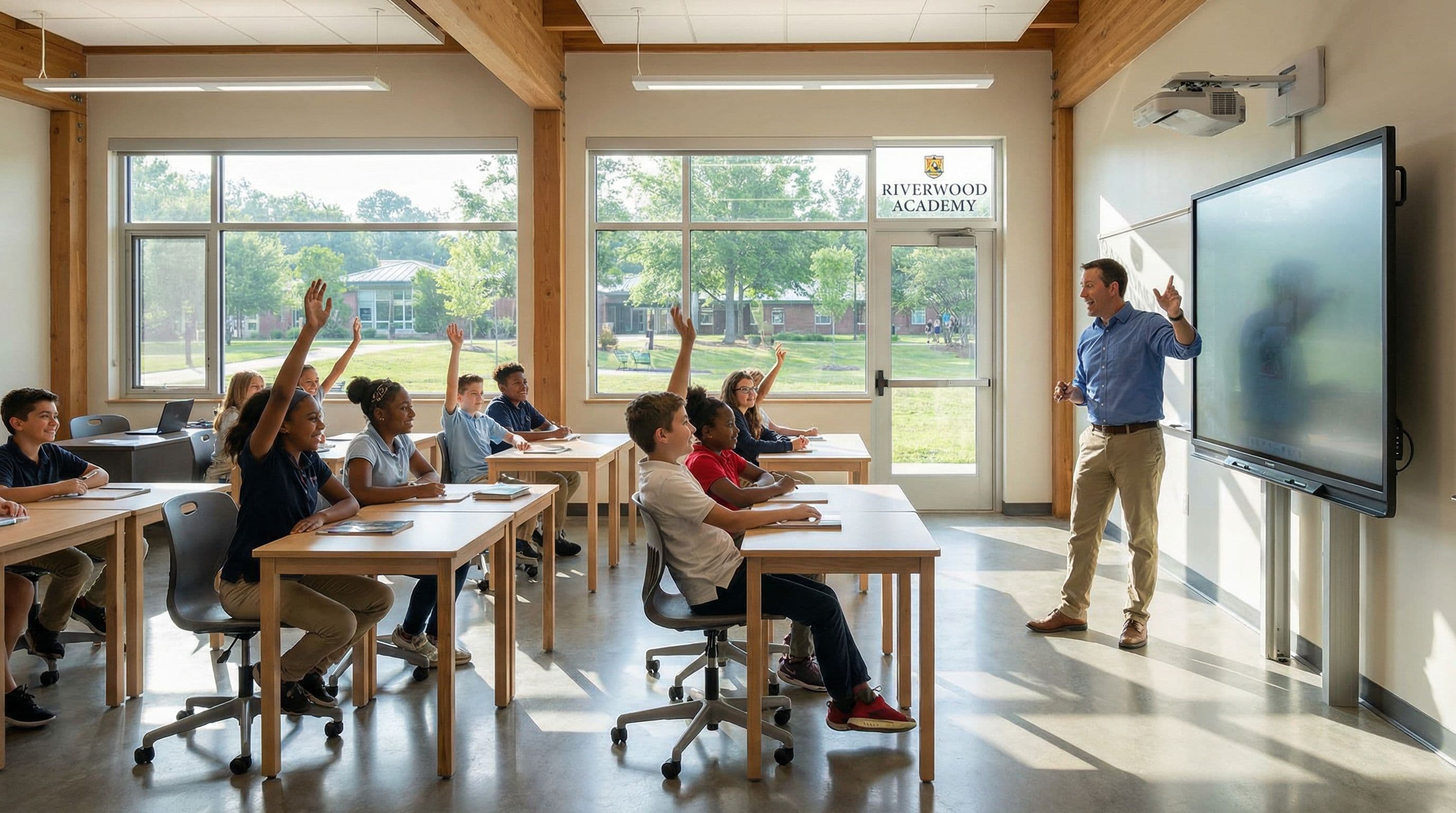
Your education business faces different risks depending on the students you serve and the programs you run. Shared spaces like hallways, playgrounds, and drop-off areas can all create exposure to third-party claims, legal defense costs, and building damage. That is why your policy is usually built around how students, parents, visitors, and staff move through your space, not just the size of the building. Local conditions also shape your exposure, since Minnesota rates very high for winter storm risk and high for severe storms and tornadoes, meaning campuses may need to think beyond classroom routines and consider equipment breakdown, business interruption, and storm-related disruption. Minnesota also has workers' compensation requirements that apply with a minimum of one employee, subject to listed exemptions, and the Minnesota Department of Commerce oversees the market. From there, most education businesses build their coverage around a combination of general liability, professional liability, commercial property, cyber liability, and umbrella protection.
Why Education Businesses Need Insurance in Minnesota
A slip and fall in a hallway, an injury on playground equipment, or an off-site activity claim can lead to medical costs, legal defense, and settlements that disrupt tuition-based budgets and delay normal operations. For an education business, those claims can ripple across your entire operation.
Minnesota's operating environment adds more complexity. The state's winter storm risk is very high, and severe storm and tornado exposure are both rated high, which means building damage, business interruption, and equipment breakdown can become practical concerns for campuses in Minneapolis, Saint Paul, Rochester, and beyond. If your program relies on classroom technology, lab equipment, musical instruments, or administrative records, commercial property insurance becomes a key part of planning. The state also has workers' compensation requirements with a minimum of one employee, subject to specific exemptions, so staffing structures matter.
Beyond physical risks, education businesses that store student records or use online systems should consider cyber liability for costs related to data breaches and privacy violations. One policy does not fit every campus or program, so reviewing your coverage carefully matters.
Minnesota requires workers' comp for businesses with employees (exemptions may apply: Sole proprietors; Partners). Non-compliance can result in fines and personal liability for owners. Commercial auto minimums are $30,000/$60,000/$10,000.
Key Risks for Education Businesses
Each of these risks can lead to claims that cost thousands, or more. Make sure your policy addresses every one:
- Student injury on campus
- Professional misconduct allegations
- Data breaches of student records
- Property damage or vandalism
- Transportation accidents
Cost Factors for Education Businesses in Minnesota
Education insurance cost in Minnesota varies based on enrollment, number of locations, the age of students served, and whether your program includes transportation, sports, lab instruction, dormitory housing, or hands-on vocational training. A preschool in Saint Paul, a tutoring center in Minneapolis, and a training academy in Rochester may all have different risk profiles even if they share similar square footage. Local conditions also influence pricing. Minnesota's premium index is 102 for 2024, which means a typical campus may pay slightly more than the national average. The state has 420 insurers in the market, so you have a broad set of options to compare. Approximately 4% of Minnesota businesses are classified as small operations, meaning many education operators are balancing coverage needs against tight operating budgets.
Your claims history, building condition, security measures, staff-to-student ratios, and the scope of services all affect quote results. If you want to compare education insurance coverage in Minnesota, gather details on your campuses, student populations, equipment, and any cyber exposure before requesting a quote. As a baseline, general liability, the coverage nearly every education business carries, averages about $75 to $290 per month in Minnesota, a bit above the national average. Your final premium depends on payroll, annual revenue, claims history, and the specific risk class of your work.
Education businesses typically carry several separately priced policies. The ranges below are typical figures for Minnesota for each line, except workers compensation, which is rated per $100 of payroll; a quote prices each one against your own operations.
| Coverage | Typical range | What moves your price |
|---|---|---|
| General Liability Insurance | $75 - $290 per month | Industry and risk classification, annual revenue, number of employees |
| Professional Liability Insurance | $90 - $360 per month | The services you actually perform, annual revenue or billed fees, limit and retention selected |
| Commercial Property Insurance | $120 - $575 per month | Building value and construction type, roof age and condition, fire protection class |
| Workers Compensation Insurance | $0.75 - $2.74 per $100 of payroll | Employee classification codes, total annual payroll, experience modification rate |
| Cyber Liability Insurance | $55 - $240 per month | Records held and how sensitive they are, annual revenue and industry, multi-factor authentication and backup practices |
| Commercial Umbrella Insurance | $75 - $330 per month | Umbrella limit requested, limits carried on the underlying policies, loss history on those underlying policies |
Prices shown are general estimates, not guaranteed rates or quotes. Your actual premium will depend on the insurer, coverage selected, business details, location, claims history, and other underwriting factors. Learn about our pricing methodology.
State Requirements
Insurance Regulations in Minnesota
Key regulatory requirements for businesses operating in MN.
Regulatory Authority
Workers' Compensation InsuranceRequired
Required for employers with 1+ employee.
Exempt categories
- Sole proprietors
- Partners
- Officers of closely held corporations
Commercial Auto Minimum Liability
$30,000/$60,000/$10,000 (bodily injury per person / per accident / property damage)
Source: Minnesota Department of Insurance, U.S. Department of Labor
What Drives Education Insurance Costs in Minnesota
Student injuries and supervision
Injury claims in education price against enrollment, activities, and transportation. General liability insurance limits typically follow the level of physical activity involved.
Allegations and student records
Misconduct allegations require defense regardless of merit, and student records are regulated data. Professional liability insurance and cyber liability insurance address those two exposures.
Winter weather
A hard freeze reaches schools through burst pipes, iced lots, and closure days rather than lost inventory. Property terms on freezing and interruption get tested every winter. FEMA counts 182 federal disaster declarations for Minnesota [2].
Climate Risk Profile
Natural Disaster Risk in Minnesota
Understanding climate-related risks helps determine appropriate insurance coverage levels.
Severe Storm
High
Tornado
High
Winter Storm
Very High
Flooding
Moderate
Expected Annual Loss from Natural Hazards
$1.2B
estimated economic loss per year across Minnesota
Source: FEMA National Risk Index
Insurance Tips for Education Business Owners in Minnesota
Scale general liability limits to match the volume of people moving through your shared spaces, since more students, parents, and visitors mean more potential for third-party claims.
Add professional liability if your staff provide academic advising, counseling, or curriculum guidance that could lead to negligence or omissions claims.
Review commercial property insurance for classroom technology, lab equipment, and administrative records, not just the building itself.
Confirm workers' compensation fits your staffing model, since Minnesota generally requires it with a minimum of one employee, subject to exemptions.
Ask about cyber liability if you store student records, use online portals, or manage payment and enrollment data that could be affected by data breach or privacy violations.
Consider commercial umbrella insurance if your campus has high traffic, multiple locations, or off-site programs where third-party claims could exceed underlying policies.
Check whether your plan accounts for storm-related disruption that could lead to business interruption or equipment breakdown.
Compare coverage separately if your programs vary by age group, facility type, or hands-on instruction.
Get Education Insurance in Minnesota
Enter your ZIP code to compare education insurance rates from top carriers.
Business insurance starting at $25/mo
Education Business Types in Minnesota
Find insurance tailored to your specific education business. Select your business type for coverage recommendations, pricing, and quotes:

Daycare Insurance
Get a daycare insurance quote built for licensed daycare centers, preschool programs, and in-home operations. Compare options that may include participant accident coverage, abuse and molestation coverage, property protection, and liability support.

Dance Studio Insurance
Get a dance studio insurance quote built for studios, schools, and independent instructors. Compare coverage options that can help with student injury claims, property damage, and legal defense costs.

Tutoring Service Insurance
Tutoring service insurance helps protect tutors and learning centers from professional errors claims, client injury claims, and cyber risks. Request a tutoring service insurance quote that fits your locations and session types.

Private School Insurance
Get a private school insurance quote built for K-12 campuses, student injury claims, and property risks. Compare coverage options before you buy.

Martial Arts Studio Insurance
Request a martial arts studio insurance quote built for dojos, MMA gyms, and training facilities. Compare coverage options that can help with student injury claims, premises liability, and property damage, matched to your classes and lease requirements.

Driving School Insurance
Get coverage built for driving schools, from student-caused collisions and vehicle damage to instructor liability and business protection. Request a driving school insurance quote tailored to your operation.

Music School Insurance
Music school insurance helps lesson studios and academies manage instrument damage, student injuries, liability claims, and property risks. Request a quote built around your instructors, locations, and classes.

Swim School Insurance
Get a swim school insurance quote built for aquatic instruction, poolside operations, and lesson-based programs. Coverage can be tailored for private lessons, group classes, and seasonal schedules.

Acting Instructor Insurance
Get acting instructor insurance built for private lessons, group classes, and multi-location coaching. Compare coverage options for liability and professional risks tied to performance arts teaching.

Adult Education Instructor Insurance
Adult education instructors can face professional error claims, student injury allegations, and venue-related gaps. Get coverage built for classes, workshops, and continuing education programs.

Art Instructor Insurance
Get an art instructor insurance quote for studio liability, professional errors, and claims tied to supplies or ruined artwork. Coverage options can help protect art teachers, studio instructors, and class operators.

Computer Lessons Instructor Insurance
Request a computer lessons instructor insurance quote for coverage that can address professional liability, cyber exposure, and general liability. Built for technology educators who teach online, in homes, or in classrooms.
Education Insurance by City in Minnesota
Insurance rates and requirements can vary by city. Find education insurance information for your area in Minnesota:
FAQ
Education Insurance FAQ in Minnesota
Two liability policies carry most of the weight: general liability for a parent or student hurt on the premises, and professional liability for disputes over instruction or supervision. Add property coverage for classroom contents, workers compensation for employees, and cyber coverage when you store student records or take payments online.
Yes, in most cases, because education claims frequently target decisions rather than accidents: how a student was supervised, evaluated, or advised. General liability does not respond to that kind of allegation, so the two policies need to be read together against your actual programs.
Premiums follow payroll and job duties, so teachers, administrators, custodians, and maintenance staff are classified differently. Getting those role descriptions right up front prevents classification disputes at audit and produces a quote you can rely on.
Because enrollment systems, payment platforms, and student records concentrate sensitive data in a handful of connected tools. A breach or outage interrupts classes and triggers notification duties at the same time, which is exactly the loss pattern cyber coverage is designed around.
The case gets stronger as public traffic, specialized instruction, facility size, and contract requirements grow. Confirm the limits and terms on the underlying liability policies first, then size the umbrella against the largest realistic claim and the strictest contract you sign.
Payroll, staff duties, student volume, property values, technology use, claims history, and the type of instruction you provide. Facility responsibility matters too: an academy that controls its own building carries exposures a tenant operation does not.
Yes, and most do. Leases commonly set liability limits, certificate wording, and additional insured requests, so review the insurance clause before you shop; those requirements shape the quote structure from the start.
Value the property that keeps instruction running, item by item, rather than accepting a round number. Laptops, tablets, projectors, and teaching materials age and multiply quickly, and accurate values determine how fast operations recover after a covered loss.
Sources
- 1.Minnesota Department of Commerce(Minnesota requires workers compensation coverage from the first employee.)
- 2.FEMA Disaster Declarations(Minnesota has 182 federal disaster declarations on record.)
- 3.BLS Quarterly Census of Employment and Wages (2024)(Education workers in Minnesota earn an average of $58,800 a year.)