







































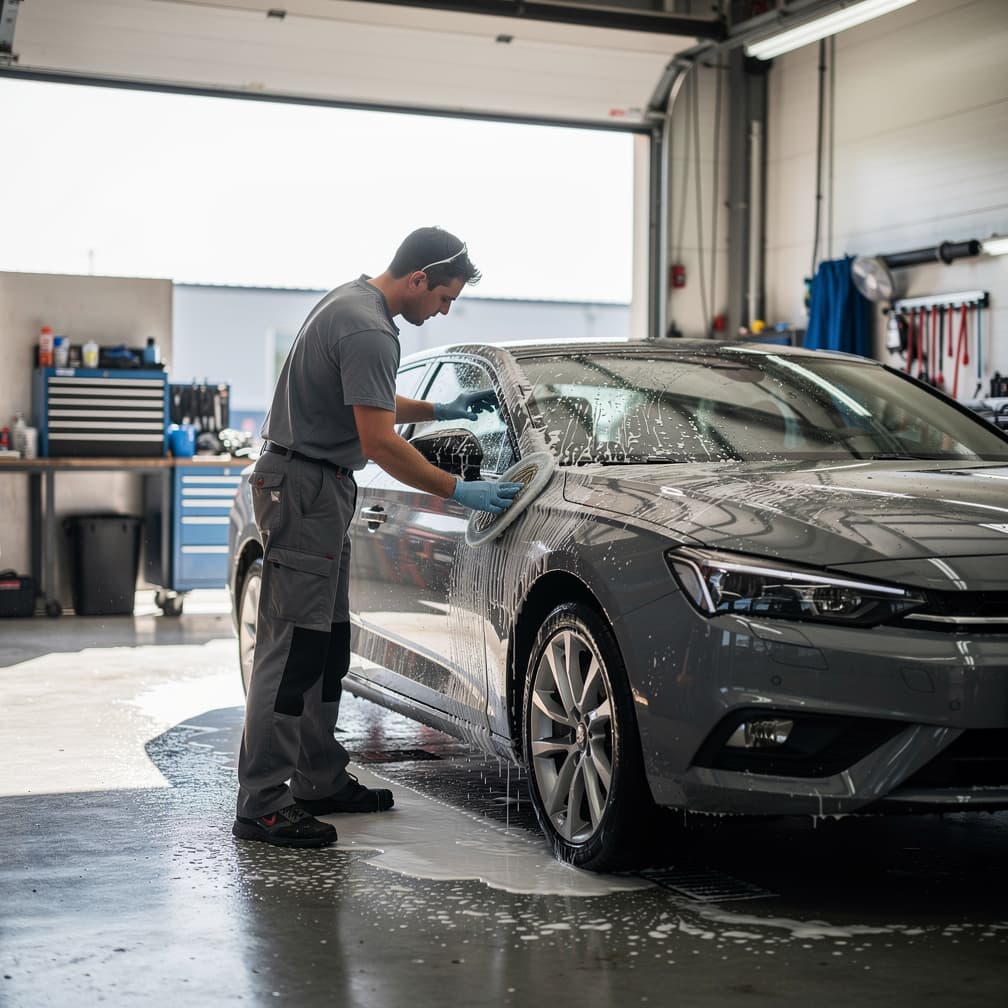

Payroll, not square footage, drives the biggest line on many wash policies. Workers Compensation is rated per $100 of payroll, and the rate follows the job code your staff actually work. Hand prep, tunnel loading, and detailing are not the same risk as a cashier, and misclassification surfaces during an audit, when it is expensive to fix. That audit is why the payroll figures behind a quote for car wash insurance in Minneapolis should match the ones your accountant files. Rates in this trade generally sit between $0.75 and $2.74 per $100 of payroll depending on classification and history, a band wide enough to be worth an hour of your time. Clean up the classifications first. Then compare, because identical numbers can land very differently across participating carriers in Minnesota.
What Makes Minneapolis Different
About 59 car washes compete inside Hennepin County, and competition on that scale pushes everyone toward memberships. Unlimited plans trade a single wash sale for a recurring charge and a standing monthly obligation. That model changes your loss picture, because a closed tunnel still owes its members a service. Refunds, pauses, and cancellations follow a shutdown faster than any repair invoice ever arrives. Interruption terms deserve more attention than they usually get from an owner in a crowded market. Ask what a policy treats as lost revenue when billing kept running but the tunnel did not. Ask how long the waiting period runs before any interruption payment is on the table. Membership churn after a closure is the loss that follows you into the next year.
Local Risk Factors in Minneapolis
Severe storms hit a wash in the parts that stick up: the sign, the canopy, the blower stacks, and the roof over the equipment room. Debris in the tunnel is its own problem, since a branch caught in a mitter curtain damages your gear and the next three cars through it. Commercial Property can help cover wind and debris damage to the building and to scheduled outdoor property, though canopies and signs are commonly sublimited far below the building limit. A warning also empties your lot for a day, and lost traffic without damage is generally not a claim. An owner in Minneapolis should ask what the outdoor property sublimit is, and whether the vacuum canopy is scheduled at all under Minnesota forms.
What Coverage Does a Car Wash in Minneapolis Need?
General Liability
Landlords, lenders, and fleet accounts ask for proof of this line before they ask about anything else. It generally responds to third-party claims: a guest who falls in a wet lane, an injury near the vacuum stalls, or damage to property that was never in your hands. Damage to a vehicle in your care during the wash itself typically falls outside it.
Example: A customer steps out of the pay lane onto wet concrete, lands hard, and sends a demand four months later with a lawyer attached. General Liability may pick up the defense and the settlement, subject to your limits.
Commercial Property
The equipment room is the real asset here, not the shell wrapped around it. Conveyors, pumps, dryers, control boards, signage, and the building can all be scheduled, with fire, storm, vandalism, and theft as the usual covered causes. Flood typically sits outside the form, and wear or mechanical breakdown generally needs an endorsement of its own.
Example: Someone pries open the pay terminal overnight, takes the coin box, and cracks a bay door on the way out. Commercial Property could fund repairs to the door and the terminal once your deductible is met.
Workers Compensation
An attendant catches a hand near a brush, or pulls a shoulder loading mats across a long shift. This line generally handles medical care and a share of lost wages, and it is rated on payroll by job classification rather than on your building. Rules on who must carry it vary, and the Minnesota Department of Commerce publishes the current requirements for employers.
Example: A tunnel loader slips on the wet apron mid-shift and tears a knee ligament that ends up needing surgery. Workers Compensation might handle the treatment and part of the missed pay, depending on how the claim is filed.
Business Owners Policy
Where separate policies split property and liability across two renewals, this package holds both for one site: one certificate, one deductible conversation, one bill. Workers Compensation stays outside it, flood and equipment breakdown usually do as well, and the limits sitting inside the package still deserve reading line by line.
Example: A fire in the equipment room stops the tunnel for three weeks in Minneapolis, and the repair bill lands beside a month of refunded memberships. A Business Owners Policy can be structured to answer for both, within its terms.
How Much Does Car Wash Insurance Cost in Minneapolis?
Car Wash Insurance is a bundle of separate policies, priced separately. The ranges below are typical figures for Minneapolis for each line, except workers compensation, which is rated per $100 of payroll; a quote prices each one against your own operations.
| Coverage | Typical range | What moves your price |
|---|---|---|
| General Liability Insurance | $100 - $350 per month | Industry and risk classification, annual revenue, number of employees |
| Commercial Property Insurance | $260 - $950 per month | Building value and construction type, roof age and condition, fire protection class |
| Workers Compensation Insurance | $0.75 - $2.74 per $100 of payroll | Employee classification codes, total annual payroll, experience modification rate |
| Business Owners Policy Insurance | $180 - $575 per month | Annual revenue and industry class, building and contents values, square footage and building age |
Prices shown are general estimates, not guaranteed rates or quotes. Your actual premium will depend on the insurer, coverage selected, business details, location, claims history, and other underwriting factors. Learn about our pricing methodology.
What Are the Insurance Requirements for a Car Wash in Minneapolis?
Workers' comp is generally required once you have your first employee. Minnesota generally requires employers to carry workers' compensation at that point. Common exemptions include sole proprietors, partners, and officers of closely held corporations. Confirm current thresholds with your state's workers' compensation agency before you hire.
Flood damage is typically excluded from standard policies. Standard commercial property and builders-risk-type policies typically exclude flood damage. Flood exposure varies address by address, so check your premises in FEMA's Flood Map Service Center before deciding; if you sit in a mapped flood zone, a separate policy through the National Flood Insurance Program is the usual starting point.
Where to verify licensing and coverage rules. The Minnesota Department of Commerce publishes consumer guidance and current insurance requirements for Minnesota businesses. When a contract or lease demands specific wording, the Minnesota Department of Commerce's guidance is the authoritative place to check.
Get Your Car Wash Quote in Minneapolis
Compare rates from multiple carriers. Free quotes, no obligation.
Operating in Minneapolis
- A landlord can withhold keys until a certificate naming them sits in the file, so a policy that lapses quietly can stall a Minneapolis lease you thought was already settled.
- Cars queue behind a stalled conveyor, and every driver in that line has your phone number and a photograph of their own paint. Damage disputes start in the queue, not in the wash.
- Keys change hands dozens of times a day at a full-service site, and the moment an attendant sits in a customer's seat, responsibility for that vehicle gets harder to argue about.
- Pay stations hold cash, and cash draws attention overnight. A pried terminal in Minneapolis is a property claim, a service interruption, and a police report before your opener finishes a first coffee.
How to Buy: Advice for Minneapolis Owners
New ownership changes the file more than owners expect, so tell participating carriers the truth about it. A wash bought from someone else inherits their equipment, their drainage, and their wiring, along with a claim history that lives in neighborhood memory rather than on your loss runs. Get the equipment room inspected before you bind, since a surprise found during a claim is a surprise you pay for. List what you have replaced and when, because upgrades price better than promises do. Commercial Property and General Liability both reward documentation already sitting in a folder. Ask what a mid-term change does to your premium under Minnesota forms if you replace tunnel gear in six months. Then take the full picture to the market in Minneapolis and compare quotes on identical facts.
FAQ
Car Wash Insurance in Minneapolis: FAQ
It generally responds to third-party claims: a customer who goes down in a wet entry lane, a guest hurt near the vacuum stalls, or damage you cause to property that was never in your hands. What it typically does not touch is damage to a vehicle you had control of during the wash itself. That gap catches owners off guard, so raise it by name before you buy anything.
Usually not under a standard liability form. Damage to property in your care, custody, or control is a common exclusion, and a vehicle riding your conveyor is exactly that. Some carriers offer an endorsement built for the exposure and price it separately. Ask every quote how it treats vehicle damage, and count what you settled at the counter last year before choosing a limit.
Price follows a handful of inputs rather than a rate card. Payroll and job classifications drive the comp side, revenue and claim frequency drive the liability side, and building value plus your equipment schedule drive property. Hours of operation, alarms, and the age of your wiring all matter. Participating carriers in Minnesota weigh loss history differently, so two washes on one street can price apart.
Because a claim arising from your operation can name them too, and that status lets your policy answer on their behalf for claims tied to your work. It generally does not reach their own negligence, so a fall on a sidewalk they maintain stays their problem. The wording has to be a real endorsement on the policy, not a line typed onto a certificate. Ask which version you actually have.
Per-occurrence is the most a policy may pay for one event, such as a single customer's fall at the pay station. The aggregate is the ceiling for the entire policy year, and every slip, every injury claim, and often every defense bill draws it down. A wash with three small claims by midyear can find the aggregate thinner than expected right as the busy stretch starts. Ask when it resets.
Only when the shutdown has a covered cause behind it, and only after the waiting period runs. Income coverage typically follows physical damage to your property, so a storm that tears the building is treated very differently from a storm that simply keeps drivers home. Membership billing complicates it, since a paused plan is lost revenue you may have to document. Forms in Minnesota differ on what counts.
Sources
- 1.U.S. Census Bureau, County Business Patterns (2023), Hennepin County(Hennepin County has about 59 businesses in this trade's category (NAICS group 811192).)
- 2.Minnesota Department of Commerce(Minnesota Department of Commerce publishes consumer guidance for insurance buyers.)
- 3.FEMA / FloodSmart(Flood coverage is typically purchased separately; FEMA administers the National Flood Insurance Program.)


