







































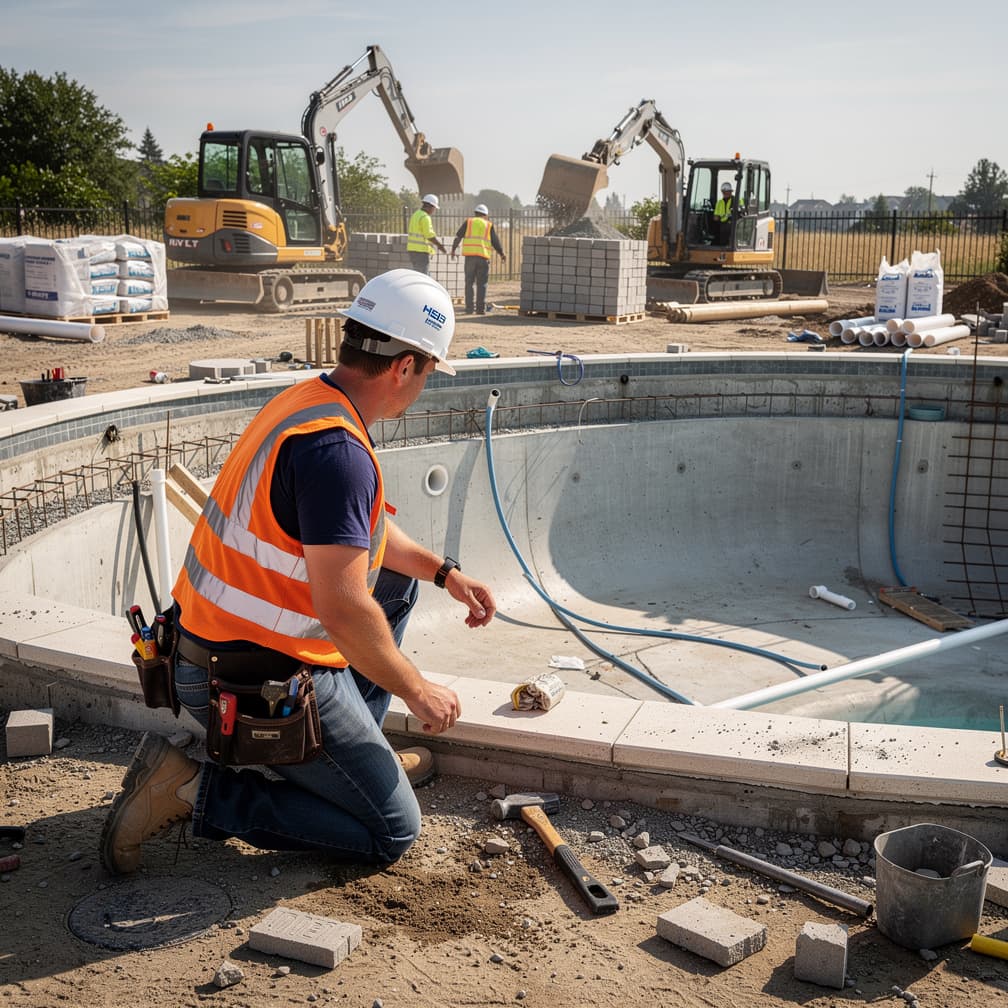

Payroll is the meter that runs your insurance bill, and in a busy market you add crew before you add trucks. Hennepin County has about 40,500 businesses, which puts more builders and property managers in a position to write their own limit requirement into your scope. Pool and spa contractor insurance in Minneapolis often gets more expensive because those contracts ask for more, not because the digging changed. Higher required limits, additional-insured wording, and waivers of subrogation all reach the invoice eventually. Competitive bidding pushes some builders to trim coverage to win work, and that trade shows up years later on a defect claim. Look at the drivers you control: payroll classification, claims history, deductible, and how carefully you document subcontractor coverage. Then put identical limits in front of participating carriers, because that is the only comparison that means anything.
What Makes Minneapolis Different
Commercial pool work arrives with an insurance exhibit, and that exhibit is the real scope of the job. It sets limits, names parties, demands waivers, and tells you how long the coverage has to survive. Completed operations wording matters most there, because a hotel deck outlives your involvement by several decades. A requirement to keep coverage in force for years after handover is ordinary in layered markets. That obligation is a cost, and it belongs in the bid rather than in a surprise two renewals later. Participating carriers in Minnesota differ on how long that wording stays available, so ask about it early. Read the exhibit before you read the number, because the exhibit changes what the number should be. If a Minneapolis property manager sends a forty-page contract, the insurance pages are the ones to mark.
Local Risk Factors in Minneapolis
A power cut across Hennepin County idles the equipment pad, the pumps, and the crew, and a spa install with no electricity is a day nobody bills. Storms also fill an open excavation and undercut the walls, so the shell you formed may need doing again at your own cost. Rework on your own unfinished work is generally not an insured loss, and that catches builders out every season. What might answer is a third-party claim: a visitor hurt on a storm-wrecked site in Minneapolis is a General Liability question, subject to the policy's terms. Secure the hole first and worry about the calendar second.
What Coverage Does a Pool & Spa Contractor in Minneapolis Need?
General Liability
General contractors, property managers, and homeowners ask for this one by name before a crew starts. It typically responds to injury and property damage your work causes to other people: a visitor who falls into an open excavation, a driveway cracked by an excavator, a neighbor's irrigation main cut while trenching. Redoing the pool itself is generally your own cost.
Example: A homeowner steps around the barrier to admire the shell, slips on wet coping, and breaks a wrist; General Liability can help cover the defense and the claim that follows.
Workers Compensation
A plaster hand slips on wet coping, or a crew member wrecks a back lifting a heater onto the pad. Workers' Compensation generally handles medical care and lost wages for injuries on the job, and it is rated on payroll rather than revenue. Thresholds, owner treatment, and family exemptions vary by state, so confirm the details with the Minnesota Department of Commerce.
Example: A trencher kicks back and a crew member's hand needs surgery halfway through a build; the medical bills and the missed weeks may land on this coverage rather than on you.
Commercial Auto
A personal auto policy commonly excludes the work itself: hauling a trailer with a mini excavator, carrying chemicals, or running a crew between jobsites. Commercial Auto is written for that use and may respond to the damage and injuries you cause on the road. It gets rated on the vehicles, the radius, and the records behind the keys, and it stops at the tailgate.
Example: A loaded trailer swings wide on a turn and clips a parked car outside the job; the repairs to that car and any injury claim are what this line is meant to answer.
Tools & Equipment (Inland Marine)
Trenchers, pumps, compactors, saws, and the trailer hauling them are the property this line follows, at the jobsite, in transit, and parked in the yard. It works off a schedule, which means an unlisted pump is generally an uninsured pump. Values matter as much as the list, since replacement cost and actual cash value settle very differently.
Example: A trailer is cut open overnight outside a Minneapolis job and the tile saw and two pumps are gone by morning; a current schedule is usually the difference between a claim and a lesson.
Commercial Umbrella
Where the liability limit underneath runs out, this line can extend above it, and often above the vehicles too. Pool work produces the kind of claim that gets there: a serious injury at an open excavation, or a defect fight that runs for years. Commercial contracts sometimes demand a limit no single underlying policy carries.
Example: A guest is badly hurt at a pool your crew was still finishing and the claim runs past the limit beneath it; the umbrella might sit above that, subject to both policies' conditions.
How Much Does Pool & Spa Contractor Insurance Cost in Minneapolis?
Pool & Spa Contractor Insurance is a bundle of separate policies, priced separately. The ranges below are typical figures for Minneapolis for each line, except workers compensation, which is rated per $100 of payroll; a quote prices each one against your own operations.
| Coverage | Typical range | What moves your price |
|---|---|---|
| General Liability Insurance | $290 - $875 per month | Industry and risk classification, annual revenue, number of employees |
| Workers Compensation Insurance | $0.75 - $2.74 per $100 of payroll | Employee classification codes, total annual payroll, experience modification rate |
| Commercial Auto Insurance | $270 - $700 per month | Fleet size and vehicle types, driver records and experience, coverage limits and deductibles |
| Inland Marine Insurance | $60 - $230 per month | Total insured value of the scheduled property, type and age of the equipment, where it is stored and how far it travels |
| Commercial Umbrella Insurance | $120 - $350 per month | Umbrella limit requested, limits carried on the underlying policies, loss history on those underlying policies |
Prices shown are general estimates, not guaranteed rates or quotes. Your actual premium will depend on the insurer, coverage selected, business details, location, claims history, and other underwriting factors. Learn about our pricing methodology.
What Are the Insurance Requirements for a Pool & Spa Contractor in Minneapolis?
Workers' comp is generally required once you have your first employee. Minnesota generally requires employers to carry workers' compensation at that point. Common exemptions include sole proprietors, partners, and officers of closely held corporations. Confirm current thresholds with your state's workers' compensation agency before you hire.
State auto liability minimums apply to business vehicles. Minnesota's minimum auto liability limits are $30,000/$60,000/$10,000 (bodily injury per person / per accident / property damage). Contracts and lenders often require more than the state floor.
Where to verify licensing and coverage rules. The Minnesota Department of Commerce publishes consumer guidance and current insurance requirements for Minnesota businesses. When a contract or lease demands specific wording, the Minnesota Department of Commerce's guidance is the authoritative place to check.
Get Your Pool & Spa Contractor Quote in Minneapolis
Compare rates from multiple carriers. Free quotes, no obligation.
Operating in Minneapolis
- Chemical drums ride in the truck alongside the tools, and a spill on a customer's driveway in Minneapolis becomes a liability conversation before it becomes a cleanup.
- A job that runs across Hennepin County lines adds mileage, fuel, and windshield time, and a truck hauling a loaded trailer gets rated on every bit of that.
- The plaster crew works around water and heavy hoses, so a slip that puts a hand out of action for six weeks is an ordinary claim rather than a freak event.
- A Minneapolis homeowners association can require a specific limit before your crew touches a shared deck, and that limit tends to sit well above anything backyard work ever needed.
How to Buy: Advice for Minneapolis Owners
Read what your policy says about work you already finished, then read what your contracts promised about it. A pool leaks, a deck heaves, or plaster fails long after the final walkthrough, and the claim arrives against a builder who moved on two seasons ago. General Liability is usually where completed work lives, and whether coverage is available depends on how and when the policy was written. A gap between policies is not a clean break; it is a hole with your name on it. A Commercial Umbrella can sit above the underlying limit for the size a defect fight sometimes reaches. The Minnesota Department of Commerce publishes consumer guidance on how policy periods affect older claims. Ask participating carriers in Minnesota how they treat prior work before you switch, rather than after.
FAQ
Pool & Spa Contractor Insurance in Minneapolis: FAQ
It depends on how and when the policy was written. Finished work generally falls under products and completed operations wording, and whether anything is available when a defect claim lands turns on which policy was in force and how it treats older jobs. A gap between policies is not a clean break. Ask about prior work before you switch carriers, rather than after a homeowner calls about a leak under the plaster.
A certificate names a party; an additional insured endorsement gives that party rights under your policy. General contractors and property managers ask for it because it puts your coverage in front of theirs when a claim touches your work. It is not automatic, it has to be issued, and the wording varies far more than the phrase suggests. Ask what your policy already allows before signing a contract that demands something else.
Usually not in the way builders hope. Subs are expected to carry their own coverage, and your policy is not a place to park somebody else's exposure for a week. Collect their certificate instead, with the dates and the limits legible on it. When a sub turns out to be uninsured, an audit typically counts what you paid them as your payroll and charges Workers' Compensation on it.
Inland Marine is the line built for property that moves: trenchers, pumps, saws, compactors, and the trailer hauling them. It follows a schedule, which means it follows only what you listed, at the values you listed. A pump bought last season and never added is a loss you fund yourself. Ask how it treats gear in transit, gear left on a Minneapolis jobsite overnight, and gear parked in a yard.
Flood sits outside standard property wording, so it gets priced and bought as its own decision. A trench filling with water is often treated as your own unfinished work needing redoing rather than as an insured loss, which is a distinction owners learn the hard way. Equipment carried off by rising water is a schedule question rather than a liability one. Read what your policy excludes before the season when it matters.
Payroll broken out by what people actually do, revenue, years in the trade, a vehicle list, an equipment schedule with replacement values, and loss runs going back five years. Expect questions about excavation depth, whether you sublet gunite or electrical, and how far you drive out of Minneapolis. The packet is boring and it is the whole game: two quotes only compare when both carriers were shown the same facts.
Sources
- 1.U.S. Census Bureau, County Business Patterns (2022), Hennepin County(Hennepin County has about 40,500 business establishments.)
- 2.Minnesota Department of Commerce(Minnesota Department of Commerce publishes consumer guidance for insurance buyers.)


