







































Updated July 10, 2026

Floor Waxing Service Insurance in Missouri
If your crew works in offices, schools, retail centers, or lobbies across Missouri, the insurance conversation is about more than a certificate. A floor waxing service insurance quote in Missouri should reflect how often you move between job sites, how much equipment you haul, and how exposed you are when floors are wet, polished, or temporarily closed off. Missouri also brings a mix of very high tornado risk, very high severe storm risk, and high flooding risk, which can affect your shop, stored inventory, and the ability to finish scheduled jobs on time. Landlords may ask for proof of general liability coverage, and businesses with 5 or more employees must think about workers' compensation. If you want floor care business insurance in Missouri that fits the work you actually do, it helps to compare liability coverage, property coverage, and bundled coverage before you request a quote.
Climate Risk Profile
Natural Disaster Risk in Missouri
Understanding climate-related risks helps determine appropriate insurance coverage levels.
Tornado
Very High
Severe Storm
Very High
Flooding
High
Earthquake
Moderate
Expected Annual Loss from Natural Hazards
$2.2B
estimated economic loss per year across Missouri
Source: FEMA National Risk Index
Risk Factors for Floor Waxing Service Businesses in Missouri
- Missouri tornado risk can create building damage, storm damage, and business interruption for floor waxing crews working in occupied commercial spaces.
- Missouri severe storm exposure can lead to property damage, equipment damage, and inventory loss for floor care businesses storing buffers, wax, and pads on-site.
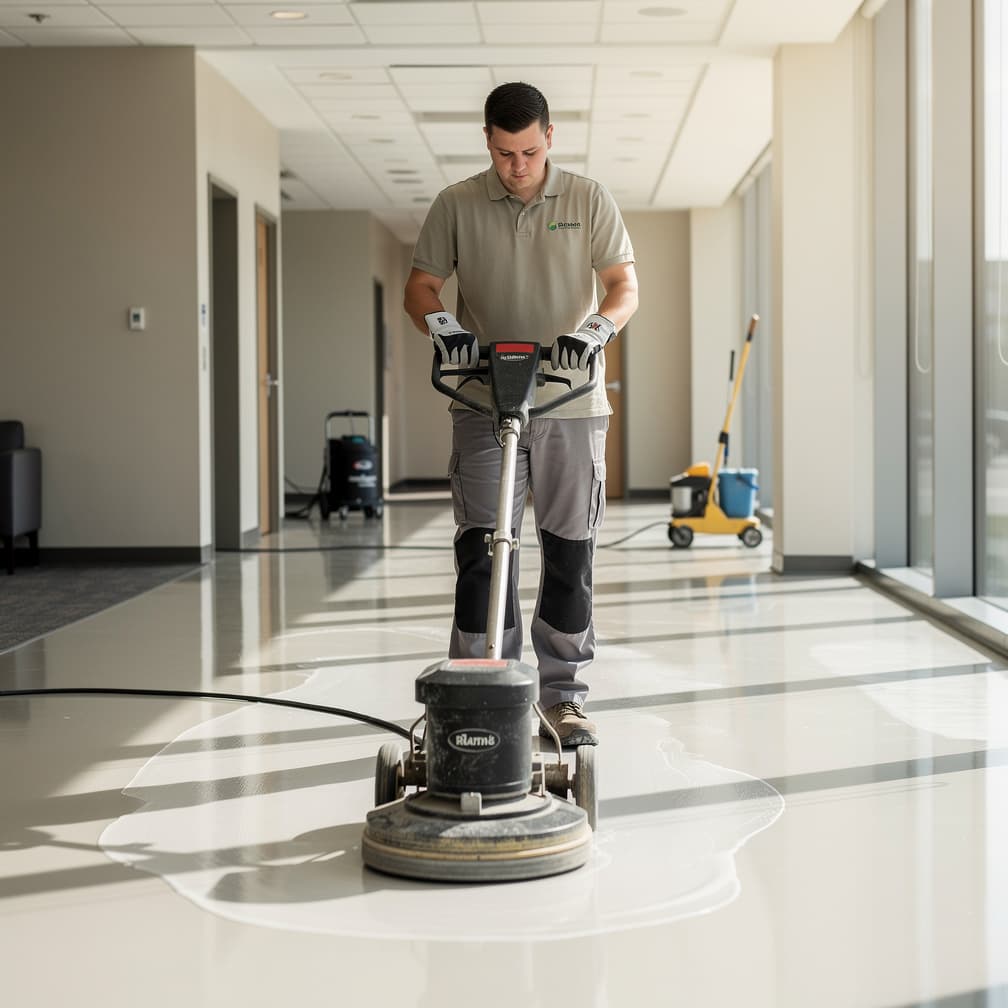
- Freshly waxed floors in Missouri offices, schools, retail stores, and lobbies can raise slip and fall exposure for customer injury and third-party claims.
- Missouri flooding risk can interrupt access to job sites, damage stored equipment, and trigger cleanup-related property coverage needs for hard floor care insurance in Missouri.
- Missouri’s high small-business concentration means many floor waxing crews work in leased spaces where liability coverage and proof of general liability coverage are often part of the lease process.
How Missouri compares with the national baseline
Property crime per 100,000 residents
2,800 vs 2,200 baseline
Property crime in Missouri runs above the national average, at 2,800 vs 2,200 incidents per 100,000 residents.
Blue bar: Missouri. Gray line: national baseline.
How Much Does Floor Waxing Service Insurance Cost in Missouri?
Floor Waxing Service Insurance is a bundle of separate policies, priced separately. The ranges below are typical figures for Missouri for each line, except workers compensation, which is rated per $100 of payroll; a quote prices each one against your own operations.
| Coverage | Typical range | What moves your price |
|---|---|---|
| General Liability Insurance | $80 - $230 per month | Industry and risk classification, annual revenue, number of employees |
| Commercial Property Insurance | $60 - $190 per month | Building value and construction type, roof age and condition, fire protection class |
| Workers Compensation Insurance | $0.75 - $2.74 per $100 of payroll | Employee classification codes, total annual payroll, experience modification rate |
| Business Owners Policy Insurance | $90 - $260 per month | Annual revenue and industry class, building and contents values, square footage and building age |
Prices shown are general estimates, not guaranteed rates or quotes. Your actual premium will depend on the insurer, coverage selected, business details, location, claims history, and other underwriting factors. Learn about our pricing methodology.
What Missouri Requires for Floor Waxing Service Insurance
Non-compliance can result in fines, loss of contracts, and personal liability:
- Workers' compensation is required in Missouri for businesses with 5 or more employees, with exemptions for sole proprietors, partners, farm workers, and domestic workers.
- Missouri businesses often need proof of general liability coverage for commercial leases, so many floor care businesses keep documentation ready before signing or renewing space agreements.
- Commercial auto minimum liability in Missouri is $25,000/$50,000/$25,000, which matters if a floor waxing crew uses vehicles to transport equipment between job sites.
- Missouri policy buyers should confirm coverage with the Missouri Department of Commerce and Insurance and keep policy documents available for landlord, contractor, or client requests.
- Because Missouri has very high tornado and severe storm exposure, buyers often review property coverage and business interruption options when insuring equipment and inventory kept at a shop or storage location.
| Requirement | What Missouri law says |
|---|---|
| Auto liability minimums | $25,000/$50,000/$25,000 (bodily injury per person / per accident / property damage). These floors apply to personal and business vehicles alike; lenders and contracts often require more. |
| Workers compensation | Generally required once you have 5 or more employees. Some roles are exempt, so confirm current thresholds before you hire. |
| Where to verify | Missouri Department of Commerce and Insurance publishes current requirements, consumer guides, and license lookups. |
Get Your Floor Waxing Service Insurance Quote in Missouri
Compare rates from multiple carriers. Free quotes, no obligation.
Common Claims for Floor Waxing Service Businesses in Missouri
A retail store in Kansas City asks a crew to wax floors before opening, and a customer slips on a freshly treated section before cones are fully placed, creating a customer injury claim.
A storm in Springfield damages a storage area where buffers, pads, and wax are kept, leading to equipment damage and a delay in scheduled jobs.
A St. Louis-area crew accidentally scuffs or damages a client’s lobby flooring while moving equipment through a leased building, creating a third-party property damage claim.
Preparing for Your Floor Waxing Service Insurance Quote in Missouri
A list of the Missouri cities, counties, or job-site types you serve, especially occupied buildings like offices, schools, and retail spaces.
Your employee count, because workers' compensation requirements change at 5 or more employees in Missouri.
A basic inventory of equipment, supplies, and any shop or storage location you want covered under property coverage.
Any lease, contract, or client insurance language that asks for proof of liability coverage or specific limits.
Coverage Considerations in Missouri
- General liability insurance is a core starting point for bodily injury, property damage, advertising injury, and third-party claims tied to floor waxing work.
- Commercial property insurance can help protect equipment, inventory, and the shop space from fire risk, theft, storm damage, vandalism, and other building damage.
- Workers' compensation insurance is important for Missouri crews with 5 or more employees because workplace injury, medical costs, lost wages, and rehabilitation can come into play.
- A business owners policy can be useful for small business owners who want bundled coverage that combines liability coverage and property coverage in one package.
What Happens Without Proper Coverage?
Floor waxing work puts your business in direct contact with other people's premises at the exact moment those premises are easiest to slip on, scuff, or damage. That alone makes insurance a buying decision, not a paperwork exercise. If someone steps onto a section that looks dry but still has residue or fresh finish, you may face a bodily injury allegation even when your crew used signs and barriers. If a machine clips a door frame, scratches a baseboard, or leaves chemical damage on an adjacent surface, the property owner will expect your business to respond.
The need gets stronger once you work in occupied commercial spaces. Offices want hallways reopened by morning. Retail tenants care about entrances and customer traffic. Schools and medical buildings often have long corridors, tight scheduling windows, and little tolerance for disruption. In those settings, one claim can cost more than the revenue from several routine service visits. Insurance helps you review how that risk is transferred before a loss happens.
There is also a practical sales reason to carry the right mix. Property managers, janitorial contractors, and facility operators often ask for proof of coverage before they let a vendor start work. If your limits, policy structure, or business description do not line up with the services you actually perform, the job can stall while you fix paperwork. That is especially common when a business starts with basic cleaning accounts and then adds stripping, waxing, and burnishing for larger commercial clients.
Workers compensation insurance matters because this trade involves wet surfaces, chemical handling, and frequent movement of heavy machines and cords through active job sites. If your staffing setup changes, or if duties expand from light cleaning into stripping and finishing, the policy review should keep pace with that operational shift.
Commercial property insurance matters for a different reason. If your machines, pads, or stored supplies are damaged or stolen, you may not be able to complete scheduled work, and missed service windows can put client relationships at risk. Review coverage before you sign the next maintenance contract, especially if you are adding employees, taking on larger buildings, or storing more equipment between jobs.
Recommended Coverage for Floor Waxing Service Businesses
Based on the risks and requirements above, floor waxing service businesses need these coverage types in Missouri:

General Liability
Essential coverage for every business, protect against third-party bodily injury, property damage, and advertising claims.

Commercial Property
Safeguard your business property, equipment, and inventory against damage and loss.

Workers Compensation
Help cover your employees' medical expenses and lost wages for work-related injuries and illnesses.

Business Owners Policy
Bundle property and liability coverage into one convenient, cost-effective policy for small businesses.
Floor Waxing Service Insurance by City in Missouri
Insurance needs and pricing for floor waxing service businesses can vary across Missouri. Find coverage information for your city:
Insurance Tips for Floor Waxing Service Owners
Ask for liability limits that match the buildings you service, because a crew working in busy lobbies and entrances faces a different third party claim profile than one handling small after hours offices.
Review your business description on the application carefully so stripping, waxing, buffing, and floor finishing are all reflected, not buried under a generic cleaning classification that misses how the work is actually performed.
Build your equipment list before requesting quotes, including buffers, burnishers, wet vacs, extension cords, pads, and stored materials, so commercial property coverage can be reviewed against what keeps your schedule moving.
Check how payroll is reported and how employee duties are described, especially if technicians both perform floor care and move heavy equipment, because workers compensation pricing and classification depend on those details.
Compare a business owners policy against separate liability and property policies if you operate from a small office or storage location, but only after confirming the package still fits your actual floor care exposures.
Bring sample service contracts to the quote review so you can line up requested limits, proof of coverage requirements, and any jobsite conditions before a property manager delays the start date.
If you use temporary labor or subcontracted help on larger projects, raise that early in the application process so the policy review reflects who is on site and who is responsible for each part of the work.
FAQ
Frequently Asked Questions About Floor Waxing Service Insurance in Missouri
It usually starts with liability coverage for bodily injury, property damage, advertising injury, and third-party claims, plus optional property coverage for equipment and inventory. Many Missouri floor care businesses also review workers' compensation and a business owners policy.
Crews working in offices, schools, stores, and lobbies often prioritize general liability insurance because freshly waxed floors can create slip and fall exposure. Depending on the operation, property coverage and workers' compensation may also matter.
Requirements vary, but Missouri businesses commonly need to show proof of general liability coverage for commercial leases. Workers' compensation is required when a business has 5 or more employees, unless an exemption applies.
Have your business details ready, including employee count, job-site types, equipment value, and any lease or contract insurance requirements. That helps an insurer quote floor care business insurance in Missouri more accurately.
General liability coverage is the main starting point for those risks, but the exact response depends on the policy and circumstances. Missouri crews often compare limits and endorsements before buying.
Most owners combine general liability, commercial property, and workers compensation, with a business owners policy worth pricing for smaller operations. The mix depends on payroll, equipment, and whether crews work in occupied commercial buildings.
The work creates direct slip hazards and property damage exposure for third parties. When someone walks onto a freshly treated area or a machine damages nearby surfaces, general liability is where the claim conversation starts.
Slip and fall allegations are one of the main reasons this trade carries liability coverage, and the response turns on your policy terms and the facts of the claim. Make sure your operations, signage practices, and occupied job sites are described accurately in the application.
Updated March 31, 2026