







































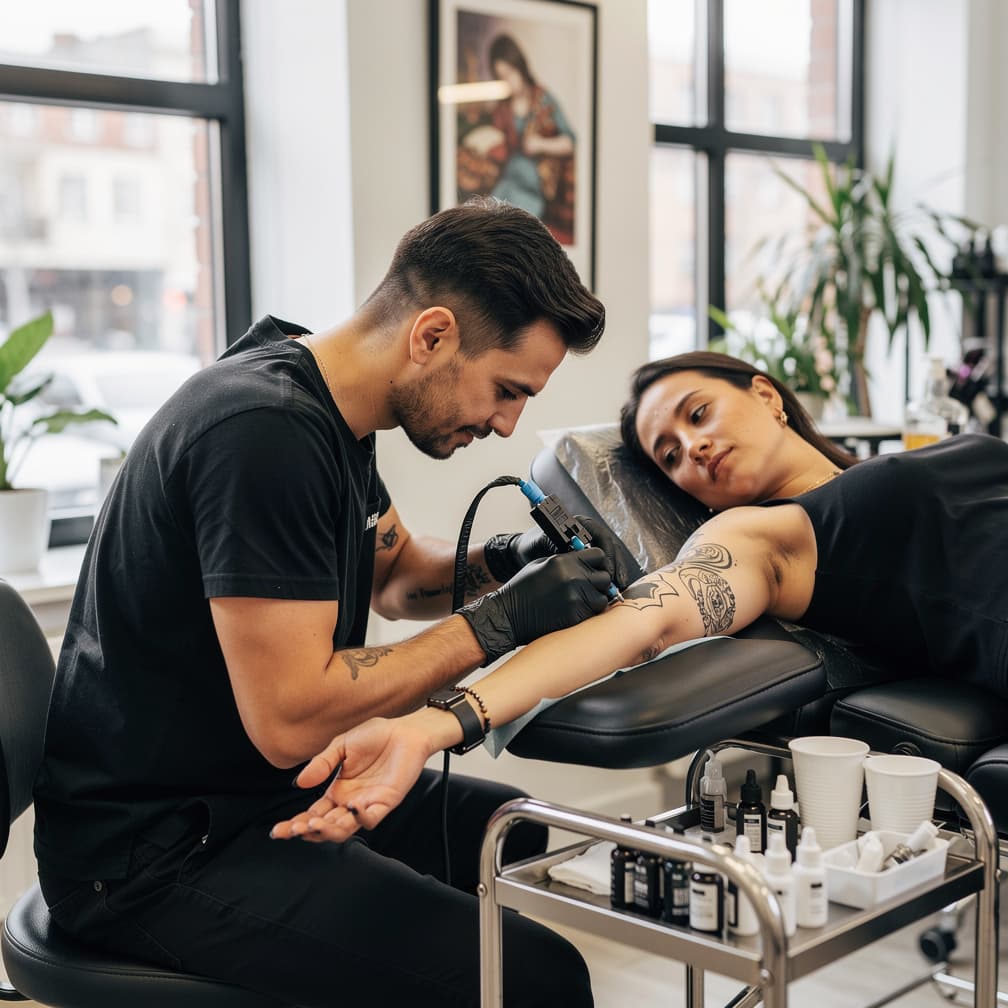

Cost is the first question owners ask and the last one to settle. Professional Liability for body art work can start from $45 a month, and the spread above that bound tracks artist count, years in the chair, and what your consent and aftercare paperwork looks like. Tattoo shop insurance in Independence is priced on those inputs, so gathering them before you shop saves three rounds of revised quotes. Claims history weighs more than most owners expect; one prior infection complaint can follow a shop for years, and pricing shifts by state as well, so a quote in Missouri answers only for Missouri. Limits matter more than the monthly number, because a limit is what stands between a lawsuit and your own account. Have the roster, the gear list, and the lease ready before you start.
What Makes Independence Different
Additional insured wording is the clause that turns your policy into somebody else's defense budget. A landlord in Independence who is named can lean on your limits when a claim touches the building. That is normal in commercial leasing, and it is why the required limit deserves a second read. Per-occurrence and aggregate are two different ceilings, and a lease usually names only the first one. Your aggregate is the whole year's total, so two bad claims can spend what one clause assumed. A shop in Independence with a busy waiting room and a full schedule can reach that ceiling faster. Ask what your aggregate is before you sign, rather than when the second claim shows up. The certificate proves a policy exists; it says nothing at all about what is left inside it.
Local Risk Factors in Independence
A power cut after a storm line moves through can end the day on its own: no autoclave, no machines, no ventilation, no session. A studio in Independence can look untouched and stay closed while the whole block waits on a crew. Then the calendar gets rebuilt by hand, one client and one deposit at a time. Property coverage may respond to physical damage from wind and debris, though a loss of power at the utility rather than at your own building is often treated differently, and sometimes not at all. That distinction deserves a direct question. Ask what a Missouri form says about off-premises power before you need to know.
What Coverage Does a Tattoo Shop in Independence Need?
Professional Liability
A client says the tattoo left them with an infection, or a reaction they blame on your ink, and the argument is about the service itself. That is the ground Professional Liability is written for: allegations that the work performed caused harm. It generally will not reach damage to your own gear or a visitor's fall in the lobby.
Example: Weeks after a session, a client's arm reacts badly and a letter arrives naming the shop and the artist; Professional Liability could respond to the claim and to the defense that follows it.
General Liability
Landlords and convention hosts ask for this one by name, and a lease clause is usually written around it. General Liability typically answers for third-party injury and property damage tied to your premises and operations: the visitor who slips near the restroom, the jacket ruined at the front desk. Claims about the tattoo work itself generally sit elsewhere.
Example: A friend waiting on a client trips over a power cord in an Independence shop and breaks a wrist; general liability limits are what the injury claim then gets measured against.
Commercial Property
Flood typically sits outside this form, and wear on a machine counts as maintenance rather than a claim, so the exclusions deserve a read before anything else. What Commercial Property is generally built for is the sudden loss: fire, storm damage, theft, and vandalism hitting your machines, chairs, cabinets, and ink stock. Settlement tracks the values you put on file.
Example: A break-in overnight clears the bench of machines and power supplies; with serial numbers and current values already on file, a property claim can move toward replacing them quickly.
Business Owners Policy
Buying the property line and the liability line separately is one route; a Business Owners Policy is the other, bundling them into a single purchase that often carries an income provision. For a one-room studio the bundle is usually the shorter conversation. What it commonly leaves out is the claim about the tattoo service itself.
Example: Smoke from a neighboring unit closes an Independence studio for ten days; a business owners policy might address the cleaning bill along with the bookings lost while the doors stay shut.
How Much Does Tattoo Shop Insurance Cost in Independence?
Tattoo Shop Insurance is a bundle of separate policies, priced separately. The ranges below are typical figures for Independence for each line; a quote prices each one against your own operations.
| Coverage | Typical range | What moves your price |
|---|---|---|
| Professional Liability Insurance | $90 - $300 per month | The services you actually perform, annual revenue or billed fees, limit and retention selected |
| General Liability Insurance | $75 - $240 per month | Industry and risk classification, annual revenue, number of employees |
| Commercial Property Insurance | $80 - $270 per month | Building value and construction type, roof age and condition, fire protection class |
| Business Owners Policy Insurance | $100 - $320 per month | Annual revenue and industry class, building and contents values, square footage and building age |
Prices shown are general estimates, not guaranteed rates or quotes. Your actual premium will depend on the insurer, coverage selected, business details, location, claims history, and other underwriting factors. Learn about our pricing methodology.
What Are the Insurance Requirements for a Tattoo Shop in Independence?
Workers' comp is generally required once you have 5 or more employees. Missouri generally requires employers to carry workers' compensation at that point. Common exemptions include sole proprietors, partners, and farm workers. Confirm current thresholds with your state's workers' compensation agency before you hire.
Flood damage is typically excluded from standard policies. Standard commercial property and builders-risk-type policies typically exclude flood damage. Flood exposure varies address by address, so check your premises in FEMA's Flood Map Service Center before deciding; if you sit in a mapped flood zone, a separate policy through the National Flood Insurance Program is the usual starting point.
Where to verify licensing and coverage rules. The Missouri Department of Commerce and Insurance publishes consumer guidance and current insurance requirements for Missouri businesses. When a contract or lease demands specific wording, the Missouri Department of Commerce and Insurance's guidance is the authoritative place to check.
Get Your Tattoo Shop Quote in Independence
Compare rates from multiple carriers. Free quotes, no obligation.
Operating in Independence
- About 71 tattoo shops operate in Jackson County, and a client who cannot get a chair this month simply books the next name on the list.
- Consent forms and aftercare sheets are your record of what was actually said, and a claim raised two years later turns largely on whether you kept them.
- A property manager in Independence can log your studio in a compliance tracking system, and a certificate rejected over a formatting error stalls a renewal as hard as no coverage would.
- Pigment and needle inventory turns over constantly, so an equipment list written the year you opened describes a shop that no longer exists.
How to Buy: Advice for Independence Owners
A certificate of insurance is one inert page until an infection claim or a lobby slip turns it into evidence; before that it works only as a gate. A landlord in Independence can hold your keys behind one, a convention host can hold your table behind one, and another studio can hold your guest spot behind one. Find out who will ask before you buy, because a General Liability policy naming the wrong additional insured is a policy you endorse in a hurry. Ask what your carrier charges to add parties to an Independence policy and how fast the certificate goes out the door. Ask whether a Business Owners Policy handles the same request differently. Then compare quotes from participating carriers through CPK with the service side of that promise in view, and not only the monthly figure.
FAQ
Tattoo Shop Insurance in Independence: FAQ
Landlords ask before you take possession. Convention organizers ask before load-in. Another studio hosting your guest spot can ask before you set up a machine. Each of them may want to be listed as an additional insured, which is an endorsement rather than a favor. Ask what your carrier charges to add a party to an Independence policy and how fast the paperwork moves.
Equipment sitting in your Independence shop is business property, and Commercial Property or the property side of a Business Owners Policy could respond to theft, subject to your deductible and the values on file. Those values matter most: gear listed at what you paid years ago can settle for less than replacing it costs today. Keep serial numbers and photographs current.
A standard commercial property form typically excludes flood, meaning rising water that arrives from outside the building. That exposure gets priced as its own separate decision. Water from a burst supply line inside your wall is usually a different question and may well be covered. The distinction turns on where the water came from, not on how wet your floor got.
Yes, and the arrangement raises a question worth settling early. An independent renter is often not an insured under the shop's policy. If that artist's client sues, your studio still gets named, because your name is on the door and on the sign. Collect a certificate from every renter, require it in the booth agreement, and ask your carrier how it treats guests.
Per-occurrence is the ceiling for one claim. Aggregate is the ceiling for everything in one policy year. A lease usually names the first and says nothing about the second. A studio in Independence with a full waiting room and a full book can see two claims land in the same year, and the aggregate decides whether anything is left behind the second one.
Design complexity rarely drives the claim. Allegations tend to follow healing, reaction to pigment, or aftercare, and those arrive after small work as often as after a full back piece. Professional Liability is generally the line written for claims that the service itself caused harm. Whether you carry it depends on your contracts and your appetite for defending one alone.
Sources
- 1.U.S. Census Bureau, County Business Patterns (2022), Jackson County(Jackson County has about 71 businesses in this trade's category (NAICS group 812199).)
- 2.Missouri Department of Commerce and Insurance(Missouri Department of Commerce and Insurance publishes consumer guidance for insurance buyers.)
- 3.FEMA / FloodSmart(Flood coverage is typically purchased separately; FEMA administers the National Flood Insurance Program.)


