







































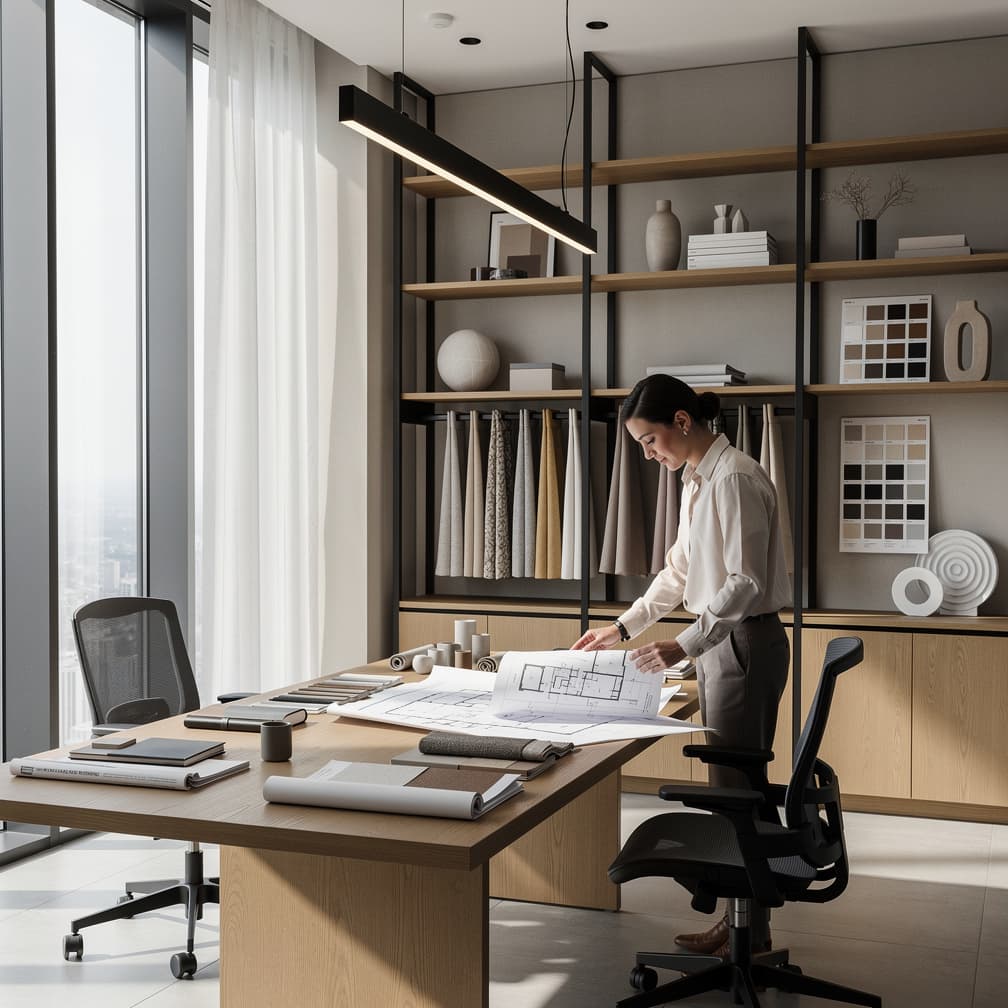

Fire, theft, and a burst pipe in a storage room all end the same way for a design studio: samples gone, finish boards gone, client deposits already spent on items that no longer exist. Interior designer insurance in St. Louis treats that inventory as a real asset rather than clutter, which is exactly how most designers end up underinsuring it. Fabric memos, rugs held for a reveal, a large-format printer, and the machine that keeps renderings moving add up quietly. Commercial Property is the line that speaks to those things, and the limit you pick is the limit you get. Write down what sits in your St. Louis studio before you request a quote, because the number owners guess is usually low. The rest of this page walks through the coverages, the published ranges, and the trade-offs behind them.
What Makes St. Louis Different
Underinsuring the studio is an easy mistake to make and an expensive one to discover. A quote asks the value of your contents, you give a round number, and that number becomes your ceiling. Fabric memos, rugs held for a reveal, sample libraries, and the plotter add up past any mental estimate. Storage often sits outside the studio, and a quote that assumes one address may not follow inventory to a second. Ask what a policy assumes about property that moves between your St. Louis space and a client's. Where few nearby vendors can replace a plotter quickly, the gap between your ceiling and reality lasts months. Count the contents once, in writing, and keep the list current for as long as the St. Louis practice runs.
Local Risk Factors in St. Louis
Before storm season starts, decide what happens to work in progress when the power goes out for three days. Renderings sit on one machine for most design practices, and a surge that takes the machine takes the schedule with it. Backups are free, and the alternative is explaining a lost drawing set to a St. Louis city client who does not care why. Equipment breakdown terms may respond when a power event damages the hardware itself, which is different from what a storm does to a roof. Ask what your Missouri quote does with electrical damage before you assume it sits inside the property line.
What Coverage Does an Interior Designer in St. Louis Need?
Professional Liability
A client who says your layout, your product specification, or your advice created extra cost is making a claim about judgment, and this is the line generally built for that argument. It can help cover defense and settlement when negligence or an omission is alleged, whether or not the allegation turns out to be fair. Physical damage and injuries sit elsewhere.
Example: You specify a veneer that delaminates in a hot install, the client bills you for the rework, and professional liability may engage once the accusation lands, fairness aside.
General Liability
Landlords, building owners, and commercial clients ask for this one by name before your installers reach the freight elevator. It typically responds to third-party injury and to damage you cause in someone else's space, and it is the line certificates usually reference. Claims about your professional judgment fall outside it, which is why designers rarely carry it alone.
Example: A client catches a foot on a rolled rug during a consultation in your St. Louis studio; the injury claim that follows is what this line is intended to answer.
Commercial Property
Samples, boards, rugs held for a reveal, the plotter, and the machine your renderings live on are the assets designers forget to count. This line is priced off the contents figure you declare, and it might help cover fire, theft, vandalism, storm damage, and equipment breakdown. Rising water is typically excluded and gets bought back separately.
Example: A pipe above a leased studio lets go over a long weekend and a whole sample library absorbs the water; coverage can respond up to the limit you declared.
Business Owners Policy
Bundling is the point here: a package that folds the liability and property pieces together for practices that fit a standard mold, often with interruption terms attached. It can be a sensible base for a small studio in St. Louis. The professional exposure, which is the claim designers actually face, usually sits outside the package and needs its own line.
Example: Fire closes your studio for six weeks and both the ruined contents and the income you lose while it dries out may fall inside a single package, depending on the form.
How Much Does Interior Designer Insurance Cost in St. Louis?
Interior Designer Insurance is a bundle of separate policies, priced separately. The ranges below are typical figures for St. Louis for each line; a quote prices each one against your own operations.
| Coverage | Typical range | What moves your price |
|---|---|---|
| Professional Liability Insurance | $85 - $270 per month | The services you actually perform, annual revenue or billed fees, limit and retention selected |
| General Liability Insurance | $50 - $130 per month | Industry and risk classification, annual revenue, number of employees |
| Commercial Property Insurance | $50 - $170 per month | Building value and construction type, roof age and condition, fire protection class |
| Business Owners Policy Insurance | $70 - $180 per month | Annual revenue and industry class, building and contents values, square footage and building age |
Prices shown are general estimates, not guaranteed rates or quotes. Your actual premium will depend on the insurer, coverage selected, business details, location, claims history, and other underwriting factors. Learn about our pricing methodology.
What Are the Insurance Requirements for an Interior Designer in St. Louis?
Workers' comp is generally required once you have 5 or more employees. Missouri generally requires employers to carry workers' compensation at that point. Common exemptions include sole proprietors, partners, and farm workers. Confirm current thresholds with your state's workers' compensation agency before you hire.
Flood damage is typically excluded from standard policies. Standard commercial property and builders-risk-type policies typically exclude flood damage. Flood exposure varies address by address, so check your premises in FEMA's Flood Map Service Center before deciding; if you sit in a mapped flood zone, a separate policy through the National Flood Insurance Program is the usual starting point.
Where to verify licensing and coverage rules. The Missouri Department of Commerce and Insurance publishes consumer guidance and current insurance requirements for Missouri businesses. When a contract or lease demands specific wording, the Missouri Department of Commerce and Insurance's guidance is the authoritative place to check.
Get Your Interior Designer Quote in St. Louis
Compare rates from multiple carriers. Free quotes, no obligation.
Operating in St. Louis
- Subcontracted millwork and painting crews carry their own certificates, and diarying their expiration dates is cheaper than discovering a lapse when a client's floor is already damaged.
- Design fees rise with project size, and so does the number in any dispute, so a limit set when you were doing single rooms in St. Louis stops matching the work within a year.
- Storm weeks stall deliveries without damaging anything, and the rushed install that follows is where the scratch, the misplacement, and the argument actually come from.
- Trade discounts mean furnishings pass through your business, and property you are holding for a St. Louis client is property somebody expects you to account for after a theft.
How to Buy: Advice for St. Louis Owners
Inventory the St. Louis studio with a camera before you shop, because a claim is a documentation exercise pretending to be a conversation. Photograph the sample library, the plotter, the boards, the rugs held for a reveal, and anything stored off site. Commercial Property is priced off the number you declare, so declaring a comfortable guess buys you a comfortable guess. Ask whether property that travels between your space and a client's is contemplated at all. Business Owners Policy can fold the studio contents in alongside the liability piece for practices that qualify. The Missouri Department of Commerce and Insurance publishes consumer guidance on documenting a property loss. Compare what participating carriers offer through CPK once the list is real.
FAQ
Interior Designer Insurance in St. Louis: FAQ
Residential work still puts you inside somebody's finished house with ladders, installers, and freight. A homeowner can ask for a certificate before your first delivery, and some buildings will not let a crate past the lobby without one. The exposure that surprises residential designers is not the scratch on the floor. It is the client who decides months later that your specification caused a problem, and that argument is what Professional Liability is meant to answer.
One answers physical harm, the other answers judgment. If a client trips over a sample case in your studio, or an installer gouges a wall, General Liability is the line that might respond. If a client says your layout was wrong, your product choice failed, or your advice created extra cost, that is a professional claim and a different policy. Design practices tend to need both, because the two claims arrive from the same project through different doors.
Yes, and they routinely do. The insurance exhibit attached to a contract names a limit, and it is usually written for the largest vendor on the job rather than the designer. You can meet the number or lose the award; negotiating it marks you as difficult before work starts. Price the higher limit before you bid on a St. Louis project, so the requirement is arithmetic rather than a scramble on a deadline.
Expect questions about revenue, the value of what sits in your studio, your claims history, and the limits your contracts demand. Expect questions about scope too: whether you direct trades, oversee installation, specify structural changes, or hold client funds for furnishings. Vague answers get priced as uncertainty, which costs money. Write one honest paragraph describing the practice and hand the identical paragraph to every carrier so the quotes compare cleanly.
Usually not the shipment itself. A vendor's mistake is a vendor's contract problem, and your policy is not a substitute for their liability. What can get insurable is the claim that follows: the client argues you should have caught the error, verified the order, or managed the timeline, and now a St. Louis project cost more. That accusation aims at your professional judgment, and Professional Liability is generally the line built for it.
An additional insured is a party added to your policy so that your coverage could respond when they get pulled into a claim arising from your work. Landlords, building owners, and general contractors ask for it because it moves the first line of defense onto your paper instead of theirs. The wording matters more than the label. Ask whether the endorsement reaches your completed work, since a designer's complaints usually arrive after the room is finished.
Sources
- 1.Missouri Department of Commerce and Insurance(Missouri Department of Commerce and Insurance publishes consumer guidance for insurance buyers.)
- 2.FEMA / FloodSmart(Flood coverage is typically purchased separately; FEMA administers the National Flood Insurance Program.)


