







































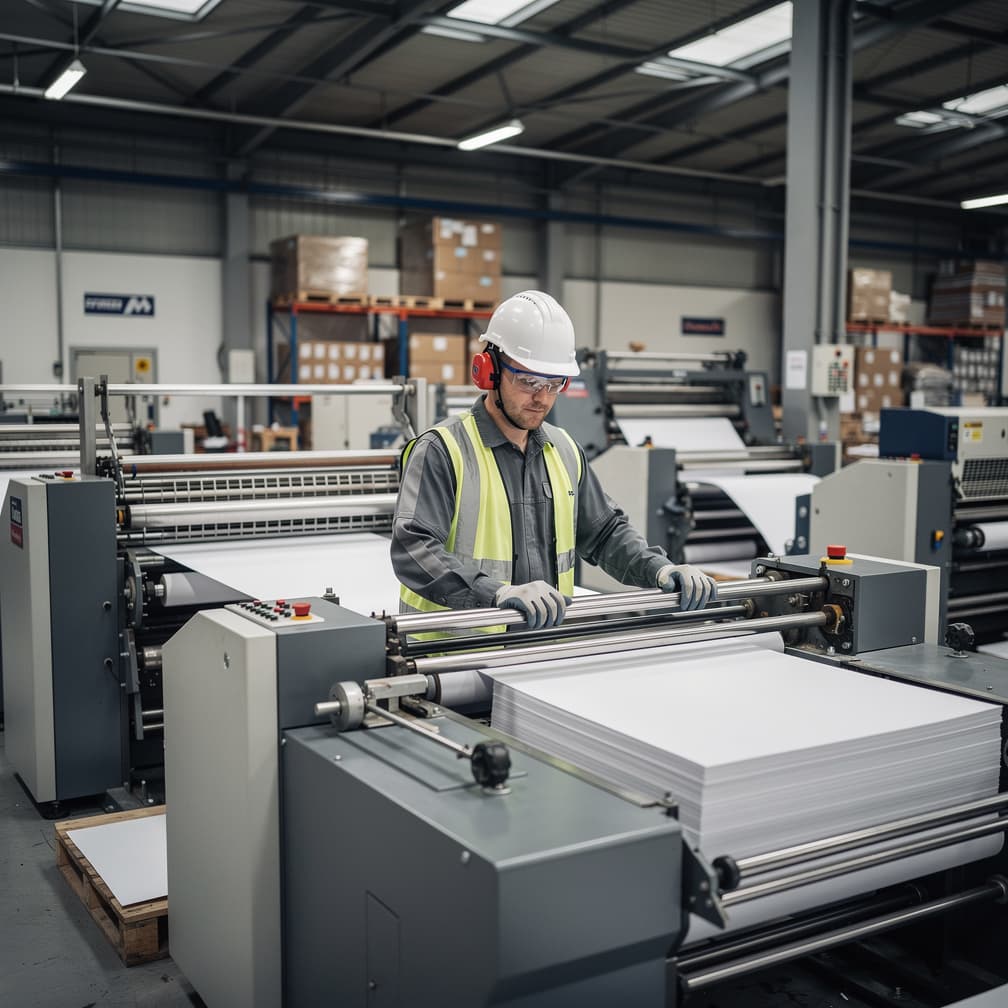

General Liability for a small printing company can start from $25 a month, which is less than the stock you waste on one bad makeready. Low price is not the point. The point is what the number gets built from: payroll, revenue, claims history, and how much replaceable equipment sits on the floor. Printing company insurance in St. Louis gets priced from those inputs, so two shops of similar size in St. Louis can be quoted very differently. If a quote looks thin, check what the limits actually are and whether the deductible is one you could pay during the week a press is down. The inexpensive policy and the right policy are not automatically the same file. Look at several before you sign one.
What Makes St. Louis Different
Word of mouth does the selling where St. Louis city holds about 9,200 businesses in total. A single dispute over a botched run travels through a client list that size in a way it never would in a metro. So the coverage question here is partly a reputation question: how quickly a third-party claim gets handled, and by whom. A small market also thins your options after a loss, because the shops that could take your overflow are few and already busy. Downtime, rather than the damaged press, is the expensive half of a claim in that setting. Ask about lost income terms with the same seriousness you bring to equipment values. Then compare a couple of quotes on identical limits and read what each one excludes. The shop down the road is not going to bail you out.
Local Risk Factors in St. Louis
Power dropping for six seconds is enough to stop a press mid-run and scrap every sheet already through it. Severe storms do that long before anything visible happens to the building. Then comes the surge that takes out a controller board, which is a repair question rather than a weather question, and property forms often treat internal electrical damage differently from a lightning strike. Ask which one your quote assumes, and ask about equipment breakdown by name rather than hoping it is in there. Surge protection on the press and a documented maintenance record are worth more than either answer. Keep both current in your St. Louis shop, and confirm the wording with a carrier quoting in Missouri before a storm makes it urgent.
What Coverage Does a Printing Company in St. Louis Need?
General Liability
Landlords and corporate accounts ask for this one by name before a lease is signed or a purchase order clears. General Liability generally applies to third-party injury and property damage: a customer who falls at your counter, or a panel your crew drops in somebody else's lobby. It typically excludes damage to your own work, so a rejected run is not a liability claim.
Example: A customer picks up a boxed order, catches a heel on a pallet strap by the counter, and breaks a wrist. The medical bills and any suit that follows are what this line is meant to take on.
Commercial Property
Fire, a burst line, or a storm that opens the roof can put presses, finishing machines, paper stock, and finished jobs at risk in one event. Commercial Property is generally the line for what sits inside your building, valued at replacement cost or actual cash value depending on the form. Flood and mechanical breakdown from an internal fault usually sit outside it.
Example: A sprinkler head lets go over the racks overnight. Skids of stock and a week of finished jobs are pulp by morning, and a contents claim may follow for the paper and the completed work alike.
Workers Compensation
Employee injuries do not belong to your liability policy, which catches plenty of owners off guard. Workers' Compensation typically responds to medical costs and lost wages when a bindery hand catches a finger or an operator hurts a back lifting stock. Rating runs off payroll, so the split between pressroom and office hours matters. Which employers must carry it is a question that changes at every state line.
Example: A helper reaches into a folder to clear a jam without locking it out and loses a fingertip. Treatment, the follow-up surgery, and the weeks away from the floor are what this line generally answers for.
Tools & Equipment (Inland Marine)
Portable gear is the blind spot: a laptop holding client files, a plate maker, hand tools, and the finishing equipment that rides along to an install. Inland Marine might apply to property in transit or away from your premises, where a property form generally stops at the walls. Scheduled items and blanket limits behave differently, so ask which one a quote assumes.
Example: Your crew loads a wide-format printer and a tool case for a lobby graphics job in St. Louis. The truck gets broken into overnight, and the missing gear could fall to this line rather than the shop's property policy.
How Much Does Printing Company Insurance Cost in St. Louis?
Printing Company Insurance is a bundle of separate policies, priced separately. The ranges below are typical figures for St. Louis for each line, except workers compensation, which is rated per $100 of payroll; a quote prices each one against your own operations.
| Coverage | Typical range | What moves your price |
|---|---|---|
| General Liability Insurance | $90 - $250 per month | Industry and risk classification, annual revenue, number of employees |
| Commercial Property Insurance | $220 - $725 per month | Building value and construction type, roof age and condition, fire protection class |
| Workers Compensation Insurance | $0.75 - $2.74 per $100 of payroll | Employee classification codes, total annual payroll, experience modification rate |
| Inland Marine Insurance | $40 - $130 per month | Total insured value of the scheduled property, type and age of the equipment, where it is stored and how far it travels |
Prices shown are general estimates, not guaranteed rates or quotes. Your actual premium will depend on the insurer, coverage selected, business details, location, claims history, and other underwriting factors. Learn about our pricing methodology.
What Are the Insurance Requirements for a Printing Company in St. Louis?
Workers' comp is generally required once you have 5 or more employees. Missouri generally requires employers to carry workers' compensation at that point. Common exemptions include sole proprietors, partners, and farm workers. Confirm current thresholds with your state's workers' compensation agency before you hire.
Flood damage is typically excluded from standard policies. Standard commercial property and builders-risk-type policies typically exclude flood damage. Flood exposure varies address by address, so check your premises in FEMA's Flood Map Service Center before deciding; if you sit in a mapped flood zone, a separate policy through the National Flood Insurance Program is the usual starting point.
Where to verify licensing and coverage rules. The Missouri Department of Commerce and Insurance publishes consumer guidance and current insurance requirements for Missouri businesses. When a contract or lease demands specific wording, the Missouri Department of Commerce and Insurance's guidance is the authoritative place to check.
Get Your Printing Company Quote in St. Louis
Compare rates from multiple carriers. Free quotes, no obligation.
Operating in St. Louis
- Finished jobs sit on racks for days waiting on pickup, and until a customer collects them, that work is your property and your loss if a pipe lets go over your St. Louis floor.
- Clients who order long mailing runs route the job through procurement, and procurement will not release a purchase order until the certificate wording matches its template exactly.
- The guillotine cutter is the machine that sends people to an emergency room, and one hand injury can move your payroll rating in Missouri for years after the bandages come off.
- Rush work stacks people, pallet jacks, and skids into the same aisle at the same hour, and that hour is when most floor injuries in a print shop happen.
How to Buy: Advice for St. Louis Owners
The loss that closes a print shop is rarely the slip claim at the counter. It is the week the main press is down and every deadline moves at once. Ask each quote what it contemplates for lost income and rented equipment, and where the waiting period begins. Commercial Property is usually where that conversation lives, and the answer varies more between quotes than the price does. Inland Marine is the separate line that might follow gear off the premises to a client site or a show floor. Bring an equipment list, replacement values, and a realistic figure for one lost day of production in St. Louis. Check the Missouri Department of Commerce and Insurance's guidance before deciding how much of that risk to keep on your own books. Then put the same limits in front of participating carriers through CPK and read what comes back.
FAQ
Printing Company Insurance in St. Louis: FAQ
Mechanical breakdown is a common gap. Property forms generally respond to fire, water, and similar sudden causes, not to a machine failing from wear or an internal fault. Equipment breakdown is usually a separate item you have to ask about by name. Check whether it appears on the quote for your St. Louis shop at all, and what it says about income while parts are in transit.
It attaches the client's name to your coverage for claims arising out of your work, so they can be defended under your policy rather than their own. Large accounts ask for it as a matter of routine. Some carriers issue a blanket endorsement that satisfies most requests while others handle each one separately, and that difference shows up in cost and in paperwork hours.
That is usually the point of Inland Marine, which may apply to portable property away from your premises or in transit. Commercial Property generally stops at your own walls. List the gear with model and serial numbers so a claim does not become an argument about what you owned. Scheduled items and blanket limits behave differently, so ask which one you have.
Standard property policies typically exclude flood, and it is priced separately through the federal program. Paper is close to the worst possible loss in that scenario, since soaked stock and finished jobs cannot be dried and run again. FEMA maps drive flood pricing and availability. If your St. Louis building sits low or opens onto a dock at grade, ask before the season rather than after.
A per-occurrence limit is the most a policy might pay for a single claim. The aggregate is the ceiling for the entire policy term. A St. Louis shop with a bad claim year can exhaust the aggregate with months left before renewal, which leaves everything after that exposed. Ask what happens when the aggregate runs out and what restoring it would cost.
That is a third-party injury claim, and General Liability is the line that typically responds to the medical bills and any suit that follows. Ink, dust, and wet shoes make the floor near a counter a real exposure rather than a theoretical one. Write incident notes and take photos the same day. Claims filed months later get decided by whatever record exists.
Sources
- 1.U.S. Census Bureau, County Business Patterns (2022), St. Louis city(St. Louis city has about 9,200 business establishments.)
- 2.Missouri Department of Commerce and Insurance(Missouri Department of Commerce and Insurance publishes consumer guidance for insurance buyers.)
- 3.FEMA / FloodSmart(Flood coverage is typically purchased separately; FEMA administers the National Flood Insurance Program.)


