







































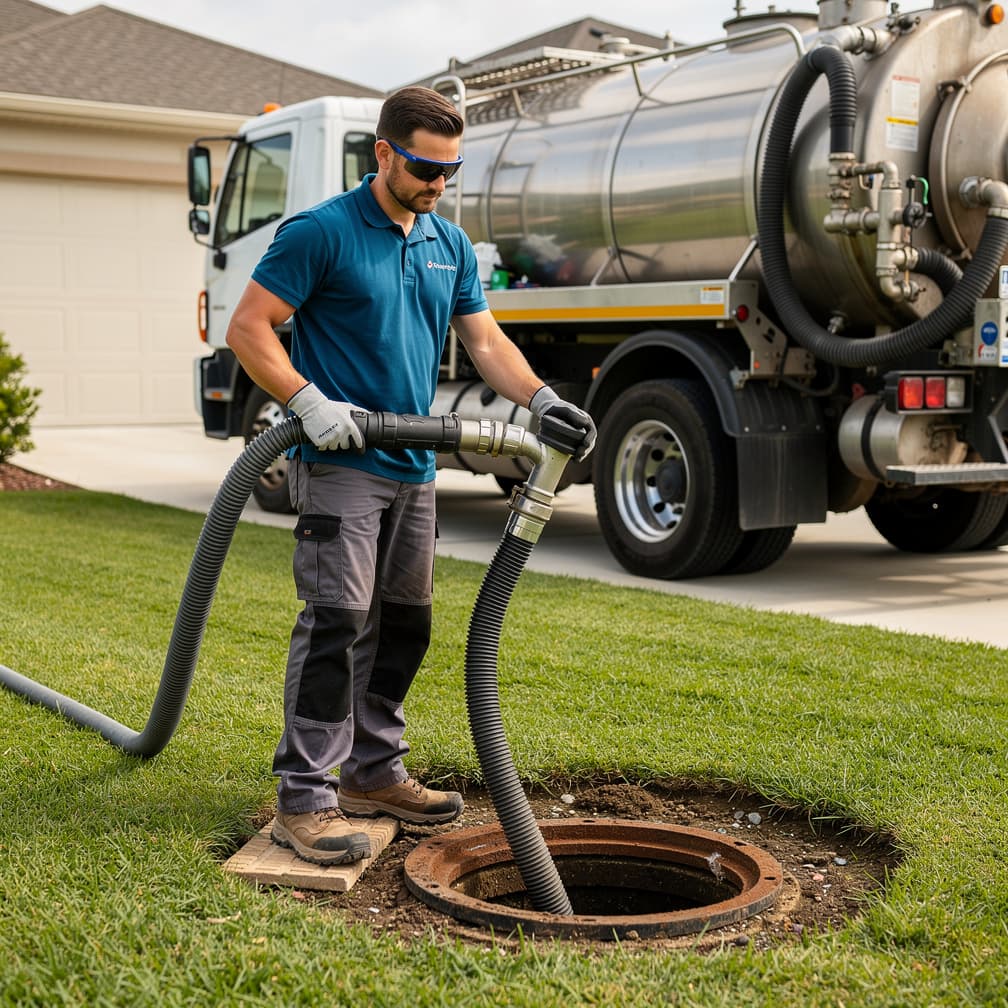

Two septic operations on the same street can pay very different premiums for the same nominal limits. The difference is usually payroll classification, driving records, the limits on file, and how much of the work involves opening ground. Septic service insurance in St. Louis rewards accurate answers: understate the digging, and the policy you bought may not be the policy you needed when the claim lands. Deductibles are the other quiet lever, and they come off your side of the loss. A low monthly figure with a high retention is a financing decision dressed up as a savings decision. Comparing quotes from participating carriers in Missouri only works when every quote answers the same questions the same way. Line the answers up first.
What Makes St. Louis Different
A single institutional client can carry a small septic operation, and it will also dictate the policy. A school district, a rural hospital, or a co-op in St. Louis city hands you the same exhibit a large contractor gets. The requirements do not scale down because your operation is one truck and two people. That is the trap of a thin market: the one big account sets your limits for everything else you do. You end up holding limits your residential route will never need, funded by a contract you cannot afford to lose. Losing it because a certificate was late is the worst version of that story. Ask the client for their insurance exhibit before you bid on anything in St. Louis, not after they accept. The bid should include what the paperwork costs you.
Local Risk Factors in St. Louis
Tornado and severe storm risk in Missouri hits a septic business in the yard, where the trucks and the spare pumps sit overnight. A shop roof gone is a bad week; a vacuum unit crushed under it is a canceled season, because a replacement is not something you pick up locally. Hail and wind on parked vehicles are usually comprehensive claims on a Commercial Auto policy rather than collision ones, a distinction owners tend to learn while filing. Severe storms also stop work outright, and stopped work still costs payroll. Nothing in a standard policy makes up for the days themselves unless you have specifically bought something that does. Ask what your policy says about a truck damaged while parked at your own yard in St. Louis. The answer is neither obvious nor uniform.
What Coverage Does a Septic Service in St. Louis Need?
General Liability
Commercial clients demand proof of it before a truck reaches the lot, and it is the line that generally answers when your work damages someone else's property or hurts someone who does not work for you. Cracked driveways, rutted lawns, a visitor going down over a hose: those are the claims. Employee injuries and damage to your own pumps sit elsewhere.
Example: A hose crosses the drive, a delivery driver catches a foot on it, and the emergency room bill arrives with a lawyer's letter; General Liability may take the claim and the defense costs from there.
Commercial Auto
A vacuum truck is not a car, and a personal auto policy generally will not treat it as one. This line is meant for the vehicles you work out of: liability to other drivers, collision, and comprehensive damage such as hail or theft. Waste in the tank and equipment on a trailer can be treated differently, so ask how each gets handled.
Example: A loaded truck rolls a stop sign on the way to a disposal site and clips a sedan; Commercial Auto is typically what stands behind the other driver's repairs and injuries.
Workers Compensation
Lifting lids, hauling hose, and working beside an open tank is how septic crews get hurt, and this is the line built for those injuries. Medical costs and lost wages for an employee typically run through it, rated per hundred dollars of payroll. Whether owners must be included varies by state, and the Missouri Department of Commerce and Insurance publishes the current requirements.
Example: A helper's back gives out lifting a concrete lid on a routine pump-out, and the treatment plus the weeks off work is what Workers Compensation is generally there to absorb.
Tools & Equipment (Inland Marine)
Property riding in a truck is rarely treated the way property in a building is, and that gap is what this line fills. Pumps, hoses, reels, jetters, cameras, and locators moving between your yard and a job can be scheduled here against theft and sudden damage. Wear, rust, and mechanical breakdown typically sit outside it.
Example: A truck gets broken into overnight and the locator and camera are gone by morning; Inland Marine can be what puts the replacements in your hands in St. Louis instead of on your credit card.
How Much Does Septic Service Insurance Cost in St. Louis?
Septic Service Insurance is a bundle of separate policies, priced separately. The ranges below are typical figures for St. Louis for each line, except workers compensation, which is rated per $100 of payroll; a quote prices each one against your own operations.
| Coverage | Typical range | What moves your price |
|---|---|---|
| General Liability Insurance | $210 - $725 per month | Industry and risk classification, annual revenue, number of employees |
| Commercial Auto Insurance | $625 - $1,700 per month | Fleet size and vehicle types, driver records and experience, coverage limits and deductibles |
| Workers Compensation Insurance | $0.75 - $2.74 per $100 of payroll | Employee classification codes, total annual payroll, experience modification rate |
| Inland Marine Insurance | $75 - $290 per month | Total insured value of the scheduled property, type and age of the equipment, where it is stored and how far it travels |
Prices shown are general estimates, not guaranteed rates or quotes. Your actual premium will depend on the insurer, coverage selected, business details, location, claims history, and other underwriting factors. Learn about our pricing methodology.
What Are the Insurance Requirements for a Septic Service in St. Louis?
Workers' comp is generally required once you have 5 or more employees. Missouri generally requires employers to carry workers' compensation at that point. Common exemptions include sole proprietors, partners, and farm workers. Confirm current thresholds with your state's workers' compensation agency before you hire.
State auto liability minimums apply to business vehicles. Missouri's minimum auto liability limits are $25,000/$50,000/$25,000 (bodily injury per person / per accident / property damage). Contracts and lenders often require more than the state floor.
Where to verify licensing and coverage rules. The Missouri Department of Commerce and Insurance publishes consumer guidance and current insurance requirements for Missouri businesses. When a contract or lease demands specific wording, the Missouri Department of Commerce and Insurance's guidance is the authoritative place to check.
Get Your Septic Service Quote in St. Louis
Compare rates from multiple carriers. Free quotes, no obligation.
Operating in St. Louis
- A hose run across a driveway or a public sidewalk is a trip hazard you created, and a visitor who goes down over it becomes a third-party claim against your operation.
- Waste in the tank makes the truck a rolling exposure after the job as much as during it, and a collision on the way to a disposal site in St. Louis city pulls the load into the claim.
- Locators, cameras, and jetters cost more than the truck's tires and sit in an unattended vehicle overnight, which is exactly the profile a thief works through first.
- Drain field work opens ground, and buried utilities, irrigation lines, and unmarked pipes turn excavation into a different insurance conversation from lifting a lid and running a hose.
How to Buy: Advice for St. Louis Owners
Start with the loss that would actually close your doors, then buy backward from it. For most septic operations that is the vacuum truck: wrecked, and the week's schedule goes with it. Commercial Auto is the line to get right first, and physical damage on the truck is the part owners drop to save money. The second loss to price is the driveway, lawn, and buried-line damage that comes with access, which General Liability is usually the home for. Write down what each of those events would cost you in a bad month, and use that number to pick limits. Check the Missouri Department of Commerce and Insurance's guidance before deciding how much of the risk you keep through a deductible. Then compare quotes from participating carriers in St. Louis on limits first and premium second.
FAQ
Septic Service Insurance in St. Louis: FAQ
It proves a policy existed on the day the certificate was issued, and very little more. It is not a contract, it does not amend the policy, and it cannot grant wording the carrier has never endorsed. A client asking to be named as additional insured needs a real endorsement behind that line, so ask your carrier for the form number rather than trusting the certificate to carry it.
Commercial clients do: property managers, restaurant groups, campground operators, and general contractors, along with permit offices in many jurisdictions. Residential customers rarely ask at all. That is why a policy tends to get sized by the strictest account rather than the average one. If a facility in St. Louis wants you on site next week, the certificate request usually arrives before the scope of work does.
Payroll, vehicles, and claims history, roughly in that order of surprise. Workers Compensation prices per hundred dollars of payroll, so how your crew gets classified moves the bill. The vacuum truck is usually the largest single line item, because it is heavy, costly to repair, and on the road all day. Digging prices higher than pumping alone, since opening ground adds ways for a job to go wrong. Two outfits on the same street in St. Louis can land far apart for those reasons.
That is generally what Inland Marine is for: property that moves between your yard and a customer's site. It typically follows a scheduled list, so a pump nobody wrote down can be a pump nobody pays for. Theft from a locked truck, damage in transit, and equipment dropped at a job are the usual triggers. Wear, rust, and mechanical breakdown are usually a separate conversation.
Depends entirely on the wording, and this is the question worth asking twice. General Liability forms treat a release of waste during your work in very different ways, and some narrow it sharply or leave it out. Certain carriers offer an endorsement for it; others decline the risk altogether. Get the exclusion pages from each quote you gather in St. Louis and read what happens between the tank and the truck.
Rarely, and a vacuum truck is the clearest example of why. Personal policies are written for personal use, and a commercial vehicle hauling waste for pay sits outside what they were built to handle. Commercial Auto exists for that use. A denied claim after a serious collision is an expensive way to learn the difference, so list every vehicle you actually work out of.
Sources
- 1.Missouri Department of Commerce and Insurance(Missouri Department of Commerce and Insurance publishes consumer guidance for insurance buyers.)


