







































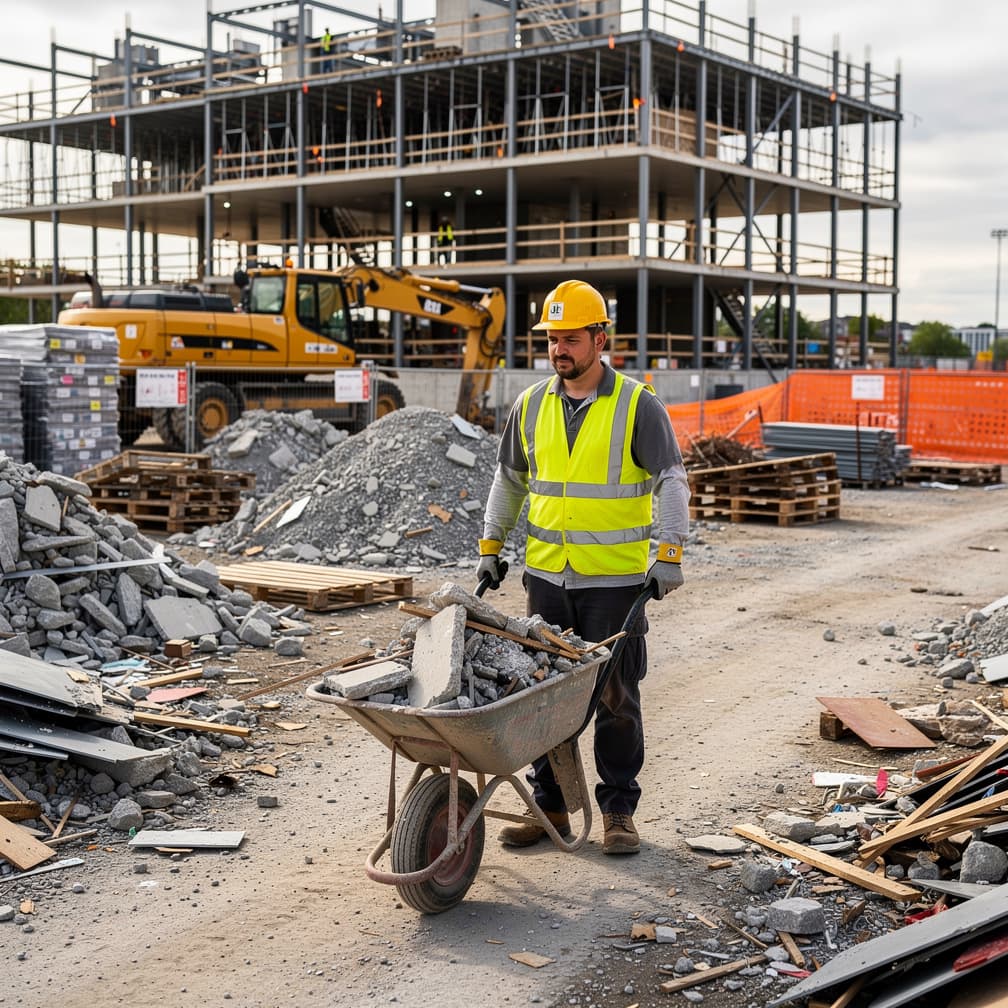

As a debris removal business in Billings, your trucks can log more miles than your loaders log hours, because the nearest disposal facility may sit well outside Yellowstone County. Distance reshapes the risk: the loss most likely to end your year happens on the road, with a stranger's vehicle and a police report, rather than in a customer's yard. Debris removal insurance in Billings priced for a local hauler and priced for a long run are two different quotes on one business. Tell every participating carrier your real radius, because an understated one gets corrected at the worst possible moment. Fuel and tipping fees already eat the margin on a distant load. A denied auto claim eats everything left, and that is the comparison worth making before you bind.
What Makes Billings Different
Handshake jobs dominate thin markets, and a handshake has no insurance exhibit for anyone to read. That sounds easier until a homeowner claims your crew hauled off something that was not debris. Without a signed scope, the argument is your word against theirs about what the pile held. Write the scope anyway, even for a one-day cleanout, and have the customer initial the photographs. A homeowner in Billings can refuse to sign, and that refusal tells you something useful. Theft and mistaken-disposal allegations are common in this trade, and they are hard to disprove late. Documentation is not coverage, but it decides whether coverage ever has to answer at all. Bring your paperwork habits to participating carriers in Montana; controls influence how a submission gets read.
Local Risk Factors in Billings
Wildfire cleanup is a specialty that looks like ordinary hauling until you read the rules. Burned material can carry contaminants, ash handling has its own requirements, and a claim alleging improper disposal after a fire cleanup arrives long after the truck left. General Liability may respond to a third-party disposal allegation depending on the exclusions, and the pollution language is exactly where those claims live, so read it rather than assume it. Smoke also closes roads and stalls work in Yellowstone County for reasons no schedule anticipated. Ask participating carriers in Montana whether the work you are being asked to do is contemplated by the policy you already hold.
What Coverage Does a Debris Removal in Billings Need?
General Liability
Property managers, general contractors, and municipal clerks ask for this one by name before a truck reaches the site. It can help cover third-party injury and property damage arising out of your work: a cracked driveway, a neighbor's fence, a slip at a residential cleanout. Damage to your own loader and injuries to your own crew sit outside it.
Example: Your crew drags a loaded container across a homeowner's driveway in Billings and cracks the apron in three places. The repair estimate lands a week later, and the policy may take the claim subject to your deductible.
Commercial Auto
Miles are the exposure here. Trucks and trailers running between a demolition job and a disposal facility sit outside what a liability form addresses, and this line is meant to answer for the collision, the injuries, and the damage your vehicle does to others. Rating follows units, gross weight, radius, and driver records. Cargo riding on the trailer usually raises separate questions.
Example: A loaded trailer clips a parked sedan while backing out of a tight alley, and the owner's repair estimate runs to a door and a quarter panel. That claim would typically be handled here.
Workers Compensation
A helper who slips on wet plywood at a cleanout needs medical care, and this is the line built to answer for it. It can pay for treatment and lost wages for injured employees, and it generally limits your exposure to the injury lawsuit that might otherwise follow. Rating runs on payroll by job class, so a driver, a laborer, and an operator price differently. Requirements vary by state.
Example: An operator wrenches a shoulder forcing a frozen pile onto a trailer and misses six weeks of work. Medical bills and a share of the lost wages might be picked up under this line, subject to the state's rules.
Commercial Umbrella
Primary limits are finite, and a loaded truck meeting a passenger car is where a debris hauler finds the edge of them. This line sits above General Liability and Commercial Auto, adding limit once an underlying policy is exhausted. Municipal and demolition contracts frequently demand figures a small program cannot reach alone. It follows the underlying forms, so their exclusions usually carry upward.
Example: An intersection collision with your grapple truck injures two people, and the demands exceed what the vehicle policy holds. The excess layer above it could pick up what remains, depending on how the tower was built.
How Much Does Debris Removal Insurance Cost in Billings?
Debris Removal Insurance is a bundle of separate policies, priced separately. The ranges below are typical figures for Billings for each line, except workers compensation, which is rated per $100 of payroll; a quote prices each one against your own operations.
| Coverage | Typical range | What moves your price |
|---|---|---|
| General Liability Insurance | $220 - $700 per month | Industry and risk classification, annual revenue, number of employees |
| Commercial Auto Insurance | $420 - $1,150 per month | Fleet size and vehicle types, driver records and experience, coverage limits and deductibles |
| Workers Compensation Insurance | $0.75 - $2.74 per $100 of payroll | Employee classification codes, total annual payroll, experience modification rate |
| Commercial Umbrella Insurance | $120 - $380 per month | Umbrella limit requested, limits carried on the underlying policies, loss history on those underlying policies |
Prices shown are general estimates, not guaranteed rates or quotes. Your actual premium will depend on the insurer, coverage selected, business details, location, claims history, and other underwriting factors. Learn about our pricing methodology.
What Are the Insurance Requirements for a Debris Removal in Billings?
Workers' comp is generally required once you have your first employee. Montana generally requires employers to carry workers' compensation at that point. Common exemptions include sole proprietors and working partners. Confirm current thresholds with your state's workers' compensation agency before you hire.
State auto liability minimums apply to business vehicles. Montana's minimum auto liability limits are $25,000/$50,000/$15,000 (bodily injury per person / per accident / property damage). Contracts and lenders often require more than the state floor.
Where to verify licensing and coverage rules. The Montana Commissioner of Securities and Insurance publishes consumer guidance and current insurance requirements for Montana businesses. When a contract or lease demands specific wording, the Montana Commissioner of Securities and Insurance's guidance is the authoritative place to check.
Get Your Debris Removal Quote in Billings
Compare rates from multiple carriers. Free quotes, no obligation.
Operating in Billings
- Your renewal date and your contract start dates rarely line up, and the three days between them stay invisible until a Billings customer asks for current proof.
- Keeping a driver with old violations feels easier than replacing one, right up until an underwriter pulls the records and prices your entire fleet around that history.
- Gate attendants at disposal facilities in Montana check paperwork before they check the load, and an expired certificate stops the truck with a full box still behind it.
- A property manager can hold your invoice until a current certificate names the management company, so a lapsed policy in Billings costs you cash flow before it ever costs you a claim.
How to Buy: Advice for Billings Owners
Payroll is the number that decides your Workers Compensation cost, and guessing it low only delays the bill. Audits reconcile what you reported against what you paid, and a storm-cleanup crew of six shows up in that math. Report honestly, separate drivers from laborers from operators, and keep the records where an auditor can follow them. General Liability quotes often use payroll or revenue as a rating basis too, so one sloppy figure distorts two lines at once. The Montana Commissioner of Securities and Insurance publishes the current requirements for workers coverage, which vary more by state than owners expect. Bring one clean payroll estimate to participating carriers rather than a different story for each, and the Billings comparison you get back will mean something.
FAQ
Debris Removal Insurance in Billings: FAQ
It can, mostly through payroll. Extra hands hired for a cleanup stretch show up at audit whether or not you reported them in advance, and the reconciliation arrives after the money is spent. Vehicles added for the surge matter too, especially a borrowed trailer nobody wrote down. Tell participating carriers in Montana what actually changed rather than letting the audit find it, since a surprise gets priced less kindly than a disclosure.
Yes, and it usually happens months later. Your name is on the manifest at the disposal facility, and a claim about improper material lands on the hauler long after the customer who filled the box has moved on. A written refusal list, a crew trained to it, and photographs of questionable loads are the practical defense. Whether coverage answers a disposal allegation depends heavily on the policy's exclusions, so read them before you rely on them.
A vehicle list with weights and radius, payroll separated by job class, loss runs for the last few years, and copies of the contracts that dictate your limits. Motor vehicle records help too, since a carrier pulls them anyway. The point is handing every carrier the same facts, because quotes built on different assumptions are not comparable, and the correction shows up at audit or at the claim.
It can, and the contract usually decides. Municipal and demolition work frequently demands limits above what a small program carries, and an umbrella is often a less costly path to that figure than raising every underlying line. The other reason is severity: a loaded truck meeting a passenger car produces injury demands that outrun a primary limit. Ask participating carriers in Montana to price the umbrella alongside the base quote, and judge the two together.
Because the trucks carry the severity. A debris hauler spends the day between jobsites and disposal facilities, and time on the road is where injuries and large repair bills come from. Commercial Auto pricing follows units, gross weight, radius, and driver records, and one violation on a driver's history can move it. General Liability rides on payroll or revenue and tends to produce smaller, more frequent claims. The order surprises owners; the math does not.
Expect the landlord to ask. A lot where trucks, trailers, and loaded containers sit overnight is a lease like any other, and leases carry insurance exhibits naming required limits and additional-insured status for the landlord. Storing loaded boxes raises its own questions, so read the exhibit before you commit to a term. Having current proof ready removes one reason for a landlord in Billings to pass on you.
Sources
- 1.Montana Commissioner of Securities and Insurance(Montana Commissioner of Securities and Insurance publishes consumer guidance for insurance buyers.)


