







































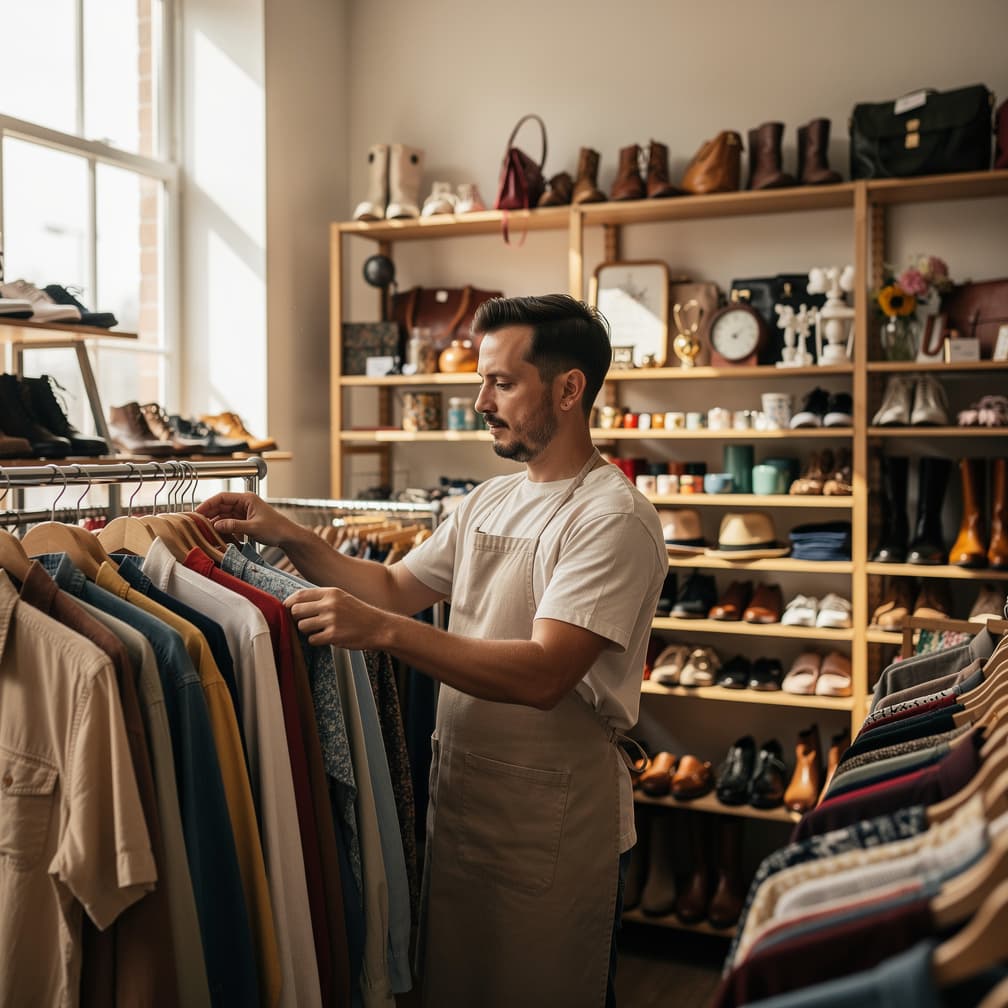

Falling merchandise hurts people. A stack of boxed housewares on a top shelf, a rack loaded past what its base can hold, a child pulling at a bin near the checkout line: each one is a bodily injury claim waiting on a witness. Thrift store insurance in Billings exists for the gap between a sales floor you sweep twice a day and the one hour you did not. Aisles narrow as donations pile up, and narrow aisles are where feet catch. Employees sorting and lifting donated goods get hurt on their own side of the ledger, which is a separate question with a separate price. Participating carriers in Montana weigh those two sides differently, which is the whole reason to compare. Below you will find what each line does and what a quote asks of you.
What Makes Billings Different
Roof leaks announce themselves on a rack of donated coats, never on a maintenance schedule. The building may be your landlord's problem, but the soaked inventory underneath it is entirely yours. That split is worth understanding before a wet season tests it on your behalf one afternoon. Your policy speaks to your property and your improvements; the landlord's speaks to the structure around them. Between those two sits a gap, and the gap is usually the ceiling nobody agreed to repair. In Yellowstone County, getting a roof fixed can mean waiting on a contractor with a long list already. Long waits mean tarps, buckets, and stock shifted into aisles where customers walk around it daily. Aisles full of relocated stock are how a weather event turns into a liability claim in Billings.
Local Risk Factors in Billings
Wildfire smoke does not need to reach your block to ruin a floor of donated clothing. Fabric holds smoke odor, and stock that smells is stock that cannot be sold, whatever it looks like on the rack. Commercial property may respond to smoke damage as a covered peril, though what counts as damage rather than a smell is exactly where these claims get argued. Document the odor with an itemized list and a professional assessment if you can get one. A store in Billings that discards inventory without recording it has thrown away the evidence along with the goods. Montana carriers may also apply a separate wildfire deductible, so check that before relying on the front page.
What Coverage Does a Thrift Store in Billings Need?
General Liability
Your landlord asks for this one by name, and a center office will ask again before you open the doors. General Liability is aimed at third-party injury and property damage: a customer who slips in an aisle, a shopper struck by falling merchandise, damage you cause to the space you rent. It does not answer for your own employees, and it typically excludes anything done deliberately.
Example: A child tugs a boxed lamp off a top shelf and it catches a shopper's shoulder on the way down. The medical bill and the demand letter that follows are the kind of claim this line is meant to meet.
Commercial Property
Flood is the first thing to know about here, since standard property forms leave it out and price it on its own. What remains is your side of the building: shelving, fixtures, terminals, the improvements you installed, and the donated stock on the floor. Fire, burst pipes, and storm damage are the usual triggers, and the valuation language on inventory without invoices decides what a claim is worth.
Example: A power strip behind a display shorts overnight and smoke reaches every rack in your Billings store. The fixtures survive, the clothing does not, and a claim on that stock could turn on the photographs you took.
Business Owners Policy
Buying liability and property apart gives you control; a Business Owners Policy gives you a package that usually costs less. It folds both into one form for a single-location store and often carries business interruption terms inside it. The catch is sublimits: categories like stock may be capped tighter than you would choose, and the package wording is not yours to negotiate.
Example: Your store closes for three weeks after a roof leak soaks the sales floor. The repairs sit on the property side of the package, while the lost trading weeks may fall to the interruption clause and its waiting period.
Workers Compensation
Someone lifts a box of hardback books wrong and cannot work for a month. Workers Compensation is built for your own staff rather than your customers, and it can help with medical treatment and a share of lost wages. It is rated against payroll, so hours at the sorting table drive the price. Whether unpaid help at your intake door counts as staff is a question your state answers, not your policy.
Example: A part-timer pricing furniture drops a drawer front on their foot during an intake rush. The treatment and the days missed afterward are what this coverage is generally intended to handle.
How Much Does Thrift Store Insurance Cost in Billings?
Thrift Store Insurance is a bundle of separate policies, priced separately. The ranges below are typical figures for Billings for each line, except workers compensation, which is rated per $100 of payroll; a quote prices each one against your own operations.
| Coverage | Typical range | What moves your price |
|---|---|---|
| General Liability Insurance | $60 - $160 per month | Industry and risk classification, annual revenue, number of employees |
| Commercial Property Insurance | $75 - $250 per month | Building value and construction type, roof age and condition, fire protection class |
| Business Owners Policy Insurance | $90 - $270 per month | Annual revenue and industry class, building and contents values, square footage and building age |
| Workers Compensation Insurance | $0.75 - $2.74 per $100 of payroll | Employee classification codes, total annual payroll, experience modification rate |
Prices shown are general estimates, not guaranteed rates or quotes. Your actual premium will depend on the insurer, coverage selected, business details, location, claims history, and other underwriting factors. Learn about our pricing methodology.
What Are the Insurance Requirements for a Thrift Store in Billings?
Workers' comp is generally required once you have your first employee. Montana generally requires employers to carry workers' compensation at that point. Common exemptions include sole proprietors and working partners. Confirm current thresholds with your state's workers' compensation agency before you hire.
Flood damage is typically excluded from standard policies. Standard commercial property and builders-risk-type policies typically exclude flood damage. Flood exposure varies address by address, so check your premises in FEMA's Flood Map Service Center before deciding; if you sit in a mapped flood zone, a separate policy through the National Flood Insurance Program is the usual starting point.
Where to verify licensing and coverage rules. The Montana Commissioner of Securities and Insurance publishes consumer guidance and current insurance requirements for Montana businesses. When a contract or lease demands specific wording, the Montana Commissioner of Securities and Insurance's guidance is the authoritative place to check.
Get Your Thrift Store Quote in Billings
Compare rates from multiple carriers. Free quotes, no obligation.
Operating in Billings
- Nothing on your floor has a receipt, so the value of your inventory is whatever your records can demonstrate after a fire in Billings, and adjectives are not records.
- Staff turnover runs high in retail sorting work, and a new hire lifting badly in their first week becomes a workers compensation claim before they have learned the routine.
- Your legal entity name, your registered address, and the name painted on the sign are frequently three different strings, and a certificate carrying the wrong one protects nobody at all.
- A store in Yellowstone County may sit far enough from restoration contractors that a dry-out after a burst pipe runs on their travel schedule instead of your reopening plan.
How to Buy: Advice for Billings Owners
Donation partners and center offices ask for paperwork you did not know existed. A bin placement agreement can demand naming language. A center in Billings can demand primary and non-contributory wording. Each request has to exist on the policy itself, rather than merely appearing on a certificate, and those two are not the same thing. Ask your quoting participating carrier which endorsement forms they use for additional insureds, and what each one costs. Confirm the details with the Montana Commissioner of Securities and Insurance if a request seems to conflict with what a policy can actually do. General Liability is what these requests attach to, and a Business Owners Policy usually carries that same liability inside a bundle. Run both structures past CPK and see which participating carriers price your store better as a package.
FAQ
Thrift Store Insurance in Billings: FAQ
General Liability is the line usually pointed at a customer injury on your sales floor, and it may help with medical costs and a resulting lawsuit, subject to your limit and your deductible. It does not answer for your own employees getting hurt; that sits with workers compensation instead. Keep an incident pad at the register, because the claim tends to arrive months after the fall.
It can, though the valuation language decides everything that follows. Stock without invoices gets argued rather than looked up, so how a form defines the value of your inventory is the clause worth reading long before a loss. Photograph a full floor, keep intake logs, and write down how you price categories. Documentation is the only evidence an adjuster has to work from.
Generally not. Standard commercial property forms exclude flood, and flood cover is written and priced on its own almost everywhere. Rising water through a back door and a burst pipe over your sorting table are two different perils with two different answers. If your stockroom in Billings sits below grade, ask the flood question directly instead of assuming a property policy has it handled.
It can. Your liability limit arrives as two numbers: one applies to a single claim, and the other is the ceiling for the whole policy year. A store with several small slip claims can quietly burn through the annual figure and find the last claim of the year has nothing left standing behind it. Ask a quoting participating carrier what both numbers are, because a low aggregate is an easy way to make a premium look attractive.
Usually, but a certificate naming them is not the same thing as an endorsement adding them. The certificate is evidence; the endorsement is what changes who the policy answers to. Ask which form number your participating carrier uses and what it costs, since some versions apply only while operations are ongoing. Sort it out before signing a lease in Billings, while the terms are still open.
It changes the questions more than it changes the price. A fitting room adds an enclosed space the public uses unsupervised, which raises injury and theft conversations, and underwriters ask about it directly. Disclose it anyway. An operation described inaccurately at quote time is how a claim gets denied later, and that outcome costs more than any premium the disclosure could have caused.
Sources
- 1.Montana Commissioner of Securities and Insurance(Montana Commissioner of Securities and Insurance publishes consumer guidance for insurance buyers.)
- 2.FEMA / FloodSmart(Flood coverage is typically purchased separately; FEMA administers the National Flood Insurance Program.)


