







































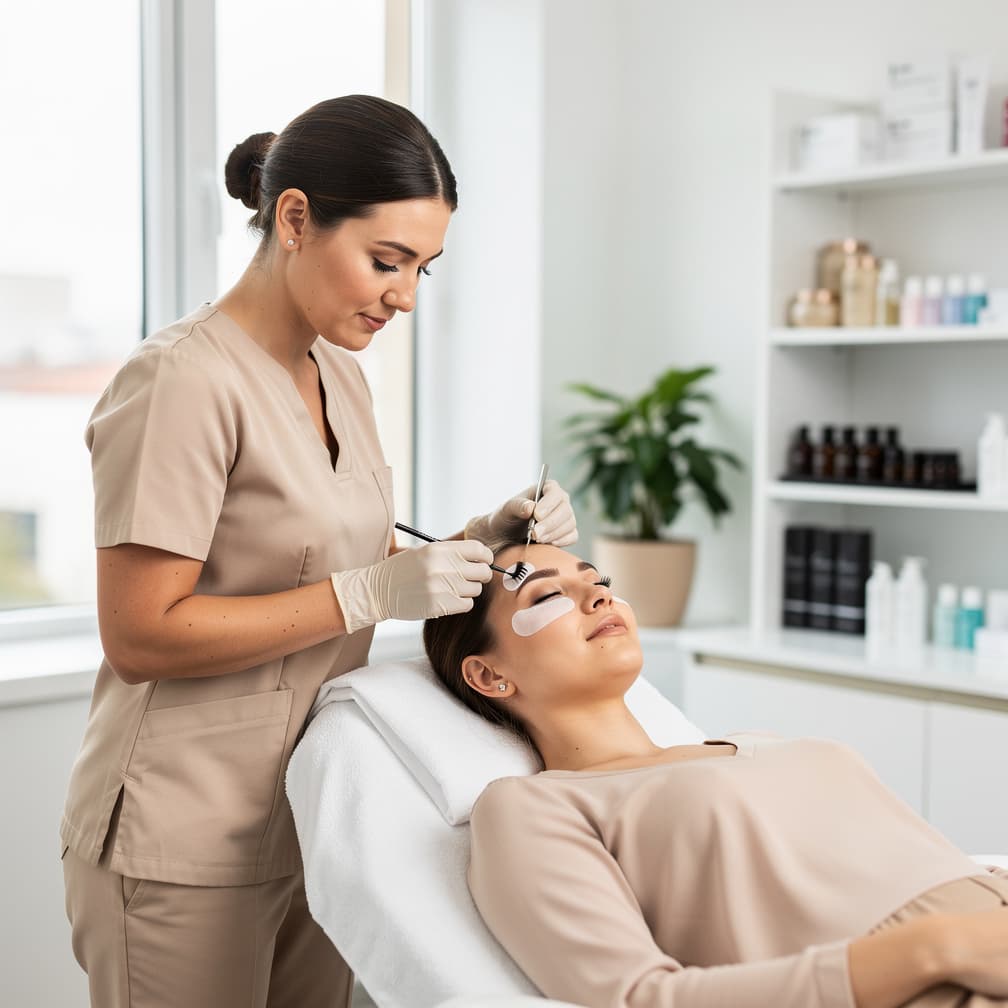

As a lash technician in Great Falls, you carry the liability of a medical-adjacent service with the paperwork of a small retail tenant. Clients lie down, close their eyes, and hand you two hours of trust a blink away from the cornea. When something goes wrong, the complaint is rarely about technique in the abstract; it is about a specific lid, a specific reaction, a specific set of aftercare instructions. Lash technician insurance in Great Falls sits under that, and under the tablet, tiles, and adhesive stock a break-in can clear out in one visit. Rules on licensing and scope vary from state to state, so what an artist across a border does proves nothing about your own file. Start with the ranges below, then look hard at limits.
What Makes Great Falls Different
Paperwork in a small building is often a handshake plus one emailed request for a document. That informality is comfortable right up to the day a claim makes everybody read the lease. A landlord who never asked for an endorsement can still be named in a client's lawsuit. Then the question is whether your policy has any obligation to that landlord at all. Usually it does not, unless someone asked for the endorsement and a carrier agreed to add it. So ask even when nobody makes you, because an unasked question gets answered at claim time. Forms vary by state, and one accepted elsewhere can be refused by a carrier in Montana. Coverage in Great Falls is far easier to fix before a claim than to argue about during one.
Local Risk Factors in Great Falls
A week of evacuation warnings empties a book before any flame reaches a building. Clients leave, renters leave, and a lash artist working alone loses every hour on the calendar with no way to make it up later. That income gap is where a business owners policy either helps or does not, depending entirely on wording: many forms want direct physical damage to your property, and a mandatory closure of the area may or may not trigger the civil authority provision your form contains. Read that provision now rather than during the evacuation. Ask a quote in Montana how it treats a suite in Great Falls that was untouched and still unreachable.
What Coverage Does a Lash Technician in Great Falls Need?
Professional Liability
The allegation that the service itself caused harm is what this line exists for: an adhesive reaction, damage to natural lashes, an injury during a removal, an argument over what your aftercare instructions actually said. It typically answers for defense costs alongside any settlement, subject to your limit. Someone tripping over a cord is generally a General Liability question instead.
Example: A client comes back four days after a full set with swollen lids and a bill from an urgent care clinic, saying the adhesive did it; a professional liability policy may pick up the defense and any settlement inside your limit.
General Liability
Landlords, suite operators, and event venues ask for this one by name, and they usually want to be listed on the certificate before you unpack. The form is built around third-party bodily injury and property damage in your space: a client who trips, a bag knocked into a mirror, a burn from a spilled drink. Claims about the lash work itself typically fall outside it.
Example: A client stands up from the lash bed, catches a foot on a power cord, and breaks a wrist on the way down; general liability is generally the line that fields the injury claim and the defense behind it.
Commercial Property
Flood is typically excluded here, and that catches owners out every season. What the form is built around is the physical stuff of a lash room: the bed, the lights, the magnification, the adhesive and trays, the retail stock, and the improvements you made to a rented suite. Theft, fire, vandalism, and storm damage are usually the named perils; a kit that lives in a vehicle often needs its own wording.
Example: Someone forces the suite door overnight and clears the room of trays, tweezers, and a ring light; commercial property could fund the replacements once the deductible comes off the top.
Business Owners Policy
Buying the liability piece and the property piece separately works fine; bundling them into one package is often cheaper and always simpler at renewal. That package is what a Business Owners Policy is, and for a one-room lash suite in Great Falls it is a common starting point. The professional side, meaning the allegation about the lash service, usually needs its own line or an endorsement.
Example: A pipe upstairs lets go and soaks a rented lash suite, closing it for two weeks; a business owners policy might address the damaged contents and, depending on the wording, part of the income lost while the room dries.
How Much Does Lash Technician Insurance Cost in Great Falls?
Lash Technician Insurance is a bundle of separate policies, priced separately. The ranges below are typical figures for Great Falls for each line; a quote prices each one against your own operations.
| Coverage | Typical range | What moves your price |
|---|---|---|
| Professional Liability Insurance | $35 - $110 per month | The services you actually perform, annual revenue or billed fees, limit and retention selected |
| General Liability Insurance | $30 - $90 per month | Industry and risk classification, annual revenue, number of employees |
| Commercial Property Insurance | $25 - $85 per month | Building value and construction type, roof age and condition, fire protection class |
| Business Owners Policy Insurance | $45 - $140 per month | Annual revenue and industry class, building and contents values, square footage and building age |
Prices shown are general estimates, not guaranteed rates or quotes. Your actual premium will depend on the insurer, coverage selected, business details, location, claims history, and other underwriting factors. Learn about our pricing methodology.
What Are the Insurance Requirements for a Lash Technician in Great Falls?
Workers' comp is generally required once you have your first employee. Montana generally requires employers to carry workers' compensation at that point. Common exemptions include sole proprietors and working partners. Confirm current thresholds with your state's workers' compensation agency before you hire.
Flood damage is typically excluded from standard policies. Standard commercial property and builders-risk-type policies typically exclude flood damage. Flood exposure varies address by address, so check your premises in FEMA's Flood Map Service Center before deciding; if you sit in a mapped flood zone, a separate policy through the National Flood Insurance Program is the usual starting point.
Where to verify licensing and coverage rules. The Montana Commissioner of Securities and Insurance publishes consumer guidance and current insurance requirements for Montana businesses. When a contract or lease demands specific wording, the Montana Commissioner of Securities and Insurance's guidance is the authoritative place to check.
Get Your Lash Technician Quote in Great Falls
Compare rates from multiple carriers. Free quotes, no obligation.
Operating in Great Falls
- Reaction claims usually arrive by text message, days after the client walked out happy, and the first reply you send becomes part of the file whether you meant it to or not.
- A shared building in Great Falls means someone else's fire, leak, or forced door can close your room, and the days you cannot open are gone whether or not the damage was yours.
- Patch test notes and a signed aftercare sheet sit in a drawer doing nothing until the week they are the only evidence the client was told what to do with a new set.
- Adhesive is a chemical stored in a small room with a client's face inches from it, and its shelf life, its fumes, and its storage temperature are all things a claim can eventually turn on.
How to Buy: Advice for Great Falls Owners
Renewal is the least expensive time to fix a mistake and the easiest time to repeat one. Your revenue moved, your menu probably moved, and the room may hold more equipment than it did a year ago. Send the updated numbers rather than letting a policy roll forward on last year's story, because a property limit that lags reality settles short. Commercial Property is the usual casualty of that drift. Ask whether a Business Owners Policy now fits better than the pieces you assembled at the beginning. The Montana Commissioner of Securities and Insurance publishes consumer guidance on reviewing a commercial policy at renewal. Then take the updated file to participating carriers in Great Falls and let them bid on the business you run now.
FAQ
Lash Technician Insurance in Great Falls: FAQ
That allegation is about the service you performed, so Professional Liability is generally the line that engages, and it typically handles defense costs as well as a settlement, subject to your limit. General Liability sits on the other side of the room, aimed at an injury that had nothing to do with the lash work, like a trip over a cord. Which one answers depends on how the claim is pleaded.
A Business Owners Policy bundles the liability and property pieces into one package, which is why plenty of one-room operations start there. It does not automatically include the professional side, so an allegation about the lash service itself may need a separate line or an endorsement. Ask what the package includes before assuming the eye claim sits inside it, because the answer varies by carrier.
Naming someone as an additional insured can extend part of your policy's protection to them for claims arising out of your work. A landlord asks for it so a suit over something that happened in your room can be pushed toward your policy rather than theirs. The wording matters: a certificate that lists a name without the endorsement behind it is often not what the lease asked for.
Property away from the salon is its own question. A property policy is written around a described location, and a kit sitting in a vehicle overnight in the Great Falls lot you park in often falls outside that description unless the form carries off-premises or mobile equipment wording. Ask specifically about theft from an unattended vehicle, which many forms treat more strictly than theft from the room.
A certificate is a one-page summary: who is insured, which lines are in force, the limits, the dates, and whoever asked to be listed. It is evidence, not the policy, and it grants nothing on its own. If a landlord in Great Falls needs additional insured status, that has to exist inside the policy; the certificate only reports what is already there.
Working out of a client's home does not remove the exposure, it moves the address. The eye claim travels with your hands, and your kit travels with you, which raises whether your property wording follows the equipment off site. Some building managers ask a visiting technician for a certificate before letting them upstairs. The absence of a storefront is not the absence of a claim.
Sources
- 1.Montana Commissioner of Securities and Insurance(Montana Commissioner of Securities and Insurance publishes consumer guidance for insurance buyers.)
- 2.FEMA / FloodSmart(Flood coverage is typically purchased separately; FEMA administers the National Flood Insurance Program.)


