Updated July 16, 2026

On-Hook Towing Insurance in Missoula
A local tow can go sideways in a tight downtown pickup, a hospital lot transfer, or a contractor vehicle move where you load in a narrow lane, clear a garage entrance, and deliver without adding damage. When a customer's vehicle is already on your truck, any scrape, shift, or loading mistake becomes your problem first. Your book of business here can include a range of private, retail, medical, and contractor calls that each carry their own loading challenges. Missoula County has 4,787 business establishments, which means your drivers are likely loading and unloading at commercial addresses more often than in a less concentrated market. That concentration translates to more handoffs per shift, and each handoff is a fresh chance for a damage claim. Before you renew, review your typical pickup environments, the kinds of vehicles you move, and whether your on-hook limit still fits the highest-value unit you tow.
On-Hook Towing Insurance Risk Factors in Missoula
Local on-hook exposure is shaped by **handoff density** more than by long-distance mileage alone. In this market, a tow operator may pick up a sedan from a clinic lot in the morning, move a contractor pickup after lunch, and finish with a private impound or disabled vehicle in a tighter commercial area. Each stop changes the loading angle, clearance, and chance of contact while the vehicle is in your care. The county business mix helps explain that pattern: professional, scientific, and technical services account for 13.1% of establishments, health care and social assistance 12.8%, and construction 12.3%. So you are not just thinking about roadside recoveries. You are also thinking about office parking areas, medical properties with limited staging room, and work vehicles that may carry added value or attached equipment. Ask for a quote that reflects where your drivers actually hook, load, secure, and unload vehicles during a normal week, not just how many miles they tow.
Montana has a moderate climate risk rating. Top hazards: Wildfire (Very High), Winter Storm (High), Earthquake (Moderate), Flooding (Moderate). The state's expected annual loss from natural hazards is $280M, which influences on-hook towing insurance premiums and may affect coverage availability in high-risk areas.
What On-Hook Towing Insurance Covers
In Montana, the most important difference is often not the basic coverage trigger. It is the operating environment around the tow. A short hook-up in a paved commercial corridor creates one kind of loss potential. A longer transport on rural roads, a winter roadside assist call, or a recovery approach on uneven ground creates another. That means you should review how your policy handles the kinds of vehicles and towing situations your company actually takes on during a normal month.
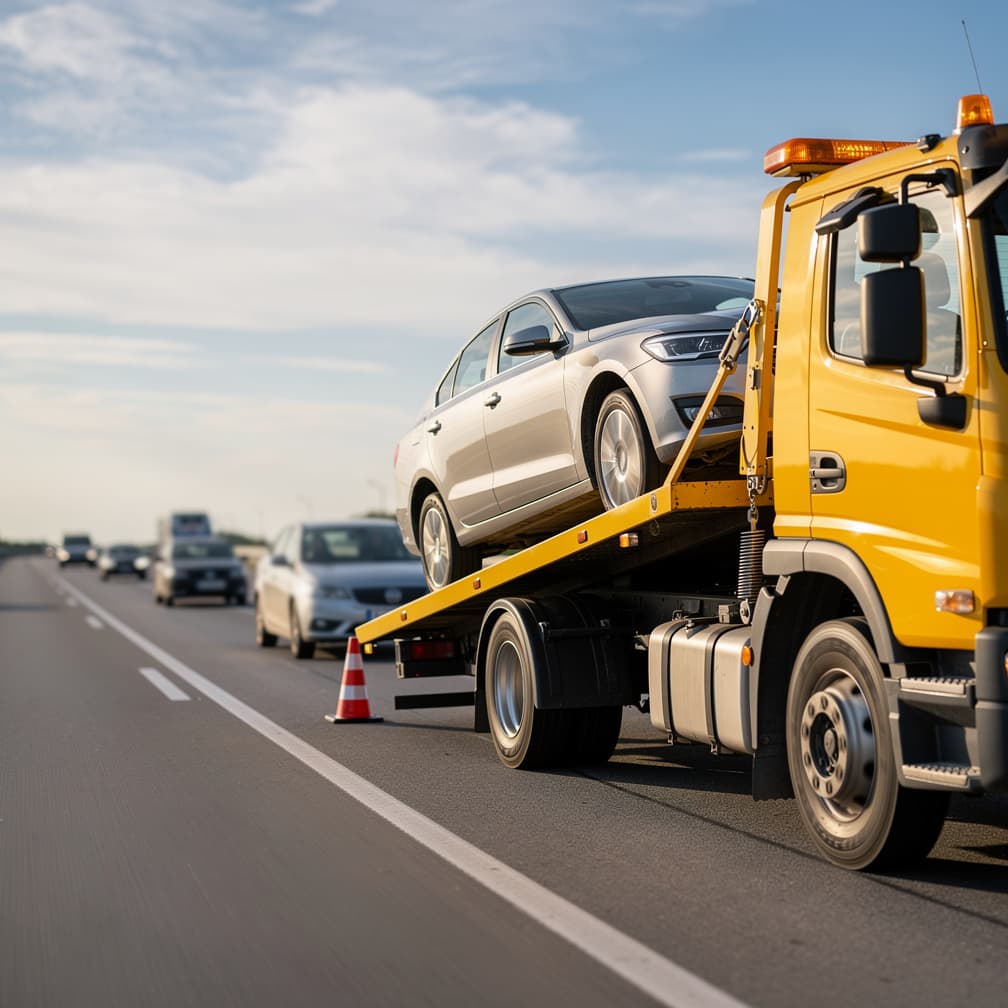
If you run flatbeds, ask how the policy is being matched to loading angles, securement practices, and the value of the vehicles you carry. If you rely on wheel-lift units, check that your insurer is rating the operation with the right expectations for roadside calls, tight turns, and frequent attach and detach activity. If your work includes accident scenes or off-road recovery approaches, make sure the quote reflects that exposure instead of assuming routine scheduled transport.
You should ask how physical damage to a customer vehicle is evaluated when weather, road surface, visibility, or remote location complicate the loss. It also helps to confirm your limits fit the more valuable vehicles you are willing to tow, not just the average call. A policy that looks adequate for ordinary passenger vehicles may feel thin the first time your driver hooks a newer pickup, work truck, or specialty vehicle. Focus on what you tow, where you tow it, how far you move it, and which jobs create the biggest severity if something goes wrong.
Coverage Included
Collision on Hook
Covers damage to towed vehicles from collisions during transport.
Comprehensive on Hook
Covers theft, fire, and weather damage to vehicles being towed.
Loading & Unloading
Covers damage during the process of loading and unloading vehicles.
Winching Coverage
Covers damage to vehicles during winching and recovery operations.
Multiple Vehicle
Covers all vehicles on multi-car carriers and rollback flatbeds.
What Makes Missoula Different
What changes the buying calculus here is how often your drivers load and unload in a given week. A towing business serving a place with frequent office, clinic, retail, apartment, and contractor calls can face more loading and unloading events in a smaller radius. Each event is a separate chance for an on-hook loss. On-hook claims often start with ordinary operational moments like a low-clearance entrance, a hurried transfer, a vehicle with existing damage, or a disagreement about when damage happened. Those 4,787 business establishments point to a steady flow of commercial addresses and customer vehicles, meaning your exposure grows from how many times your drivers repeat the load and unload cycle. If your work mix includes account tows for local businesses, make sure your per-vehicle limit can handle the most expensive unit a commercial account is likely to call about. Disciplined intake procedures that document condition before loading matter as much as realistic limits. In a market like this, disciplined intake and realistic limits usually matter as much as the truck setup itself.
Our Recommendation for Missoula
Start with your last few months of dispatches and sort them by pickup environment. You will likely see patterns across medical, office, retail, apartment, contractor, dealer, and private calls. That exercise usually shows where your on-hook exposure really sits. If you regularly move newer pickups, vans, or service vehicles tied to local businesses, confirm your per-job limit can replace the priciest late-model truck or van a client might hand you the keys to. If your drivers work many short calls in tighter properties, focus on claims controls as much as premium. Photo documentation before hookup, written condition notes, and clear procedures for low-clearance entries and crowded lots all reduce the chance a routine tow becomes a dispute. Missoula's median household income is $65,329, which means a repair bill from a tow-related scrape could equal a month or more of take-home pay for many residents and prompt a faster complaint. That is a good reason to review deductibles, not just limits, and to request terms based on your actual dispatch pattern rather than a generic towing profile.
Get On-Hook Towing Insurance in Missoula
Enter your ZIP code to compare on-hook towing insurance rates from carriers in Missoula, MT.
Business insurance starting at $25/mo
FAQ
Frequently Asked Questions
Missoula towing operations often see repeated loading and unloading at offices, clinics, apartments, and contractor locations, not just roadside pickups. That means more handoff points where damage can be alleged, and your quote should reflect the pickup environments and vehicle mix your drivers actually work in.
Local commercial activity tends to generate more account tows for vendor vehicles, employee cars, and service trucks than a typical residential market. That volume can increase commercial-account towing frequency, which is why your per-vehicle limit needs to match the most expensive unit a commercial account might call about.
Missoula operators should describe tight parking layouts, garage entrances, staging constraints, and how drivers document vehicle condition before hookup. Those details help an agent evaluate loading and unloading exposure more accurately than mileage alone.
Missoula County's leading sectors are professional services at 13.1%, health care at 12.8%, and construction at 12.3%. A large share of your commercial calls may involve office sedans, medical-campus vehicles, and contractor trucks, so ask for terms built around those vehicle types and pickup settings.
With a local median household income of $65,329, a moderate repair dispute can feel like a major expense to the vehicle owner and a reputational risk for your shop. Review whether your deductible fits the kinds of claims most likely to arise on short local tows.
Recovery work can create a different exposure than routine towing. A ditch pull, slide-off, or accident-scene load can produce a different damage dispute than a standard roadside tow, so your quote should describe that work clearly.
Long rural tows can change claim severity because the vehicle stays in your care longer and the route may involve weather, distance, or rougher approaches. If your business regularly runs between communities, make sure your operating territory is described accurately.
Montana insurance oversight runs through the Montana Commissioner of Securities and Insurance. If you want to verify licensing or review consumer guidance while comparing policies, that is the state office to check first.
Sources
- 1.U.S. Census Bureau, County Business Patterns, Missoula County(Missoula County has 4,787 business establishments, so local towing often means more vendor vehicles, employee cars, and service units moving between lots, offices, clinics, and construction addresses.; The county business mix helps explain that pattern: professional, scientific, and technical services account for 13.1% of establishments, health care and social assistance 12.8%, and construction 12.3%.)
- 2.U.S. Census Bureau, ACS 5-Year Estimates, table B19013(Missoula's median household income is $65,329, so a personal vehicle damage dispute can still be a meaningful financial event for the owner and a fast-moving complaint for your business.)
Updated July 16, 2026