







































Updated July 6, 2026

Pool & Spa Contractor Insurance in Nebraska
When you request pool & spa contractor insurance in Nebraska, the quote usually turns on how clearly you show your operation before underwriters start guessing. The cleaner submission is often the less expensive one, because it separates custom in-ground construction from portable spa delivery, shows which phases you self-perform, and identifies where you rely on electricians, concrete crews, or other subcontractors. If you want the number to come back tighter, prepare a current vehicle list, payroll by job duty, equipment schedule, and a short description of your typical projects before you ask for pricing. Nebraska pool and spa work also creates a wide spread of exposures from one job to the next: excavation near existing utilities, access across finished residential lots, startup visits after handoff, and service calls with pumps, heaters, and controls loaded in a truck. If you hire even one employee, workers compensation insurance may be required in Nebraska, so your quote needs the right labor classification and payroll detail from the start. Bring that operational detail to the application, then compare limits and deductibles against the size of the homes and projects you actually take on.
Climate Risk Profile
Natural Disaster Risk in Nebraska
Understanding climate-related risks helps determine appropriate insurance coverage levels.
Tornado
Very High
Hailstorm
Very High
Severe Storm
High
Flooding
Moderate
Expected Annual Loss from Natural Hazards
$1.2B
estimated economic loss per year across Nebraska
Source: FEMA National Risk Index
How Much Does Pool & Spa Contractor Insurance Cost in Nebraska?
Pool & Spa Contractor Insurance is a bundle of separate policies, priced separately. The ranges below are typical figures for Nebraska for each line, except workers compensation, which is rated per $100 of payroll; a quote prices each one against your own operations.
| Coverage | Typical range | What moves your price |
|---|---|---|
| General Liability Insurance | $300 - $900 per month | Industry and risk classification, annual revenue, number of employees |
| Workers Compensation Insurance | $0.75 - $2.74 per $100 of payroll | Employee classification codes, total annual payroll, experience modification rate |
| Commercial Auto Insurance | $210 - $550 per month | Fleet size and vehicle types, driver records and experience, coverage limits and deductibles |
| Inland Marine Insurance | $50 - $210 per month | Total insured value of the scheduled property, type and age of the equipment, where it is stored and how far it travels |
| Commercial Umbrella Insurance | $110 - $320 per month | Umbrella limit requested, limits carried on the underlying policies, loss history on those underlying policies |
Prices shown are general estimates, not guaranteed rates or quotes. Your actual premium will depend on the insurer, coverage selected, business details, location, claims history, and other underwriting factors. Learn about our pricing methodology.
Operating a Pool & Spa Contractor Business in Nebraska
- Residential pool and spa jobs in Nebraska often move through occupied properties, so access routes, temporary barriers, and cleanup practices affect liability exposure before the shell or spa is even in place.
- Crews that alternate between excavation, plumbing runs, equipment setting, decking, startup, and later service calls create changing payroll and vehicle use patterns that should be described accurately on the application.
- Portable spa delivery and custom in-ground construction do not present the same risk profile, so your quote should separate installation methods, lifting equipment, and the amount of subcontracted work.
- Nebraska weather can interrupt excavation, concrete, finish work, and return visits, which increases the chance that materials, tools, or partially completed work stay on site longer than planned.
Preparing for Your Pool & Spa Contractor Insurance Quote in Nebraska
Prepare a job mix summary that shows how much of your Nebraska work is custom pool construction, spa installation, renovation, maintenance, or startup service after completion.
Gather payroll by role, including excavation labor, installation crews, service technicians, and office staff, so workers compensation insurance can be quoted on the right exposure basis.
List every owned, leased, or regularly used truck, van, and trailer with how each unit is used, because commercial auto insurance should reflect hauling patterns and service-call mileage.
Build an equipment and tool schedule that includes mobile pumps, compact machinery, saws, testing gear, and other higher-value items that move from shop to truck to jobsite.
Get Your Pool & Spa Contractor Insurance Quote in Nebraska
Compare rates from multiple carriers. Free quotes, no obligation.
Common Claims for Pool & Spa Contractor Businesses in Nebraska
A crew excavates for a new in-ground pool at an occupied home, rain delays backfill and decking, and an unsecured work area leads to an injury allegation after a visitor enters the site.
A service truck carrying pumps, plumbing fittings, and startup equipment is involved in a crash on the way to a handoff visit, leaving both vehicle damage and a delay that disrupts the project schedule.
A subcontracted electrical connection is completed after the shell, equipment pad, and finish work are already in place, and a later malfunction leads to finger-pointing over which trade caused the loss.
Coverage Considerations in Nebraska
- General liability insurance deserves close review when your crews work around homeowners, guests, existing patios, landscaping, and utility areas, because one access mistake can turn into a property damage or injury claim.
- Workers compensation insurance should match your actual headcount and job duties, because Nebraska may require it once you hire one employee and misclassified labor can distort the quote.
- Commercial auto insurance needs to reflect every truck, trailer, and service vehicle used to haul pumps, filters, heaters, pipe, and tools, not just the vehicles titled in the business name.
- Inland marine insurance is worth reviewing for mobile tools, compact equipment, and job materials that travel between yard, truck, trailer, and site, especially when projects stretch across multiple visits.
Common Risks for Pool & Spa Contractor Businesses
- A customer or visitor slips on a wet work area near an open pool shell or spa installation site.
- Excavation, grading, or equipment movement damages a driveway, patio, fence, or nearby structure.
- A completed pool or spa installation later triggers a claim tied to an alleged defect or installation issue.
- Tools, pumps, or mobile property are stolen from a trailer, truck, or unsecured jobsite storage area.
- A truck or trailer used to move materials between jobsites is involved in a vehicle accident.
- A crew member is injured while lifting materials, working around water, or handling contractors equipment.
What Happens Without Proper Coverage?
Pool and spa claims bracket the whole project timeline. Access damage and struck utility lines happen in week one, injuries and staged-material losses happen mid-build, and the leak behind finish materials shows up a season after startup. A program reviewed only against the active jobsite ignores the completed operations tail, which is where this trade’s most stubborn claims live.
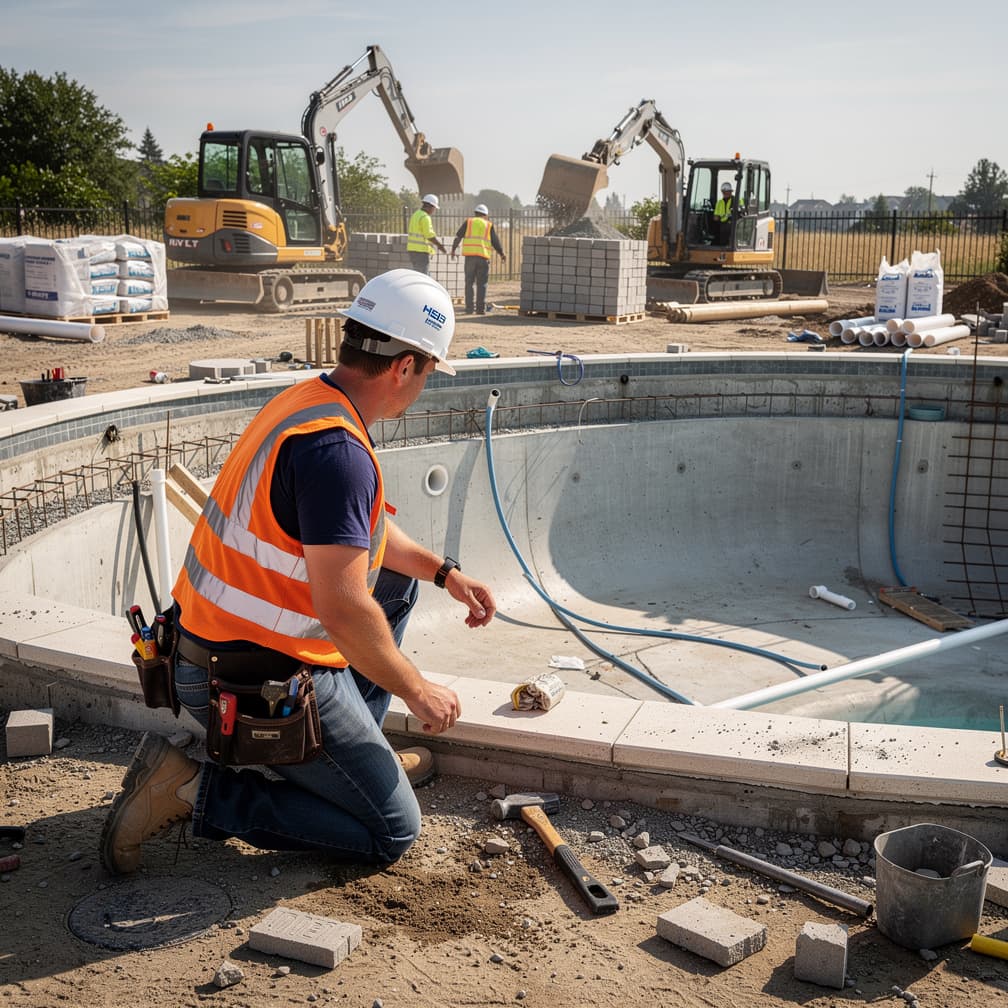
The backyard setting raises the stakes in ways commercial sites do not. You are excavating within feet of the house, the neighbor’s fence, and landscaping the owner just paid for, and an open shell sits exposed to homeowners, children, and other trades between your crew’s visits. Site security, access control, and daily documentation are not just safety practices here; they are what an underwriter reads as the difference between a controlled operation and a loss waiting to happen.
Subcontracted phases add a coordination risk. Excavation, gunite, electrical, and decking crews each bring their own insurance, and when a claim spans phases, the first argument is usually about whose policy responds. Contract transfer language and certificate tracking decide that argument in advance, so treat them as part of the insurance program rather than office paperwork.
Ask for limits sized to the largest projects you accept, not the smallest. One serious injury near an excavation or one major property damage claim on a high-value home looks nothing like a portable spa installation, and the program has to hold at the top end.
Recommended Coverage for Pool & Spa Contractor Businesses
Based on the risks and requirements above, pool & spa contractor businesses need these coverage types in Nebraska:

General Liability
Essential coverage for every business, protect against third-party bodily injury, property damage, and advertising claims.

Workers Compensation
Help cover your employees' medical expenses and lost wages for work-related injuries and illnesses.

Commercial Auto
Protect your business vehicles and drivers with comprehensive commercial auto coverage.

Inland Marine
Protect tools, equipment, and goods in transit or stored at locations away from your primary premises.

Commercial Umbrella
Extend your liability limits beyond your primary policies for extra protection against catastrophic claims.
Pool & Spa Contractor Insurance by City in Nebraska
Insurance needs and pricing for pool & spa contractor businesses can vary across Nebraska. Find coverage information for your city:
Insurance Tips for Pool & Spa Contractor Owners
Review general liability insurance with completed operations in mind, especially if your work includes plumbing connections, equipment installation, finish work, and post-startup punch list visits after the main build is complete.
Separate your vehicle exposures from your mobile equipment exposures so commercial auto insurance and inland marine insurance are each scheduled for the property and liability they are actually intended to address.
Bring a current equipment list to the quote process, including trailers, specialty tools, testing gear, and installation equipment that regularly moves between your yard, suppliers, and open job sites.
Check that your payroll estimates match the labor you actually use for excavation, installation, finishing, and service work, because workers compensation pricing and classification depend heavily on those details.
If you rely on subcontractors for excavation, electrical, gunite, decking, or other phases, review your contract transfer language and certificate tracking process before assuming their policy can help protect your business against covered losses.
Ask whether your liability limits are sized for the largest residential projects you accept, because one serious injury or property damage claim can look very different from a small spa installation.
Document how you secure active sites, stage materials, and control access after hours, since those operational details can affect both claim frequency and the way an underwriter views your risk.
Compare umbrella options if you work on high-value homes or larger backyard builds, because underlying liability limits that feel adequate on smaller jobs may not leave much room on a severe claim.
FAQ
Frequently Asked Questions About Pool & Spa Contractor Insurance in Nebraska
Nebraska pool and spa contractors often do. Nebraska requires workers compensation when you have one employee, with exemptions for sole proprietors, partners, and some agricultural workers. If you are adding a helper or installer, confirm status before the job starts.
Nebraska pool and spa contractors should match liability limits to the homes, access conditions, and subcontracted phases involved. A larger custom build with finished patios, landscaping, and utility work can create more severe property damage or injury exposure than a smaller install.
Nebraska pool builders should break out which phases are subcontracted, such as electrical coordination, concrete, or specialty finish work, and which phases your own crew performs. That detail helps the quote reflect your real operation instead of a broad contractor assumption.
Nebraska business insurance oversight runs through the Nebraska Department of Insurance. If you need to verify state insurance information while comparing policies, use that regulator as the reference point and then match the policy terms to your actual construction and service work.
Nebraska pool and spa contractors usually get a cleaner quote when they provide payroll by job duty, a current vehicle schedule, an equipment list, and a clear split between portable spa work, custom builds, and service calls. That reduces guesswork in underwriting.
General liability, workers compensation, commercial auto, inland marine, and commercial umbrella coverage form the usual set. The weighting depends on your crew, vehicles, mobile tools, subcontractor use, and the size of projects you take on.
Completed operations is the part of general liability that matters after handoff, and its terms vary by policy. If a claim surfaces once the pool is in use, alleged property damage from a leak or an installation issue, that is the coverage section doing the work, so read it closely.
If your tools move between yards, suppliers, trailers, and open job sites, yes, that is the pattern inland marine exists for. Theft from a trailer or damage in transit falls outside what a fixed-location property policy is designed around.
Sources
- 1.Nebraska Department of Insurance(Nebraska requires workers compensation when you have one employee, with exemptions for sole proprietors, partners, and some agricultural workers.; Nebraska business insurance oversight runs through the Nebraska Department of Insurance.)
Updated July 6, 2026