Updated July 5, 2026

On-Hook Towing Insurance in Lincoln
A local tow operation often works out of a small yard or shared commercial space, then runs short urban pickups, dealer transfers, apartment-complex removals, and roadside calls that can stack up fast across one shift. That operating pattern matters because on-hook towing insurance in Lincoln should be reviewed around how vehicles are actually loaded, moved, documented, and stored between dispatch and release. A truck handling tight neighborhood recoveries near older residential blocks does not present the same claim story as a unit doing mostly scheduled transport for repair shops and fleet accounts along major commercial corridors.
Here, you are often balancing quick response expectations with frequent handoffs between drivers, customers, body shops, and property managers. That raises practical questions about who verifies pre-existing damage, where photos are taken, how keys are logged, and whether your paperwork matches the type of call you accept most often. If your book mixes private-property towing, roadside assistance, and transport for local businesses, ask for an on-hook review that separates those activities clearly. That gives you a cleaner way to check limits, exclusions, and claim documentation before the next loaded vehicle leaves your hook.
On-Hook Towing Insurance Risk Factors in Lincoln
The local risk issue is **concentration**. A tow company here can move through dense parking lots, medical campuses, construction areas, and mixed commercial streets in the same day, with very different loading conditions from one call to the next. That matters for on-hook claims because damage disputes often turn on the exact moment custody starts, the angle of loading, the condition of the vehicle before hookup, and where the unit is taken after pickup. Nebraska's broader weather hazard profile is part of the background, but the more useful city-level review is operational: where your drivers winch, where they stage, and how often they tow from tight-access properties with limited room to document condition. If you handle apartment enforcement, garage pulls, or dealer moves, review whether your procedures change by call type. You should also check whether your policy terms line up with after-hours releases, temporary storage, and any gap between roadside service and full transport, because those handoff points are where preventable disputes often start.
Nebraska has a high climate risk rating. Top hazards: Tornado (Very High), Hailstorm (Very High), Severe Storm (High), Flooding (Moderate). The state's expected annual loss from natural hazards is $1.2B, which influences on-hook towing insurance premiums and may affect coverage availability in high-risk areas.
What On-Hook Towing Insurance Covers
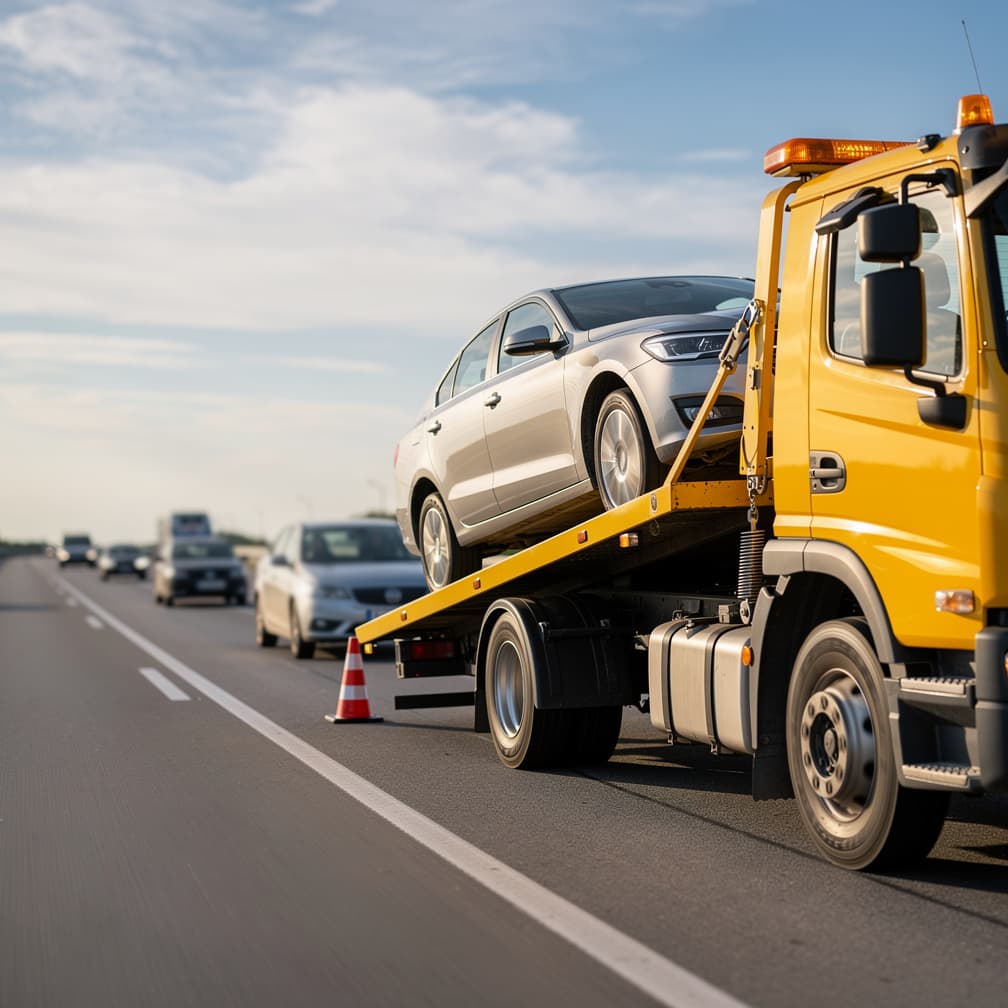
In Nebraska, the useful review is not the basic definition of on-hook coverage, it is where your operation creates the most claim pressure while a vehicle is attached to your truck or being moved by it. For many towing businesses, that means looking closely at the handoff points. A customer vehicle can be exposed during a roadside hookup on a narrow shoulder, during a winch onto a flatbed in poor traction, while secured for transport across town, or during unloading at a shop, yard, auction, or residence. Your quote should match those moments.
That is why the underwriting conversation often turns to procedure. If your drivers photograph pre-existing damage before hookup, note wheel condition, document key custody, and record destination changes from dispatch, you give the carrier a clearer picture of how a future claim may be investigated. If you perform police-directed tows, private property impounds, or recovery work after weather events, ask how those job types are being classified in the quote. They can change how an underwriter views severity, especially when the towed vehicle is already damaged before your driver arrives.
Nebraska weather and road conditions can also change the exposure from one call to the next, so it helps to describe how you handle delayed pickups, overnight storage transitions, and after-hours releases. If your operation crosses state lines, moves specialty vehicles, or uses subcontracted drivers at peak times, bring that up during the quoting process. A policy review built around the exact towing situations that could turn into a disputed damage claim is what actually matters.
Coverage Included

Collision on Hook
Covers damage to towed vehicles from collisions during transport.
Comprehensive on Hook
Covers theft, fire, and weather damage to vehicles being towed.
Loading & Unloading
Covers damage during the process of loading and unloading vehicles.
Winching Coverage
Covers damage to vehicles during winching and recovery operations.

Multiple Vehicle
Covers all vehicles on multi-car carriers and rollback flatbeds.
Industries & Insurance Needs in Lincoln
County business mix is the practical demand signal here. Lancaster County reports 8,929 business establishments, and the leading sectors by establishment share are health care and social assistance at 12.9%, construction at 12.6%, and other services, except public administration, at 11.3%, so a local tow book may lean heavily toward service calls tied to employee parking, contractor vehicles, customer lots, and commercial property enforcement rather than only highway breakdowns. That should change how you present your operation to an underwriter.
If your accounts include clinics, job sites, repair shops, or property managers, separate those relationships from public roadside work when you request terms. The reason is simple: scheduled dealer or commercial moves, private-property tows, and urgent roadside pickups can create different damage allegations and documentation needs even when the same truck handles them. A cleaner breakdown of who calls you, where vehicles are picked up, and how they are released can make the on-hook review more accurate.
What Makes Lincoln Different
Concentration is what changes the calculus here. In a market where a tow company may serve apartments, medical offices, contractors, repair facilities, and retail properties within a compact service area, the biggest issue is often not trip length. It is how many different custody situations your drivers move through in one day, and how well each one is documented.
That matters because the county containing Lincoln has 8,929 business establishments. More commercial properties and service businesses mean more chances for private-property removals, customer-lot disputes, dealer transfers, and short-haul tows where the argument is not whether you had the vehicle long, but whether condition was verified clearly at pickup and release. If your operation depends on repeat local accounts, review your on-hook terms with those account types in mind. You want limits and procedures that fit frequent handoffs, tight loading areas, and mixed call types, not a generic towing description that blurs everything together.
Our Recommendation for Lincoln
Start with your call mix, then get more specific than broad labels like roadside or impound. Break your operation into the kinds of loaded moves you actually perform here: apartment or retail lot removals, dealer transfers, body-shop deliveries, construction-related pickups, and standard disabled-vehicle tows. That gives you a better basis for reviewing on-hook limits and any restrictions tied to storage, unattended units, or release procedures.
Ask your agent to walk through your documentation chain from dispatch to final release. You should know who photographs the vehicle, who notes prior damage, where keys are secured, and how your records differ for private-property work versus customer-authorized transport. Lincoln's median household income is $69,991, so many owners will expect clear handling and prompt resolution if a damage dispute arises. That makes claim defensibility a practical buying issue, not just a paperwork issue. Before you bind or renew, compare your busiest local account types against your policy wording and your driver procedures.
Get On-Hook Towing Insurance in Lincoln
Enter your ZIP code to compare on-hook towing insurance rates from carriers in Lincoln, NE.
Business insurance starting at $25/mo
FAQ
Frequently Asked Questions
Lincoln tow companies should separate private-property removals, roadside calls, dealer transfers, and shop deliveries. Those call types can create different damage allegations, so a cleaner breakdown helps you review limits, exclusions, and documentation procedures against the work you actually accept.
Lincoln private-property towing can change the review because short, frequent lot removals often create disputes about vehicle condition at pickup. You should ask how your policy terms apply to photos, key control, release procedures, and any temporary storage between tow and release.
Lancaster County has 8,929 business establishments, so local tow operators may serve many commercial lots, contractors, repair shops, and service businesses. That makes it worth presenting your account mix clearly instead of describing the whole operation as generic towing.
Lincoln-area towing tied to business accounts should be reviewed by account type. In Lancaster County, health care and social assistance is 12.9% of establishments, construction 12.6%, and other services 11.3%, so your loaded-vehicle exposures may vary sharply by client relationship.
Lincoln households report a median income of $69,991, which can translate into higher expectations around vehicle condition, communication, and repair handling. For a tow company, that is a reason to review claim documentation steps before a dispute tests your process.
The Nebraska Department of Insurance handles regulatory questions and complaints. If you run into trouble with a carrier or policy form, that is where to start. Checking policy terms, exclusions, and claim reporting steps during the quoting process can help you avoid those problems entirely.
Yes, when the equipment handles different job types. A flatbed doing scheduled dealer transport presents a different risk than a wheel-lift pulling wrecked vehicles from a ditch. If those uses are blended, you may overpay for the low-risk truck or find the high-risk unit underinsured when a claim hits.
Operators usually get a cleaner quote by bringing a current unit schedule, driver list, service radius, loss details, and sample tow paperwork. That helps the underwriter classify roadside towing, recovery, impounds, and transport work more accurately.
Sources
- 1.U.S. Census Bureau, County Business Patterns, Lancaster County(Lancaster County has 8,929 business establishments.; The leading sectors by establishment share in Lancaster County are health care and social assistance 12.9%, construction 12.6%, and other services (except public administration) 11.3%.)
- 2.U.S. Census Bureau, ACS 5-Year Estimates, table B19013(Lincoln median household income is $69,991.)
Updated July 5, 2026