







































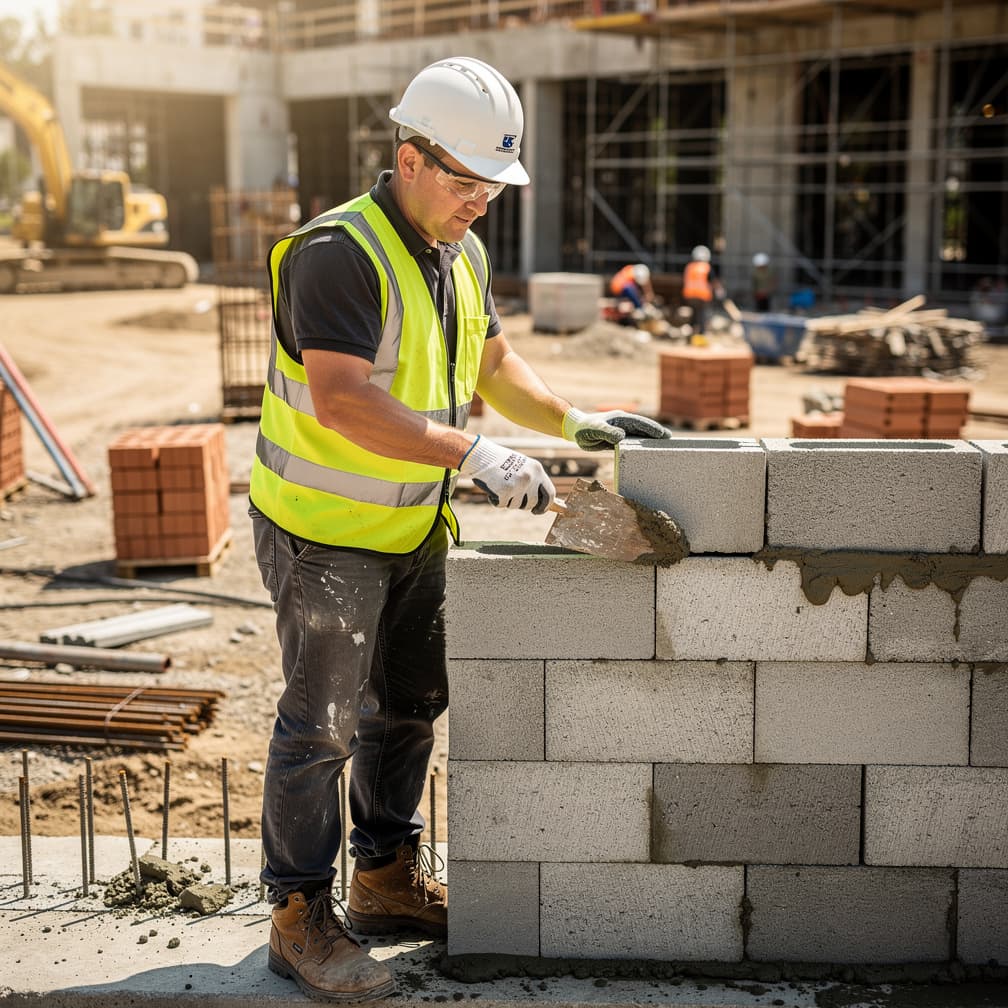

Mortar splatter dries on a customer's new siding, and the repaint bill lands on your invoice. Masonry contractor insurance in Omaha exists for those moments: the scaffold plank that gives way, the pallet of block that cracks a driveway, the mixer that vanishes from a jobsite overnight. Certificates move faster than crews do, and a builder can hold your first draw until yours is on file with the wording the contract asked for. Douglas County has about 16,500 businesses, and any one of them can set those terms before you touch a trowel. The limits behind the certificate matter more than the certificate itself, because a complaint about a finished wall can arrive long after the last joint was struck. Start with the exposures you actually carry, then price them.
What Makes Omaha Different
A storm week does not damage masonry so much as it stops it, and stopped work has its own costs. Fresh mortar has a curing window, and weather that interrupts it can turn finished work into work you do twice. Rework arguments are where a Nebraska weather delay quietly becomes a question about workmanship versus conditions. Scaffold and staged block also need attention before a front arrives, since loose material becomes somebody else's property damage in a hurry. An Omaha jobsite left unsecured is a claim shaped like a decision you did not make. Delay itself is usually not an insured event, and most policies answer for damage rather than for lost days. Build the weather float into the contract instead of hoping a policy fills it. Ask specifically what happens to work in progress when a job stops mid wall.
Local Risk Factors in Omaha
The morning after a storm is where the real work sits: sorting what is damaged, what is stolen, and what simply walked off while the site stood open. Missing tools after severe weather in Douglas County are a common and unglamorous loss, and Inland Marine is the coverage usually written around portable equipment, subject to its schedule and deductible. A wall that came down cleanly is easier to argue about than one that partially failed, because partial failure invites a question about workmanship. Photograph everything before you touch anything. Documentation is what turns an Omaha argument into a claim with a number attached.
What Coverage Does a Masonry Contractor in Omaha Need?
General Liability
Builders, owners, and permit desks ask for this one by name before a crew mobilizes. It is generally the line for harm your masonry work does to other people and their property: the passerby hurt near scaffold, the cracked driveway, the siding washed with mortar. Redoing your own defective wall typically sits outside it, since faulty workmanship is treated as a cost of the job.
Example: A pallet of block shifts off a barrow and spiders a customer's new driveway; general liability may respond to the repair the owner demands and the argument that follows.
Workers Compensation
Scaffold, heavy units, and long days put your crew a step away from a bad afternoon. This coverage is generally written for employee injuries on the job, handling medical costs and lost wages, and it is rated per unit of payroll rather than per project. It does not answer for the schedule you lose, and rules on who must carry it vary by state.
Example: A helper comes off the second lift while striking joints and breaks a wrist; workers compensation is typically the line that picks up his treatment and the wages he misses.
Commercial Auto
Personal auto policies are written around personal driving, and a truck hauling block for pay is not that. This line generally answers for accidents involving the vehicles your business owns and operates, priced off weight, radius, and driver records. Equipment riding in the bed is usually a separate question, and personal trucks driven by employees raise a hired and non-owned issue worth asking about.
Example: A loaded flatbed takes longer to stop than the driver expected and clips a sedan at a light; commercial auto could pick up the other vehicle and the injury claim behind it.
Tools & Equipment (Inland Marine)
Property coverage tends to sit still; this one travels. Mixers, wet saws, scaffold frames, generators, and hand tools move between Omaha jobs and get lost, stolen, or damaged in transit, and a schedule of what you own is what prices it. Terms for gear left unattended overnight often differ from terms in transit, which is worth confirming before a loss rather than after one.
Example: The trailer gets emptied overnight at a site and the mixer and saw are gone by the pour; inland marine might cover replacing what your schedule listed.
How Much Does Masonry Contractor Insurance Cost in Omaha?
Masonry Contractor Insurance is a bundle of separate policies, priced separately. The ranges below are typical figures for Omaha for each line, except workers compensation, which is rated per $100 of payroll; a quote prices each one against your own operations.
| Coverage | Typical range | What moves your price |
|---|---|---|
| General Liability Insurance | $250 - $725 per month | Industry and risk classification, annual revenue, number of employees |
| Workers Compensation Insurance | $0.75 - $2.74 per $100 of payroll | Employee classification codes, total annual payroll, experience modification rate |
| Commercial Auto Insurance | $230 - $675 per month | Fleet size and vehicle types, driver records and experience, coverage limits and deductibles |
| Inland Marine Insurance | $35 - $150 per month | Total insured value of the scheduled property, type and age of the equipment, where it is stored and how far it travels |
Prices shown are general estimates, not guaranteed rates or quotes. Your actual premium will depend on the insurer, coverage selected, business details, location, claims history, and other underwriting factors. Learn about our pricing methodology.
What Are the Insurance Requirements for a Masonry Contractor in Omaha?
Workers' comp is generally required once you have your first employee. Nebraska generally requires employers to carry workers' compensation at that point. Common exemptions include sole proprietors, partners, and some agricultural workers. Confirm current thresholds with your state's workers' compensation agency before you hire.
State auto liability minimums apply to business vehicles. Nebraska's minimum auto liability limits are $25,000/$50,000/$25,000 (bodily injury per person / per accident / property damage). Contracts and lenders often require more than the state floor.
Where to verify licensing and coverage rules. The Nebraska Department of Insurance publishes consumer guidance and current insurance requirements for Nebraska businesses. When a contract or lease demands specific wording, the Nebraska Department of Insurance's guidance is the authoritative place to check.
Get Your Masonry Contractor Quote in Omaha
Compare rates from multiple carriers. Free quotes, no obligation.
Operating in Omaha
- Hand tools disappear from open sites in ones and twos, never all at once. A trowel here and a saw there rarely clears a deductible, so the loss lands on you no matter which Nebraska policy you hold.
- The trailer parked overnight at a motel between out-of-town jobs is the least protected your equipment ever gets. Wheel locks and a written schedule of what rides on it turn a bad morning into a manageable one.
- Winter and wet stretches shut a masonry calendar down, yet the policy period keeps running and so do the certificates on file. Cancelling coverage through a slow month leaves finished work behind you with nothing standing behind it.
- Larger builders run certificate portals rather than email, and the upload has to match their entity name exactly. A mismatched name in an Omaha portal can flag your crew as uninsured while your policy sits perfectly in force.
How to Buy: Advice for Omaha Owners
Payroll classification is worth an hour of your attention every year. The rate applied to a mason on scaffold differs from the rate applied to office time, and putting people in the wrong bucket produces either an audit bill or a policy that argues with you at claim time. Workers Compensation is rated per unit of payroll, so this is not a rounding question. Have the split written down before the quote, along with overtime handling, which is treated differently from place to place. The Nebraska Department of Insurance publishes the current requirements for coverage in Nebraska, and those rules genuinely vary. General Liability is often rated on receipts, so those figures deserve equal care. With honest numbers in hand, quotes from participating carriers can be compared in Omaha without fear of a surprise at audit.
FAQ
Masonry Contractor Insurance in Omaha: FAQ
Payroll by classification, headcount, gross receipts, a vehicle list with weights and driver records, an equipment schedule with values, three years of loss runs, and the insurance exhibit from your largest contract. That last one matters most, since the exhibit behind an Omaha job tells you the limits to quote. Assemble the file once and every comparison afterward takes an afternoon instead of a fortnight.
Typically yes, per claim rather than per year, and the details vary by line. A higher deductible buys a lower monthly number and a bigger bill on the day something goes wrong. For a trade that regularly nicks siding and chips flatwork, small frequent losses are exactly what a high deductible leaves with you. Pick a number you could write a check for today.
Yes, and that stranger never signed anything with you, which is the point. Third-party bodily injury is the exposure General Liability is meant to address, and defense can run long even when fault is contested. On many policies defense costs erode the limit itself, so the figure on your certificate is not always the figure available for a settlement.
It can, and frequency tends to matter more than size. Three small equipment losses can move a renewal further than one large settled file, because a pattern reads as a habit. That math argues for absorbing what you can afford and reserving the policy for what you cannot. Clean documentation and steady loss control give a carrier a reason to price you as the outfit you actually are.
Expect to show proof before the scaffold goes up. Builders, owners, and property managers generally condition access on a certificate naming the limits their contract demands, and an Omaha jobsite gate is a poor place to discover a gap. The certificate itself is only evidence; what matters is whether the policy behind it delivers the limits and the additional insured status the agreement asked for.
Payroll first, because the crew is the biggest exposure and workers coverage is rated off it. After that come work heights, the vehicles hauling block and mortar, the value of the equipment on the trailer, gross receipts, and three years of claims. Deductible choice moves the monthly number too. Geography matters less than owners expect; your own record and the work you take drive most of it.
Sources
- 1.U.S. Census Bureau, County Business Patterns (2022), Douglas County(Douglas County has about 16,500 business establishments.)
- 2.Nebraska Department of Insurance(Nebraska Department of Insurance publishes consumer guidance for insurance buyers.)


