







































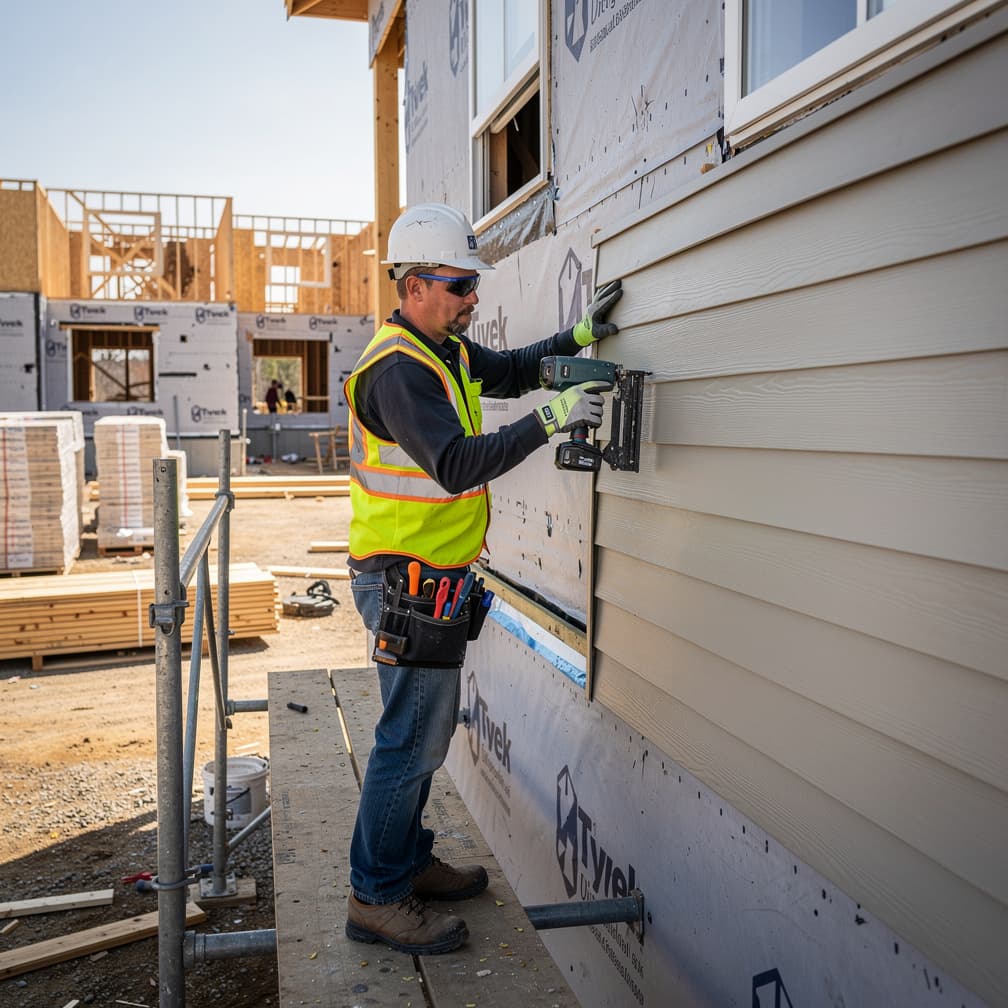

With about 54 siding contractors operating in Douglas County, a homeowner comparing bids has a stack of them, and the one difference anybody can verify in thirty seconds is whether your certificate is real and current. Ask an owner who lost a signed job to a lapsed policy how fast that check happens now. Proof of coverage works as a sales document in this trade, which is a strange thing to say about siding contractor insurance in Omaha, and it stays true anyway. Keep the certificate current, keep the limits at what your contracts ask for, and keep the named entity spelled the way the contract spells it. Renewal gaps are self-inflicted losses. Everything below is about the ones you control.
What Makes Omaha Different
The property owner who hires you decides when your paperwork is good enough, and that decision precedes the work. A homeowner in Omaha can ask for a certificate naming the trust that actually holds title to the house. Getting the entity name wrong on that certificate is a rejection, and rejections cost you the start date. Property managers hand the request to a compliance desk that reads limits, dates, and endorsements before anything else. Nobody at that desk will call you to explain what is missing, because that is not their job. So the fastest fix is asking for the exact wording before you sign rather than after you invoice. Forms in Nebraska vary by carrier, so keep a copy of every endorsement; a certificate alone confers no rights. The obligation belongs to the counterparty, and meeting it cleanly is the difference between a start date and a delay.
Local Risk Factors in Omaha
A crushed trailer is the loss owners do not plan for, and severe storms produce them across Douglas County without much notice. Ladders bent, staging twisted, a compressor under a fallen limb: none of it installs siding, and replacing it midweek stalls two crews at once. Inland Marine can help cover scheduled equipment depending on the perils written into your form, which is why the schedule needs real replacement values rather than what you paid years ago. The gap is time. A policy may replace the nailer, and it does nothing for the week you lost behind it. Keep a spare set of the tools that stop everything when they vanish, and treat the schedule as a working document instead of paperwork you filed once in Nebraska.
What Coverage Does a Siding Contractor in Omaha Need?
General Liability
The owner or general contractor who hires you asks for this one by name, and the certificate they want is proof it exists. General Liability can respond to a stranger hurt near your scaffold and to property damage your crew causes to gutters, windows, or landscaping. Your own defective work is typically carved out, while the damage it causes to the rest of the house may be treated differently.
Example: A ladder shifts, a downspout tears loose from the fascia, and the homeowner sends you the repair invoice along with a bill from the landscaper whose beds it landed in. This line may take it from there.
Workers Compensation
A fall from staging ends a career and starts a claim on the same afternoon. Workers Compensation can pay medical bills and a share of lost wages for an injured employee, and it typically bars that employee from suing you over the same injury. Who counts as an employee varies by state, and uninsured subs usually get charged back onto your payroll at audit.
Example: A helper on the second course misses a rung with a bundle of trim in one hand and lands wrong on frozen ground. The medical bills and part of his lost wages could fall here.
Commercial Auto
Trucks, vans, and the trailer hauling ladders and panels drop outside a personal auto policy the moment they earn money. Commercial Auto rates on your vehicle list, your driving radius, and who is allowed to drive. It might answer for injury and property damage after an accident on the way to a job in Omaha, subject to the drivers you disclosed.
Example: Reversing out of a tight driveway with panels past the tailgate, the trailer clips a parked car and the neighbor calls a lawyer rather than you. Claims like that one may sit here.
Tools & Equipment (Inland Marine)
Property that leaves your shop is where a building policy stops, and that gap is why this line exists. Inland Marine could help cover ladders, staging, compressors, nailers, and brakes against theft or damage between job sites, subject to the schedule you filed. Gear left off the schedule is usually yours to replace, and wear on old equipment is not a claim.
Example: The trailer sits locked at a job in Omaha on a quiet night, and by morning the compressor and two nailers are gone. Scheduled equipment is generally where this coverage does its work.
How Much Does Siding Contractor Insurance Cost in Omaha?
Siding Contractor Insurance is a bundle of separate policies, priced separately. The ranges below are typical figures for Omaha for each line, except workers compensation, which is rated per $100 of payroll; a quote prices each one against your own operations.
| Coverage | Typical range | What moves your price |
|---|---|---|
| General Liability Insurance | $180 - $550 per month | Industry and risk classification, annual revenue, number of employees |
| Workers Compensation Insurance | $0.75 - $2.74 per $100 of payroll | Employee classification codes, total annual payroll, experience modification rate |
| Commercial Auto Insurance | $230 - $600 per month | Fleet size and vehicle types, driver records and experience, coverage limits and deductibles |
| Inland Marine Insurance | $35 - $150 per month | Total insured value of the scheduled property, type and age of the equipment, where it is stored and how far it travels |
Prices shown are general estimates, not guaranteed rates or quotes. Your actual premium will depend on the insurer, coverage selected, business details, location, claims history, and other underwriting factors. Learn about our pricing methodology.
What Are the Insurance Requirements for a Siding Contractor in Omaha?
Workers' comp is generally required once you have your first employee. Nebraska generally requires employers to carry workers' compensation at that point. Common exemptions include sole proprietors, partners, and some agricultural workers. Confirm current thresholds with your state's workers' compensation agency before you hire.
State auto liability minimums apply to business vehicles. Nebraska's minimum auto liability limits are $25,000/$50,000/$25,000 (bodily injury per person / per accident / property damage). Contracts and lenders often require more than the state floor.
Where to verify licensing and coverage rules. The Nebraska Department of Insurance publishes consumer guidance and current insurance requirements for Nebraska businesses. When a contract or lease demands specific wording, the Nebraska Department of Insurance's guidance is the authoritative place to check.
Get Your Siding Contractor Quote in Omaha
Compare rates from multiple carriers. Free quotes, no obligation.
Operating in Omaha
- A lender's draw can sit until every file in the chain is complete, and yours is one of them. Nobody in that chain will chase your paperwork on your behalf.
- Tear-off on an older house in Omaha exposes whatever the last crew hid, and rot behind the wrap changes the scope on the spot. Get the change order signed before you fasten anything new, because a verbal scope is not a document a claim file can use.
- A property manager in Omaha can hold your start date until a certificate lands with the right entity name spelled the right way. Nobody phones to tell you it bounced.
- Ladders and staging spend their nights on a trailer, and a trailer parked on a street is a target for anyone carrying bolt cutters. What is not on your equipment schedule is not a claim.
How to Buy: Advice for Omaha Owners
Know what you are not buying. Your own faulty workmanship is typically excluded, which surprises owners who expected a policy to fund the redo of a wall they installed wrong. Rising water sits outside standard property forms and gets bought separately. Wear on an old ladder is not a claim, and neither is a nailer you simply lost. Workers Compensation does not reach a sub who never worked for you on paper, and Commercial Auto does not follow a personal errand. None of that makes the coverage weak; it makes the boundaries knowable, which is the whole point of reading a form before the loss. Ask each quote to show you the exclusions page written for Nebraska, not the brochure. The Nebraska Department of Insurance publishes consumer guidance on reading policy exclusions. Then compare quotes from participating carriers knowing exactly what sits outside each one.
FAQ
Siding Contractor Insurance in Omaha: FAQ
That is the everyday claim of this trade. General Liability may respond to property damage you cause to things you were never hired to touch: a bent downspout, a cracked window, a flowerbed crushed under a stack of panels. Your own work is the exception, since that piece is typically carved out. Small damage tends to get fixed out of pocket rather than filed, so weigh your deductible against the callbacks you actually see.
Ask before you bind, because turnaround belongs to the carrier and not to you. Handling varies: some issue routinely, some queue endorsement requests behind everything else, and adding a named party can carry a fee. Get the exact legal names and wording from the contract at signing, then have the file built once. A request from a site in Douglas County then takes minutes instead of an afternoon.
Someone walks past an open work zone, catches a foot on a bundle of trim or a scaffold leg, and goes down. You may hear nothing that day. The call arrives weeks later from a lawyer, and General Liability is the line that may answer for the injury and for the defense. Fence the debris zone and photograph it daily, because the file you never built is the one you end up needing.
Usually within a stated territory, though that detail is worth confirming rather than assuming. Underwriters ask for your radius of operation, and understating it to shave premium creates an argument at claim time. Vehicles are the sensitive part, since longer runs mean more miles and more exposure, and the rating reflects that. Tell a carrier where you actually work in Nebraska and let the quote price it.
It depends on what a bad month looks like for you. A higher deductible on an equipment schedule lowers premium and moves risk onto your cash: a stolen nailer becomes an annoyance you fund, a stolen trailer of staging becomes a week you fund. Set it where a bad day stays survivable. Then look at limits, which run the other way, since layers above the first tier usually cost less per dollar.
Payroll, working height, and claims history do most of the work. A crew doing single-story vinyl prices differently from one hanging fiber cement four stories up, and three clean years is worth more than any amount of shopping. Subcontractor spend matters too, since uninsured subs typically get charged back at audit. General Liability is quoted off the operation you describe, and carriers in Nebraska weigh the same description differently.
Sources
- 1.U.S. Census Bureau, County Business Patterns (2023), Douglas County(Douglas County has about 54 businesses in this trade's category (NAICS group 238170).)
- 2.Nebraska Department of Insurance(Nebraska Department of Insurance publishes consumer guidance for insurance buyers.)


