







































Updated July 10, 2026

Pool & Spa Contractor Insurance in Nevada
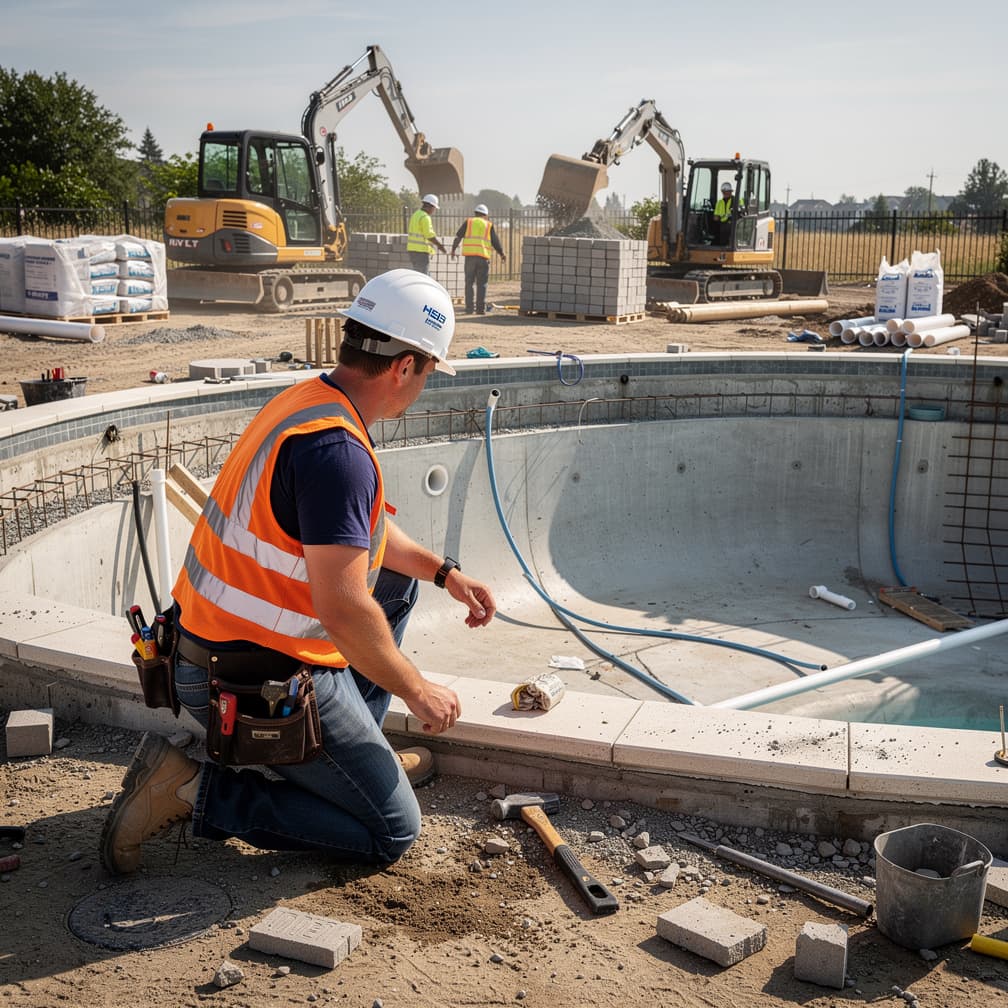
A pool and spa contractor in Nevada works around heat, excavation, water, heavy equipment, and tight jobsite timelines, so the insurance conversation is about more than a certificate. A pool & spa contractor insurance quote in Nevada should reflect how you actually build: trenching for plumbing, moving tools between Las Vegas, Reno, Henderson, and Carson City, storing materials in trailers or trucks, and handling wet surfaces where slip and fall claims can happen fast. Nevada’s wildfire and earthquake exposure also matters because a delayed project, damaged equipment, or interrupted access can change how liability and property protection should be structured. If your team installs pools, spas, decking, or related equipment, you may need a mix of contractor general liability for pool builders, completed operations coverage for pool contractors, commercial auto, inland marine, and umbrella protection. The goal is to align pool builder insurance or spa installation contractor insurance with Nevada’s rules, your lease requirements, and the way your crews, vehicles, and mobile property move from one site to the next.
Climate Risk Profile
Natural Disaster Risk in Nevada
Understanding climate-related risks helps determine appropriate insurance coverage levels.
Wildfire
High
Earthquake
High
Extreme Heat
High
Flash Flooding
Moderate
Expected Annual Loss from Natural Hazards
$320M
estimated economic loss per year across Nevada
Source: FEMA National Risk Index
Common Risks for Pool & Spa Contractor Businesses
- A customer or visitor slips on a wet work area near an open pool shell or spa installation site.
- Excavation, grading, or equipment movement damages a driveway, patio, fence, or nearby structure.
- A completed pool or spa installation later triggers a claim tied to an alleged defect or installation issue.
- Tools, pumps, or mobile property are stolen from a trailer, truck, or unsecured jobsite storage area.
- A truck or trailer used to move materials between jobsites is involved in a vehicle accident.
- A crew member is injured while lifting materials, working around water, or handling contractors equipment.
Risk Factors for Pool & Spa Contractor Businesses in Nevada
- Nevada wildfire exposure can interrupt pool and spa projects, create property damage concerns at job sites, and increase the need to review liability and umbrella coverage.
- Earthquake risk in Nevada can affect pool shells, spas, plumbing runs, and stored materials, making property damage and contractors equipment protection important.
- Extreme heat across Nevada can raise the chance of employee safety issues, medical costs, and lost wages on active pool and spa installation sites.
- Flash flooding in Nevada can damage mobile property, tools, equipment in transit, and materials staged near excavations or unfinished pools.
- Nevada’s construction work environment can increase slip and fall exposure around wet decks, open trenches, and installation areas, raising third-party claims risk.
How Nevada compares with the national baseline
Uninsured drivers
10.2% vs 11.6% baseline
About 10.2% of Nevada drivers are estimated to be uninsured, below the 11.6% average across states.
Fatal crashes per 100 million miles
1.38 vs 1.33 baseline
Nevada sees about 1.38 fatal crashes per 100 million miles driven, above the national average of 1.33.
Property crime per 100,000 residents
2,440 vs 2,200 baseline
Property crime in Nevada runs above the national average, at 2,440 vs 2,200 incidents per 100,000 residents.
Blue bar: Nevada. Gray line: national baseline.
How Much Does Pool & Spa Contractor Insurance Cost in Nevada?
Pool & Spa Contractor Insurance is a bundle of separate policies, priced separately. The ranges below are typical figures for Nevada for each line, except workers compensation, which is rated per $100 of payroll; a quote prices each one against your own operations.
| Coverage | Typical range | What moves your price |
|---|---|---|
| General Liability Insurance | $310 - $925 per month | Industry and risk classification, annual revenue, number of employees |
| Workers Compensation Insurance | $0.75 - $2.74 per $100 of payroll | Employee classification codes, total annual payroll, experience modification rate |
| Commercial Auto Insurance | $250 - $675 per month | Fleet size and vehicle types, driver records and experience, coverage limits and deductibles |
| Inland Marine Insurance | $50 - $210 per month | Total insured value of the scheduled property, type and age of the equipment, where it is stored and how far it travels |
| Commercial Umbrella Insurance | $110 - $320 per month | Umbrella limit requested, limits carried on the underlying policies, loss history on those underlying policies |
Prices shown are general estimates, not guaranteed rates or quotes. Your actual premium will depend on the insurer, coverage selected, business details, location, claims history, and other underwriting factors. Learn about our pricing methodology.
Get Your Pool & Spa Contractor Insurance Quote in Nevada
Compare rates from multiple carriers. Free quotes, no obligation.
What Nevada Requires for Pool & Spa Contractor Insurance
Non-compliance can result in fines, loss of contracts, and personal liability:
- Workers’ compensation is required in Nevada for businesses with 1+ employees, with limited exemptions for sole proprietors and some corporate officers.
- Commercial auto coverage should be built to meet Nevada’s minimum liability limits of $25,000/$50,000/$20,000 for vehicles used in pool and spa contracting operations.
- Nevada businesses often need proof of general liability coverage for commercial leases, so contractors should keep current certificates ready when bidding or signing space agreements.
- Policy buyers should confirm coverage for contractors equipment, tools, and mobile property if pumps, saws, mixers, or other jobsite items are regularly transported across Nevada.
- Contractors should review umbrella coverage and underlying policies when project size, subcontracted work, or customer injury exposure makes higher liability limits practical.
- Buyers should verify that their policy fits pool builder insurance and spa installation contractor insurance operations rather than a generic construction form that may not match the work.
| Requirement | What Nevada law says |
|---|---|
| Auto liability minimums | $25,000/$50,000/$20,000 (bodily injury per person / per accident / property damage). These floors apply to personal and business vehicles alike; lenders and contracts often require more. |
| Workers compensation | Generally required once you have your first employee. Some roles are exempt, so confirm current thresholds before you hire. |
| Where to verify | Nevada Division of Insurance publishes current requirements, consumer guides, and license lookups. |
Common Claims for Pool & Spa Contractor Businesses in Nevada
A crew member leaves a wet deck area open during a spa installation in Reno, and a visitor slips and falls before the surface is secured, triggering a third-party claim.
A sudden Nevada wind and flash flooding event damages tools, mobile property, and materials stored near an unfinished pool excavation, creating a replacement-cost issue.
A truck carrying pumps and installation tools is involved in a vehicle accident while traveling between Henderson and a nearby job site, affecting equipment in transit and commercial auto coverage.
Preparing for Your Pool & Spa Contractor Insurance Quote in Nevada
A list of services you perform, such as pool building, spa installation, decking, excavation coordination, and any subcontracted work.
Vehicle details, driver counts, and whether your crews use hired auto or non-owned auto in addition to owned company vehicles.
A current inventory of tools, contractors equipment, and mobile property that move between job sites.
Your payroll, employee count, lease requirements, and any desired coverage limits for general liability and umbrella coverage.
Coverage Considerations in Nevada
- General liability for bodily injury, property damage, advertising injury, and legal defense tied to pool and spa contracting work.
- Workers’ compensation if you have 1 or more employees, with attention to medical costs, lost wages, rehabilitation, and workplace injury exposure.
- Commercial auto and hired auto or non-owned auto protection for crews, service calls, and material runs across Nevada job sites.
- Inland marine coverage for tools, mobile property, contractors equipment, and equipment in transit between installations.
What Happens Without Proper Coverage?
Pool and spa claims bracket the whole project timeline. Access damage and struck utility lines happen in week one, injuries and staged-material losses happen mid-build, and the leak behind finish materials shows up a season after startup. A program reviewed only against the active jobsite ignores the completed operations tail, which is where this trade’s most stubborn claims live.
The backyard setting raises the stakes in ways commercial sites do not. You are excavating within feet of the house, the neighbor’s fence, and landscaping the owner just paid for, and an open shell sits exposed to homeowners, children, and other trades between your crew’s visits. Site security, access control, and daily documentation are not just safety practices here; they are what an underwriter reads as the difference between a controlled operation and a loss waiting to happen.
Subcontracted phases add a coordination risk. Excavation, gunite, electrical, and decking crews each bring their own insurance, and when a claim spans phases, the first argument is usually about whose policy responds. Contract transfer language and certificate tracking decide that argument in advance, so treat them as part of the insurance program rather than office paperwork.
Ask for limits sized to the largest projects you accept, not the smallest. One serious injury near an excavation or one major property damage claim on a high-value home looks nothing like a portable spa installation, and the program has to hold at the top end.
Recommended Coverage for Pool & Spa Contractor Businesses
Based on the risks and requirements above, pool & spa contractor businesses need these coverage types in Nevada:

General Liability
Essential coverage for every business, protect against third-party bodily injury, property damage, and advertising claims.

Workers Compensation
Help cover your employees' medical expenses and lost wages for work-related injuries and illnesses.

Commercial Auto
Protect your business vehicles and drivers with comprehensive commercial auto coverage.

Inland Marine
Protect tools, equipment, and goods in transit or stored at locations away from your primary premises.

Commercial Umbrella
Extend your liability limits beyond your primary policies for extra protection against catastrophic claims.
Pool & Spa Contractor Insurance by City in Nevada
Insurance needs and pricing for pool & spa contractor businesses can vary across Nevada. Find coverage information for your city:
Insurance Tips for Pool & Spa Contractor Owners
Review general liability insurance with completed operations in mind, especially if your work includes plumbing connections, equipment installation, finish work, and post-startup punch list visits after the main build is complete.
Separate your vehicle exposures from your mobile equipment exposures so commercial auto insurance and inland marine insurance are each scheduled for the property and liability they are actually intended to address.
Bring a current equipment list to the quote process, including trailers, specialty tools, testing gear, and installation equipment that regularly moves between your yard, suppliers, and open job sites.
Check that your payroll estimates match the labor you actually use for excavation, installation, finishing, and service work, because workers compensation pricing and classification depend heavily on those details.
If you rely on subcontractors for excavation, electrical, gunite, decking, or other phases, review your contract transfer language and certificate tracking process before assuming their policy can help protect your business against covered losses.
Ask whether your liability limits are sized for the largest residential projects you accept, because one serious injury or property damage claim can look very different from a small spa installation.
Document how you secure active sites, stage materials, and control access after hours, since those operational details can affect both claim frequency and the way an underwriter views your risk.
Compare umbrella options if you work on high-value homes or larger backyard builds, because underlying liability limits that feel adequate on smaller jobs may not leave much room on a severe claim.
FAQ
Frequently Asked Questions About Pool & Spa Contractor Insurance in Nevada
Most Nevada pool and spa contractors start with general liability, workers’ compensation if they have 1 or more employees, commercial auto, and inland marine. Depending on project size and equipment use, umbrella coverage and contractors equipment protection may also fit.
Pricing varies based on payroll, vehicle use, project scope, limits, claims history, and the amount of tools or equipment you move between jobs. For Nevada, the average premium range in the data is $223 to $893 per month, but your quote can differ.
Workers’ compensation is required for businesses with 1 or more employees, with some exemptions. Nevada also has commercial auto minimums of $25,000/$50,000/$20,000, and many commercial leases ask for proof of general liability coverage.
It can, if your policy includes completed operations coverage for pool contractors. That matters when a finished pool, spa, or related installation later causes a bodily injury or property damage claim after the job is done.
Often yes, if the policy is written to match both services. The key is making sure your pool builder insurance or spa installation contractor insurance reflects all of your work, equipment, vehicles, and liability limits.
General liability, workers compensation, commercial auto, inland marine, and commercial umbrella coverage form the usual set. The weighting depends on your crew, vehicles, mobile tools, subcontractor use, and the size of projects you take on.
Completed operations is the part of general liability that matters after handoff, and its terms vary by policy. If a claim surfaces once the pool is in use, alleged property damage from a leak or an installation issue, that is the coverage section doing the work, so read it closely.
If your tools move between yards, suppliers, trailers, and open job sites, yes, that is the pattern inland marine exists for. Theft from a trailer or damage in transit falls outside what a fixed-location property policy is designed around.
Updated March 31, 2026