Updated July 16, 2026

Key Takeaways
- Compare a standalone commercial property policy against a Businessowners Policy using the same deductible, valuation method, and business income assumptions.
- Review whether your building and contents are insured on actual cash value or replacement cost before you accept a lower premium.
- Update your property schedule, equipment list, and inventory values before requesting quotes so limits match what you own now.
- Read your lease and identify which improvements, fixtures, signs, and attached equipment you are responsible to insure.
- Ask for ordinance or law and equipment breakdown to be reviewed if rebuilding costs or mechanical failure could interrupt operations.
Commercial Property Insurance in Nevada
Nevada businesses face a property risk mix unlike most states. High wildfire exposure, significant earthquake risk, extreme heat, and periodic flash flooding all shape how your commercial property policy should be structured. That matters whether you operate near Carson City, in Reno's warehouse corridors, along the Las Vegas Strip, or in a smaller community where local commerce drives the economy. Nevada has 340 active insurers competing in the market, which means more carriers vying for your premium dollar and more room to compare terms. Pricing still reflects local hazards, construction type, and the way your building is used.
Your goal is not just to protect walls and contents. It is to make sure the policy fits the property's replacement value, your deductible tolerance, and any endorsements you may need for business income or ordinance or law coverage.
What Commercial Property Insurance Covers
A Nevada commercial property policy is designed to protect physical assets tied to a business location, but the exact protection depends on the form, limits, and endorsements you choose. Core coverage usually includes building protection if you own the structure, plus business personal property coverage for equipment, furniture, fixtures, inventory, computers, and signage. That matters in a state where many businesses operate in high-traffic, high-heat, or wildfire-adjacent areas. A damaged roof, storefront, or stockroom can create immediate operating losses.
Standard policies typically respond to covered building damage from fire, windstorm, hail, theft, vandalism, and similar perils, but they do not automatically cover every loss. Flood is a separate issue. Standard policies exclude flood damage even outside a designated flood zone, so businesses exposed to flash flooding should evaluate separate flood protection. Earthquake exposure is also significant in Nevada. Owners should ask whether the carrier offers earthquake-related options or whether that exposure is excluded under the base form.
Nevada does not impose a universal commercial property mandate, but requirements can vary by industry, lease terms, lender conditions, and business size. Many owners also add business income coverage to help with lost revenue and continuing expenses after a covered closure, and equipment breakdown coverage if they rely on specialized systems or machinery. Ordinance or law coverage can be important when repairs trigger code-related upgrades after a loss. For Nevada businesses, the practical question is not only what is covered, but whether the policy is built to match local rebuilding realities and the state's risk profile.

Building Coverage
Can help pay to repair or rebuild your building after covered damage like fire, wind, or vandalism.

Business Personal Property
Can help replace furniture, inventory, equipment, and supplies inside your building when a covered event damages or destroys them.
Business Income
May replace lost revenue and help cover ongoing expenses like payroll and rent while covered damage keeps your business closed.

Equipment Breakdown
Typically covers sudden mechanical or electrical failure of equipment like HVAC systems, boilers, or refrigeration units, which standard property policies often exclude.
Ordinance or Law
Can help cover the added cost of rebuilding to current building codes after a covered loss to an older structure.
Commercial Property Insurance Requirements in Nevada
- The Nevada Division of Insurance regulates the market, so policy terms and carrier practices should be reviewed through that state framework.
- Standard commercial property policies exclude flood damage, so flash-flood exposure in Nevada usually requires a separate flood solution.
- Ordinance or law coverage can matter when repairs must meet updated code requirements after a covered loss.
- Earthquake exposure is high in Nevada, so buyers should confirm whether the base form excludes it or whether a separate option is available.
How Much Does Commercial Property Insurance Cost in Nevada?
Average Cost in Nevada
$60 - $280
per month
Businesses in Nevada typically see commercial property insurance premiums of $60 - $280 per month, which tends to run 4% below the national range of $65 - $290 per month.
- Building value and construction type
- Roof age and condition
- Fire protection class
- Occupancy and the operations inside the building
- Business personal property and equipment values
- Wind and hail deductible terms
Contact CPK Insurance for a personalized quote.
Commercial property insurance cost in Nevada reflects both the state's market conditions and its hazard profile. Nevada's premium index is 124, which means carriers price local risk about 24 percent above a national baseline, so you may see higher base rates than in lower-risk states. That does not mean every business pays the same amount. It means local underwriting tends to price in wildfire, earthquake, extreme heat, and flash flooding more heavily than a lower-risk market would.
Your premium reflects a mix of factors. Higher limits generally raise the premium, while higher deductibles may reduce it. Location is another major factor, especially for properties in wildfire-prone, flood-prone, or older urban corridors. Claims history, industry or risk profile, and policy endorsements also affect pricing. The quote can still vary widely based on construction type, occupancy, fire protection features, and whether you need add-ons such as business income or equipment breakdown coverage.
Nevada has 82,600 businesses, and 99.4% are small businesses, which means carriers are often quoting compact operations with very different property values and protection needs. Your premium reflects how your specific operation fits the carrier's appetite. Businesses in Accommodation and Food Services, Retail Trade, Construction, and Healthcare and Social Assistance may see different pricing because their contents, occupancy patterns, and interruption exposure vary. Accommodation and Food Services businesses account for 22.4% of employment in the state, which means many carriers see concentrated risk in kitchens, refrigeration, and high-traffic dining spaces. When you request a quote, expect the carrier to ask for square footage, building materials, protection systems, occupancy details, and the replacement cost basis used for the policy.
| Property Type | What's Covered | Common Exclusions |
|---|---|---|
| Building | Structure, roof, systems, permanent fixtures | Flood, earthquake, normal wear |
| Business Personal Property | Equipment, inventory, furniture, computers | Employee personal property, vehicles |
| Tenant Improvements | Build-outs, custom installations, modifications | Structural changes without landlord approval |
| Business Income | Lost revenue during covered shutdown | Losses from non-covered perils |
| Extra Expense | Additional costs to minimize shutdown | Costs not related to covered loss |
Building
- What's Covered
- Structure, roof, systems, permanent fixtures
- Common Exclusions
- Flood, earthquake, normal wear
Business Personal Property
- What's Covered
- Equipment, inventory, furniture, computers
- Common Exclusions
- Employee personal property, vehicles
Tenant Improvements
- What's Covered
- Build-outs, custom installations, modifications
- Common Exclusions
- Structural changes without landlord approval
Business Income
- What's Covered
- Lost revenue during covered shutdown
- Common Exclusions
- Losses from non-covered perils
Extra Expense
- What's Covered
- Additional costs to minimize shutdown
- Common Exclusions
- Costs not related to covered loss
How Nevada compares with the national baseline
Property crime per 100,000 residents
2,440 vs 2,200 baseline
Property crime in Nevada runs above the national average, at 2,440 vs 2,200 incidents per 100,000 residents.
Blue bar: Nevada. Gray line: national baseline.
Prices shown are general estimates, not guaranteed rates or quotes. Your actual premium will depend on the insurer, coverage selected, business details, location, claims history, and other underwriting factors. Learn about our pricing methodology.
Request a Quote Comparison
Enter your ZIP code to compare commercial property insurance rates from top carriers.
Business insurance starting at $25/mo
Who Needs Commercial Property Insurance?
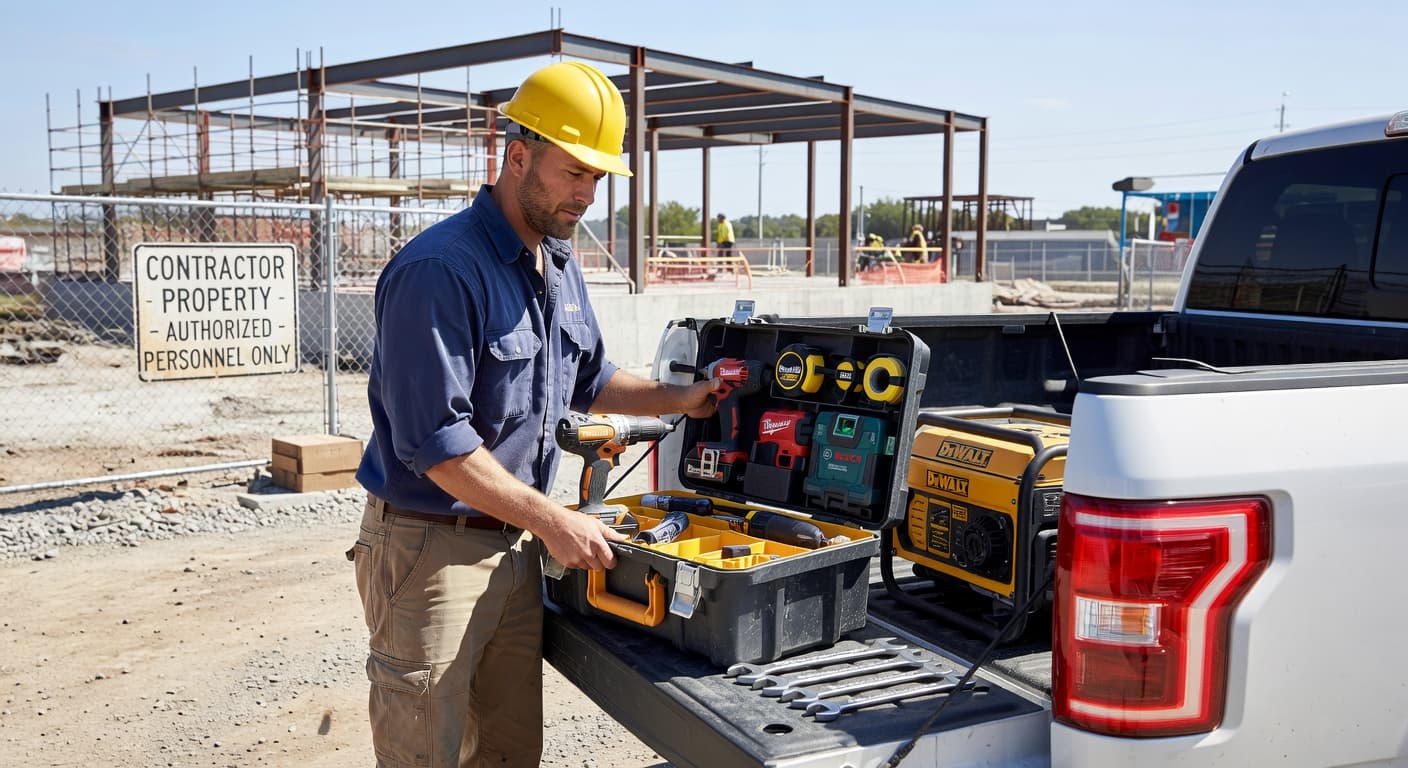
Commercial property insurance in Nevada is relevant to any business that owns, leases, or depends on a physical location, but some groups have especially strong reasons to review it closely. Accommodation and Food Services businesses represent significant invested capital exposed to fire risk, equipment breakdown, or storm damage, given their kitchens, refrigeration, fixtures, signage, and inventory. Retail Trade businesses may need business personal property coverage for stock, shelving, displays, and point-of-sale equipment that can be damaged by theft, vandalism, or building damage. Construction firms often carry tools, materials, and temporary office contents that can be exposed to theft or weather-related losses at job-adjacent locations.
Healthcare and Social Assistance operations may need stronger building coverage because patient-facing spaces, records areas, and specialized equipment can be costly to restore after a covered loss. Professional and Technical Services firms, even when smaller, can still depend on computers, furniture, and leasehold improvements that are vulnerable to fire risk or vandalism. If a business operates in Carson City, Reno, Las Vegas, Henderson, or another Nevada city with different hazard conditions, the policy should reflect that location's rebuilding and protection profile.
Nevada's small-business environment also matters. Many owners are balancing limited cash flow against the need for adequate limits. That makes coverage a practical issue, not just a legal one. Lenders, landlords, and contract terms may require proof of coverage even when state law does not set a single universal minimum. Owners who lease space should still evaluate whether their lease requires building, contents, or ordinance or law coverage, because a lease can shift repair responsibilities in ways the base policy does not automatically mirror.
Businesses in wildfire-exposed, earthquake-exposed, or flash-flood-prone parts of Nevada should treat property insurance as a resilience tool, not just a compliance item. A single covered loss can affect inventory, signage, tenant improvements, and revenue continuity at the same time. The right policy structure matters for both recovery and day-to-day operations.
Commercial Property Insurance by City in Nevada
Commercial Property Insurance rates and coverage options can vary across Nevada. Select your city below for localized information:
How to Buy Commercial Property Insurance
To buy commercial property insurance in Nevada, start by matching the policy to the property you actually use, not just the building you own. The Nevada Division of Insurance regulates the market, so your quote process should begin with a licensed carrier or agent who can explain state-specific options and endorsements. Because Nevada businesses should compare quotes from multiple carriers, it is smart to request quotes from several insurers active in the market, while remembering that availability and fit vary by property.
Have your property details ready before you shop. Carriers usually want the address, square footage, construction type, occupancy type, replacement cost estimate, deductible preference, and a list of contents or equipment. When you request business income coverage, be prepared to explain how long a covered closure would affect rent, payroll, loan payments, taxes, and net income. Your operation may also call for equipment breakdown coverage if you rely on specialized machinery or systems, or ordinance or law coverage if repairs could trigger building-code upgrades.
Underwriting still depends on risk details. A warehouse in Reno, a restaurant in Las Vegas, and a retail shop in Carson City may all receive different terms because of location, occupancy, and protection features. If your business is in a high-hazard area, ask the carrier how wildfire, earthquake, heat exposure, or flash-flood exposure affects the quote.
Before binding coverage, review whether the policy uses replacement cost or actual cash value, because replacement cost can cost more but pays more at claim time. Confirm deductibles, limits, endorsements, and any exclusions in writing. If you lease your space, verify that the policy matches the lease obligations and that your building coverage lines up with who is responsible for repairs after a covered loss. Request a quote today to compare options from multiple carriers.
How to Save on Commercial Property Insurance
The most reliable way to manage your premium is to shape the risk profile the carrier sees. Start by comparing quotes from multiple insurers, because the same property can price differently depending on underwriting appetite. Use that competition to your advantage, especially if you are shopping for a small operation.
Raise deductibles only if your cash flow can support them after a loss. A higher deductible can reduce premium, but it should not be so high that a wildfire, storm damage, or vandalism claim becomes difficult to absorb. Review limits carefully, because overinsuring can raise cost while underinsuring can trigger claim reductions through coinsurance. Coinsurance commonly requires a substantial share of replacement cost, so accurate building valuations matter.
Choose coverage based on actual exposure. If your operation has expensive systems, equipment breakdown coverage may be worth pricing separately rather than assuming the base form is enough. If your property is older or likely to require code upgrades after a loss, ask about ordinance or law coverage before you bind the policy. If lost income would be a problem after a covered closure, business income coverage may be more valuable than expanding limits on low-priority items.
Fire protection, security features, maintenance of roofs and HVAC systems, and documented building condition can all support a stronger underwriting profile. Because Nevada's hazards include wildfire, earthquake, extreme heat, and flash flooding, location-specific mitigation is especially important.
Our Recommendation for Nevada
For Nevada buyers, the smartest approach is to build the policy around the property's real replacement cost, the lease or lender obligations, and the hazards most likely to affect the location. Prioritize building coverage if you own the structure, then add business personal property coverage for contents, and consider business income coverage if a shutdown would strain cash flow. If your equipment is specialized, ask early about equipment breakdown coverage rather than assuming it is included. If the building is older, ordinance or law coverage can be a practical add-on because code-driven repairs can change the cost of recovery. Compare at least three quotes, and make sure each carrier is using the same limits, deductible, and valuation method so the numbers are actually comparable.
FAQ
Frequently Asked Questions
In Nevada, it can commonly help cover owned buildings, business personal property, inventory, furniture, fixtures, computers, and signage, with protection tied to covered perils such as fire, windstorm, theft, vandalism, and hail. You can often add business income coverage for revenue loss during a covered closure.
Your monthly cost depends on location, construction type, limits, deductible, claims history, and endorsements. Properties exposed to wildfire, earthquake, or flash flooding may price differently than lower-risk locations.
Yes, many Nevada tenants still need business property insurance because leased spaces often contain furniture, equipment, inventory, and tenant improvements that are not protected by the landlord's policy. Your lease may also require proof of coverage or specific limits.
Location, replacement cost, building construction, occupancy type, fire protection features, claims history, and policy endorsements are the main drivers. Nevada's high wildfire and earthquake exposure can also influence underwriting and pricing.
Look at building coverage, business personal property coverage, business income coverage, equipment breakdown coverage, and ordinance or law coverage. The right mix depends on whether you own the building, how much equipment you use, and how quickly you need to recover after a covered loss.
Start with a licensed agent or carrier regulated by the Nevada Division of Insurance, then share your address, occupancy, square footage, construction type, contents values, and desired deductible. Comparing multiple quotes is important because carrier appetite and pricing can vary.
Choose a deductible you can actually pay after a loss, but keep the limit high enough to reflect the building's replacement cost and the value of contents. Underinsuring can reduce claim payments through coinsurance, so accurate valuation is especially important.
Commercial property insurance in the U.S. generally addresses buildings, contents, and related property exposures described in the policy. III says a BOP covers any buildings the business owns and much of the property needed to run the business, so your declarations and endorsements matter.
Sources
- 1.iii.org
Updated July 16, 2026