







































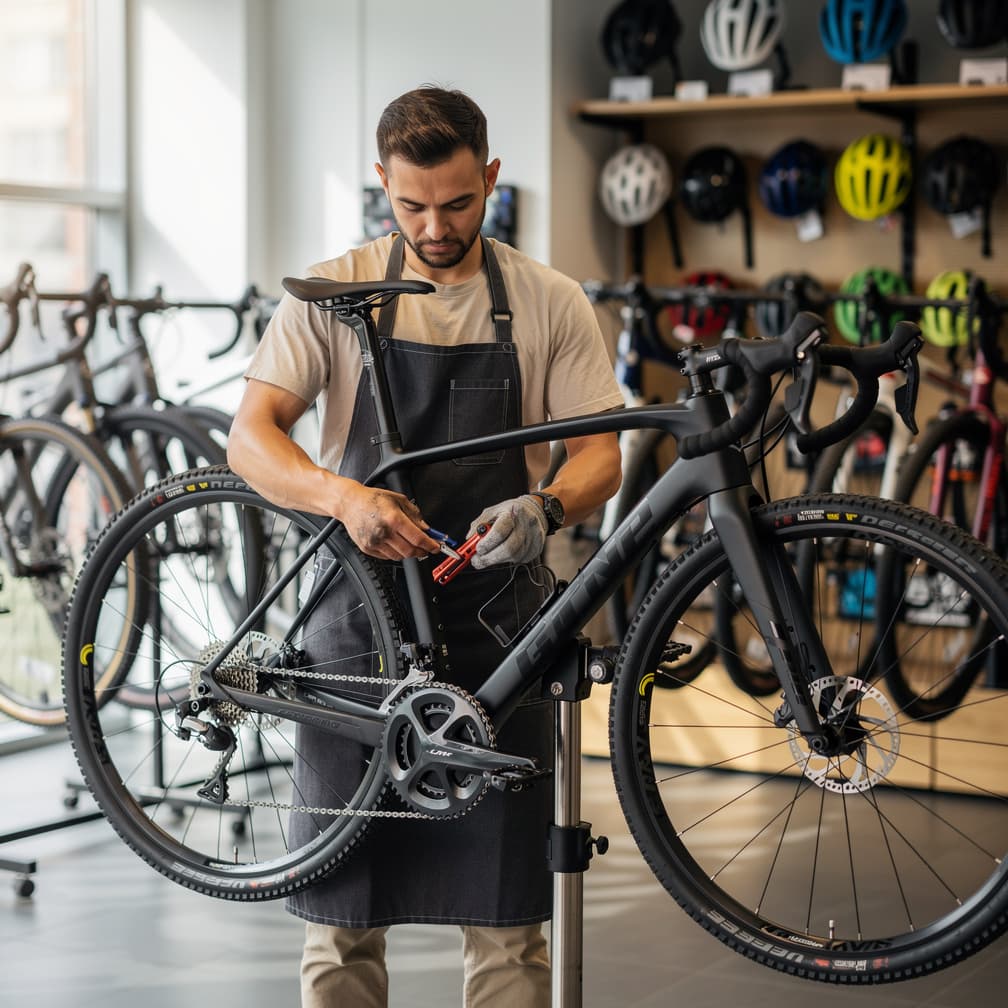

As a bike shop in Las Vegas, your busiest hours are also your riskiest ones: a full floor, a crowded aisle, and a repair queue that tempts shortcuts. A slip near the door is the claim everyone pictures, and it is real, but the quieter ones do more damage. A bike returned after service that fails on the road puts your work on trial. An overnight break-in takes the highest-value inventory first, because the expensive frames resell fastest. Bike shop insurance in Las Vegas is the set of decisions that settles which of those you absorb yourself. Deductibles, limits, and what counts as covered property are where that gets decided. Compare quotes from participating carriers on those terms before the season turns and the floor fills up.
What Makes Las Vegas Different
Additional insured wording is the quiet clause that decides whose policy answers first when a claim starts. A landlord named on your policy is asking your carrier to defend them for something you did. That is ordinary in retail leases, and it is also a real transfer of risk onto your limit. The shopping-center lease behind a Las Vegas storefront can require it, plus a waiver and advance notice terms. Each of those items is an endorsement, and endorsements take time your opening date may not have. Start the paperwork before you commit to a date, because a certificate cannot be backdated honestly. Ask the carrier to review the exhibit language rather than reading it yourself and hoping for the best. Carriers in Nevada use different form editions, so the wording either matches what you signed or does not.
Local Risk Factors in Las Vegas
A shop that closes for a week under an evacuation order still owes rent, and the riders whose bikes sit on your racks still want them back. Customer property in your care is what owners forget in an evacuation, because those frames belong to somebody else and a standard form is written around what you own. Ask participating carriers in Nevada about property of others before a season in Las Vegas when the air turns brown. Smoke damage to stock is a claim of its own, and cleaning a floor of bikes runs slower and costs more than it sounds. Keep your inventory documentation off site, since the file in the office does not survive what the office does not survive.
What Coverage Does a Bike Shop in Las Vegas Need?
General Liability
Landlords and event organizers ask for this one by name, and it is the line that answers when somebody outside your payroll gets hurt or has their property damaged. For a bike shop that means customer injuries on the floor, plus products and completed operations: the claim that follows a repair or a part out the door. It typically excludes your own stock and your own staff.
Example: A customer catches a pedal on the way past a display and goes down hard in Las Vegas; general liability can help cover the medical bills and the suit that tends to follow.
Commercial Property
Flood and ordinary wear are generally outside it, which tells you what it is for: sudden accidental damage to the space you occupy, the bikes and parts inside it, and the stands, jigs, and diagnostic gear that earn your service revenue. Theft is usually included, subject to limits and to how the loss happened. Values you cannot document are values it may not pay.
Example: Someone puts a brick through the front glass overnight and three e-bikes leave the display wall; commercial property may respond to the stolen stock and the window alike, minus your deductible.
Workers Compensation
Employee injuries sit outside general liability entirely, which is the reason this line exists at all. Lifting an e-bike onto a stand, a hand caught in a chainring, a slip in a wet bay: the coverage is meant for medical costs and lost wages when staff get hurt on the job. Rules on who must carry it vary by state, and it is rated on payroll rather than a flat monthly figure.
Example: A mechanic strains her back wrestling a cargo bike onto the stand and misses three weeks at your Las Vegas shop; workers compensation is designed to pick up the medical bills and part of the wages.
Business Owners Policy
Think of it as the property and the liability conversations settled inside one document, often with some business income terms attached and priced for a shop your size. It bundles rather than expands, so employee injuries, flood, and a number of other perils generally stay outside it. The convenience is real, the exclusions are unchanged, and the limits still need reading.
Example: A pipe splits above the stockroom and soaks a season of parts, closing the bay for two weeks; a business owners policy could answer for the ruined stock and the lost trading days both.
How Much Does Bike Shop Insurance Cost in Las Vegas?
Bike Shop Insurance is a bundle of separate policies, priced separately. The ranges below are typical figures for Las Vegas for each line, except workers compensation, which is rated per $100 of payroll; a quote prices each one against your own operations.
| Coverage | Typical range | What moves your price |
|---|---|---|
| General Liability Insurance | $65 - $190 per month | Industry and risk classification, annual revenue, number of employees |
| Commercial Property Insurance | $80 - $260 per month | Building value and construction type, roof age and condition, fire protection class |
| Workers Compensation Insurance | $0.75 - $2.74 per $100 of payroll | Employee classification codes, total annual payroll, experience modification rate |
| Business Owners Policy Insurance | $90 - $290 per month | Annual revenue and industry class, building and contents values, square footage and building age |
Prices shown are general estimates, not guaranteed rates or quotes. Your actual premium will depend on the insurer, coverage selected, business details, location, claims history, and other underwriting factors. Learn about our pricing methodology.
What Are the Insurance Requirements for a Bike Shop in Las Vegas?
Workers' comp is generally required once you have your first employee. Nevada generally requires employers to carry workers' compensation at that point. Common exemptions include sole proprietors and some corporate officers. Confirm current thresholds with your state's workers' compensation agency before you hire.
Flood damage is typically excluded from standard policies. Standard commercial property and builders-risk-type policies typically exclude flood damage. Flood exposure varies address by address, so check your premises in FEMA's Flood Map Service Center before deciding; if you sit in a mapped flood zone, a separate policy through the National Flood Insurance Program is the usual starting point.
Where to verify licensing and coverage rules. The Nevada Division of Insurance publishes consumer guidance and current insurance requirements for Nevada businesses. When a contract or lease demands specific wording, the Nevada Division of Insurance's guidance is the authoritative place to check.
Get Your Bike Shop Quote in Las Vegas
Compare rates from multiple carriers. Free quotes, no obligation.
Operating in Las Vegas
- A trade-in you clean up and resell carries a products exposure of its own, even though nobody handed you a quote for the privilege of selling used bikes.
- Seasonal hires move your payroll, and payroll is the rating base for workers compensation, so the audit after the season tends to find whatever the estimate before it missed.
- A race organizer or a school district in Las Vegas can require an additional insured endorsement before you set up a repair tent, and endorsements do not issue the same afternoon you ask.
- Group rides leaving from your door blur the line between a sales event and an activity you are hosting, and that distinction is one a carrier will want to talk through with you.
How to Buy: Advice for Las Vegas Owners
Once the lease is signed your leverage is gone, so do the insurance work while you still have some. The exhibit can be negotiated: limits, additional insured wording, notice periods, and who bears what. After signing, all of it is simply a bill you already agreed to. Price the requirement before you commit, because a General Liability limit that looked routine can cost real money at the top end. Ask your carrier what the endorsement costs to add before you agree to it in writing. Commercial Property should be sized to your stock and gear rather than to the lease, since the lease does not care what your display wall is worth. The Nevada Division of Insurance publishes consumer guidance on business insurance requirements. With the numbers in hand, compare quotes from participating carriers before you set an opening date in Las Vegas.
FAQ
Bike Shop Insurance in Las Vegas: FAQ
Theft of stock is usually a Commercial Property question, and the answer turns on the deductible, the limit, and how the loss happened. Forced entry and unexplained disappearance are not always treated alike. Ask how the policy values inventory, because replacement cost and actual cash value pay very differently on a wall of e-bikes. Your documented count is what turns that claim into arithmetic.
It is a one-page summary issued by the carrier showing that a policy exists on a given date. Landlords, event organizers, brand programs, and lenders all ask for one. The certificate grants nothing by itself; it describes a policy that either performs or does not. Keep a list of everyone holding one on your Las Vegas shop and send updates the week you renew.
It means the landlord wants your policy to defend and cover them for claims arising out of your operations. That is ordinary in retail leases, and it is a real transfer of risk onto your limit. It takes an endorsement, and the wording has to match what you signed. If a landlord in Las Vegas requires it, get the request to your carrier early, because endorsements are not instant.
Generally not. The aggregate is a ceiling on the whole policy year, while the per-occurrence figure only caps what any single claim can draw out of it. A shop that sells parts and services bikes really can see two of these in one season, and the second claim meets whatever the first one left behind. Ask whether defense costs come out of that same pot, because legal fees on a repair dispute can drain it before anyone discusses settlement.
It bundles, which is convenient, and bundling is not the same thing as completeness. A Business Owners Policy commonly combines property and liability into one document, often with some business income terms attached. Employee injuries generally sit outside it, and so do flood and a number of other perils. Read the limits and the exclusions rather than assuming the package settled the question.
A seller can be named in a products claim even when somebody else fitted the part. The allegation is what triggers a defense, and defending costs money whether or not you were at fault. Products and completed operations coverage is generally part of a shop's general liability, subject to the policy's terms. Keep sales records, because proving what you sold and when is the first thing anyone asks.
Sources
- 1.Nevada Division of Insurance(Nevada Division of Insurance publishes consumer guidance for insurance buyers.)
- 2.FEMA / FloodSmart(Flood coverage is typically purchased separately; FEMA administers the National Flood Insurance Program.)


