







































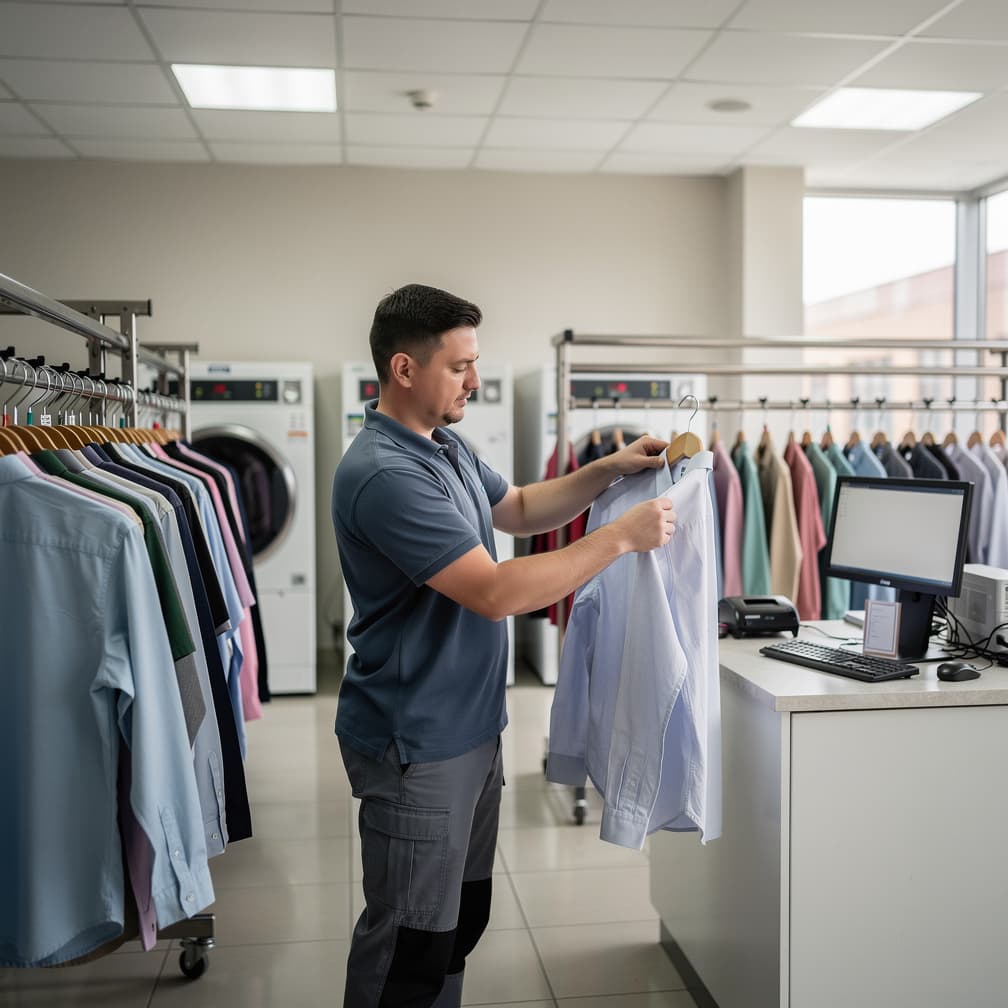

General liability for a small cleaning or laundry shop often starts from $35 a month, which is the least expensive part of this decision and the worst place to stop reading. That figure buys a limit for the customer who slips on a wet floor and says nothing about the racked orders behind the counter. Dry cleaning and laundry insurance in Reno is really three questions: your building and machines, other people's clothes, and your people. Each one is priced on a different input, and only one of them tracks the number in a comparison ad. Replacement cost drives one, payroll drives another, and participating carriers in Nevada weigh your claims history against all three. Read the next sections before you shop on the monthly figure alone.
What Makes Reno Different
Payroll is the meter for the injury side of a Reno plant, and it runs continuously. Presser hours, sorter hours, and counter hours are classified differently, and classification moves the rate. Getting a class code wrong is expensive in both directions, at audit and at claim time. Workers Compensation is rated per hundred dollars of payroll, so headcount honesty is the whole game. An audit at year end trues the number up whether you enjoyed the estimate or not. Owners who guess low at binding are the ones holding a surprise invoice months later. Give a participating carrier in Nevada the real wage records the very first time around. A clean quote built on real numbers is the only quote worth comparing to another one.
Local Risk Factors in Reno
Wildfire reaches a laundry through smoke long before any flame gets close. Smoke odor in fabric is a real loss, and a plant full of clean garments is precisely the wrong place for it. Rewashing an entire rack for customers who did nothing wrong is slow and expensive. Commercial Property may respond to smoke damage at your premises, subject to the form, while property of others in your care is usually handled under its own smaller amount. Ask a participating carrier in Nevada how smoke-only losses are treated for a Reno plant, because some forms want visible damage rather than odor alone.
What Coverage Does a Dry Cleaning & Laundry in Reno Need?
General Liability
Landlords, linen accounts, and property managers name this line on nearly every certificate they ask for. It can help cover a customer hurt at your counter and damage you cause to somebody else's property. Garments in your care are handled under separate care, custody, and control terms with their own sublimit, and chemical release from solvent is often narrowed by endorsement.
Example: A customer steps off a wet tile near the pressing counter and fractures a wrist. The medical bills and the demand letter that follows are the kind of claim this line is intended to answer.
Commercial Property
Presses, boilers, tumblers, racks, and the building shell itself sit behind this line. It may help with sudden physical damage from fire, theft, vandalism, or a storm at your address. Property belonging to customers is usually available only under a smaller separate amount, and flood is typically excluded and priced through a policy of its own.
Example: A dryer fire spreads out of a lint-packed duct and takes out two machines and part of a wall. Repair and replacement costs may fall to this coverage, subject to your deductible.
Business Owners Policy
Rather than buying property and liability separately, many small plants fold both into one form here. It commonly bundles contents or building, the liability limit an account demands, and an income provision for a covered shutdown. The bundled sublimits are the part to read, especially the amount available for customer goods in a Reno shop.
Example: A burst supply line soaks a rack of finished orders and shuts the plant for a week. Both the damage and the income that stopped with it could be picked up under a single form here.
Workers Compensation
Burns at a press, strains from lifting wet linen, and hands caught in machinery are the injuries this trade actually produces. State rules decide when it is required and thresholds vary. The Nevada Division of Insurance publishes the current requirements for Nevada. Rates run per hundred dollars of payroll, and job classification moves them considerably.
Example: A presser burns a forearm on a hot head during a rush and needs stitches plus two weeks away. Medical costs and a share of lost wages are generally handled through this line.
How Much Does Dry Cleaning & Laundry Insurance Cost in Reno?
Dry Cleaning & Laundry Insurance is a bundle of separate policies, priced separately. The ranges below are typical figures for Reno for each line, except workers compensation, which is rated per $100 of payroll; a quote prices each one against your own operations.
| Coverage | Typical range | What moves your price |
|---|---|---|
| General Liability Insurance | $65 - $200 per month | Industry and risk classification, annual revenue, number of employees |
| Commercial Property Insurance | $120 - $370 per month | Building value and construction type, roof age and condition, fire protection class |
| Business Owners Policy Insurance | $140 - $380 per month | Annual revenue and industry class, building and contents values, square footage and building age |
| Workers Compensation Insurance | $0.75 - $2.74 per $100 of payroll | Employee classification codes, total annual payroll, experience modification rate |
Prices shown are general estimates, not guaranteed rates or quotes. Your actual premium will depend on the insurer, coverage selected, business details, location, claims history, and other underwriting factors. Learn about our pricing methodology.
What Are the Insurance Requirements for a Dry Cleaning & Laundry in Reno?
Workers' comp is generally required once you have your first employee. Nevada generally requires employers to carry workers' compensation at that point. Common exemptions include sole proprietors and some corporate officers. Confirm current thresholds with your state's workers' compensation agency before you hire.
Flood damage is typically excluded from standard policies. Standard commercial property and builders-risk-type policies typically exclude flood damage. Flood exposure varies address by address, so check your premises in FEMA's Flood Map Service Center before deciding; if you sit in a mapped flood zone, a separate policy through the National Flood Insurance Program is the usual starting point.
Where to verify licensing and coverage rules. The Nevada Division of Insurance publishes consumer guidance and current insurance requirements for Nevada businesses. When a contract or lease demands specific wording, the Nevada Division of Insurance's guidance is the authoritative place to check.
Get Your Dry Cleaning & Laundry Quote in Reno
Compare rates from multiple carriers. Free quotes, no obligation.
Operating in Reno
- The building you rent was probably never designed for the water, heat, and load a laundry puts through it. A landlord in Reno can still hold you responsible for damage to the premises under the lease you signed.
- Alterations and repairs done in-house look like a service and behave like a professional exposure. A ruined hem is a different argument than a scorched sleeve, and not every form treats the two the same way.
- Bagged orders sitting in a car, a locker, or a hallway are still in your care until the customer takes them. Where the handoff happens decides who owns the loss when something goes missing.
- Payroll changes every season, and a policy does not notice until the audit does. Updating wage figures mid-term with a participating carrier in Nevada is cheaper than arguing about them after the fact.
How to Buy: Advice for Reno Owners
Your lease is the first document to read, because it usually names the limit and the party that must be added as an additional insured. Pull it out before you request a single quote for a Reno shop. General Liability is what a landlord names, and Commercial Property is what a lender names once it has financed your press or boiler. Those two demands can be satisfied by one Business Owners Policy in many cases, and one policy is easier to renew than two. Gather the lease, an equipment list with replacement values, and your last twelve months of revenue. The Nevada Division of Insurance publishes consumer guidance on commercial insurance basics if any of the terms are new to you. Then put the same information in front of several participating carriers through CPK and compare what comes back on wording, not only on price.
FAQ
Dry Cleaning & Laundry Insurance in Reno: FAQ
That is the classic general liability scenario, and it is usually why a shop buys the line at all. The limit involved is the per-occurrence one, and defense costs may sit inside or outside it depending on the form. Ask which, because a defense-inside form quietly shrinks what is left for the claimant and for you. A wet floor sign costs less than either answer, so put one out.
About 40 dry cleaning and laundry businesses operate in Washoe County, and the count matters for one practical reason: it decides whether you can send work to another plant while yours is rebuilt. Where there is nowhere to send it, business income limits carry more weight and the period of restoration becomes the term to negotiate hardest. Where there are options, the exposure looks different. Ask a participating carrier how long their income period runs.
Landlords routinely require proof of coverage before handing over keys, and most commercial leases name a minimum liability limit plus additional-insured status for the property owner. The certificate is what gets accepted at the desk, but the endorsement sitting behind it is what actually does the work. Ask a participating carrier to confirm that endorsement exists before your start date, because a certificate on its own can be handed back by a careful leasing office.
Damage to a garment while it sits in your care is a customer property claim rather than an ordinary injury claim. Liability forms typically treat property in your care, custody, and control under separate terms with their own sublimit, and that sublimit is often lower than the headline limit an ad quotes. Ask what it is per garment and per occurrence, because one ruined item is rarely the whole loss when a full batch went through the same machine.
Color loss is among the harder claims in this trade, because the argument is usually whether the fabric failed or the process did. Where a form responds at all, it generally responds under customer property terms and subject to a sublimit. Where the garment was already weakened, an exclusion for inherent vice or gradual deterioration may apply instead. Your ticket wording and your intake notes do a lot of work here, so keep them.
Price moves on things a carrier can measure: payroll, revenue, building construction, machine age, solvent type, and how much customer property hangs on your racks overnight. Claims history matters too, and several small garment settlements can read worse to an underwriter than one unlucky fire. Nothing about a Reno address sets the number by itself. Send one accurate submission to several participating carriers and compare what comes back on identical facts.
Sources
- 1.U.S. Census Bureau, County Business Patterns (2023), Washoe County(Washoe County has about 40 businesses in this trade's category (NAICS group 8123).)
- 2.Nevada Division of Insurance(Nevada Division of Insurance publishes consumer guidance for insurance buyers.)
- 3.FEMA / FloodSmart(Flood coverage is typically purchased separately; FEMA administers the National Flood Insurance Program.)


