







































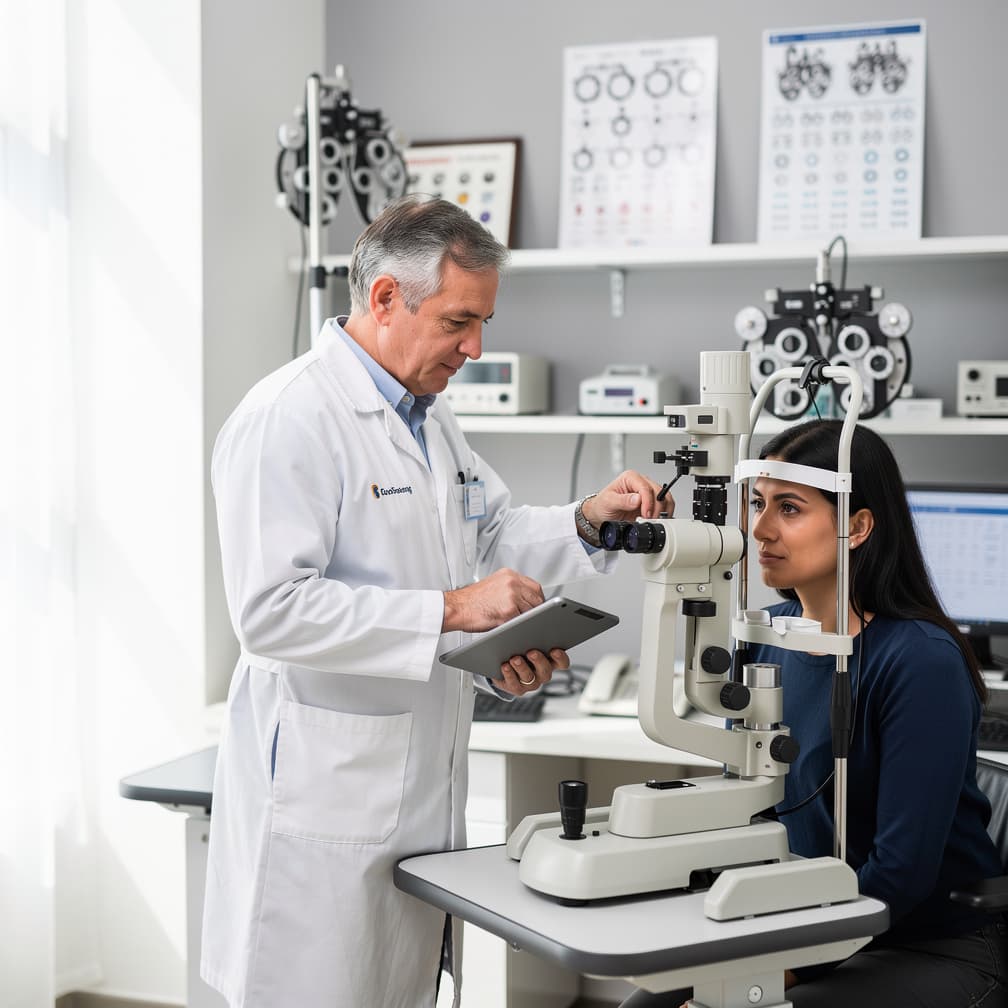

Participating carriers in Nevada do not read an optometry submission the same way, and two of them can see identical payroll and patient volume yet land far apart. That spread is the whole reason to shop rather than renew on autopilot. What moves it is description: a practice that dispenses frames and fits contact lenses is a different risk from one that refracts and refers, and a form built for the second will strain under the first. Optometrist insurance in Reno should be quoted on what actually happens in the lanes, including after-hours emergency calls and the equipment you let a mobile technician touch. Write that description once, carefully, then reuse it on every quote request. A comparison only means something when the input is identical.
What Makes Reno Different
Payroll drives more of your premium than any other single input, and it is easy to misreport. An optician grinding lenses is not rated like a receptionist booking appointments, though both are staff. Lumping the two together can inflate one class and hollow out another at the same time. Underwriters audit that split after the fact, and the audit can arrive as an unexpected bill. Patient volume then drives the professional side, and carriers in Nevada weigh it differently from each other. The equipment schedule drives the property side, and replacement values age faster than owners expect. A device insured at what you paid for it in Reno will not replace itself today. Update the schedule at renewal, or discover the shortfall at the worst possible moment.
Local Risk Factors in Reno
Wildfire smoke closes a practice long before flame is anywhere near it. Air quality alone stops patients driving in, and particulate settling into optics and ventilation can leave equipment needing professional cleaning rather than replacement. Commercial Property may respond to smoke damage where the form recognizes it, though a device that merely needs a service visit can fall under maintenance rather than under a loss. A practice in Reno can be untouched, closed for a week, and outside the trigger the entire time, because nothing was physically harmed. Ask what your policy says about smoke, ash, and air quality closures before the Nevada season starts.
What Coverage Does an Optometrist in Reno Need?
Professional Liability
Vision plan networks and hospital affiliations ask for this one by name before they will list you, and a claims-made form is the usual answer. It is meant to respond to allegations about the exam itself: a missed sign, a delayed referral, a prescription written wrong. It typically leaves out the fall in your waiting room, which belongs to General Liability.
Example: A patient returns a year later saying the retinal referral never went out, and their attorney wants the chart. Defense work starts before fault is settled, and the policy in force at reporting is generally the one that answers.
General Liability
Someone walks into your dispensary who is not a patient, browses the frame board, and trips on a display base. Third-party bodily injury and property damage of that kind is what this line is built around, and it is what a landlord's certificate request is really chasing. Allegations about the exam itself sit elsewhere, on the professional side.
Example: A patient leaves a lane with pupils still dilated, misjudges the step at your entrance, and breaks a wrist. General Liability can respond to the medical bills and the claim that follows, subject to your limit.
Commercial Property
Flood is typically excluded, and so is a device that simply wears out, which catches owners more often than anything else here. What sits inside is the sudden stuff: fire, storm damage, burst pipes, theft, and the harm those do to your lanes, your frame stock, and your build-out. Income lost while the space is unusable is usually a separate extension worth asking about.
Example: A supply line above the ceiling lets go overnight and soaks the edger, the frame board, and the carpet of a Reno dispensary. Commercial Property might answer for the equipment and the build-out, depending on the wording you hold.
Cyber Liability
Patient charts, billing files, and the appointment schedule are the assets a practice cannot rebuild by hand. This line is intended for what happens when they are stolen, exposed, or locked: notification letters, forensic review, legal advice, and the income lost while nobody can open a schedule. A property form generally will not reach data that was never physically harmed.
Example: Ransomware locks the records system on a full clinic day, and every chart, prescription history, and booking sits out of reach. Cyber Liability could pick up the forensic work and the patient notifications once your retention is met.
Workers Compensation
Where General Liability looks to people who do not work for you, this line looks to the ones who do: the optician at the edger, the technician running pre-tests, the staff at the front desk. It is rated against payroll by class rather than by headcount, and the point at which it becomes mandatory varies by state.
Example: An optician catches a hand on a lens edger mid-shift and needs stitches and time away. Workers Compensation is generally the line that handles the medical bills and a share of lost wages in Nevada.
How Much Does Optometrist Insurance Cost in Reno?
Optometrist Insurance is a bundle of separate policies, priced separately. The ranges below are typical figures for Reno for each line, except workers compensation, which is rated per $100 of payroll; a quote prices each one against your own operations.
| Coverage | Typical range | What moves your price |
|---|---|---|
| Professional Liability Insurance | $120 - $390 per month | The services you actually perform, annual revenue or billed fees, limit and retention selected |
| General Liability Insurance | $45 - $150 per month | Industry and risk classification, annual revenue, number of employees |
| Commercial Property Insurance | $75 - $240 per month | Building value and construction type, roof age and condition, fire protection class |
| Cyber Liability Insurance | $50 - $180 per month | Records held and how sensitive they are, annual revenue and industry, multi-factor authentication and backup practices |
| Workers Compensation Insurance | $0.75 - $2.74 per $100 of payroll | Employee classification codes, total annual payroll, experience modification rate |
Prices shown are general estimates, not guaranteed rates or quotes. Your actual premium will depend on the insurer, coverage selected, business details, location, claims history, and other underwriting factors. Learn about our pricing methodology.
What Are the Insurance Requirements for an Optometrist in Reno?
Workers' comp is generally required once you have your first employee. Nevada generally requires employers to carry workers' compensation at that point. Common exemptions include sole proprietors and some corporate officers. Confirm current thresholds with your state's workers' compensation agency before you hire.
Flood damage is typically excluded from standard policies. Standard commercial property and builders-risk-type policies typically exclude flood damage. Flood exposure varies address by address, so check your premises in FEMA's Flood Map Service Center before deciding; if you sit in a mapped flood zone, a separate policy through the National Flood Insurance Program is the usual starting point.
Where to verify licensing and coverage rules. The Nevada Division of Insurance publishes consumer guidance and current insurance requirements for Nevada businesses. When a contract or lease demands specific wording, the Nevada Division of Insurance's guidance is the authoritative place to check.
Get Your Optometrist Quote in Reno
Compare rates from multiple carriers. Free quotes, no obligation.
Operating in Reno
- Equipment finance contracts name the lender against the device rather than against the practice, so the certificate they want is a different document from the one your landlord is chasing.
- An after-hours call from a patient with a red eye is clinical work performed outside your normal description, and a carrier in Nevada rated your policy on that description.
- Replacement values on diagnostic equipment age badly. A device scheduled at what you paid for it years ago will not buy its own replacement, and you learn that on the day you need it.
- Staff turnover at the front desk in Reno resets your records discipline every time, because the person who knows which follow-ups are outstanding is usually the person who just left.
How to Buy: Advice for Reno Owners
Gather the equipment list before you shop, with model, age, and what each item would cost to replace today. A slit lamp, a lens edger, a visual field analyzer, and a records server are the practice; without them there are no exams to bill. Commercial Property is rated off that schedule, and an outdated schedule is how owners discover a shortfall at the worst moment. Ask separately whether mechanical breakdown is included or sits outside the form, because a board that fails on its own is not the same as a board that got soaked. Add the income question: how long does the form keep paying while a lane sits dark. Checking the Nevada Division of Insurance's guidance on business interruption terms before deciding is time well spent. Then send the identical schedule to every quote request in Reno and compare what participating carriers make of it.
FAQ
Optometrist Insurance in Reno: FAQ
Contracts set your floor, so start by reading the highest limit anyone has demanded of you. Then ask a separate question: what would defending an allegation about an exam from four years ago actually cost, and does your form pay defense inside the limit or outside it. Inside means money spent defending you is money no longer available to settle. Ask for a quote at your target limit and at one step above.
That is one of the more common allegations in this trade, and it rarely arrives as a lawsuit first. It arrives as a letter, a records request, and a demand. Professional Liability is meant to respond to allegations about the clinical work and the documentation behind it, including defense costs while fault is still being argued. The chart note you wrote at the time is what the whole thing gets decided on.
Payroll split by role, annual revenue and patient volume, an equipment schedule with current replacement values, five years of loss runs, and the insurance exhibit from your lease. Add a plain description of what you actually do: dispensing, contact lens fitting, in-house grinding, after-hours calls, off-site screenings. Guess at any of it and the quote gets re-rated later, generally not in your favor. Participating carriers in Nevada read the same packet differently.
Often not, and this catches practices out. Property forms are generally built around sudden physical loss, so a device that wears out, or whose board fails on its own, is commonly treated as maintenance rather than as a loss. Equipment breakdown is a separate endorsement on many forms and absent from others. Ask which of the two a carrier in Nevada is quoting you, because the answer decides who pays for a lane that went dark.
Ask before you agree to the date rather than afterwards. Coverage territory and the location wording in your form decide whether work away from your own suite sits inside the policy. The employer or school will usually want naming as an additional insured for the day, which is an endorsement request with its own lead time. If staff go with you, the payroll follows them, and so does the workers compensation rating.
Routine exams are where most professional allegations start, because a missed sign or a delayed referral is a judgment call rather than an accident. Professional Liability is intended to answer allegations about the clinical work itself, including the cost of defending one that never reaches a courtroom. General Liability handles the slip in your waiting room and generally leaves the exam-lane dispute alone. The two are not interchangeable.
Sources
- 1.Nevada Division of Insurance(Nevada Division of Insurance publishes consumer guidance for insurance buyers.)
- 2.FEMA / FloodSmart(Flood coverage is typically purchased separately; FEMA administers the National Flood Insurance Program.)


