







































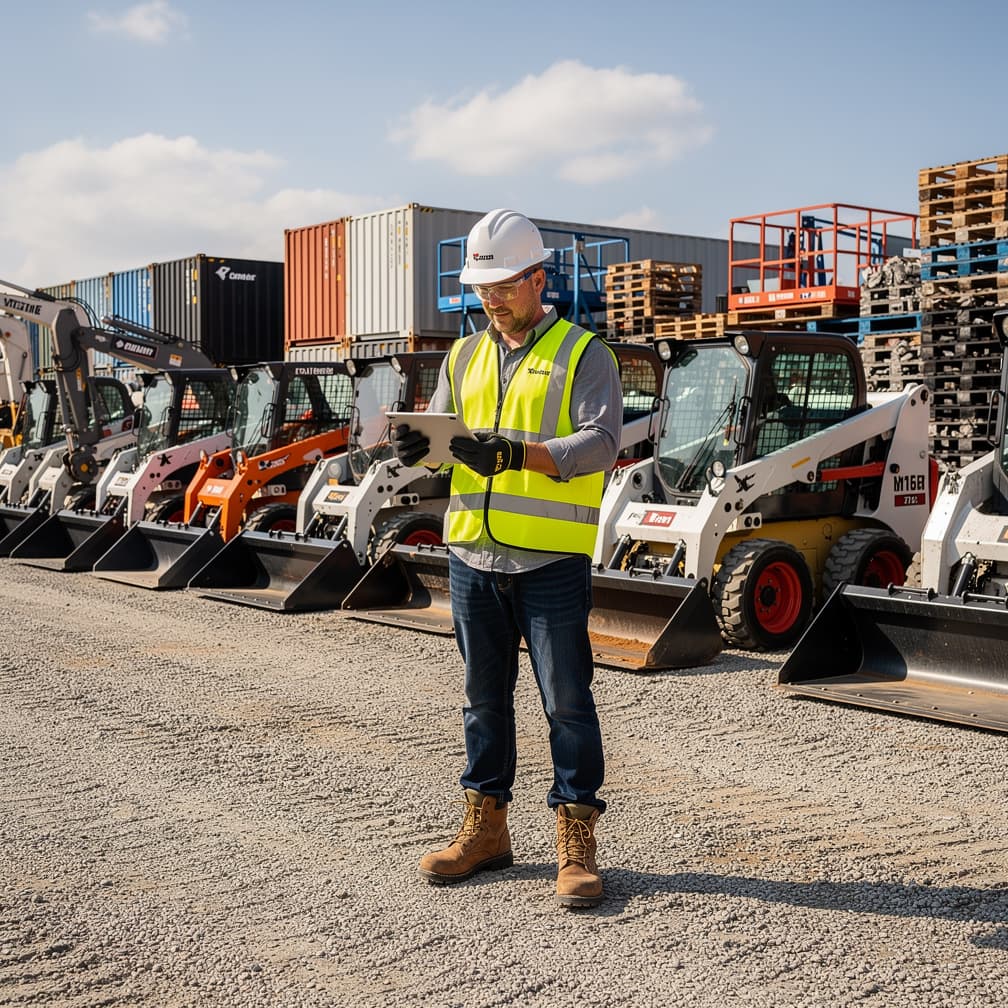

As a construction equipment rental company in Concord, your delivery radius is wider than your yard suggests, and every mile of it is a different conversation with an underwriter. Jobs pull equipment across Merrimack County lines, and a machine on a trailer occupies an awkward space: it is neither at your property nor at the customer's site. That in-transit window is where plenty of claims begin. Construction equipment rental insurance in Concord has to follow the equipment rather than sit still with it. Ask specifically what happens to a unit that shifts off a trailer, then ask again about a unit parked overnight at a job you have never seen. Those two answers separate a real program from a cheap one. The rest of this page is about getting them before you need them.
What Makes Concord Different
Weather delays hit small markets harder, because there is no second crew waiting to take the machine. A unit rented for a job that stalls stays out, unused, while your utilization number quietly drops. Nobody insures a slow week, and no policy answers for a customer who simply stopped working. What insurance can address is the machine itself, and only for causes the form actually names. Wind, hail, and water are treated as separate perils, with separate rules and separate deductibles. Assuming one answer applies to all three is the mistake that turns a storm into an argument. Ask which perils are named, which are excluded, and what the deductible looks like for each. That conversation costs nothing today and settles a claim faster in Concord or anywhere across New Hampshire.
Local Risk Factors in Concord
Winterizing is an insurance decision even though it never appears on a policy. Antifreeze checks, fuel treatment, block heaters, and drained water lines are the difference between a maintenance morning and a row of engines that will not turn over in spring. None of that is claimable, and carriers know the difference as well as you do. What is claimable is the sudden event: a shop line that lets go and floods the parts room overnight, or a machine wrecked on an icy road during a delivery. Ask which of your winter losses sit on which form for a Concord operation, and confirm it with participating carriers in New Hampshire before the first hard freeze instead of after.
What Coverage Does a Construction Equipment Rental in Concord Need?
General Liability
Contractors, landlords, and public project offices all demand proof of this one before a machine reaches the site. It is generally the line that answers third-party injury and property damage tied to your equipment, your delivery crew, and your yard. It typically does not address damage to the machines themselves, and the additional-insured wording a contract insists on lives here.
Example: A scissor lift your driver positions rolls slightly and gouges a finished stairwell. The contractor bills the repair to your company, and General Liability could pick up the property damage claim, deductible aside.
Commercial Property
The building, the shop, the parts room, the racking, and the office where your rental agreements live all sit under this form. It may respond to fire, wind, and other named perils at your address, subject to the deductible. Machines that leave the yard usually belong on an equipment form instead, and flood is typically excluded.
Example: A fire starts near the wash bay and takes the parts room and half the racking with it. Commercial Property might cover rebuilding the space and replacing what burned, depending on the cause of loss.
Tools & Equipment (Inland Marine)
Wear, mechanical breakdown, and a machine that simply aged out are not what this form exists for. What it can address is sudden, accidental loss to the units on your schedule: theft from a jobsite, damage in transit on a trailer, a unit tipped or crushed. Scheduling and storage terms decide most claims, so the list has to be right.
Example: A mini excavator disappears overnight from a job your driver delivered to at noon. If the unit was scheduled and the storage terms were met, that theft is the sort of loss an equipment form is meant to answer.
Commercial Auto
Unlike the equipment form, this one follows the vehicles: the trucks, trailers, and lowboys hauling iron out to jobs. Pricing runs off driver records, radius, and what you carry, and it could respond to liability and physical damage involving those vehicles. Where the machine on the trailer sits is a separate question, so ask how the two forms meet.
Example: Your lowboy rear-ends a car on the way to a delivery and the other driver claims an injury. Bodily injury and the wrecked vehicle typically fall to the auto policy rather than to the equipment form.
Commercial Umbrella
A contract demanding a combined limit your underlying policies cannot reach is usually why a rental company buys this. It sits above General Liability and commonly above the auto policy, extending limits rather than widening the form underneath. Minimum underlying limits are required, and a gap the base policy excludes generally stays a gap.
Example: A jobsite injury verdict runs past the liability limit your contract demanded, and the excess has to come from somewhere. That is where an umbrella would sit above the underlying limit, subject to its own terms.
How Much Does Construction Equipment Rental Insurance Cost in Concord?
Construction Equipment Rental Insurance is a bundle of separate policies, priced separately. The ranges below are typical figures for Concord for each line; a quote prices each one against your own operations.
| Coverage | Typical range | What moves your price |
|---|---|---|
| General Liability Insurance | $220 - $750 per month | Industry and risk classification, annual revenue, number of employees |
| Commercial Property Insurance | $150 - $525 per month | Building value and construction type, roof age and condition, fire protection class |
| Inland Marine Insurance | $370 - $1,400 per month | Total insured value of the scheduled property, type and age of the equipment, where it is stored and how far it travels |
| Commercial Auto Insurance | $280 - $825 per month | Fleet size and vehicle types, driver records and experience, coverage limits and deductibles |
| Commercial Umbrella Insurance | $110 - $420 per month | Umbrella limit requested, limits carried on the underlying policies, loss history on those underlying policies |
Prices shown are general estimates, not guaranteed rates or quotes. Your actual premium will depend on the insurer, coverage selected, business details, location, claims history, and other underwriting factors. Learn about our pricing methodology.
What Are the Insurance Requirements for a Construction Equipment Rental in Concord?
Workers' comp is generally required once you have your first employee. New Hampshire generally requires employers to carry workers' compensation at that point. Common exemptions include sole proprietors, partners, and LLC members. Confirm current thresholds with your state's workers' compensation agency before you hire.
State auto liability minimums apply to business vehicles. New Hampshire's minimum auto liability limits are $25,000/$50,000/$25,000 (bodily injury per person / per accident / property damage). Contracts and lenders often require more than the state floor.
Flood damage is typically excluded from standard policies. Standard commercial property and builders-risk-type policies typically exclude flood damage. Flood exposure varies address by address, so check your premises in FEMA's Flood Map Service Center before deciding; if you sit in a mapped flood zone, a separate policy through the National Flood Insurance Program is the usual starting point.
Where to verify licensing and coverage rules. The New Hampshire Insurance Department publishes consumer guidance and current insurance requirements for New Hampshire businesses. When a contract or lease demands specific wording, the New Hampshire Insurance Department's guidance is the authoritative place to check.
Get Your Construction Equipment Rental Quote in Concord
Compare rates from multiple carriers. Free quotes, no obligation.
Operating in Concord
- Mechanical breakdown is not a claim, and the hour meter is the only honest record of whether a failure was an accident or a service interval somebody decided to skip.
- Public work brings the strictest paperwork you will meet, and a Merrimack County project can stop your equipment at the perimeter over a missing endorsement nobody thought to mention.
- Machines idling in the yard still sit on your equipment schedule, so a unit that stopped renting two seasons ago is quietly costing you premium every month it stays on the list.
- A contractor in Concord can name your company in a suit over damage on a site your crew left hours earlier, for no better reason than your name being painted on the machine.
How to Buy: Advice for Concord Owners
Pull the insurance exhibit out of your three biggest rental contracts before you shop anything. Those documents already decided your General Liability limit, whether an umbrella is required, and what endorsement wording has to appear on the certificate. Buying below them is not a saving, it is a bid you cannot honor. Next, build the equipment schedule: make, model, serial, and a current value for every unit that leaves the yard, because Inland Marine gets priced off that list and very little else. Add the vehicle list and driver records if you deliver. Requirements shift by state, and the New Hampshire Insurance Department publishes consumer guidance on commercial coverage basics for Concord business owners. With the exhibit, the schedule, and the driver list in hand, you can compare quotes from participating carriers on the same terms instead of guessing which one left something out.
FAQ
Construction Equipment Rental Insurance in Concord: FAQ
Generally not. Policies answer sudden, accidental events, and mechanical breakdown, wear, and gradual deterioration are usually excluded outright. A hose that fails from age is maintenance. A machine tipped over on a slope is a claim. That split decides which repairs belong in your budget rather than in a claim file, and it is the most useful boundary to understand before you compare quotes.
A certificate of insurance is the standard document, and it summarizes your limits and endorsements on one page. It is evidence rather than the policy, so the underlying forms still govern what happens in a claim. Get the requirement in writing at quote time, track who is named on which contract, and reissue when anything changes, because a Concord site can hold your machine at the gate until the paperwork matches.
The two forms answer different questions. Commercial Property generally addresses the building, the shop, the racking, parts inventory, and office contents at your address. Machines that leave the yard usually sit on an equipment form instead. Owners who buy one and assume it swallows the other find the seam during a claim. Ask each carrier which policy responds to a unit parked in the yard versus a unit out on a job.
Standard property and equipment forms typically exclude flood, so rising water is usually priced separately through a flood policy. Rain falling into an open cab is a different question than a waterway reaching your lot, and forms treat the two differently. If low ground is part of your operation in Concord, ask about flood coverage before the wet season, because it cannot be added once water is forecast.
Injury claims tied to equipment you rented out generally land on General Liability, and a suit filed in Merrimack County can name you even when your driver left hours earlier. Fault gets argued later; defense spending starts right away. Your inspection records, your setup practice, and whether the renter signed off on the machine's condition at pickup all matter. So do the limits your contracts already committed you to.
Usually, because the dealer's contract already made you responsible for the unit while it sits in your possession. Leased-in or borrowed equipment occupies an awkward spot: some forms include it with a separate sublimit, some exclude it, and some stay silent until a claim forces the reading. Confirm the wording in writing before the machine arrives rather than after somebody damages it.
Sources
- 1.New Hampshire Insurance Department(New Hampshire Insurance Department publishes consumer guidance for insurance buyers.)
- 2.FEMA / FloodSmart(Flood coverage is typically purchased separately; FEMA administers the National Flood Insurance Program.)


