







































Updated July 16, 2026

Siding Contractor Insurance in New Jersey
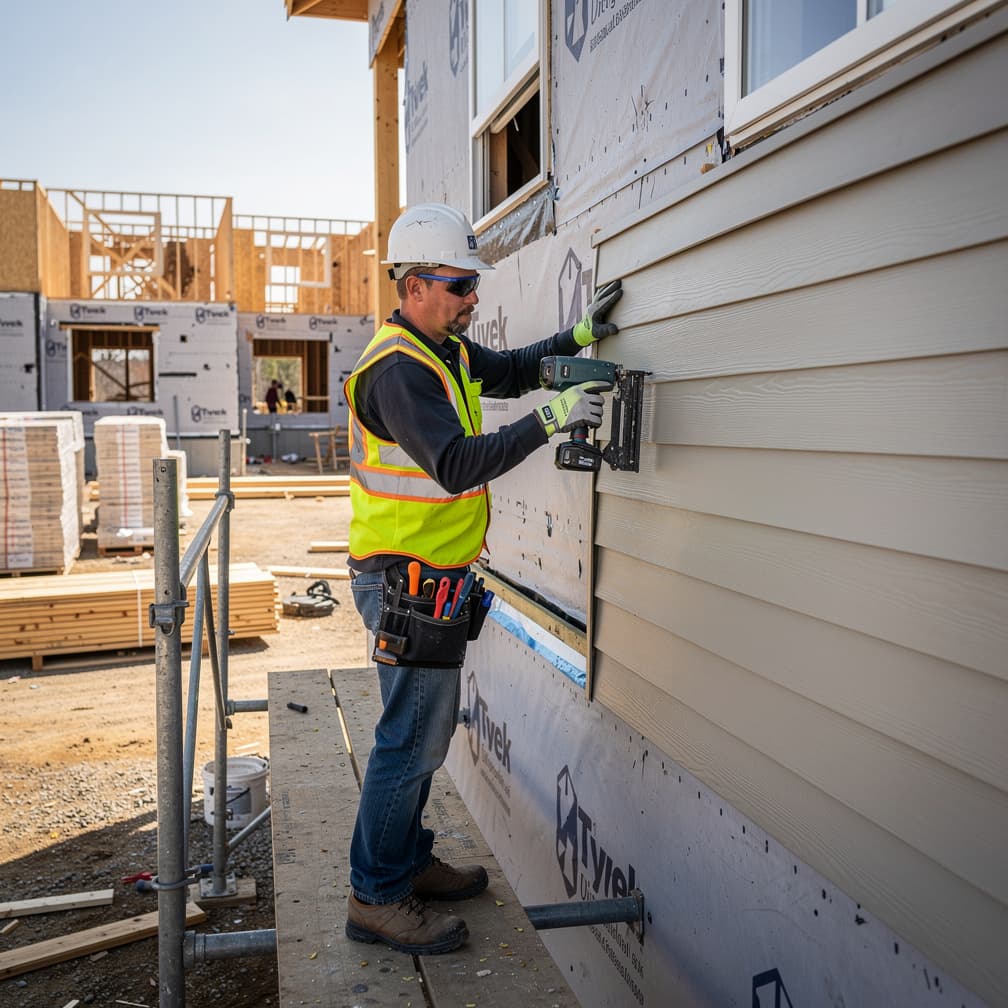
Payroll usually moves the price first for siding contractor insurance in New Jersey. Your premium shifts based on how many installers, laborers, and drivers appear on payroll and how their work is classified. Before you shop, build a clean breakdown of who climbs ladders, who handles tear-off, who drives loaded trucks, and who only estimates or supervises. A one-owner operation that subcontracts part of the install looks different to an underwriter than a crew that stages bundles, runs brake tools, and moves from occupied homes to light commercial sites in the same week.
New Jersey also requires a specific compliance step. If you have even one employee, workers compensation insurance is generally required, while sole proprietors and partners are exempt. Vehicle setup matters too, because siding work depends on pickups, vans, and trailers moving materials, ladders, and compressors between jobs. If your current policy review only lists a generic contractor class and one vehicle, it may miss how your business actually operates. Sort your payroll, vehicle use, and mobile equipment schedule so the coverage review matches the way your crews work now, not last season.
Climate Risk Profile
Natural Disaster Risk in New Jersey
Understanding climate-related risks helps determine appropriate insurance coverage levels.
Hurricane
High
Flooding
High
Nor'easter
High
Severe Storm
Moderate
Expected Annual Loss from Natural Hazards
$1.6B
estimated economic loss per year across New Jersey
Source: FEMA National Risk Index
How Much Does Siding Contractor Insurance Cost in New Jersey?
Siding Contractor Insurance is a bundle of separate policies, priced separately. The ranges below are typical figures for New Jersey for each line, except workers compensation, which is rated per $100 of payroll; a quote prices each one against your own operations.
| Coverage | Typical range | What moves your price |
|---|---|---|
| General Liability Insurance | $190 - $575 per month | Industry and risk classification, annual revenue, number of employees |
| Workers Compensation Insurance | $0.75 - $2.74 per $100 of payroll | Employee classification codes, total annual payroll, experience modification rate |
| Commercial Auto Insurance | $260 - $675 per month | Fleet size and vehicle types, driver records and experience, coverage limits and deductibles |
| Inland Marine Insurance | $40 - $150 per month | Total insured value of the scheduled property, type and age of the equipment, where it is stored and how far it travels |
Prices shown are general estimates, not guaranteed rates or quotes. Your actual premium will depend on the insurer, coverage selected, business details, location, claims history, and other underwriting factors. Learn about our pricing methodology.
Preparing for Your Siding Contractor Insurance Quote in New Jersey
Prepare a payroll breakdown that separates owners, office staff, estimators, drivers, and field installers. Premiums often shift when employee duties are spelled out rather than lumped together.
List every pickup, van, and trailer with who drives it, what it carries, and whether it moves materials or only tools. Your quote should reflect how crews actually deploy each day.
Build a current equipment and mobile property schedule for ladders, brake tools, compressors, and other items that travel job to job. Include anything commonly left on site during multi-day work.
Note whether you operate as a sole proprietor, partnership, or employer with staff. New Jersey workers compensation rules change once you have employees, which shapes how the quote comes together.
Common Claims for Siding Contractor Businesses in New Jersey
A crew finishes a tear-off on an occupied New Jersey home and stacks removed material for pickup. A delivery vehicle then backs into the staging area, damaging both the vehicle and bundled new siding waiting for installation.
An installer carries long panels up a ladder beside a driveway and loses control in a gust. The panel strikes a parked car and cracks a nearby window.
A company pickup loaded with ladders, fasteners, and brake equipment travels between New Jersey jobs. If those tools are damaged or stolen, the next install can stall until replacement gear arrives.
Get Your Siding Contractor Insurance Quote in New Jersey
Compare rates from multiple carriers. Free quotes, no obligation.
Operating a Siding Contractor Business in New Jersey
- Occupied residential jobs in New Jersey often keep homeowners, tenants, delivery drivers, and parked vehicles close to the work area. Staging panels, ladders, and debris control deserves more attention during the policy review.
- A crew that tears off existing cladding, trims openings, and returns for punch work creates repeated vehicle trips and repeated setup exposure. Tell your provider how often the crew revisits a site so liability details reflect that rhythm.
- Mixed residential and light commercial siding work can shift your payroll profile during the year. This happens especially when owners estimate jobs while employees install, drive, load materials, and handle site cleanup.
- Coastal storm exposure and wind-driven weather in parts of New Jersey can turn loose materials, partially wrapped walls, and delayed dry-in into larger loss situations. Describe your sequencing and material handling so the underwriter understands the real risk.
Coverage Considerations in New Jersey
- General liability insurance should be reviewed around active exterior work near walkways, driveways, windows, and neighboring property. People and property stay exposed the entire time the site is active.
- Tools and equipment coverage deserves close attention for brake tools, compressors, ladders, and staged materials. Siding crews move property between jobs and may leave items at a site during multi-day work.
- Cutting around windows, removing old cladding, and managing partially wrapped walls can turn a small mistake or weather delay into a larger claim involving the structure. Make sure your provider understands these installation risks.
- Inland marine insurance is worth reviewing for items that travel between jobs. Gear in transit faces different risks than equipment bolted to your shop floor.
What Happens Without Proper Coverage?
Siding contractors face a mix of job site, workmanship allegation, and transportation risk that can create losses from several directions at once. One claim may start with a simple exterior repair and expand because the owner says water entered around a window after the work was completed. Another may involve a ladder accident, a tool falling near a walkway, or a truck backing into a parked vehicle while materials are being unloaded. These are not abstract exposures. They come directly from how siding work is performed.
General liability insurance matters because your crews work on the outside of occupied properties where third parties, neighboring structures, and finished surfaces are close to the work area. If a customer alleges property damage or bodily injury tied to your operations, the cost is not limited to the repair itself. Legal defense and settlement pressure can follow even when responsibility is disputed. That is why limits should track the size of the properties you work on and the contract requirements you sign.
Workers compensation insurance is just as practical. Siding installation involves climbing, lifting, cutting, carrying, and repetitive motion. An injured employee can mean medical costs, lost time, and disruption to active jobs. If your business is growing, adding crews without updating payroll and class details can leave your policy review out of step with your actual exposure.
Commercial auto insurance is often essential because your business depends on vehicles to move people, tools, and materials. A collision on the way to a job, damage caused while unloading, or an incident involving a driver running between sites can interrupt work and create liability beyond the vehicle itself. Inland marine insurance supports that same mobile operation by addressing tools and other property that do not stay at one fixed location.
You may also need this policy mix because contracts often push the issue before a claim ever happens. Homeowners, property managers, and general contractors commonly want certificates of insurance before they let exterior work begin. If your coverage does not line up with your operations, vehicle use, payroll, or subcontractor relationships, the problem usually shows up at the worst time, during a bid, before mobilization, or after a loss. Review your current jobs, who is working them, and what property moves between sites before you request a quote.
Recommended Coverage for Siding Contractor Businesses
Based on the risks and requirements above, siding contractor businesses need these coverage types in New Jersey:

General Liability
Essential coverage for every business, protect against third-party bodily injury, property damage, and advertising claims.

Workers Compensation
Help cover your employees' medical expenses and lost wages for work-related injuries and illnesses.

Commercial Auto
Protect your business vehicles and drivers with comprehensive commercial auto coverage.

Inland Marine
Protect tools, equipment, and goods in transit or stored at locations away from your primary premises.
Siding Contractor Insurance by City in New Jersey
Insurance needs and pricing for siding contractor businesses can vary across New Jersey. Find coverage information for your city:
Insurance Tips for Siding Contractor Owners
Separate your residential, multifamily, and commercial job types during the quote process so the liability review reflects the properties, access conditions, and contract expectations you actually handle.
Ask for inland marine to be reviewed around the tools and mobile equipment your crews carry every day, especially items that stay in trucks, trailers, or temporary job site storage.
Match your commercial auto schedule to real business use, including supplier pickups, crew transport, and any trailers used to move ladders, brake tools, or material between addresses.
Review workers compensation with current payroll and field duties, because installers, laborers, and working supervisors create different injury exposure than office-only staff.
If you use subcontractors, keep written agreements and current certificates organized before a claim happens, because unclear responsibility can complicate both liability and injury disputes.
Check that your general liability limits fit the size of the homes or buildings you side, especially if one water intrusion allegation could involve multiple elevations, windows, or occupied units.
FAQ
Frequently Asked Questions About Siding Contractor Insurance in New Jersey
New Jersey generally requires workers compensation insurance once your siding business has one employee. Sole proprietors and partners are exempt, so your business structure and whether anyone is on payroll should be clarified before you request a quote.
List mobile tools and equipment that travel with the crew, including ladders, brake tools, and compressors. Note which items stay on the truck versus what gets left on site overnight, because that split changes how coverage is built.
New Jersey siding contractors should separate payroll by actual job duties, not just list everyone as a contractor employee. Installation, driving, estimating, supervision, and office work each carry different risk weights that shape the price.
New Jersey siding contractors usually review inland marine around mobile tools and equipment that travel with the crew, such as ladders, brake tools, and compressors. Give your provider a clear schedule of what moves between jobs and what may stay on site.
New Jersey business insurance is regulated by the New Jersey Department of Banking and Insurance. You can contact them to verify a carrier's license or file a complaint about how a claim was handled.
Siding contractors usually start with general liability insurance, then review workers compensation, commercial auto, and inland marine based on how crews work. The right mix depends on whether you install on homes, commercial buildings, or both, and how much property moves between job sites.
General liability for siding contractors may help with certain third-party property damage claims, but water intrusion allegations are often fact-specific and depend on policy terms. Because siding, trim, flashing, and weather barrier work interact closely, you should review how your jobs are performed before relying on broad assumptions.
Workers compensation is important for siding businesses with employees doing tear-offs, ladder work, lifting, and tool use. Because this trade involves physical exterior labor, your quote should reflect actual payroll, field duties, and whether supervisors also work on site.
Sources
- 1.New Jersey Department of Banking and Insurance(New Jersey business insurance is regulated by the New Jersey Department of Banking and Insurance.; If you have one employee, workers compensation insurance is generally required in New Jersey, while sole proprietors and partners are exempt.)
Updated July 16, 2026