







































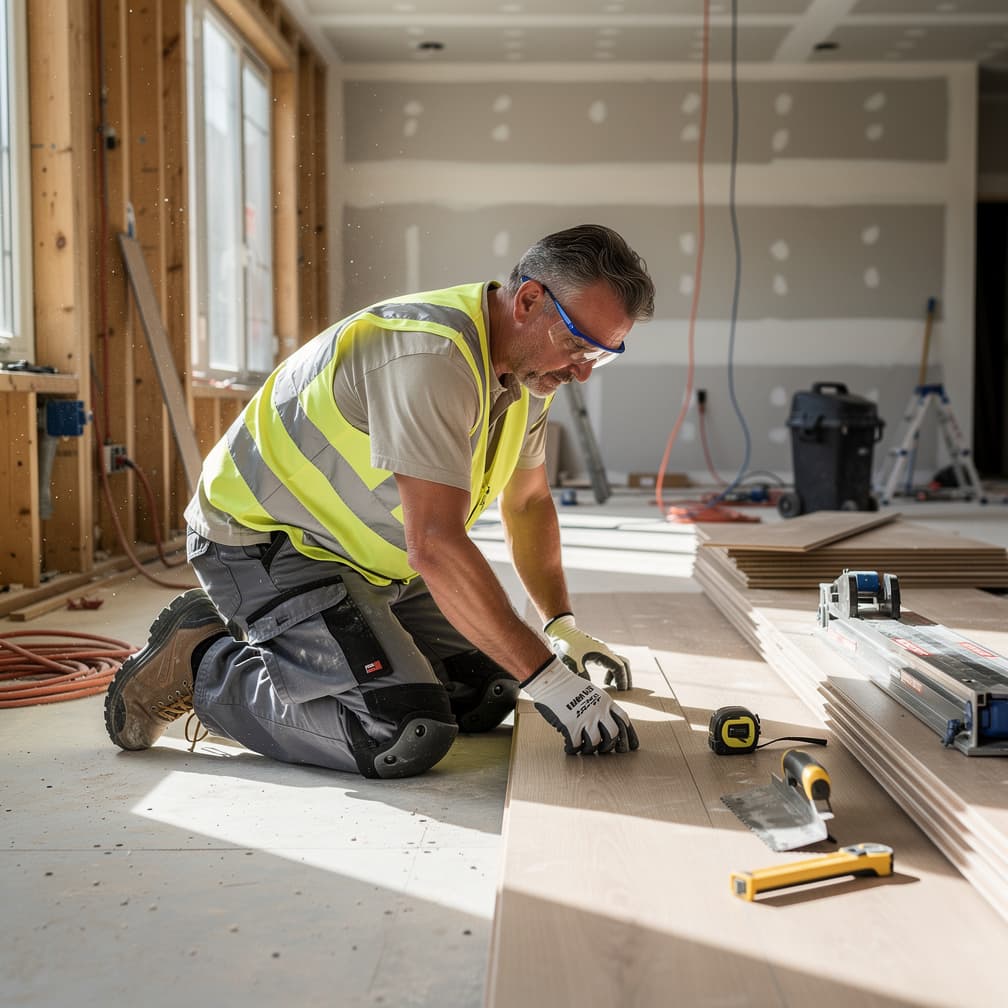

Dust from a floor sander gets into everything in an occupied house, including rooms you never worked in. Cleanup disputes and damage claims start there more often than owners expect, and they are ordinary business risk rather than bad luck. That is the plain case for flooring contractor insurance in Newark. One unhappy customer talks to the next three people who were going to call you, so how a claim gets handled matters as much as whether it gets paid. Legal defense costs money even when you did nothing wrong. A punch-list argument over a gap at a threshold can turn into a demand letter against your business in Newark. Everything below is about which of those situations a policy can step into, and on what terms.
What Makes Newark Different
Certificate wording, limits, and endorsements travel together, and a client rejects the set rather than one piece. A certificate is only evidence; the endorsement behind it is what actually changes the policy. Plenty of contractors send the certificate, assume the wording followed, and learn otherwise at claim time. Check that the endorsement your Newark client demanded exists on the policy and names the right party. One typo in a company name can leave the wrong entity standing on your paperwork. If a Newark contract names an entity that no longer exists, ask for a corrected exhibit. Correcting it takes an email before the job and a lawyer after the loss. Chase the wording while the job is still boring and nobody has been damaged yet.
Local Risk Factors in Newark
Hurricane season can shut a flooring schedule down for far longer than the storm itself lasts. Evacuations empty the neighborhoods you were installing in, suppliers close, and material on order in Newark stops moving. When the wind passes, the work returns all at once as water-damaged floors get torn out, and that is its own problem: rushed crews in wet houses generate injuries and damage claims. Workers Compensation may respond to a crew member hurt in that scramble, subject to how and when the claim is reported. The honest gap is time. Nothing pays you back for the empty weeks, so ask what your policy says about that in New Jersey.
What Coverage Does a Flooring Contractor in Newark Need?
General Liability
Builders, property managers, and public bid offices ask for this line by name before a crew loads in. It can respond to third-party injury and to damage your work does to somebody else's property: the gouged stair rail, the customer who trips on torn-up subfloor, the legal defense that follows. Workmanship disputes and gradual moisture failure typically fall outside it.
Example: A tool cart rolls into a freshly painted stairwell wall on the way to an upstairs bedroom, and the homeowner in Newark wants the whole wall repainted. General Liability might pick up that repair, subject to your deductible.
Workers Compensation
Injuries to your own crew sit outside the liability line entirely, and that gap is what this coverage exists to close. Kneeling all day, lifting rolls up stairs, and handling blades produce strains and cuts, and medical care plus lost wages can be covered here. Cost tracks payroll and class code. A builder in Newark can demand proof of it before an award.
Example: An installer carrying a roll of carpet up a flight of stairs slips on the landing and tears a shoulder. Workers Compensation can help cover the treatment and the wages he misses while healing.
Commercial Auto
Your personal auto policy generally steps back once the van is hauling planks, adhesive, and a floor sander for the business. This line is built for those vehicles, and it might respond to damage, injury, and the liability that follows a crash. Every truck that carries material belongs on the list, because the one left off is the one in the accident.
Example: A loaded van rear-ends a car on the way to a scheduled install, and two addresses lose their crew that week. Commercial Auto is intended to answer for the other driver's damage and the injuries claimed.
Tools & Equipment (Inland Marine)
Saws, grinders, moisture meters, and the sander live in a truck rather than in a building, and most property coverage is written around a fixed address. This line follows equipment that moves, so it can respond to theft or sudden damage at a jobsite or in transit. Material you own but have not installed can sometimes be added. Wear and mechanical breakdown usually are not.
Example: Somebody cuts the lock on a trailer overnight, and the sander, two saws, and a box of meters are gone before the crew arrives. Inland Marine may step in for the replacements.
How Much Does Flooring Contractor Insurance Cost in Newark?
Flooring Contractor Insurance is a bundle of separate policies, priced separately. The ranges below are typical figures for Newark for each line, except workers compensation, which is rated per $100 of payroll; a quote prices each one against your own operations.
| Coverage | Typical range | What moves your price |
|---|---|---|
| General Liability Insurance | $140 - $440 per month | Industry and risk classification, annual revenue, number of employees |
| Workers Compensation Insurance | $0.75 - $2.74 per $100 of payroll | Employee classification codes, total annual payroll, experience modification rate |
| Commercial Auto Insurance | $260 - $650 per month | Fleet size and vehicle types, driver records and experience, coverage limits and deductibles |
| Inland Marine Insurance | $35 - $140 per month | Total insured value of the scheduled property, type and age of the equipment, where it is stored and how far it travels |
Prices shown are general estimates, not guaranteed rates or quotes. Your actual premium will depend on the insurer, coverage selected, business details, location, claims history, and other underwriting factors. Learn about our pricing methodology.
What Are the Insurance Requirements for a Flooring Contractor in Newark?
Workers' comp is generally required once you have your first employee. New Jersey generally requires employers to carry workers' compensation at that point. Common exemptions include sole proprietors and partners. Confirm current thresholds with your state's workers' compensation agency before you hire.
State auto liability minimums apply to business vehicles. New Jersey's minimum auto liability limits are $35,000/$70,000/$25,000 (bodily injury per person / per accident / property damage). Contracts and lenders often require more than the state floor.
Where to verify licensing and coverage rules. The New Jersey Department of Banking and Insurance publishes consumer guidance and current insurance requirements for New Jersey businesses. When a contract or lease demands specific wording, the New Jersey Department of Banking and Insurance's guidance is the authoritative place to check.
Get Your Flooring Contractor Quote in Newark
Compare rates from multiple carriers. Free quotes, no obligation.
Operating in Newark
- A dropped box of tile in a finished hallway starts a claim in front of the customer, so the conversation happens before you have called anybody. What you say in that first minute tends to outlive the repair.
- Floor sanders, tile saws, and grinders live in the truck, which makes an overnight break-in an equipment loss and a schedule loss at the same time. Two days of replacement shopping is time nobody hands back.
- A homeowner in Newark can hold your final payment over a scuffed baseboard your crew never touched. Photographs taken before you carried anything into the house are what settle that argument.
- Dust from sanding travels through a house that people still live in, and cleanup complaints turn into property damage claims far more often than owners expect them to.
How to Buy: Advice for Newark Owners
Subcontractors decide more of your premium than the size of your jobs does. Collect a certificate from every sub before they touch a floor, and keep it where you can find it a year later. An uninsured sub can be treated as your payroll at audit, which turns a modest Workers Compensation quote into a much larger bill. The same sub can pull your General Liability into a claim over work you never touched. Ask each carrier quoting your Newark business how it treats subcontracted labor and what proof it wants at audit. The New Jersey Department of Banking and Insurance publishes consumer guidance on how business insurance audits are conducted. Give every participating carrier the same sub list and the same payroll, then compare quotes knowing the answer will survive the audit.
FAQ
Flooring Contractor Insurance in Newark: FAQ
That depends on the carrier and on whether the wording your client wants already sits on the policy. A plain certificate is usually quick. An endorsement that adds a new additional insured, or primary wording, can take longer, and a job can stall while two offices email each other. Ask about turnaround before you bind, because certificate speed becomes an operations problem more often than premium ever does.
The general contractor's policy stands behind the general contractor. Yours answers for your crew and your work, and his subcontract will usually require you to carry your own. Read the insurance exhibit before signing anything on a Newark project, because the limits and the wording are already fixed by that document. Working under somebody else's policy is a story owners tell right up until the first claim.
Last year's payroll split by role, last year's revenue, every vehicle with its driver, and a schedule of tools with replacement values. Add your loss runs and the insurance exhibit from your largest contract, since it sets limits you already promised somebody. Underwriters price what you tell them, so a guess on payroll turns into an audit bill later. The same packet handed to every carrier is what makes quotes comparable.
It can, and the timing decides. When a builder deducts a repair straight from your final payment, there may be no claim on file and no adjuster involved, only a smaller check. Report the damage when it happens rather than when the invoice arrives, so General Liability has a chance to respond to a third-party property damage claim. Staying quiet now is an argument you lose later.
Nothing about carrying planks through a doorway requires a policy on its own. The contract usually does. A builder or property manager wants proof before your crew loads in, and a homeowner in Newark who hires you directly can still sue you over a damaged banister. General Liability is the line those clients ask for by name, and it might respond to third-party property damage or injury, subject to your limits.
Cost tracks your file more than your trade. Payroll and class codes set the Workers Compensation piece, while revenue and job mix move General Liability. The vehicles and tools you list drive the rest. A claim history full of damaged finishes pushes it up, and clean years pull it down. The cost table on this page shows current ranges, and quotes from participating carriers in New Jersey differ because each one weighs those inputs its own way.
Sources
- 1.New Jersey Department of Banking and Insurance(New Jersey Department of Banking and Insurance publishes consumer guidance for insurance buyers.)


