Updated July 16, 2026

On-Hook Towing Insurance in Albuquerque
Retail trade makes up 12.1% of establishments in Bernalillo County, meaning your drivers probably spend more time backing out of tight commercial lots than cruising open highway. That matters because low-speed maneuvering in crowded parking areas is exactly where scraped bumpers and wheel claims tend to originate. If your book includes private-property impounds, dealer moves, or short urban hauls between repair shops and storage yards, your on-hook policy deserves a closer review. You also handle vehicles tied to fleets, employee parking disputes, vendor access, or customer drop-offs, and in those situations documentation matters as much as the tow itself. The exposure here comes from frequent handoffs and crowded pickup conditions where proving the vehicle's condition before hookup is what protects you. Ask for quote options that let you review per-vehicle limits, deductible tolerance, and how your policy responds when the allegation is cosmetic damage discovered after delivery.
On-Hook Towing Insurance Risk Factors in Albuquerque
Albuquerque's top risk factors include Wildfire risk, Drought conditions, Power shutoffs, and Air quality events.
New Mexico has a moderate climate risk rating. Top hazards: Wildfire (Very High), Drought (High), Flash Flooding (High), Severe Storm (Moderate). The state's expected annual loss from natural hazards is $340M, which influences on-hook towing insurance premiums and may affect coverage availability in high-risk areas.
What On-Hook Towing Insurance Covers
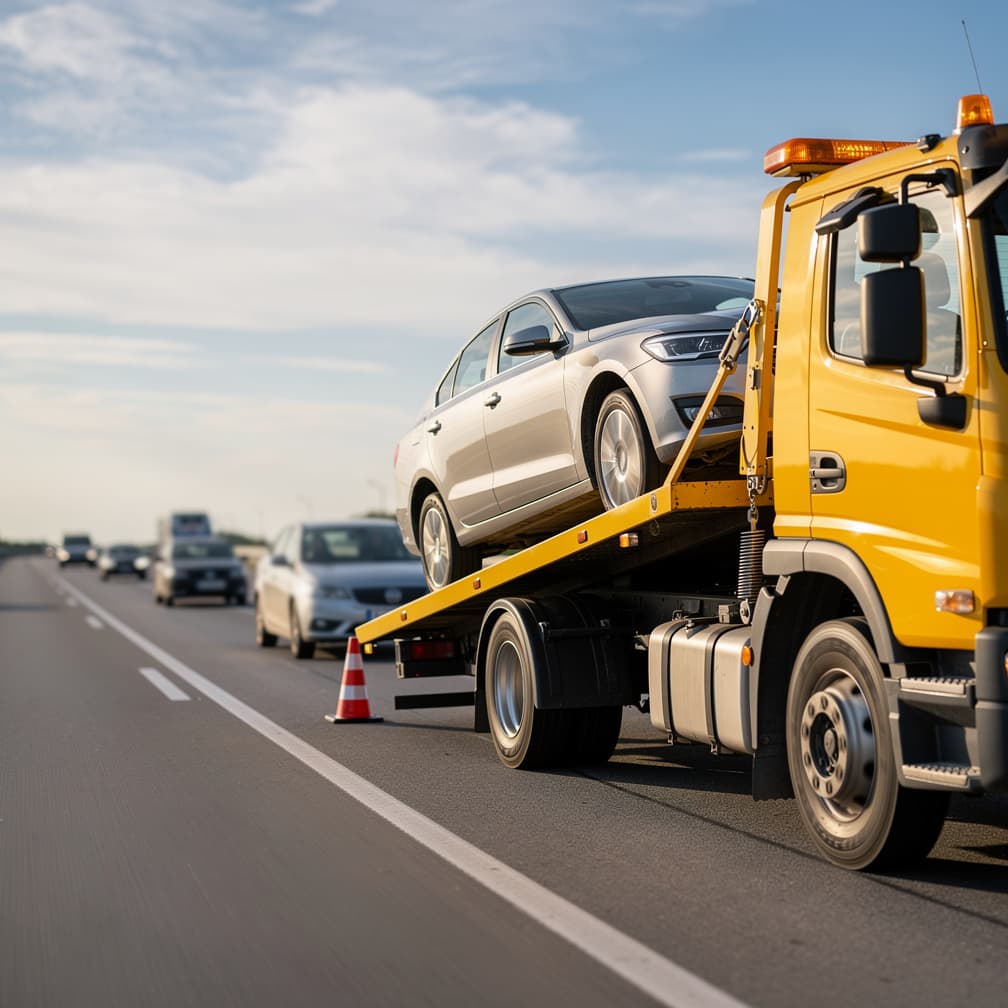
In New Mexico, the most useful review starts with the moments where damage disputes actually develop during a tow. Think about the jobs that create extra strain on bumpers, undercarriages, suspensions, body panels, and glass. A compact car picked up from a paved parking lot is one exposure. A disabled SUV loaded from a narrow shoulder, a dirt lot, or a sloped driveway is another. If your operation handles both, your policy review should focus on whether your limits and deductibles still make sense for the heaviest and most damage-sensitive vehicles you accept.
State conditions can change how an ordinary tow becomes a more complicated one. Wind, dust, sudden rain, hail, and wildfire-related route changes can all affect loading position, visibility, stopping distance, and where you can safely unload. That does not automatically change what your policy may cover, but it does change how carefully you should document the vehicle condition before hookup, during loading, and at delivery. If your drivers work nights on highways, tribal roads, oilfield-adjacent routes, or remote county roads, ask how the policy responds when a routine tow turns into a longer transport because the nearest safe drop location is farther away than expected.
You should also review the operational edges that often create claim friction. Low-clearance vehicles, modified trucks, electric vehicles, motorcycles, and units with pre-existing damage each carry their own dispute potential. In practice, the strongest buying move is to line up your dispatch records, tow tickets, and photo process with the policy terms before renewal. That gives you a cleaner way to show what happened, what condition the vehicle was in, and whether the loss arose during the tow itself.
Coverage Included

Collision on Hook
Covers damage to towed vehicles from collisions during transport.
Comprehensive on Hook
Covers theft, fire, and weather damage to vehicles being towed.
Loading & Unloading
Covers damage during the process of loading and unloading vehicles.
Winching Coverage
Covers damage to vehicles during winching and recovery operations.

Multiple Vehicle
Covers all vehicles on multi-car carriers and rollback flatbeds.
What Makes Albuquerque Different
Urban handoff density is the main thing that changes the calculus here. In Bernalillo County, professional and technical services, health care, and retail together account for roughly 38% of all business establishments, so a typical tow route touches medical campuses, office parking, and storefront drop-offs rather than highway hauls. For an on-hook buyer, the practical result is more pickups in controlled-access areas, striped parking rows, loading zones, and properties with cameras, managers, and third parties who may challenge what happened. The real question is not whether damage occurred during transport but whether your records can prove pre-tow condition, pickup location, authorization, and delivery condition when a complaint surfaces weeks later. If your operation spends more time on short local moves than open-road hauls, review whether your limit fits the kinds of vehicles you actually take into care and whether your claims process depends on driver photos, dispatch notes, and signed releases.
Our Recommendation for Albuquerque
Your dispatch pattern tells a reviewer more than a generic towing class code ever will. If most calls involve apartment complexes, retail centers, hospitals, or office properties, ask to review how often your drivers take custody in tight spaces, after hours, or without the owner present, because those are the jobs where condition disputes tend to get expensive. Build your quote request around the vehicles you move most often, your highest-value routine tow, and the handoff points where allegations usually arise. Before renewal, tighten your operating routine with time-stamped intake photos, wheel and body-condition checklists, lot diagrams, and delivery confirmation that can help support an on-hook claim file. Bernalillo County's business base means more commercial properties and parking relationships to manage, so your insurance review should line up with your contracts, signage practices, and authorization records. Bring those details to your quote request so the limit and deductible discussion matches your actual local work.
Get On-Hook Towing Insurance in Albuquerque
Enter your ZIP code to compare on-hook towing insurance rates from carriers in Albuquerque, NM.
Business insurance starting at $25/mo
FAQ
Frequently Asked Questions
Even a five-block tow across a crowded commercial lot can trigger a four-figure damage claim if the pickup happens in a controlled parking area. You should match your limit to the vehicles and property relationships your drivers handle every week.
Bring dispatch logs, sample authorization forms, intake photos, and a list of the vehicle types you tow most often. A reviewer needs that level of detail to judge whether your on-hook limit and deductible actually fit frequent handoffs and after-hours pickups.
It does, because professional services, health care, and retail make up roughly 38% of county establishments, so your routes likely involve office, medical, and shopping properties where lot procedures and documentation carry real weight.
Albuquerque's median household income of $65,604 means a meaningful share of the personal vehicles entering your care are newer models with higher repair costs. If you regularly tow late-model daily drivers, review whether your limit still makes sense for a single higher-value loss.
The New Mexico Office of Superintendent of Insurance is the state resource for policy and complaint questions. Use that as a backstop, then focus your quote review on local tow patterns, vehicle values, and how your drivers document condition before hookup.
Operators doing rural recovery work should review on-hook coverage closely because off-pavement loading, longer hauls, and difficult access points can increase damage disputes. Ask for terms built around your actual recovery jobs, not just routine roadside towing.
Buyers should compare quotes using the same truck schedule, driver list, service territory, and job mix each time. Then review differences in limits, deductibles, exclusions, and how each option treats your hardest-to-place vehicles and longest tows.
Weather can affect buying decisions because wind, dust, hail, and sudden rain change loading conditions and documentation needs. If weather regularly complicates your calls, describe that in the submission so the quote reflects the operation more accurately.
Sources
- 1.U.S. Census Bureau, County Business Patterns, Bernalillo County(Retail trade is one of the largest business sectors in Bernalillo County, at 12.1% of establishments.; In Bernalillo County, professional, scientific, and technical services account for 13.3% of establishments, health care and social assistance 12.9%, and retail trade 12.1%.)
- 2.U.S. Census Bureau, ACS 5-Year Estimates, table B19013(Albuquerque median household income is $65,604.)
- 3.New Mexico Office of Superintendent of Insurance(New Mexico's insurance regulator is the New Mexico Office of Superintendent of Insurance.)
Updated July 16, 2026