Updated July 5, 2026

Dealer Open Lot Insurance in Las Cruces
Property managers, lenders, and some commercial sellers around Las Cruces usually want proof that your inventory is insured before they are comfortable with an overflow arrangement, a financed lot, or vehicles parked away from your main frontage. Locally, satisfying that request often means showing a certificate that matches the address where units actually sit, the values you carry there, and any seasonal changes in how many vehicles are on hand. If you are shopping for dealer open lot insurance in Las Cruces, that paperwork matters because your operation may look simple from the street while your storage pattern is not. A small independent dealer here may rotate units between a visible sales line, a back parcel, and a temporary holding area tied to reconditioning or title work. That is where buyers get tripped up: the inventory count changes, the address list lags behind, and the proof of coverage no longer tells the full story. Before you request quotes, line up every storage address, your peak unit count, and whether any lender or landlord wants to be shown on certificates.
Dealer Open Lot Insurance Risk Factors in Las Cruces
Las Cruces's top risk factors include Wildfire risk, Drought conditions, Power shutoffs, and Air quality events.
New Mexico has a moderate climate risk rating. Top hazards: Wildfire (Very High), Drought (High), Flash Flooding (High), Severe Storm (Moderate). The state's expected annual loss from natural hazards is $340M, which influences dealer open lot insurance premiums and may affect coverage availability in high-risk areas.
What Dealer Open Lot Insurance Covers
The useful review here is not the generic list of causes of loss but the way your inventory exposure changes by location, storage practice, and daily handling. If part of your stock sits on the main sales lot and part sits at a secondary address, ask whether each location is scheduled correctly and whether limits are adequate for the highest concentration of units you hold at one time. A policy that looks workable on paper can leave a gap if overflow storage is informal or newly added.
You should also review how the policy treats vehicles during ordinary dealership movement. That includes units being repositioned for merchandising, moved to service or detail, taken to another storage area, or prepared for a customer demonstration.
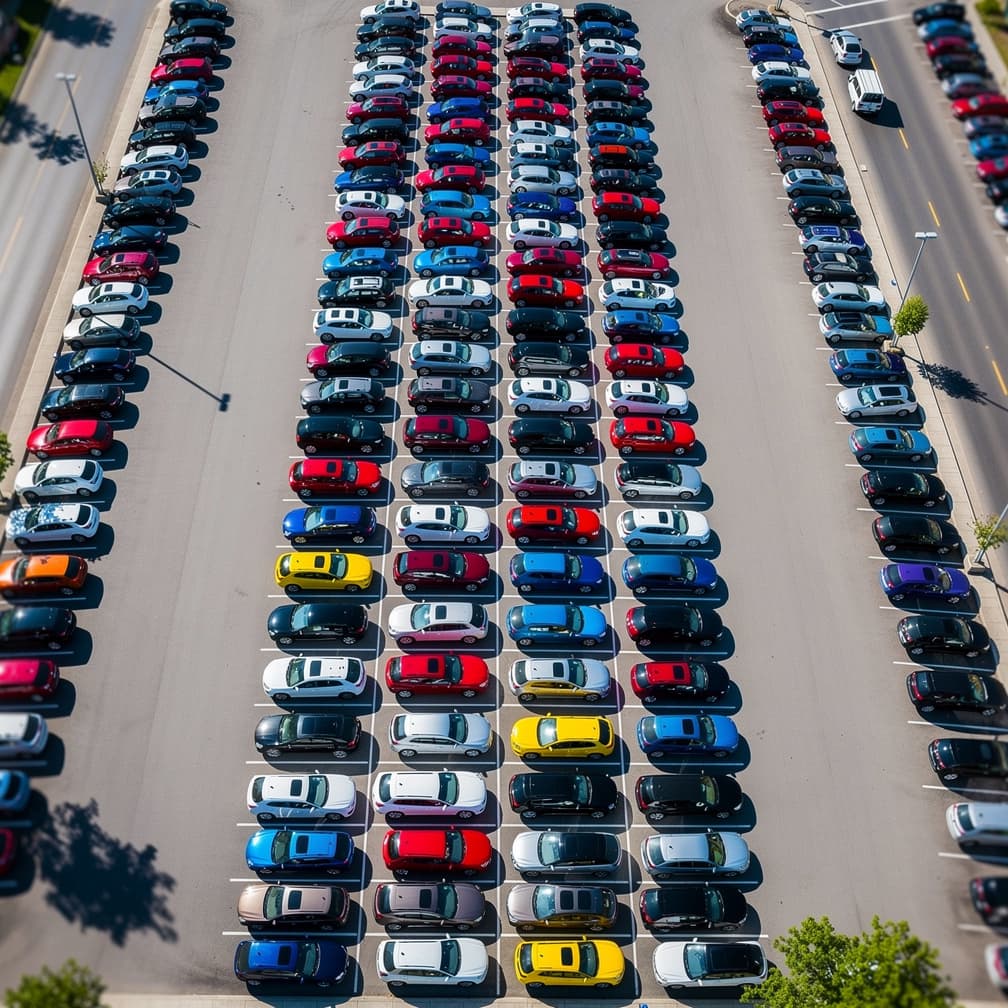
Weather and lot conditions make concentration risk worth special attention. If many vehicles are parked tightly in one exposed section, a single hailstorm could damage dozens of units at once. That is why deductible structure, per-location limits, and any reporting requirements deserve a line-by-line review before renewal. If you use fencing, lighting, key control, or camera systems, make sure those details are reflected accurately in the submission. Underwriters use them to judge both theft exposure and post-loss documentation.
This is also the right place to ask about exclusions and valuation language. If a unit is newly acquired, temporarily offsite, or awaiting repair after minor damage, confirm how the policy responds and what records you need to support the claim. A clean schedule, clear storage map, and written movement procedures usually make coverage easier to evaluate before a loss happens.
Coverage Included

Weather Damage
Covers hail, wind, flood, and storm damage to lot inventory.

Theft Protection
Covers vehicles stolen from your lot.
Fire Damage
Covers fire and explosion damage to inventory vehicles.

Vandalism
Covers intentional damage to vehicles on your lot.

Test Drive Coverage
Covers vehicles during customer and employee test drives.

Transit Coverage
Covers vehicles being moved between lot locations.
Industries & Insurance Needs in Las Cruces
County business density shapes how often a local dealer is asked to document coverage cleanly and quickly. Doña Ana County has 3,836 business establishments, so vehicles for sale often sit near other occupied properties, shared commercial parcels, and landlord-controlled sites where proof of insurance is part of doing business. That matters if you use overflow space, keep units behind another business, or park inventory on a parcel that is not your primary storefront. The county mix also matters: health care and social assistance accounts for 16% of establishments, retail trade 13.3%, and construction 12.1%, so your lot may sit beside businesses that expect clear access, controlled parking, and current certificates before they tolerate vehicle storage next door. If your setup touches any shared property line, ask for quotes that reflect each address, your maximum on-lot values, and any certificate wording a landlord or lender wants before units are moved.
What Makes Las Cruces Different
Shared commercial property is the main thing that changes the buying decision here. In this market, a dealer may not just be insuring cars on a single front lot. You may be proving coverage to a landlord for a side parcel, to a lender tied to financed inventory, or to a neighboring property owner who wants documentation before vehicle storage expands. That makes address accuracy more important than many dealers expect. A policy review should match where units are displayed, where overflow inventory sits after purchase, and whether any back lot or fenced parcel is used only part of the month. If your certificate shows one location while your actual storage pattern uses more than one, you create friction right when a lender, landlord, or seller asks for proof. The practical move is to map every place vehicles are kept, then ask whether each address, limit, and reporting expectation is reflected before inventory grows.
Our Recommendation for Las Cruces
Start with your lot map, not your renewal date. List every address where sale units are parked, even if one parcel is used only during busy weeks or while vehicles wait for cleanup, photos, or title processing. Then match that list against what your lender, landlord, or seller agreement actually requires you to show on certificates. Las Cruces buyers also need to think about local purchasing power. The city's median household income is $55,176, so many independent dealers here compete by carrying a tighter mix of value-priced units and turning them faster. That can make inventory values swing more than the lot looks from the road. Ask for a review that looks at peak total values, not just average counts, and confirm how newly acquired units are handled before they are fully staged for sale. If you use any overflow or shared parcel, request certificate language early so a lease, financing review, or storage arrangement does not stall.
Get Dealer Open Lot Insurance in Las Cruces
Enter your ZIP code to compare dealer open lot insurance rates from carriers in Las Cruces, NM.
Business insurance starting at $25/mo
FAQ
Frequently Asked Questions
Las Cruces landlords usually want a current certificate showing the storage address, the named insured, and limits that make sense for the vehicles kept there. If you use more than one parcel, ask that each location be reviewed before you move inventory.
Las Cruces dealers should assume a part-time back lot still needs to be discussed if sale units are stored there. Temporary use can still create a mismatch between your actual storage pattern and the proof of coverage a lender or property owner expects.
Doña Ana County has 3,836 business establishments, so vehicle storage often happens near other occupied commercial properties. That makes clean certificates and accurate location schedules more important when you use shared parcels, leased space, or overflow arrangements.
Las Cruces dealers often carry units that turn at different speeds and values, so your quote should reflect peak inventory value, not just a rough car count. A tighter, faster-moving mix can still create a meaningful concentration at certain times of the month.
Las Cruces dealers should first ask the lender, landlord, or property manager requesting proof what wording they need to see. If a regulatory question comes up, New Mexico uses the New Mexico Office of Superintendent of Insurance as the state insurance regulator.
Dealers often do if vehicles for sale are stored at that overflow address. The key step is making sure the location is disclosed and scheduled correctly, because a quote built only around the main lot can miss how your inventory is actually stored.
The state regulates insurance through the Office of Superintendent of Insurance. If you want to verify licensing, review consumer resources, or confirm where to direct a formal complaint, start there before binding or renewing coverage.
Yes, but only if each location is listed on the schedule and the carrier has evaluated your storage setup. Give every address, explain ordinary vehicle movement, and check the schedule before you accept the quote.
Sources
- 1.U.S. Census Bureau, County Business Patterns, Doña Ana County(Doña Ana County has 3,836 business establishments, so vehicles for sale often sit near other occupied properties, shared commercial parcels, and landlord-controlled sites where proof of insurance is part of doing business.; The county mix also matters: health care and social assistance accounts for 16% of establishments, retail trade 13.3%, and construction 12.1%, so your lot may sit beside businesses that expect clear access, controlled parking, and current certificates before they tolerate vehicle storage next door.)
- 2.U.S. Census Bureau, ACS 5-Year Estimates, table B19013(The city's median household income is $55,176, so many independent dealers here compete by carrying a tighter mix of value-priced units and turning them faster.)
- 3.New Mexico Office of Superintendent of Insurance(New Mexico uses the New Mexico Office of Superintendent of Insurance as the state insurance regulator.)
Updated July 5, 2026