







































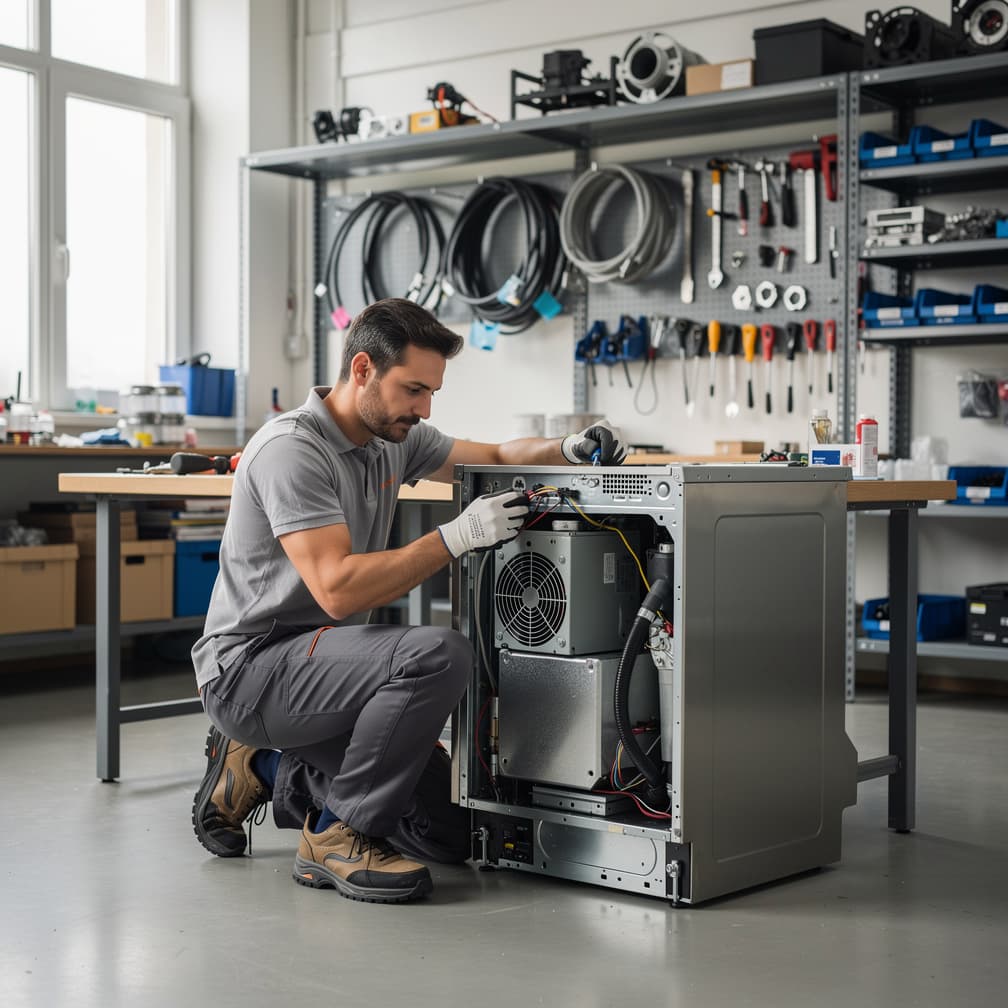

As an appliance repair business in Buffalo, the mix of accounts you chase decides who your customer actually is. Apartment complexes, management companies, and commercial kitchens buy repair work under contract, and contracts arrive with insurance clauses attached. A homeowner asks whether you can come today; a facilities manager asks for a certificate, an additional insured endorsement, and a limit, and will not schedule without them. Appliance repair insurance in Buffalo is what gets you onto that work at all. Losing an account over missing paperwork is the most avoidable loss in this trade. Erie County has about 22,500 businesses, which is the count of parties who could put such a clause in front of you. Decide which accounts you want before you decide which limits you need.
What Makes Buffalo Different
Deductibles are the lever owners ignore and the one that moves a quote fastest. A higher deductible lowers the premium and quietly moves the small stuff, which is most of this trade's claims, back onto you. Scratched floors and cracked panels are exactly the losses that land under a big deductible and never get filed. Decide whether you want a policy for catastrophes or a policy for ordinary weeks, because the two are priced differently. Limits work the opposite way: the first layer costs more than the second. Employee count, vehicle count, and the mix of residential and commercial work do the rest of the pricing. Getting the same job list in front of every participating carrier in New York is the only way the comparison means anything. A quote for Buffalo work built on guessed numbers is a quote for somebody else's business.
Local Risk Factors in Buffalo
Flooding closes the roads your technicians need before it ever touches a machine, and a day of canceled calls in Buffalo does not come back. Standing water in a customer's home also turns a routine service call into a site nobody should be working in, and the appliances you were called about may be a total loss rather than a repair. Your own van, parked at a job in Erie County when water rises, is a separate problem. Commercial Auto forms often include a comprehensive option that may respond to flood damage to the vehicle itself, subject to the deductible and to what was actually purchased. Standard property forms typically exclude flood entirely, so the parts and equipment sitting in a shop are a different conversation, priced separately. Ask which of your forms treats rising water before the water is a forecast.
What Coverage Does an Appliance Repair in Buffalo Need?
General Liability
Property managers, landlords, and warranty networks ask for this one by name before they let a technician through the door. It is generally the line for damage you cause at a customer's site and for injuries to people who do not work for you. Damage to the appliance you were working on is commonly excluded, which surprises owners.
Example: A hand truck clips a cabinet door while a washer comes out of a tight laundry closet, splitting the panel and the trim beside it. Repairs to that cabinetry might fall to the policy, subject to the deductible.
Commercial Auto
Every parts run, service call, and equipment haul is business use of a vehicle, and personal auto forms commonly exclude exactly that. This line is meant for the vans and trucks that carry your technicians, subject to who is listed as a driver. The meters and pullers inside are usually scheduled somewhere else.
Example: A van heading to a supplier for a compressor rear-ends a stopped car at a light. The other driver's repairs, the injury claim, and the damage to your van could all run through this policy, up to the limit.
Professional Liability
Sometimes nothing gets broken and the customer is still furious: the unit failed again a week later, and they say the diagnosis was wrong. That argument is about your work rather than about property, which is where General Liability usually stops and this line typically begins. Deliberate misconduct stays outside it.
Example: A customer says a misdiagnosed control board led to three visits and a freezer of spoiled food, then sends a demand letter naming the last technician. Defense costs for that dispute may be picked up here.
Tools & Equipment (Inland Marine)
Tools do not sit still in this trade. Diagnostic meters, vacuum pumps, specialty pullers, and part carriers ride between homes every day, and a building policy generally stops at the door while a vehicle policy generally stops at the tools. This line is written for property that travels, rated on a schedule you keep current. Wear and mechanical breakdown are usually outside it.
Example: A locked van in Buffalo is broken into overnight and the diagnostic gear inside walks, taking three days of scheduled calls with it. Replacement of the scheduled equipment can be within reach, depending on the list you filed.
How Much Does Appliance Repair Insurance Cost in Buffalo?
Appliance Repair Insurance is a bundle of separate policies, priced separately. The ranges below are typical figures for Buffalo for each line; a quote prices each one against your own operations.
| Coverage | Typical range | What moves your price |
|---|---|---|
| General Liability Insurance | $90 - $270 per month | Industry and risk classification, annual revenue, number of employees |
| Commercial Auto Insurance | $230 - $575 per month | Fleet size and vehicle types, driver records and experience, coverage limits and deductibles |
| Professional Liability Insurance | $75 - $210 per month | The services you actually perform, annual revenue or billed fees, limit and retention selected |
| Inland Marine Insurance | $35 - $120 per month | Total insured value of the scheduled property, type and age of the equipment, where it is stored and how far it travels |
Prices shown are general estimates, not guaranteed rates or quotes. Your actual premium will depend on the insurer, coverage selected, business details, location, claims history, and other underwriting factors. Learn about our pricing methodology.
What Are the Insurance Requirements for an Appliance Repair in Buffalo?
Workers' comp is generally required once you have your first employee. New York generally requires employers to carry workers' compensation at that point. Common exemptions include sole proprietors of one-person businesses and some ministers and clergy. Confirm current thresholds with your state's workers' compensation agency before you hire.
State auto liability minimums apply to business vehicles. New York's minimum auto liability limits are $25,000/$50,000/$10,000 (bodily injury per person / per accident / property damage). Contracts and lenders often require more than the state floor.
Where to verify licensing and coverage rules. The New York State Department of Financial Services publishes consumer guidance and current insurance requirements for New York businesses. When a contract or lease demands specific wording, the New York State Department of Financial Services's guidance is the authoritative place to check.
Get Your Appliance Repair Quote in Buffalo
Compare rates from multiple carriers. Free quotes, no obligation.
Operating in Buffalo
- Your equipment schedule is the number a claim pays against, not the number you spent. Owners renew for years on a list built the month they started, and the gap only appears after a break-in.
- A property manager in Buffalo can require your policy to name every building it manages, and not only the one with the broken dryer. That clause can reshape the policy before a single repair happens.
- Photographs taken before you touch a unit cost you nothing and settle claims. Without them, a dispute about a scratch that predates your visit becomes your word against a phone camera.
- Payroll estimated at binding gets trued up at audit, and seasonal help hired during a surge counts toward it. The bill for the difference arrives months later, when the busy stretch is already spent.
How to Buy: Advice for Buffalo Owners
Give the decision a calendar. Renewal is the only moment you have real leverage, so start the comparison six weeks out rather than the week the policy lapses. Use that window to update the equipment schedule, pull the loss runs, and collect the insurance page from any new contract. Owners who shop under deadline take the first workable number, which is how a Commercial Auto premium quietly doubles across two renewals without anyone noticing. Ask what changed in the rating rather than in the total. General Liability increases usually trace back to payroll, receipts, or claims, and all three are things you can document. Check the New York State Department of Financial Services's guidance before deciding whether a mid-term change makes sense in New York. Then take your time comparing quotes from participating carriers, because time is the only discount you control.
FAQ
Appliance Repair Insurance in Buffalo: FAQ
If the puddle came off the machine you were servicing, expect to be in the conversation. Bodily injury to a customer, a resident, or a passerby at a job site in Buffalo is the exposure General Liability is meant for, subject to the form and the limit. Claims like these settle slowly and cost real money in defense before anybody decides fault. A dry mat and a photograph do more prevention than any endorsement.
Do the math before you report anything minor. Claim frequency follows you across renewals for years, so a modest scratched-floor payment can cost more in future rates than writing the check would have. A high deductible makes that decision for you by default, which is worth knowing before you choose one. Big losses are a different question entirely, and that is what the policy is really for.
Price tracks exposure, not size. Carriers rate on payroll, annual receipts, how many vehicles you run and who drives them, the value of the tools that travel, and five years of claims. Vehicles usually move the number most; a clean loss history moves it down. Contracts matter too, because a required limit sets the floor for what you buy. Two shops in Buffalo can pay very differently for reasons that have nothing to do with location.
Damage to somebody else's property during a service call is the classic General Liability scenario, and that form is usually where a scratched floor lands, subject to the limit and the deductible. Damage to the appliance you were working on is treated differently, because most forms carve out the work itself. Photographs taken before you touch a unit settle more of these disputes than any policy language does.
Usually not, and this is the gap that surprises owners most. Personal auto policies commonly exclude business use, so a wreck on a parts run can leave the accident, the van, and the tools inside it on you. Commercial Auto is the line written for vehicles used in the work. Participating carriers in New York define business use in the form rather than in conversation, so read the exclusion before you rely on it.
It asks your policy to stand behind that party for what your technician does on their property. A certificate says a policy exists; the endorsement is what actually grants the status, and the two get confused constantly. Some forms name the party for ongoing operations only and drop them once the job is finished, which matters because complaints about a repair rarely arrive the same day. Ask for the endorsement form number rather than the checked box.
Sources
- 1.U.S. Census Bureau, County Business Patterns (2022), Erie County(Erie County has about 22,500 business establishments.)
- 2.New York State Department of Financial Services(New York State Department of Financial Services publishes consumer guidance for insurance buyers.)


