







































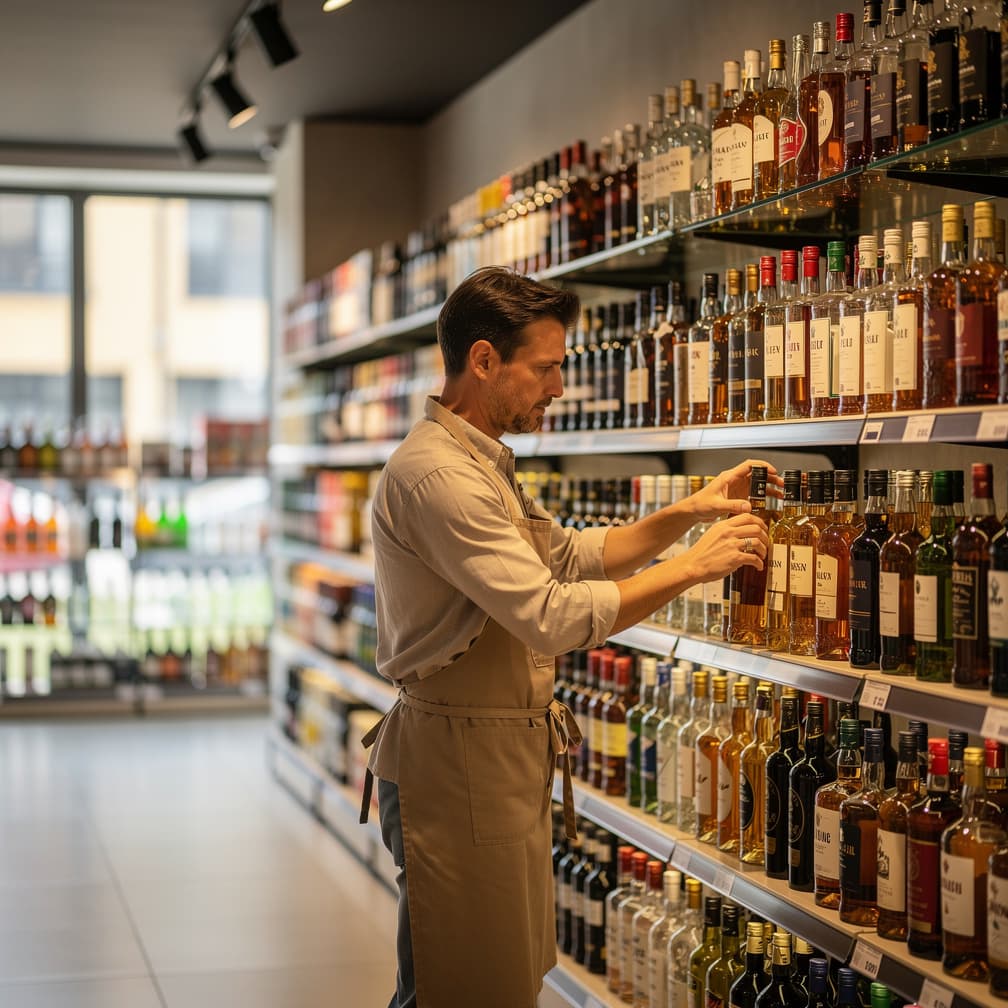

General Liability for a liquor store typically starts around $35 a month, which is the smallest line on the bill and nowhere near the biggest risk in the building. Liquor store insurance in Buffalo has to answer for stock that is dense, portable, and easy to resell, so a smashed door at a Buffalo storefront can cost more than a year of premium in one night. A dram shop claim can arrive months after the receipt printed, built out of a register log and a still frame from a camera. Payroll drives one number, the building and its contents drive another, and your loss history colors both. The same store can be priced three different ways by three participating carriers, because each one weighs those drivers differently. Read the ranges below with your own shelf value in mind before you start comparing.
What Makes Buffalo Different
Competitors do not raise your premium, though the loss history of your class can, and about 141 liquor stores operate in Erie County. Underwriters look at what that class tends to lose money on before they look at your store at all. Slips at the entrance, theft of stock, and alcohol sales gone wrong are the pattern behind the price. Your job in a quote is to show why your store sits on the better side of that pattern. Camera coverage, drawer procedure, and how new staff learn age checks are the levers actually under your control. A Buffalo store with documented controls has a story to tell; one without simply takes the class average. None of this shows up in the published ranges, which describe the class rather than the store. The gap between the two is where comparing quotes genuinely pays.
Local Risk Factors in Buffalo
A closed sales floor after water gets in costs more than the stock it ruined, because the reopening date belongs to a cleanup crew rather than to you. Drying a building, replacing low shelving, and getting the coolers certified again takes weeks in a queue you share with every other business in Erie County. Lost income wording decides whether those weeks land on your books or on the policy, and it typically requires a covered cause first. Flood is where that sentence bites, since a standard property form usually treats rising water as outside its scope entirely. An owner who assumes otherwise finds out during the worst month of the year. Ask which trigger applies before the season turns, and ask what proof of lost trade a carrier in New York would want.
What Coverage Does a Liquor Store in Buffalo Need?
General Liability
A shopper goes down on a wet tile by the entrance, and the store rather than the shopper answers for it. General Liability is built around customer injury and damage you do to someone else's property, and it usually funds the defense as well. Claims tied to alcohol you sold are typically excluded and belong to Liquor Liability instead.
Example: A case slips off a hand truck and lands on a customer's foot during a busy evening; general liability may respond to the medical bills and the demand letter that follows.
Commercial Property
Landlords ask about this one and lenders insist on it. Commercial Property is aimed at the building where you hold an interest in it, plus the shelving, coolers, registers, and the alcohol inventory inside. Fire, storm damage, and vandalism are common causes of loss, while flood and wear and tear generally sit outside the form.
Example: A fire in a neighboring unit smokes out your stockroom overnight and the coolers quit; commercial property could help with the repairs and the inventory that has to be written off.
Liquor Liability
General Liability will not touch a claim tied to the alcohol you sold, and that gap is the space this line fills. Liquor Liability is meant for dram shop exposure: a sale to a minor, a sale to someone already impaired, and the suit that shows up long afterward. Intentional acts and unlicensed sales usually stay outside it.
Example: A sale made near closing becomes a lawsuit months later, assembled from a receipt and camera footage; liquor liability might carry the defense costs and whatever settlement lands.
Commercial Crime
Money is the exposure here, together with the stock that leaves in a staff bag. Commercial Crime is intended for employee theft, forgery, robbery, and losses tied to cash handling, subject to what you can document. Unexplained shrink generally falls outside the form, which is why counts and camera retention earn their keep.
Example: A clerk with the safe code skims deposits for six months before the numbers stop matching; commercial crime is designed to answer for documented employee dishonesty like that.
Workers Compensation
Where General Liability deals with the customer, this line deals with the person on your payroll. Workers Compensation is meant for medical bills and lost wages after a work injury: a back strained lifting cases, a cut from broken glass, a fall in the stockroom. Requirements vary by state, and it is rated per hundred dollars of payroll.
Example: A clerk breaks a bottle while restocking a cooler in Buffalo and needs stitches; workers compensation can generally take on the treatment and the shifts missed afterward.
How Much Does Liquor Store Insurance Cost in Buffalo?
Liquor Store Insurance is a bundle of separate policies, priced separately. The ranges below are typical figures for Buffalo for each line, except workers compensation, which is rated per $100 of payroll; a quote prices each one against your own operations.
| Coverage | Typical range | What moves your price |
|---|---|---|
| General Liability Insurance | $100 - $320 per month | Industry and risk classification, annual revenue, number of employees |
| Commercial Property Insurance | $210 - $750 per month | Building value and construction type, roof age and condition, fire protection class |
| Liquor Liability Insurance | $100 - $390 per month | Share of sales that comes from alcohol, type of venue and how late you serve, server training and service procedures |
| Commercial Crime Insurance | $40 - $130 per month | Employees who handle money or inventory, internal controls and separation of duties, funds and securities on hand |
| Workers Compensation Insurance | $0.75 - $2.74 per $100 of payroll | Employee classification codes, total annual payroll, experience modification rate |
Prices shown are general estimates, not guaranteed rates or quotes. Your actual premium will depend on the insurer, coverage selected, business details, location, claims history, and other underwriting factors. Learn about our pricing methodology.
What Are the Insurance Requirements for a Liquor Store in Buffalo?
Workers' comp is generally required once you have your first employee. New York generally requires employers to carry workers' compensation at that point. Common exemptions include sole proprietors of one-person businesses and some ministers and clergy. Confirm current thresholds with your state's workers' compensation agency before you hire.
Flood damage is typically excluded from standard policies. Standard commercial property and builders-risk-type policies typically exclude flood damage. Flood exposure varies address by address, so check your premises in FEMA's Flood Map Service Center before deciding; if you sit in a mapped flood zone, a separate policy through the National Flood Insurance Program is the usual starting point.
Where to verify licensing and coverage rules. The New York State Department of Financial Services publishes consumer guidance and current insurance requirements for New York businesses. When a contract or lease demands specific wording, the New York State Department of Financial Services's guidance is the authoritative place to check.
Get Your Liquor Store Quote in Buffalo
Compare rates from multiple carriers. Free quotes, no obligation.
Operating in Buffalo
- Loss runs from your last three years are the part of a submission a carrier trusts completely, so pull them before anyone in New York asks.
- A landlord can hold the keys to a Buffalo storefront until your certificate arrives carrying the exact wording the lease named, so the policy has to exist before the shelves do.
- Delivery drivers stack cases in the aisle while customers walk past them, and the fall that follows is your claim rather than the distributor's.
- The register in a Buffalo store is the busiest risk point in the building, since every sale is an age decision and one wrong call can surface as a lawsuit months later.
How to Buy: Advice for Buffalo Owners
Start with the lease, because it is the document that decides half of what you end up buying. A landlord can require limits, additional insured status, and notice before cancellation, and those three lines set your floor. Take them to a quote alongside your payroll figure and an honest value for what sits on the shelves. General Liability typically answers for the customer side of the store; Commercial Property is aimed at the building and the stock inside it. The New York State Department of Financial Services publishes the current requirements for alcohol retail licensing in New York, which is worth reading before you sign anything in Buffalo. Then compare quotes from participating carriers on the limits your lease named, rather than on the number that looks smallest.
FAQ
Liquor Store Insurance in Buffalo: FAQ
Cost tracks payroll, revenue, the value of your stock, your limits, your deductible, and your claims history. Square footage matters less than most owners expect. A store with cameras, a monitored alarm, and three clean years prices differently from one without any of them. The published ranges on this page describe the class; your own numbers decide where a Buffalo store lands inside them.
It asks your carrier to extend protection to the landlord for claims arising out of your operation. The certificate alone does not create it; the endorsement does, so ask to see the endorsement itself. Landlords want it because it puts your policy in front of theirs when a customer falls in a space they own. Expect a small charge and a specific form number.
Per occurrence is the most a policy may pay for a single claim. The aggregate is the ceiling across the whole policy year, however many claims arrive. A store that has already had one serious injury claim can discover the aggregate is what limits the next one. Ask for both numbers, since a certificate showing only one tells you half the story.
It usually can, since a store answers for the condition of the floor its customers walk on. General Liability is built around that, and it might respond to the medical bills and the defense that follows a demand letter. A floor check log and a photograph of the mat inside your Buffalo entrance are worth more than an argument later.
Lost income gets handled by business interruption wording, and none of it is automatic. It commonly requires a covered cause of loss, a waiting period, and proof of what you would have earned. A closure caused by a utility failure several blocks away may sit outside the form unless a specific extension was added. Ask what triggers it before you need it.
Often, though it depends on the size, the type, and how many you have had. One theft claim after five clean years reads differently than a third slip in two. Some owners absorb small losses for exactly this reason, which is what a higher deductible formalizes. Ask a carrier writing in New York how they weigh frequency against severity; the answers differ more than you would expect.
Sources
- 1.U.S. Census Bureau, County Business Patterns (2023), Erie County(Erie County has about 141 businesses in this trade's category (NAICS group 445310).)
- 2.New York State Department of Financial Services(New York State Department of Financial Services publishes consumer guidance for insurance buyers.)
- 3.FEMA / FloodSmart(Flood coverage is typically purchased separately; FEMA administers the National Flood Insurance Program.)


