







































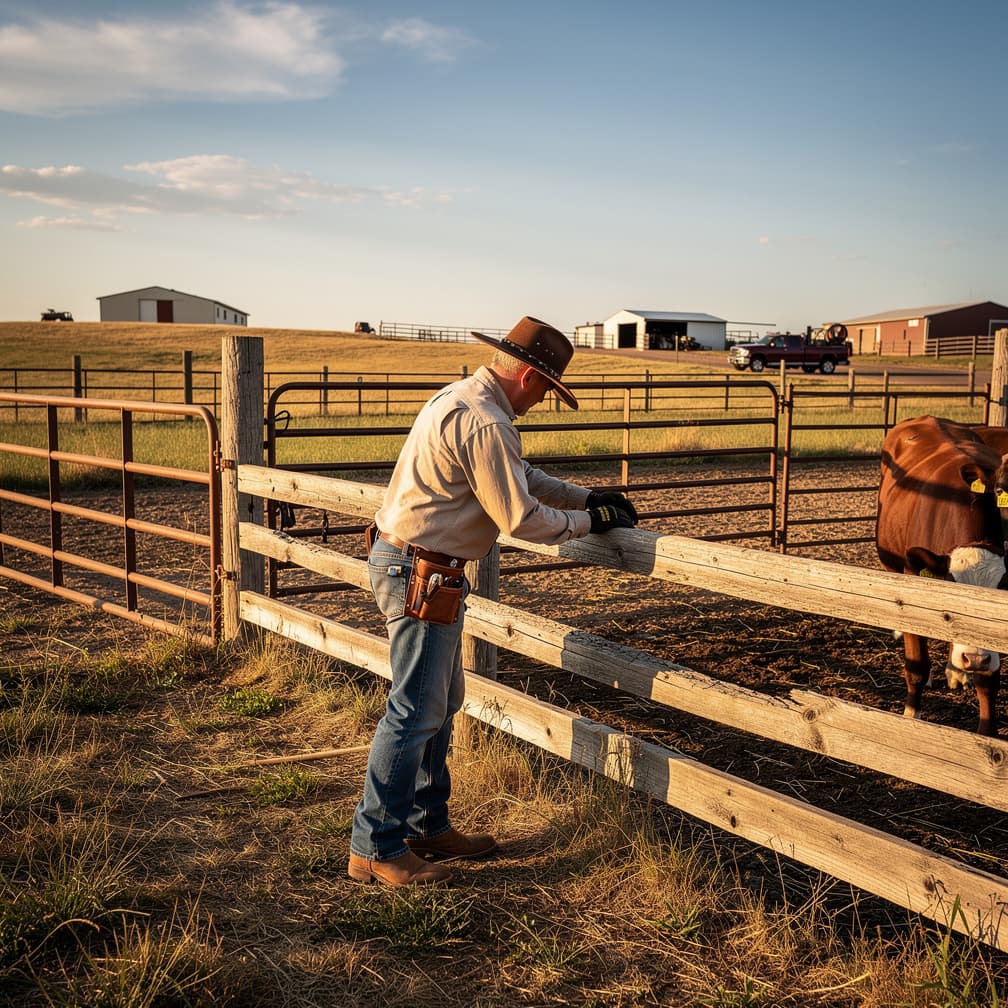

As a ranch in Buffalo, machinery decides your week. A baler, a loader, a stock trailer, a water pump: when one quits, feeding and hauling stall until it is fixed, and a rented replacement costs money no budget planned for. Breakdown and theft end the same way, with work stopped and a bill open. Ranch insurance in Buffalo should be shopped with an honest equipment list, because a policy priced on a guess pays on a guess. Note what each machine is worth today rather than what you paid. Note what leaves the property and what never does. Participating carriers price those two lists differently, and that difference is where your real quote lives.
What Makes Buffalo Different
Additional insured wording trips up more ranch operations than any limit ever has. Someone leasing you pasture wants their name on your policy, and your policy has to allow it. Forms in use across New York differ on which of those requests a ranch policy grants without an endorsement. Read the clause before you sign, because a signature commits you to something the policy may not deliver. Ask what the counterparty actually needs: additional insured, waiver of subrogation, primary and noncontributory, notice of cancellation. Those four phrases decide whether the certificate you send gets accepted or bounced back. A contract for work near Buffalo can name all four in one paragraph nobody reads aloud. Take the paragraph to whoever quotes you and let the quotes answer it instead of your optimism.
Local Risk Factors in Buffalo
Water standing in a pasture stops work long before it damages anything you could photograph. Feed trucks cannot reach the far pens, a vet appointment slides, and a shipping window out of Buffalo passes while the ground drains. When water does reach a barn it ruins from the bottom up: feed, tack, wiring, and the motors on anything mounted low. Standard property coverage is written around fire, wind, and theft, and it generally leaves rising water to a separate flood policy carrying its own waiting period. That waiting period is the part owners learn the hard way, since you cannot buy it the week a forecast turns. Ask what your form says about surface water, and ask early enough in New York for the answer to matter.
What Coverage Does a Ranch in Buffalo Need?
General Liability
Ask whoever leases you pasture what they want to see, and this is the line they name. It can help cover a third party's injury on your ground, damage you do to somebody else's property, and the defense if a demand turns into a suit. Injuries to your own workers and property left in your care generally sit outside it.
Example: A buyer steps into the wet alley beside the chute, catches a heel, and tears a knee. The medical bills and the demand letter behind them are the kind of claim this line is meant to take on.
Commercial Property
Flood and mechanical breakdown typically sit outside this form, which tells you what it is actually for: the barn, the loafing shed, the panels, the tack and tools inside them, and stored feed, when fire, wind, hail, or theft does the damage. Fencing and animals get treated unevenly, so ask how yours are scheduled.
Example: Wind lifts half the roof off a hay barn and rain finishes the feed stored under it that night. Structure and contents can land on one claim, with your deductible coming off the top.
Commercial Auto
Personal auto policies commonly exclude business use, and that gap is the reason this line exists for ranch trucks, feed rigs, and trailers. It might answer liability when a ranch vehicle injures someone or damages property, plus physical damage to the truck itself where that piece is added. Hauling for hire changes the classification, so disclose it.
Example: A loaded stock trailer sways on a county road out of Buffalo, clips a mailbox and a parked car, and the driver was a hand you pay by the day. Whether that claim goes anywhere often turns on who was authorized to drive.
Workers Compensation
Payroll is the meter: this line gets rated per $100 of what you pay hired help, and it can cover medical care and lost wages when a worker is hurt doing ranch work. Whether owners and family members are included varies, and requirements differ by state, so get the list of included people in writing.
Example: A hand loading panels at branding tears a shoulder and misses two months of work. Medical bills and part of the lost pay are where that claim goes, provided the payroll behind him was reported honestly.
How Much Does Ranch Insurance Cost in Buffalo?
Ranch Insurance is a bundle of separate policies, priced separately. The ranges below are typical figures for Buffalo for each line, except workers compensation, which is rated per $100 of payroll; a quote prices each one against your own operations.
| Coverage | Typical range | What moves your price |
|---|---|---|
| General Liability Insurance | $150 - $525 per month | Industry and risk classification, annual revenue, number of employees |
| Commercial Property Insurance | $320 - $1,100 per month | Building value and construction type, roof age and condition, fire protection class |
| Commercial Auto Insurance | $270 - $800 per month | Fleet size and vehicle types, driver records and experience, coverage limits and deductibles |
| Workers Compensation Insurance | $0.75 - $2.74 per $100 of payroll | Employee classification codes, total annual payroll, experience modification rate |
Prices shown are general estimates, not guaranteed rates or quotes. Your actual premium will depend on the insurer, coverage selected, business details, location, claims history, and other underwriting factors. Learn about our pricing methodology.
What Are the Insurance Requirements for a Ranch in Buffalo?
Workers' comp is generally required once you have your first employee. New York generally requires employers to carry workers' compensation at that point. Common exemptions include sole proprietors of one-person businesses and some ministers and clergy. Confirm current thresholds with your state's workers' compensation agency before you hire.
State auto liability minimums apply to business vehicles. New York's minimum auto liability limits are $25,000/$50,000/$10,000 (bodily injury per person / per accident / property damage). Contracts and lenders often require more than the state floor.
Flood damage is typically excluded from standard policies. Standard commercial property and builders-risk-type policies typically exclude flood damage. Flood exposure varies address by address, so check your premises in FEMA's Flood Map Service Center before deciding; if you sit in a mapped flood zone, a separate policy through the National Flood Insurance Program is the usual starting point.
Where to verify licensing and coverage rules. The New York State Department of Financial Services publishes consumer guidance and current insurance requirements for New York businesses. When a contract or lease demands specific wording, the New York State Department of Financial Services's guidance is the authoritative place to check.
Get Your Ranch Quote in Buffalo
Compare rates from multiple carriers. Free quotes, no obligation.
Operating in Buffalo
- A delivery driver leaves a gate open at dusk and forty head are on the road by midnight. The wreck that follows arrives as a liability claim against you, and participating carriers in New York ask for your fence maintenance file first.
- A load can sit at the scale while a buyer's compliance clerk checks your certificate against the contract. If a company in Buffalo holds payment until the wording matches, that delay costs you rather than them.
- Vets, farriers, and haulers work your ground without ever appearing on your payroll. An injury to one of them is a liability question rather than a payroll one, and the answer depends on whose paperwork is on file.
- Fuel gets delivered a few steps from a barn holding a season of hay. One spill or one spark turns that into a property claim and a cleanup bill in the same afternoon.
How to Buy: Advice for Buffalo Owners
Hired help is the exposure owners most want to wave off and the one that turns into the largest bill. A neighbor's kid stacking hay, a day laborer at branding, a contract fence crew working near Buffalo: each raises the same question about who answers when a shoulder tears. Workers Compensation requirements differ by state, and whether you must carry it is a separate question from whether you should. An uninsured injury tends to arrive as a liability claim against you instead, and General Liability commonly excludes injuries to your own workers. Get a certificate from every contractor before they start, and keep it filed. The New York State Department of Financial Services publishes consumer guidance on employer coverage requirements. Then compare quotes from participating carriers through CPK using a payroll number you have actually verified.
FAQ
Ranch Insurance in Buffalo: FAQ
That is the claim ranch liability coverage exists for. General Liability may respond to a third party's injury on your property, including medical costs and the defense if they sue you. Your own workers are handled elsewhere, and harm you cause on purpose is excluded everywhere. The limit you picked is the ceiling on all of it, which is why the limit deserves more attention than the premium.
Sometimes, and the details decide it. Liability from a trailer in tow often follows the towing vehicle, while physical damage to the trailer itself usually has to be scheduled. A trailer sitting unhitched at a gate is a third question again. List every trailer on the Commercial Auto quote with values, and ask which of those three situations the form actually addresses.
Not automatically. Commercial Property forms are written around structures and contents, and animals commonly need scheduled livestock coverage or a separate form. Even then the cause matters: death from an accident, from disease, and from weather get treated differently, and some causes sit outside the form entirely. Ask for the list of covered causes in writing before you assume the herd is on the policy.
It puts the other party's name on your policy so your coverage can answer claims arising out of your use of their ground. Landowners and buyers ask for it because it moves the first line of defense to your insurer instead of theirs. Not every form grants it automatically, and some need an endorsement. Confirm your New York quote allows the exact wording the contract names.
Often, subject to where they sat and how they were secured. Property kept in a locked building gets treated differently from gear left in an open lean-to or a trailer parked by a gate. Some forms sublimit tools sharply while others schedule them by item. Your deductible comes off first, which is why small theft claims frequently cost more in renewal pricing than they return.
The per occurrence figure caps what a policy may pay for one event, and the aggregate caps what it may pay across the whole policy year. A rough season holding a visitor injury, a fence-line dispute with a neighbor, and a delivery gone wrong can burn the aggregate on the first two claims and leave the third one short. Ask for both numbers, and ask whether defense costs are counted against them.
Sources
- 1.New York State Department of Financial Services(New York State Department of Financial Services publishes consumer guidance for insurance buyers.)
- 2.FEMA / FloodSmart(Flood coverage is typically purchased separately; FEMA administers the National Flood Insurance Program.)


