







































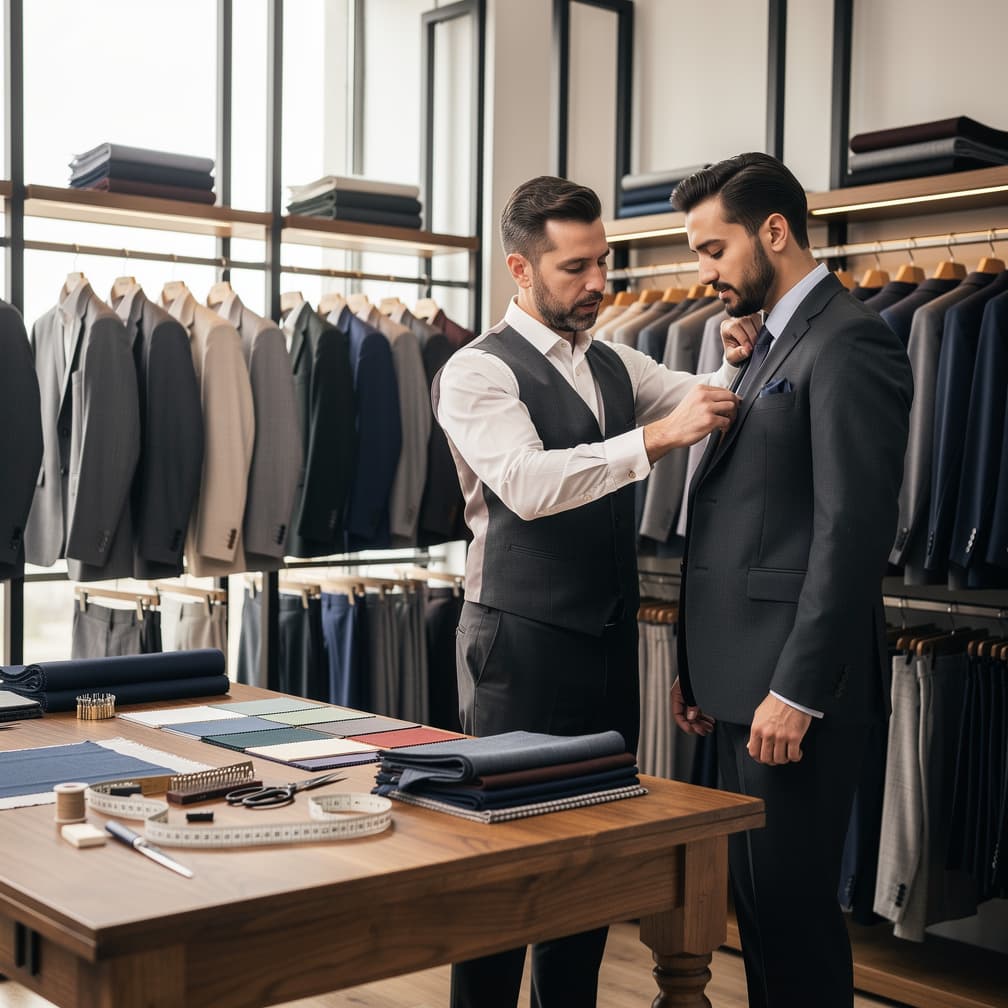

Two shops on the same block can pay very different premiums, and the reason is almost never luck. Deductibles, limits, payroll, the value of the garments on your racks, and the claims you have filed all move the number before anyone looks at your address. Tailor insurance in New York is quoted from that pile of facts, so the fastest way to control cost is to have the pile ready and accurate. Commercial Property for a shop can run from $65 a month at the low end, and it climbs with the value of what one fire or one burst pipe could take out at once. Understating that value saves a few dollars now and costs a great deal at claim time. Quotes from participating carriers in New York move on the same inputs, so line them up side by side.
What Makes New York Different
About 61,500 businesses share Kings County, and that number changes who can put insurance requirements in front of you. In a market that size, corporate and institutional buyers are common enough that a shop can be asked for proof of coverage several times a year, by parties who have never met each other. Each one has its own template, its own limit, and its own idea of what naming means. The volume is the point: paperwork becomes an operating routine instead of an occasional errand. Competition also compresses turnaround promises, and a shop that promises a fast return is a shop that leans harder on its equipment. Equipment leaned on hard fails on the worst day. Build the policy for a shop running at full speed, since that is when the claim arrives. Then compare that build against what your contracts actually oblige you to hold.
Local Risk Factors in New York
A dark shop with a full rack is the real hurricane exposure for a tailor in New York, and no photograph of it looks like damage. Power goes out across the block, presses and machines stop, and the garments promised for weddings and events keep their dates while the doors stay shut. When the power returns, the week that follows is compressed, and compressed weeks are where measurements go wrong and disputes begin. Storm shutters protect glass but do nothing for a schedule. A business owners policy can bundle the property and income pieces for a small shop, though what it does about a multi-day closure depends on how the interruption terms are written and on whether the outage started with damage at your own address. Get that answer in New York in writing.
What Coverage Does a Tailors in New York Need?
General Liability
A customer catches a heel on the fitting platform and goes down: that is the claim this line exists for, along with the defense costs that follow it. Landlords and corporate clients demand it by name before keys or contracts move. It generally does not answer for the garment in your hands, since property you took custody of is treated separately.
Example: Pins scatter near the mirror and a customer in New York falls while stepping down from the platform; General Liability may respond to the injury claim and the defense behind it.
Commercial Property
Machines, presses, fixtures, and the fabric and trim you own sit behind this line when fire, storm damage, theft, or vandalism reaches them. The gap worth knowing: garments belonging to customers are handled under a separate provision with its own limit, and water rising from outside the building is typically excluded and priced on its own.
Example: A break-in overnight clears the bench of sewing machines and the shop cannot take work in the morning; Commercial Property could pick up the replacement cost, subject to the deductible.
Business Owners Policy
Buying the property and liability pieces as one package is what a Business Owners Policy does, and for a small shop it often prices below the same parts bought apart. It can also bundle income protection while the doors are shut. The limits inside the bundle are the catch, because a package sized for a generic retailer may not fit a rack of formalwear.
Example: A fire in the pressing area closes the shop for three weeks; a Business Owners Policy might address the equipment, the interior, and the income lost while the doors stay locked.
Workers Compensation
Staff who lift loaded garment racks, haul inventory, and work over hot presses get hurt in predictable ways: backs, hands, and burns. This line is meant to handle the medical bills and lost wages that follow, and it is rated per $100 of payroll against what people physically do. Requirements for small employers vary by state and are not something to assume.
Example: A presser reaches across a hot plate and burns a forearm badly enough to miss two weeks of work; Workers Compensation is intended to take on the medical costs and the lost wages.
How Much Does Tailors Insurance Cost in New York?
Tailors Insurance is a bundle of separate policies, priced separately. The ranges below are typical figures for New York for each line, except workers compensation, which is rated per $100 of payroll; a quote prices each one against your own operations.
| Coverage | Typical range | What moves your price |
|---|---|---|
| General Liability Insurance | $75 - $200 per month | Industry and risk classification, annual revenue, number of employees |
| Commercial Property Insurance | $100 - $310 per month | Building value and construction type, roof age and condition, fire protection class |
| Business Owners Policy Insurance | $120 - $350 per month | Annual revenue and industry class, building and contents values, square footage and building age |
| Workers Compensation Insurance | $0.75 - $2.74 per $100 of payroll | Employee classification codes, total annual payroll, experience modification rate |
Prices shown are general estimates, not guaranteed rates or quotes. Your actual premium will depend on the insurer, coverage selected, business details, location, claims history, and other underwriting factors. Learn about our pricing methodology.
What Are the Insurance Requirements for a Tailors in New York?
Workers' comp is generally required once you have your first employee. New York generally requires employers to carry workers' compensation at that point. Common exemptions include sole proprietors of one-person businesses and some ministers and clergy. Confirm current thresholds with your state's workers' compensation agency before you hire.
Flood damage is typically excluded from standard policies. Standard commercial property and builders-risk-type policies typically exclude flood. Given New York's coastal flood exposure, a separate flood policy is worth pricing; FEMA's National Flood Insurance Program is the usual starting point.
Where to verify licensing and coverage rules. The New York State Department of Financial Services publishes consumer guidance and current insurance requirements for New York businesses. When a contract or lease demands specific wording, the New York State Department of Financial Services's guidance is the authoritative place to check.
Get Your Tailors Quote in New York
Compare rates from multiple carriers. Free quotes, no obligation.
Operating in New York
- Water reaches fabric before it reaches anything else in the room, because racks sit at the height a leak finds first and wet garments do not improve while they wait for a dryer.
- Small garment disputes settled out of pocket keep your claims file clean, and your deductible is the line that decides which losses genuinely belong on a policy.
- A shop in New York that promises same-week turnaround is a shop leaning on its equipment every day, and equipment leaned on hard fails during the busiest stretch rather than the quiet one.
- Replacement machines can take weeks to arrive when no local dealer holds stock in Kings County, so downtime, rather than the physical damage, is often the expensive half of an equipment claim.
How to Buy: Advice for New York Owners
Claims history is the input you cannot fix at quoting time, which is why the small stuff matters. A shop that pays for a rushed rework out of pocket keeps a clean file; a shop that files three small garment disputes in one year explains them for the next several. That does not mean absorbing a real loss, it means knowing which losses belong on a policy. Your deductible is the line between the two, so set it at the number where a claim is genuinely worth filing. General Liability and Commercial Property both behave this way. Check the New York State Department of Financial Services's guidance before deciding what to report. Then compare quotes from participating carriers in New York with your real history attached, since the honest file prices better than the vague one.
FAQ
Tailors Insurance in New York: FAQ
Usually not in the way owners hope. Fixing your own work is a business cost, and policies are generally written for sudden accidental damage rather than for the quality of the workmanship itself. Where it can turn into a coverage question is when a mistake damages the garment beyond repair and the customer demands its value. That distinction, between rework and destruction, decides most of these disputes. Ask a carrier how workmanship disputes are treated before you need the answer.
Less than the difference in rent, and far less than the difference owners expect. Rating leans on payroll, revenue, the value you hold, and your claims record, and those follow the shop rather than the postcode. Location does move a few things: property rates track local repair costs and loss patterns, and thinner markets mean fewer carriers competing for the account. That last part shows up as a narrower spread between quotes rather than as a higher base price.
A client can demand almost anything in a contract, and being named on your policy is one of the more common asks. It is a real endorsement, which means your carrier has to agree to it and may charge for it. Some carriers add named parties easily and some decline depending on the work involved. Sort that out before you sign, because agreeing to naming language you cannot deliver leaves you in breach of a contract you already signed in New York.
Document what belonged to customers before you touch anything else. Photographs of the racks, your ticket records, and a written list of whose garments were where turn a chaotic loss into a claim somebody can adjust. Your own machines are easy to prove with receipts; other people's clothing is not, and that is where these claims stall. Report the loss promptly, because notice deadlines are written into the policy and a late report can complicate an otherwise straightforward claim.
It is the classic tailoring claim and it usually starts with paperwork, not fabric. A ticket gets misfiled, a suit goes to the wrong rack, and the customer wants its value rather than an apology. How a policy responds depends on how it treats property of others in your care, which is a specific question and not something a standard property form handles automatically. Ask any carrier in New York where customers' goods sit in the policy and what limit applies to them.
Often not, and this is the gap that surprises shops most. General Liability is generally built around injuries to other people and damage to property you do not control, while a garment in your hands for alteration is property you took custody of on purpose. That custody usually falls under a different part of the policy structure, if it is addressed at all. Ask specifically about care, custody, and control before assuming a liability limit answers for a ruined gown.
Sources
- 1.U.S. Census Bureau, County Business Patterns (2022), Kings County(Kings County has about 61,500 business establishments.)
- 2.New York State Department of Financial Services(New York State Department of Financial Services publishes consumer guidance for insurance buyers.)
- 3.FEMA / FloodSmart(Flood coverage is typically purchased separately; FEMA administers the National Flood Insurance Program.)


