







































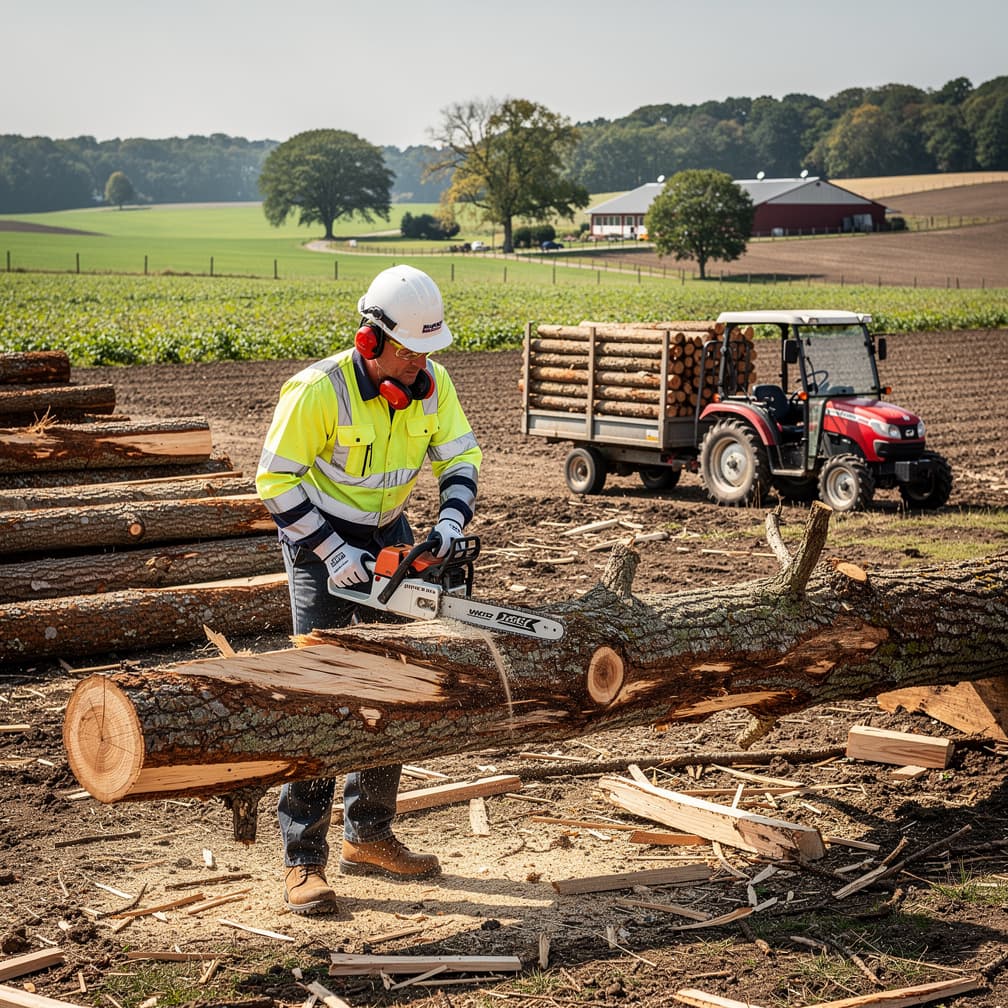

General Liability for a timber and logging outfit typically runs from $35 to $130 a month, and the spread inside that range is the interesting part. Crew size, payroll, the machines you run, whether you subcontract the haul, and what your last five years of claims look like all push the price up or pull it down. Two crews cutting the same tract in New York can price differently for reasons that have nothing to do with skill. Timber and logging insurance in New York is quoted off paperwork, so the paperwork is worth getting right before you shop. Have payroll by job duty, a machine list with serial numbers, and your loss runs ready. What you tell a carrier is what you get rated on, and guesses cost money later. Comparing quotes from participating carriers only helps when every quote is looking at the same business.
What Makes New York Different
Kings County holds about 61,500 business establishments, and every one that hires timber work brings its own idea of proof. Volume is not really the point here; variety is. A land trust, a homebuilder, and a pipeline contractor do not ask for the same limits or the same wording. A crew working a dense county ends up maintaining several versions of one document, each with its own expiry. Density also thickens the party list on a single incident: more subcontractors on one tract, more counsel on one claim. Defense costs multiply with parties rather than with damage, which is the part owners consistently underestimate. Ask how your form handles defense against the limit before the party count gets decided for you. Paperwork is the operating system in a market like this, and the cut is only the work.
Local Risk Factors in New York
Before a named storm reaches New York, the practical move is to get iron off the exposed landings near New York and onto high, firm ground. Machines left in the open take wind-driven debris, and a loader flipped by a gust is a real loss even miles from the coast. What owners miss is the timing of the paperwork: adding or confirming coverage after a storm is named is usually too late, because carriers restrict changes once a system is in the forecast cone. Wind damage to scheduled equipment may fall to an Inland Marine form, though the flood and surge riding the same storm are typically excluded and priced on their own. Confirm what your form says about named-storm deductibles now, while a change is still allowed.
What Coverage Does a Timber & Logging in New York Need?
General Liability
Tract owners and timber buyers ask for this line by name, because it stands behind the damage your work does to other people and their property: a felled tree through a fence, a bystander struck, a crushed culvert. General Liability may respond to those third-party claims and the legal defense that follows. It typically will not answer for injuries to your own crew or damage to property in your care.
Example: A hinge cut goes wrong and a poplar drops across the neighbor's board fence instead of into the lay. The repair bill and an angry letter arrive together, and this line may pick up the third-party damage.
Workers Compensation
A chainsaw bite, a rolling stem, a fall on a steep landing: crew injuries are constant in felling and bucking, and this is the line built for them. Workers Compensation can help cover medical care and lost wages for an employee hurt on the job, regardless of fault. Owner and family-member rules vary by state, so who must be covered is worth confirming rather than assuming.
Example: A cutter's saw kicks back on a limbing pass and opens a deep gash that needs stitches and a week off. Workers Compensation may handle the medical bills and part of the wages he loses while healing.
Commercial Auto
Personal auto policies generally exclude a pickup once it is pulling a saw trailer to a tract, which is where this line comes in. Commercial Auto is meant for the trucks, trailers, and crew rigs that move between yard, landing, and mill. It can respond to a collision your driver causes on a haul road, though wear on the vehicle and the machine riding on the trailer usually belong to other forms.
Example: A loaded log truck comes over a rise to find traffic stopped and cannot haul down in time. The damage to the other vehicles from that rear-end collision is generally where Commercial Auto steps in.
Tools & Equipment (Inland Marine)
Saws, skidders, loaders, and a trailer of rigging spend their lives moving over rough ground and long roads, far from any fixed address a property policy assumes. Inland Marine is the line written around that mobile equipment, and it can respond when a machine is damaged, stolen, or lost in transit. Flood and simple mechanical breakdown typically sit outside it, so those are worth asking about directly.
Example: A skidder catches fire at a remote landing outside New York and is a total loss before anyone can reach it with an extinguisher. Written on the schedule, that machine may be covered under this equipment line.
Commercial Umbrella
When a clearing contract or a utility agreement demands a limit higher than your primary lines carry, this is usually the least expensive way to reach it. Commercial Umbrella sits above your underlying liability and auto limits and can extend them after a large claim exhausts what sits beneath. It does not lower those underlying limits, which have to qualify first, and it follows the same exclusions they do.
Example: A groundman is badly hurt when a rolling stem catches him, and the injury award climbs past the limit on the primary liability policy. The umbrella layer is designed to absorb the excess above it.
How Much Does Timber & Logging Insurance Cost in New York?
Timber & Logging Insurance is a bundle of separate policies, priced separately. The ranges below are typical figures for New York for each line, except workers compensation, which is rated per $100 of payroll; a quote prices each one against your own operations.
| Coverage | Typical range | What moves your price |
|---|---|---|
| General Liability Insurance | $750 - $2,900 per month | Industry and risk classification, annual revenue, number of employees |
| Workers Compensation Insurance | $0.75 - $2.74 per $100 of payroll | Employee classification codes, total annual payroll, experience modification rate |
| Commercial Auto Insurance | $1,400 - $5,000 per month | Fleet size and vehicle types, driver records and experience, coverage limits and deductibles |
| Inland Marine Insurance | $350 - $1,700 per month | Total insured value of the scheduled property, type and age of the equipment, where it is stored and how far it travels |
| Commercial Umbrella Insurance | $340 - $1,575 per month | Umbrella limit requested, limits carried on the underlying policies, loss history on those underlying policies |
Prices shown are general estimates, not guaranteed rates or quotes. Your actual premium will depend on the insurer, coverage selected, business details, location, claims history, and other underwriting factors. Learn about our pricing methodology.
What Are the Insurance Requirements for a Timber & Logging in New York?
Workers' comp is generally required once you have your first employee. New York generally requires employers to carry workers' compensation at that point. Common exemptions include sole proprietors of one-person businesses and some ministers and clergy. Confirm current thresholds with your state's workers' compensation agency before you hire.
State auto liability minimums apply to business vehicles. New York's minimum auto liability limits are $25,000/$50,000/$10,000 (bodily injury per person / per accident / property damage). Contracts and lenders often require more than the state floor.
Where to verify licensing and coverage rules. The New York State Department of Financial Services publishes consumer guidance and current insurance requirements for New York businesses. When a contract or lease demands specific wording, the New York State Department of Financial Services's guidance is the authoritative place to check.
Get Your Timber & Logging Quote in New York
Compare rates from multiple carriers. Free quotes, no obligation.
Operating in New York
- Cutting past a boundary is a timber trespass claim, and it gets settled on stump counts rather than on sympathy. Ask early how your policy treats it, since intentional acts sit outside most forms.
- A skidder exhaust in dry slash starts fires that do not stay on your tract. Spark arrestors and a water pump at the landing are cheap next to a claim that crosses a fence line outside New York.
- Landowners like to watch a big stem come down, and they stand exactly where they should not. A plain conversation about staying clear while a saw runs prevents the claim nobody ever expects to file.
- Access to a tract usually runs across somebody else's driveway or hay field, and the ruts are your bill even when the timber came out clean. Ask who walks the road at the end of the job, before the first tree comes down.
How to Buy: Advice for New York Owners
Gather the file before you shop and the shopping gets short. Underwriters want payroll split by duty, a driver list with motor vehicle records, an equipment schedule carrying serial numbers and values, your haul radius, and five years of loss runs. Add written safety practice if you have it, and if you do not, that is a weekend well spent. Inland Marine gets quoted off the equipment schedule, so a stale list can mean a stale settlement when a loader burns at the landing. Commercial Auto gets quoted off the drivers and the miles between New York and the mill. Check the New York State Department of Financial Services's guidance on what a commercial application may ask of you before deciding what to hand over. With one clean file you can send the same submission to several participating carriers through CPK and read real differences rather than guesses.
FAQ
Timber & Logging Insurance in New York: FAQ
Damage to someone else's property during your work is normally a General Liability question, and the form could respond to repairing or replacing the fence. What it typically excludes is damage to property in your own care or control, which is a separate argument with a separate answer. If the same tree took out a parked car, that pulls another line in, so report the whole scene rather than the piece of it you assume will answer.
Often yes, and the wording decides what it is worth. Some endorsements limit the status to ongoing operations, which ends the day the crew leaves the landing, while damage discovered after the cut can fall outside that window. When a contract in New York asks to name the owner for the length of the cut, ask whether completed operations are included. The request usually carries a cost, and learning that at the certificate stage costs days.
Per occurrence caps what a policy may pay on a single incident, while the aggregate caps the whole term, and logging generates exactly the sort of small property claims that spend an aggregate quietly. Three flattened fences and a crushed culvert take a bite nobody notices. Then a tract owner asks for a limit you no longer have to give. Check where the number stands before promising anything, because a certificate shows what you bought rather than what remains.
Personal auto policies typically exclude vehicles used in a business, and a pickup pulling a saw trailer to a tract is a working vehicle no matter whose name is on the title. Commercial Auto is generally the line that answers there. Tell the carrier who drives and how far, since both move the price and both get examined closely after an accident.
Equipment in transit deserves a specific question, because forms differ on a machine riding a lowboy versus a machine parked at a landing overnight. Inland Marine is usually the line built around contractors equipment, and anything nobody added to the schedule may sit outside it entirely. Photograph serial plates and hour meters while the iron is healthy, since settlement arguments run on what you can document.
Two things, usually. Their mistake can land on your policy, and at audit an uninsured sub can be reclassified as your payroll and rated accordingly, which is a bill with no claim attached to it. Collect certificates before the first day on the ground and keep them for the full term. Ask them for the same wording somebody else demanded from you.
Sources
- 1.U.S. Census Bureau, County Business Patterns (2022), Kings County(Kings County has about 61,500 business establishments.)
- 2.New York State Department of Financial Services(New York State Department of Financial Services publishes consumer guidance for insurance buyers.)


