







































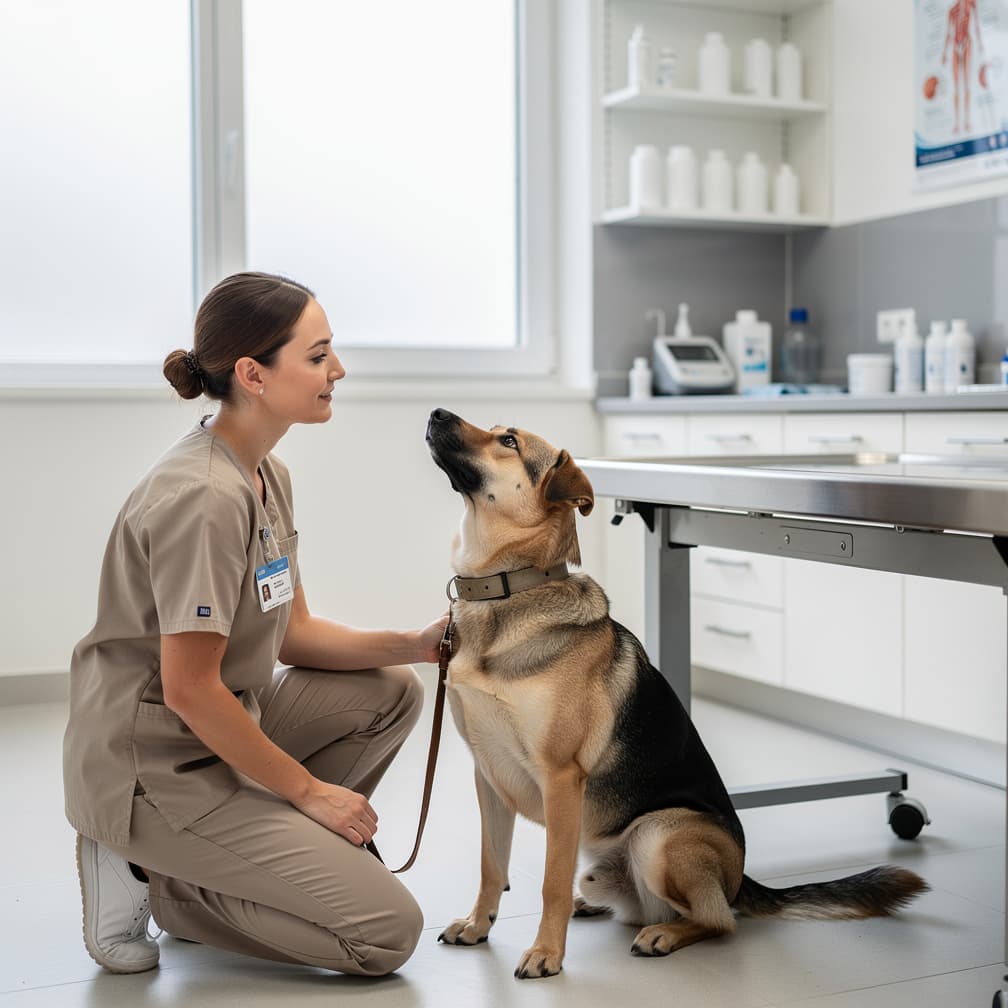

General liability for a dog trainer typically runs between $35 and $130 a month, and where you land inside that band depends on how you teach. Group classes in rented space, off-leash drilling, and work with dogs that already have a bite history all push toward the top of it. Dog trainer insurance in Rochester gets priced off exposure rather than off how long you have been doing this. Underwriters ask about class size, whether you take aggression cases, and whether you own a facility or borrow one every week. Two trainers on the same Rochester block can pay different amounts because one runs puppy socials and the other rehabilitates biters. Comparing quotes from participating carriers is how you learn which underwriter reads a book like yours kindly.
What Makes Rochester Different
Storm damage to a training space is the version of weather that actually reaches an insurance policy. Water through a roof ruins mats, crates, and agility equipment stored in a rented room overnight. Whose policy answers depends on who owns what, and the lease assigns that more clearly than memory. The building belongs to the landlord; the gear inside it belongs to you and needs its own line. Trainers assume a landlord's policy reaches their property, and that assumption is wrong more often than not. Read the lease section on tenant improvements and personal property before a storm makes it urgent. Ask a carrier in New York what the form says about property you keep at a location you rent. Then decide whether the limit you carry would actually rebuild the kit you teach with in Rochester.
Local Risk Factors in Rochester
Before you sign a lease on ground-floor space in Rochester, ask what the building has done in past high water and what your own policy would do about it. The answer usually arrives as a gap rather than a coverage: property forms used across New York commonly leave rising water out, and separate flood protection carries waiting periods that make last-minute buying useless. Your mats, crates, and jumps are the loss, and they are cheap to photograph and expensive to replace. A trainer working out of a vehicle across Monroe County carries a smaller version of the same exposure. Decide where the gear sleeps, then decide what you actually need.
What Coverage Does a Dog Trainer in Rochester Need?
General Liability
Landlords, pet retail floors, and parks departments ask for this one by name before they let you set up. It is the line that may respond when a dog you were handling bites a client or a passer-by, or when that dog wrecks property you do not own. Injury to you sits outside it, and so do intentional acts.
Example: A leash goes slack during a group class in Rochester and a passer-by is bitten on the forearm. The medical bills and the defense of the resulting claim could fall to this line.
Professional Liability
A liability form is built for what happened while you were standing there, and it generally stops short of what your advice caused after you left. This is the line for that gap: allegations that a behavior plan, a handling instruction, or a training method fell below a reasonable standard. It matters most if you sell written plans.
Example: Six weeks after you write a desensitization plan, the dog bites a houseguest and the owner's attorney calls your instructions negligent. Defending that allegation is what this coverage is meant to fund.
Commercial Property
Crates, long lines, agility jumps, a decoy suit, and the mats in a rented room are the pile this line is built around. It can help cover them after fire, theft, vandalism, or storm damage, subject to the schedule and the deductible you chose. Standard forms typically exclude flood, and gradual wear is generally treated as your own cost.
Example: A vehicle window goes in overnight and a bag of long lines, clickers, and a training collar set disappears from the back seat. Replacing that kit may sit within this coverage, subject to your deductible.
How Much Does Dog Trainer Insurance Cost in Rochester?
Dog Trainer Insurance is a bundle of separate policies, priced separately. The ranges below are typical figures for Rochester for each line; a quote prices each one against your own operations.
| Coverage | Typical range | What moves your price |
|---|---|---|
| General Liability Insurance | $70 - $240 per month | Industry and risk classification, annual revenue, number of employees |
| Professional Liability Insurance | $45 - $160 per month | The services you actually perform, annual revenue or billed fees, limit and retention selected |
| Commercial Property Insurance | $50 - $160 per month | Building value and construction type, roof age and condition, fire protection class |
Prices shown are general estimates, not guaranteed rates or quotes. Your actual premium will depend on the insurer, coverage selected, business details, location, claims history, and other underwriting factors. Learn about our pricing methodology.
What Are the Insurance Requirements for a Dog Trainer in Rochester?
Workers' comp is generally required once you have your first employee. New York generally requires employers to carry workers' compensation at that point. Common exemptions include sole proprietors of one-person businesses and some ministers and clergy. Confirm current thresholds with your state's workers' compensation agency before you hire.
Flood damage is typically excluded from standard policies. Standard commercial property and builders-risk-type policies typically exclude flood damage. Flood exposure varies address by address, so check your premises in FEMA's Flood Map Service Center before deciding; if you sit in a mapped flood zone, a separate policy through the National Flood Insurance Program is the usual starting point.
Where to verify licensing and coverage rules. The New York State Department of Financial Services publishes consumer guidance and current insurance requirements for New York businesses. When a contract or lease demands specific wording, the New York State Department of Financial Services's guidance is the authoritative place to check.
Get Your Dog Trainer Quote in Rochester
Compare rates from multiple carriers. Free quotes, no obligation.
Operating in Rochester
- An assistant holding a second leash changes your application, because a second handler is a second set of decisions the carrier is now being asked to rate.
- Landlords write insurance exhibits for the worst tenant they ever had, so a training room clause in New York can demand limits a solo trainer would never choose. That clause prices the space more than the rent does.
- Public-land classes in Rochester can require a permit, and the permit application can require insurance naming the municipality before anyone signs off on a term you already advertised.
- Behavior plans you put in writing get quoted back at you months later, when the dog does something nobody predicted and the client remembers exactly which page said what.
How to Buy: Advice for Rochester Owners
Write down every place you work in a normal month. A client's yard, a rented hall, a public field, a friend's barn, the garage where your crates live. Each location is a question an underwriter will ask, and each one changes what the policy contemplates. A form written for one fixed address may not reach a session on borrowed ground. General Liability generally follows the operation rather than the address, while Commercial Property is fussier about where your things sleep at night. Ask specifically about gear stored off-premises and gear in transit between Rochester sessions. The New York State Department of Financial Services publishes consumer guidance on business property coverage for mobile operations. Once the location list is honest, compare quotes from participating carriers and read what each one excludes rather than only what each one costs.
FAQ
Dog Trainer Insurance in Rochester: FAQ
Two different numbers govern that. One caps what a single bite incident can draw. The other caps what the entire policy term can draw across every claim added together. A group class incident might land well under the first number and still matter, because a second dog and a second injured client months later draw down whatever remains of the second. By a third incident, a limit that looked generous on the binder can be very thin.
Property damage to something you do not own is one of the routine losses in this trade, and General Liability generally reaches it. A dog you were handling gouges a hallway floor or takes out a screen door, and the homeowner sends you the repair bill. The deductible you chose decides whether the policy gets involved at all, since plenty of these repairs land under it. Damage to your own gear is a separate line entirely.
A client who slips on wet grass while watching a recall drill is a third-party injury claim, and General Liability might respond depending on the circumstances and on the policy terms. Whether you were negligent is the argument, and defense costs run while that argument plays out. A signed waiver helps document what the client was told, though it does not end the claim. Ask a carrier in New York how the form treats outdoor sessions.
Possibly not, and it depends on what you actually sell. Professional Liability is built for allegations about advice, instruction, or judgment: someone follows your handling plan, it does not work, and the dog bites a guest weeks later. A trainer running only group manners classes carries a smaller version of that exposure than someone writing behavior modification plans. Look at what you put in writing for clients, because written plans are what get quoted back at you.
That allegation is the classic Professional Liability scenario, and a General Liability form is generally not built to answer it. The complaint says your instruction fell below a reasonable standard, and the harm arrived weeks after you left. Defense costs start when the letter arrives, whether or not anyone ever proves the point. Session notes and intake forms are what you get to argue with, so keep them as though an adjuster will read them.
Bring annual revenue, class count and class size, whether you take aggression cases, your locations, an honest equipment list with replacement values, and five years of loss history including incidents that never became claims. Understating any of it is how a claim gets denied later. If you work across Monroe County, list every place you regularly train, because a form written for one fixed address may not contemplate sessions on borrowed ground.
Sources
- 1.New York State Department of Financial Services(New York State Department of Financial Services publishes consumer guidance for insurance buyers.)
- 2.FEMA / FloodSmart(Flood coverage is typically purchased separately; FEMA administers the National Flood Insurance Program.)


