







































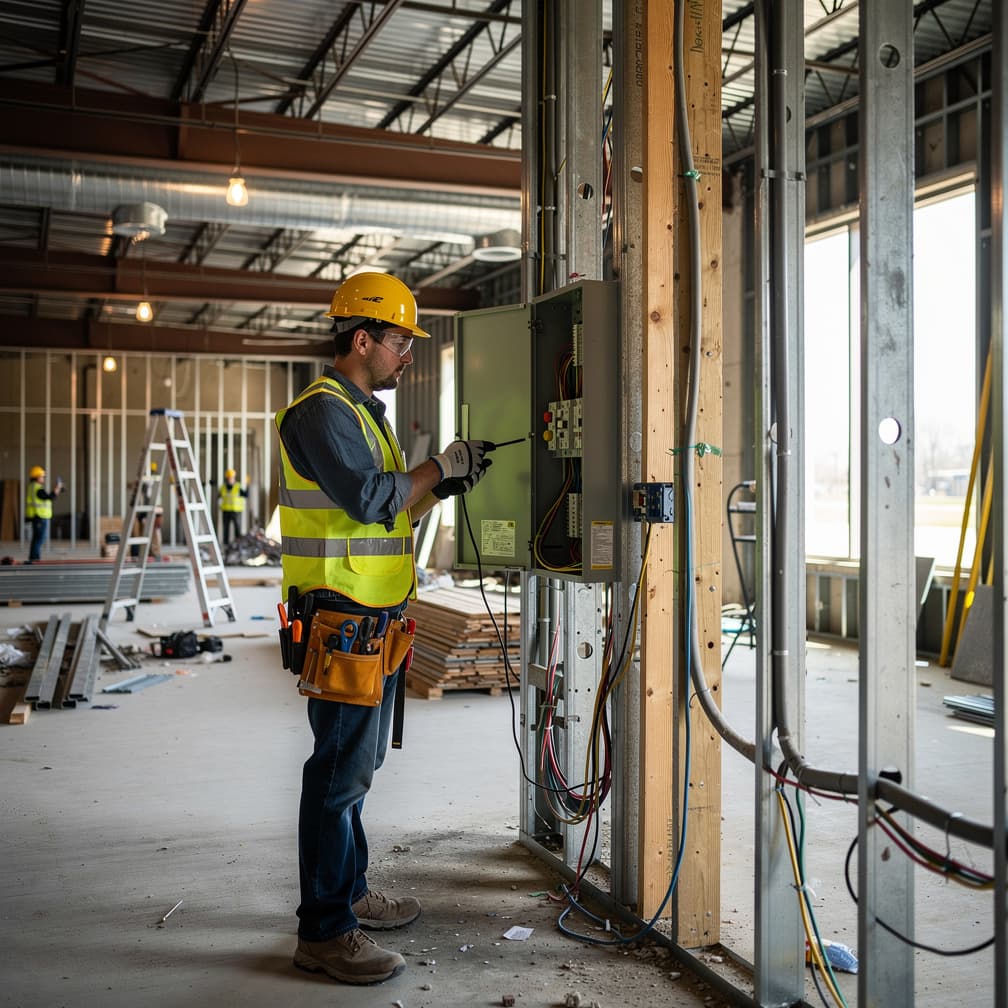

Smoke inside a panel you touched last week is the call that ends a good month. Even when the fault traces back to a failing bus or a load nobody told you about, the claim opens against the last hands on the equipment, and arguing that costs money whether or not you were wrong. Electrical contractor insurance in Rochester exists largely to fund that argument. Ask where defense costs sit: inside the limit, where they eat the money meant for the loss, or outside it. Ask what your aggregate looks like after two claims in one year, because the per-occurrence number printed on the certificate is not the number that runs out. A quote is easy to get. Those two questions are what separate one quote from another, and participating carriers in New York answer them differently.
What Makes Rochester Different
Market size decides how much of your revenue rides on one relationship, and that is an insurance fact. If two general contractors supply most of your work, their contract terms are effectively your policy spec. Read both contracts side by side and buy to the stricter one, since one policy serves both. Spreading work across many smaller clients trades that problem for a different one: certificate volume. Every new customer is another request for proof and another chance for stale paperwork to surface. Neither shape is safer; they simply fail differently, and the failure mode should drive what you buy. Write down which shape your book actually has before you go compare quotes in Rochester. Participating carriers in New York price concentration and spread differently, so the honest answer earns a better number.
Local Risk Factors in Rochester
A week of pulled-out drywall and dehumidifiers is what flooding actually hands an electrical shop in Monroe County. An owner can want everything below the water line inspected, replaced, and signed off, and want it by the weekend. That rush is where careful shops sign for work outside their normal scope, and where an energization decision gets made on somebody else's timeline. Document what you found wet, what you refused to reuse, and who told you to proceed, because a fire six weeks later gets traced backwards. General Liability may respond to damage your work causes afterward, though it typically will not pay to redo the work itself. Rising water inside a leased shop in Rochester is a separate problem, and it usually sits outside a property form altogether.
What Coverage Does an Electrical Contractor in Rochester Need?
General Liability
Every general contractor, building owner, and landlord who asks for a certificate is asking about this line. General Liability is meant for third-party harm: the tenant hurt beside your ladder, the floor ruined by a drilled line, the fire blamed on your wiring. Redoing the faulty installation itself is typically excluded, and that boundary decides most disputes.
Example: A recessed can goes in over a joist bay holding a supply line, the screw finds the pipe, and a ceiling comes down two hours later. The homeowner's repair bill is the kind of third-party damage this line may be called on to answer.
Workers Compensation
Your own people are the subject here: the apprentice off a ladder, the journeyman with an arc-flash burn, the helper who wrecks a back pulling wire through a long run. Medical costs and lost wages for employees are what this line is built around, while harm to customers and bystanders belongs elsewhere. Whether you owe it turns on your state and your headcount, and the New York State Department of Financial Services publishes the current requirements.
Example: A helper reaching into a live panel takes a flash burn across both hands and misses six weeks of work. Treatment and a share of the wages he cannot earn are generally what this line is meant to take on.
Commercial Auto
A personal auto policy can exclude the very trip you make in a work truck, and Commercial Auto is written to close that gap. Service vans, work trucks, and trailers used in the business belong here, along with hired and non-owned use when a helper drives their own car to the supply house. What sits inside the van is a different line.
Example: A loaded van runs a red light on the way to a callback and clips a sedan. Repairs, the other driver's injuries, and the defense that follows are where this coverage is expected to step in, up to the limit you bought.
Tools & Equipment (Inland Marine)
Benders, testers, meters, and a pulling machine spend their lives in a van, and a property policy written for a building typically stops at the building. This line follows the tools and material that move between jobsites instead. Forms differ on theft from an unattended vehicle and on property left in the open, and gradual wear is generally excluded, so read the caps before you trust the total.
Example: A locked van in Rochester gets popped overnight and the pulling machine, the knockout set, and a thermal camera are gone by morning. Replacement of scheduled items is usually what this form is intended to handle, after the deductible.
Commercial Umbrella
Contracts on bigger jobs frequently demand a limit above what your primary policies carry, and this is how most shops reach it without rebuilding everything underneath. It sits over General Liability and the vehicle line, attaching only when those underlying limits satisfy its own requirements. Leave a gap beneath it and it may not respond at all.
Example: A wreck involving a work van seriously injures two people, and the claim runs past the primary vehicle limit before the file is a month old. The excess layer is where that overrun could land.
How Much Does Electrical Contractor Insurance Cost in Rochester?
Electrical Contractor Insurance is a bundle of separate policies, priced separately. The ranges below are typical figures for Rochester for each line, except workers compensation, which is rated per $100 of payroll; a quote prices each one against your own operations.
| Coverage | Typical range | What moves your price |
|---|---|---|
| General Liability Insurance | $180 - $600 per month | Industry and risk classification, annual revenue, number of employees |
| Workers Compensation Insurance | $0.75 - $2.74 per $100 of payroll | Employee classification codes, total annual payroll, experience modification rate |
| Commercial Auto Insurance | $360 - $975 per month | Fleet size and vehicle types, driver records and experience, coverage limits and deductibles |
| Inland Marine Insurance | $45 - $190 per month | Total insured value of the scheduled property, type and age of the equipment, where it is stored and how far it travels |
| Commercial Umbrella Insurance | $95 - $310 per month | Umbrella limit requested, limits carried on the underlying policies, loss history on those underlying policies |
Prices shown are general estimates, not guaranteed rates or quotes. Your actual premium will depend on the insurer, coverage selected, business details, location, claims history, and other underwriting factors. Learn about our pricing methodology.
What Are the Insurance Requirements for an Electrical Contractor in Rochester?
Workers' comp is generally required once you have your first employee. New York generally requires employers to carry workers' compensation at that point. Common exemptions include sole proprietors of one-person businesses and some ministers and clergy. Confirm current thresholds with your state's workers' compensation agency before you hire.
State auto liability minimums apply to business vehicles. New York's minimum auto liability limits are $25,000/$50,000/$10,000 (bodily injury per person / per accident / property damage). Contracts and lenders often require more than the state floor.
Where to verify licensing and coverage rules. The New York State Department of Financial Services publishes consumer guidance and current insurance requirements for New York businesses. When a contract or lease demands specific wording, the New York State Department of Financial Services's guidance is the authoritative place to check.
Get Your Electrical Contractor Quote in Rochester
Compare rates from multiple carriers. Free quotes, no obligation.
Operating in Rochester
- A homeowner in Rochester can refuse the last draw until a scorched outlet gets explained, and that argument starts long before any carrier hears the word claim.
- Trim-out gets rushed because the general wants a certificate of occupancy, and rushed trim-out on a Rochester job is where the callback claims are born.
- Extension cords across a hallway are the most boring injury exposure you own, and they are the reason a tenant's twisted ankle can reach a liability limit somebody else insisted on.
- Your van is a rolling tool crib, and the largest single loss an electrical shop faces is walking out to find it empty at a jobsite in Monroe County.
How to Buy: Advice for Rochester Owners
Umbrella limits get bought for one reason: the number a contract demands is bigger than the number you carry. Rather than reflexively raising General Liability, price a Commercial Umbrella that sits above your existing lines, since it may reach the same requirement for less. It typically extends over the vehicle line too, which is where a serious injury claim from a wreck can outrun a primary Commercial Auto limit. Confirm the underlying limits meet the umbrella's own requirements, because a gap underneath means the umbrella does not attach. Then look at what happens to the price when a required limit doubles, since the second million rarely costs what the first one did. Check the New York State Department of Financial Services's guidance before deciding. Ask participating carriers in New York to quote the whole ladder rather than one rung.
FAQ
Electrical Contractor Insurance in Rochester: FAQ
Standard property and equipment forms typically exclude flood, and that exclusion holds whether the water reaches a leased shop or a job trailer full of fittings. Flood coverage gets bought separately, through its own program, and a shop full of wire is no exception. Water from a line you drilled is a different animal and usually sits with liability instead. Ask a participating carrier in New York which of your losses is water and which is flood.
Longer than most electricians expect. Completed-operations claims arrive months or years after trim-out, when a fixture fails or a wall gets opened. That is why contracts often demand completed-operations coverage, and why letting a policy lapse between jobs carries risk: what matters is frequently the coverage in force when the claim is made. Ask a carrier in New York how their form treats work finished under a previous policy.
No. A certificate is a summary printed on a particular day, and it proves what existed at that moment. It grants no rights by itself, and it does nothing to stop a policy from cancelling or changing afterward. That is why owners ask for updated copies, and why endorsements rather than certificates are what actually change a policy. If a job in Rochester runs past a renewal, send a fresh copy unasked.
Usually not. Lost days on someone else's building are not damage to your property, and liability forms are built around harm to others rather than around your calendar. Business income coverage exists, but it generally follows physical damage to property you insure, not a schedule that slipped. The practical hedge is contract language about weather delays plus a cash buffer, rather than another policy line.
Payroll broken out by classification, annual revenue, a list of vehicles with drivers, a tool schedule, and three years of loss runs. Those five items are what actually price an electrical shop in Rochester or anywhere else. Estimating any of them produces a number that gets corrected at audit, usually upward. Hand identical information to several participating carriers and the spread you see is real appetite.
Work description matters, and how a carrier reads it is their own call. Live work, service changes, and jobs inside occupied spaces read differently than a rough-in on an empty shell, because the number of people and finished surfaces around you changes. Describe the work accurately rather than modestly. Participating carriers in New York weigh the same description differently, which is exactly why comparing several is worth an hour.
Sources
- 1.New York State Department of Financial Services(New York State Department of Financial Services publishes consumer guidance for insurance buyers.)


