







































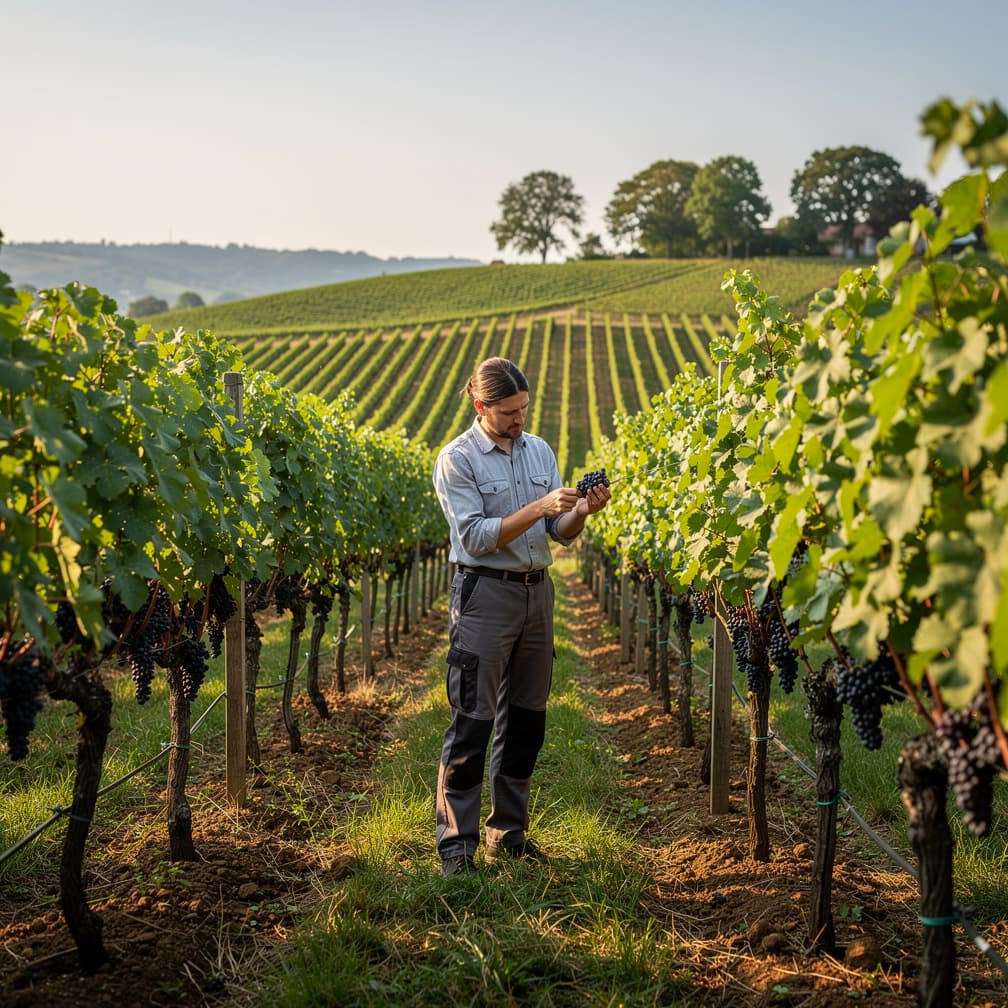

A guest steps off a gravel path beside the tasting room and lands hard on one wrist. The claim that follows starts with a phone call from the person who was pouring your wine ten minutes earlier. Vineyard insurance in Rochester has to hold two businesses at once: acres of fruit that answer to weather, and a hospitality room that answers to people. A quote priced off building value alone misses half of that. What you report about visitor traffic, event bookings, and who works the crush pad moves the number more than acreage does. Participating carriers in New York read those two halves differently, so one submission comes back at several different prices. Start by writing down every way a stranger ends up on your ground.
What Makes Rochester Different
Waivers of subrogation show up in wine club, distribution, and venue agreements, and they change things. The clause asks your carrier to give up its right to chase whoever caused a loss. Carriers can accept it, but usually only when it is added to the policy well in advance. Signing first and asking later is how a claim becomes a coverage argument with your own insurer. A vineyard in Rochester that signs several agreements a year should build one review habit. Send every new contract's insurance section to your carrier before the ink dries on anything. It costs nothing, and it converts a surprise into a scheduling item you can plan around. Participating carriers in New York handle these requests differently, so ask before you promise anything.
Local Risk Factors in Rochester
Water that never touches the fruit can still stop the work. A saturated access road keeps a delivery truck out, a flooded parking area keeps guests away, and a wet cellar floor keeps the crew out until it is pumped and cleaned. Days lost in the middle of a season do not come back, and the fruit keeps ripening on its own schedule regardless. Most business interruption wording wants direct physical damage before lost income is considered, which is why a policy that responds to a merely wet week is rarer than owners assume. Ask how a claim would treat spoilage, cleanup, and the days a Rochester tasting room sat closed. The National Flood Insurance Program publishes maps worth reading before deciding Monroe County is dry enough to ignore.
What Coverage Does a Vineyard in Rochester Need?
General Liability
Anyone who walks onto the property for a tasting, a tour, or a wedding brings the exposure General Liability is built around: a slip on a wet tasting room floor, a child who pulls a stack of cases over, a guest hurt on a gravel path. Venues and planners commonly demand it before booking. Injuries to your own crew typically sit elsewhere, with Workers' Compensation.
Example: A tour group cuts across a hose left on the walkway, and one guest goes down and breaks a wrist. The medical bills and the letter that follows are what this line may take up.
Commercial Property
Barns, the tasting room, storage buildings, tanks, fences, and gates sit on a schedule, and that schedule is what Commercial Property gets quoted from. Damage from fire, wind, or a burst line may be paid up to the listed values, so old values quietly become your problem. Flood typically falls outside the form, and fruit still growing in the block usually does too.
Example: Wind peels half the roof off the barrel storage barn and rain reaches what is inside overnight. Rebuilding the structure and replacing the soaked contents is the claim this line is meant to handle.
Workers Compensation
Guest injuries and staff injuries go to different places, and Workers' Compensation is the staff side: a cellar hand lifting a hose, a picker working a slope, a server carrying cases up steps. Medical care and lost wages generally land here. It is priced per hundred dollars of payroll rather than as a flat monthly figure, and requirements vary by state.
Example: A seasonal worker slips off a bin trailer during crush and cannot lift anything for six weeks. Wage replacement and the treatment that follows are what this line typically takes on.
Tools & Equipment (Inland Marine)
The tractor, the sprayer, and the pruning tools never stay put, and a building policy tends to stop at the wall. Inland Marine is the line that follows mobile property around the block and off the estate, where theft or sudden damage to scheduled gear might be answered. Wear, rust, and mechanical failure from age are usually excluded.
Example: Someone lifts a sprayer out of an unlocked barn overnight and a block goes unsprayed for a week in Rochester. Replacing the unit is what a scheduled equipment claim could come down to.
How Much Does Vineyard Insurance Cost in Rochester?
Vineyard Insurance is a bundle of separate policies, priced separately. The ranges below are typical figures for Rochester for each line, except workers compensation, which is rated per $100 of payroll; a quote prices each one against your own operations.
| Coverage | Typical range | What moves your price |
|---|---|---|
| General Liability Insurance | $140 - $600 per month | Industry and risk classification, annual revenue, number of employees |
| Commercial Property Insurance | $240 - $925 per month | Building value and construction type, roof age and condition, fire protection class |
| Workers Compensation Insurance | $0.75 - $2.74 per $100 of payroll | Employee classification codes, total annual payroll, experience modification rate |
| Inland Marine Insurance | $65 - $280 per month | Total insured value of the scheduled property, type and age of the equipment, where it is stored and how far it travels |
Prices shown are general estimates, not guaranteed rates or quotes. Your actual premium will depend on the insurer, coverage selected, business details, location, claims history, and other underwriting factors. Learn about our pricing methodology.
What Are the Insurance Requirements for a Vineyard in Rochester?
Workers' comp is generally required once you have your first employee. New York generally requires employers to carry workers' compensation at that point. Common exemptions include sole proprietors of one-person businesses and some ministers and clergy. Confirm current thresholds with your state's workers' compensation agency before you hire.
Flood damage is typically excluded from standard policies. Standard commercial property and builders-risk-type policies typically exclude flood damage. Flood exposure varies address by address, so check your premises in FEMA's Flood Map Service Center before deciding; if you sit in a mapped flood zone, a separate policy through the National Flood Insurance Program is the usual starting point.
Where to verify licensing and coverage rules. The New York State Department of Financial Services publishes consumer guidance and current insurance requirements for New York businesses. When a contract or lease demands specific wording, the New York State Department of Financial Services's guidance is the authoritative place to check.
Get Your Vineyard Quote in Rochester
Compare rates from multiple carriers. Free quotes, no obligation.
Operating in Rochester
- Wine club fulfillment contracts carry their own insurance clause, and it rarely matches the clause a venue partner in Rochester insisted on last season.
- Seasonal staff turn over every year, which means the safety walkthrough that happened once has to happen again before the first busy weekend of the season.
- Barrels and tanks are heavy, and moving them is the kind of routine work that produces the injury claims nobody saw coming out of a quiet week.
- A power cut on a rural line stops refrigeration long before anyone notices, and fruit sitting in a tank does not wait for the utility to call back.
How to Buy: Advice for Rochester Owners
Aggregates are the least understood number on a vineyard's quote and the easiest one to run out of. A per-occurrence limit describes one bad afternoon; the aggregate describes the whole year, and a busy event season can chew through it with small claims. Ask what happens once it is exhausted, whether it resets only at renewal, and whether a contract you signed demands an aggregate you no longer have. Defense costs are the next question: inside the limit or outside it, because inside means every legal bill shrinks what remains for the claim itself. General Liability is where both questions live. Commercial Property carries its own limit logic building by building, so never assume the two behave alike. Check the New York State Department of Financial Services's guidance before deciding which limit structure fits your season, then match it exactly across participating carriers in New York.
FAQ
Vineyard Insurance in Rochester: FAQ
Because they are reading different files, or the same file with different appetites. One may load heavily for event volume while another cares more about the age of your buildings or a claim from three years back. Participating carriers in New York also use their own forms, so two close prices can carry very different exclusions. Compare what is excluded before comparing what is charged, or the cheaper quote wins an argument it should lose.
No. Wear, rust, and mechanical breakdown from age are maintenance, and forms generally exclude them, because insurance responds to sudden events rather than to time passing. A sprayer stolen overnight is a claim. A sprayer that finally quit is a purchase. Ask where the line sits for equipment breakdown, since that can sometimes be added separately. Service records help when a carrier asks which of the two actually happened.
The venue side of that question tends to answer itself. A couple's planner, the caterer, and the rental company each want proof of coverage, often naming themselves on it. General Liability is the line those requests point at, and it may respond when a guest is hurt on your ground. Confirm the wording before deposits change hands, since adding it afterward can take longer than the event allows.
Price follows your file rather than your address, and two estates on the same road in Rochester can land far apart. Payroll through crush, guest volume, event count, building values, and claim history do most of the work. Treat any published starting point as a floor for simple risks: a tasting room, weddings, and a working cellar all push a quote upward from there. Use the cost table on this page to see how each line prices out for a working estate.
Usually not. Commercial Property is generally built around buildings, contents, and equipment, and growing crops typically sit outside that form. A frost that thins a block or a hail band that strips fruit is normally a separate arrangement with its own terms. Ask any quote to state plainly what happens to fruit still hanging, and have the exclusion read to you if one applies.
Nearly anyone you do business with: a landlord, a wholesaler, an event planner, a rental yard, or a permit office reviewing a public tasting in Rochester. None of them are being difficult. The certificate is how they confirm a policy exists on the day it matters. Each writes the requirement in its own words, so a document that satisfies one can fall short for the next. Keep every request filed with the contract that produced it.
Sources
- 1.New York State Department of Financial Services(New York State Department of Financial Services publishes consumer guidance for insurance buyers.)
- 2.FEMA / FloodSmart(Flood coverage is typically purchased separately; FEMA administers the National Flood Insurance Program.)


