







































Updated July 10, 2026

Alarm Contractor Insurance in North Carolina
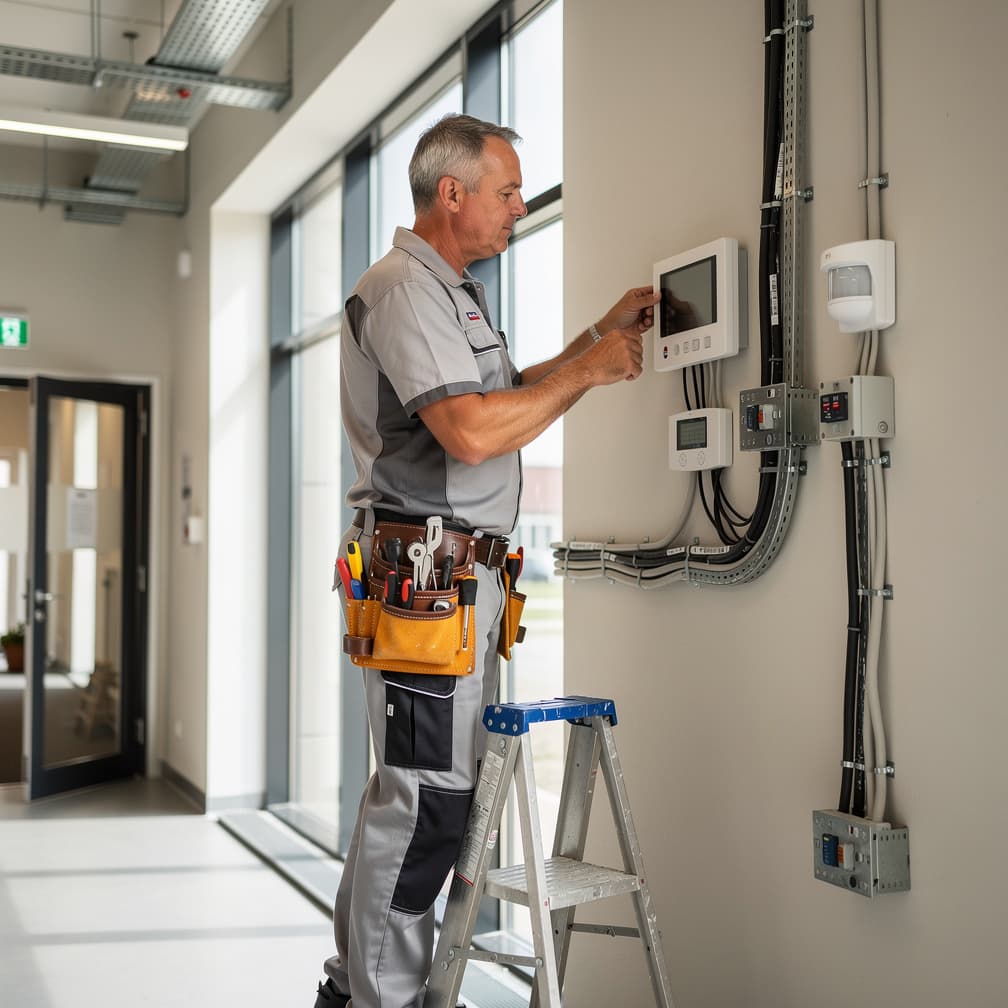
Getting an alarm contractor insurance quote in North Carolina usually starts with the way the business actually works: service calls across Raleigh, Charlotte, Wilmington, Greensboro, and Asheville; ladder work at homes, offices, and retail sites; and equipment moving between trucks, warehouses, and customer locations. That mix creates different insurance questions than a desk-based business. A contractor may need protection for third-party claims if a panel, sensor, or cable run damages a client’s property, and coverage for slip and fall or customer injury if someone is hurt at the jobsite. North Carolina also brings practical pressure from hurricane exposure, flooding, and severe storm disruptions, which can complicate schedules, vehicle use, and mobile property. On top of that, many commercial clients ask for proof of general liability coverage before work begins, and businesses with three or more employees may need workers' compensation. The goal is to match your policy to the way you bid, install, service, and drive in North Carolina so you can request a quote with the right details up front.
Climate Risk Profile
Natural Disaster Risk in North Carolina
Understanding climate-related risks helps determine appropriate insurance coverage levels.
Hurricane
Very High
Flooding
High
Severe Storm
High
Tornado
Moderate
Expected Annual Loss from Natural Hazards
$2.8B
estimated economic loss per year across North Carolina
Source: FEMA National Risk Index
Risk Factors for Alarm Contractor Businesses in North Carolina
- North Carolina hurricane exposure can interrupt alarm installation schedules and create property damage or equipment in transit losses on the way to jobsites.
- Flooding in North Carolina can affect customer sites, service vehicles, and mobile property used for alarm service calls and rework visits.
- Severe storms in North Carolina raise the chance of slip and fall incidents, customer injury, and third-party claims during on-site installation work.
- Customer property damage during service calls in North Carolina can lead to liability claims when wiring, panels, or mounted devices are damaged.
- Tool-related losses on North Carolina jobsites can affect contractors equipment, tools, and valuable papers kept in trucks or service vans.
How North Carolina compares with the national baseline
Uninsured drivers
7.4% vs 11.6% baseline
About 7.4% of North Carolina drivers are estimated to be uninsured, below the 11.6% average across states.
Fatal crashes per 100 million miles
1.52 vs 1.33 baseline
North Carolina sees about 1.52 fatal crashes per 100 million miles driven, above the national average of 1.33.
Property crime per 100,000 residents
2,590 vs 2,200 baseline
Property crime in North Carolina runs above the national average, at 2,590 vs 2,200 incidents per 100,000 residents.
Blue bar: North Carolina. Gray line: national baseline.
How Much Does Alarm Contractor Insurance Cost in North Carolina?
Alarm Contractor Insurance is a bundle of separate policies, priced separately. The ranges below are typical figures for North Carolina for each line, except workers compensation, which is rated per $100 of payroll; a quote prices each one against your own operations.
| Coverage | Typical range | What moves your price |
|---|---|---|
| General Liability Insurance | $90 - $280 per month | Industry and risk classification, annual revenue, number of employees |
| Professional Liability Insurance | $80 - $250 per month | The services you actually perform, annual revenue or billed fees, limit and retention selected |
| Commercial Auto Insurance | $160 - $430 per month | Fleet size and vehicle types, driver records and experience, coverage limits and deductibles |
| Workers Compensation Insurance | $0.75 - $2.74 per $100 of payroll | Employee classification codes, total annual payroll, experience modification rate |
| Inland Marine Insurance | $20 - $80 per month | Total insured value of the scheduled property, type and age of the equipment, where it is stored and how far it travels |
Prices shown are general estimates, not guaranteed rates or quotes. Your actual premium will depend on the insurer, coverage selected, business details, location, claims history, and other underwriting factors. Learn about our pricing methodology.
What North Carolina Requires for Alarm Contractor Insurance
Non-compliance can result in fines, loss of contracts, and personal liability:
- Workers' compensation is required in North Carolina for businesses with 3 or more employees, with exemptions for sole proprietors, partners, LLC members, and farm laborers.
- Commercial auto minimum liability in North Carolina is $50,000/$100,000/$50,000 (raised effective July 1, 2025) for vehicles used to reach service-area jobsite locations.
- North Carolina businesses often need proof of general liability coverage for commercial leases, so certificate requests may come up before work starts.
- The North Carolina Department of Insurance regulates coverage placement, so buyers should confirm policy terms, endorsements, and insurer filings before binding.
- If a client contract asks for additional insured wording, limits, or certificate details, those requirements should be reviewed before the quote is finalized.
| Requirement | What North Carolina law says |
|---|---|
| Auto liability minimums | $50,000/$100,000/$50,000 (bodily injury per person / per accident / property damage). These floors apply to personal and business vehicles alike; lenders and contracts often require more. |
| Workers compensation | Generally required once you have 3 or more employees. Some roles are exempt, so confirm current thresholds before you hire. |
| Where to verify | North Carolina Department of Insurance publishes current requirements, consumer guides, and license lookups. |
Get Your Alarm Contractor Insurance Quote in North Carolina
Compare rates from multiple carriers. Free quotes, no obligation.
Common Claims for Alarm Contractor Businesses in North Carolina
A technician installs a keypad in a Raleigh office suite and accidentally damages a wall-mounted fixture, leading to a property damage claim from the tenant or building owner.
A service call in a Wilmington retail location ends with a customer tripping over tools left near the work area, creating a slip and fall claim and legal defense costs.
A crew driving between Charlotte-area jobsites is involved in a vehicle accident while carrying replacement parts and tools, triggering commercial auto and equipment in transit questions.
Preparing for Your Alarm Contractor Insurance Quote in North Carolina
A list of your services, such as installation, repair, monitoring-related work, and emergency service calls, so the quote reflects your real operations.
The number of employees and whether you meet North Carolina workers' compensation rules for 3 or more employees.
Details on service vans, trailers, and any hired auto or non-owned auto use for jobs across your service area.
Information about tools, mobile property, contractors equipment, and whether customers or commercial leases require specific certificate wording.
What Happens Without Proper Coverage?
Think about how a bad week actually unfolds. Monday, a technician fishing wire through a finished wall nicks a copper line, and the ceiling below is stained by evening. Thursday, a commercial client calls because a break-in was not detected, and their first question is not about the drilling; it is about why the motion detector covering the loading door was placed where it was. Two disputes, two completely different policies, one company. That split is the reason alarm work cannot be insured with a single generic contractor policy.
You may also need coverage because contracts push the issue before a claim ever happens. Property managers, general contractors, commercial tenants, and building owners often want proof of general liability before they let you start work. If you use employees in the field, workers compensation insurance may be part of what upstream parties expect to see before they issue badges, keys, or site access. Vehicle coverage becomes part of the conversation when technicians drive to estimates, installations, inspections, and emergency service calls throughout the week.
The cost of being underinsured is not limited to paying a claim out of pocket. It can also mean losing a job because your certificate does not match contract requirements, discovering that a professional error allegation falls outside the policy you bought, or finding out that stolen tools and test equipment were never properly scheduled. Alarm contractors carry expensive portable gear and rely on it daily, so get inland marine terms settled before a theft or transit loss interrupts your schedule.
If you are comparing quotes, do not stop at the premium. Ask how each policy treats completed operations, service work, employee driving, portable equipment, and the professional side of alarm design and programming. Then line those answers up against your proposals, service agreements, and actual workflow before you bind coverage.
Recommended Coverage for Alarm Contractor Businesses
Based on the risks and requirements above, alarm contractor businesses need these coverage types in North Carolina:

General Liability
Essential coverage for every business, protect against third-party bodily injury, property damage, and advertising claims.

Professional Liability
Protect your business from claims of negligence, errors, and omissions in your professional services.

Commercial Auto
Protect your business vehicles and drivers with comprehensive commercial auto coverage.

Workers Compensation
Help cover your employees' medical expenses and lost wages for work-related injuries and illnesses.

Inland Marine
Protect tools, equipment, and goods in transit or stored at locations away from your primary premises.
Alarm Contractor Insurance by City in North Carolina
Insurance needs and pricing for alarm contractor businesses can vary across North Carolina. Find coverage information for your city:
Insurance Tips for Alarm Contractor Owners
Separate installation accidents from professional mistakes when you compare quotes, because property damage during drilling and a faulty programming allegation fall under different policies.
Show underwriters your real mix of residential, commercial, retrofit, and service work, since alarm contractors with different job types can have very different claim patterns.
Reread your contracts before renewal so your general liability limits, additional insured requests, and completed operations terms match what customers and upstream contractors require.
List the tools and portable test equipment that travel in vans or sit at temporary job sites, because inland marine coverage works best when scheduled property reflects actual field use.
Break out payroll by office staff, sales staff, and field technicians as accurately as possible, since workers compensation pricing and classification depend on who performs the hands-on work.
Discuss who drives each vehicle, how often crews respond after hours, and whether personal vehicles are used for business, because commercial auto gaps start with unclear vehicle use.
Ask specifically how the quote addresses programming, system layout, troubleshooting, and recommendation errors, so you can see whether professional liability fits the advisory side of your work.
FAQ
Frequently Asked Questions About Alarm Contractor Insurance in North Carolina
It can be built around general liability coverage for bodily injury, property damage, and third-party claims, plus professional liability or E&O for professional errors, negligence, or omissions tied to your work. Many North Carolina alarm contractors also review commercial auto and inland marine for service vans, tools, and equipment in transit.
The average premium range in the state is provided as $88 to $349 per month, but actual alarm contractor insurance cost in North Carolina varies based on services performed, number of employees, vehicle use, coverage limits, and whether you need endorsements for client contract requirements.
Common buying-process requirements include workers' compensation for businesses with 3 or more employees, commercial auto minimum liability of $50,000/$100,000/$50,000 (raised effective July 1, 2025), and proof of general liability coverage for many commercial leases. Some clients may also request specific certificate wording or additional insured status.
Many contractors review both because they address different risks. General liability coverage is commonly used for bodily injury, property damage, and slip and fall claims, while E&O coverage is aimed at professional errors, omissions, and client claims tied to the way a system is designed or serviced.
Have your services, employee count, vehicle details, jobsite locations, and any certificate or contract requirements ready. That helps an underwriter quote alarm contractor business insurance and alarm contractor coverage options that fit your actual operations in North Carolina.
Yes, because the trade creates two kinds of claims. General liability addresses third-party injury or property damage at the site, while E&O is designed for allegations tied to programming, recommendations, testing, or other professional mistakes. One policy does not stand in for the other.
Portable tools, test equipment, ladders, cable tools, and job materials that move between vehicles and temporary work sites. It can respond when that property is stolen, damaged in transit, or lost away from your main location, which fixed-premises property coverage was not built to follow.
Because the work is judgment as much as labor. A customer may allege that device placement, panel programming, troubleshooting, or a system recommendation contributed to a loss even when nobody claims your crew caused physical damage during the install, and that allegation lands on the professional side of the program.
Updated March 31, 2026