







































Updated July 16, 2026

Plastering & Stucco Contractor Insurance in North Carolina
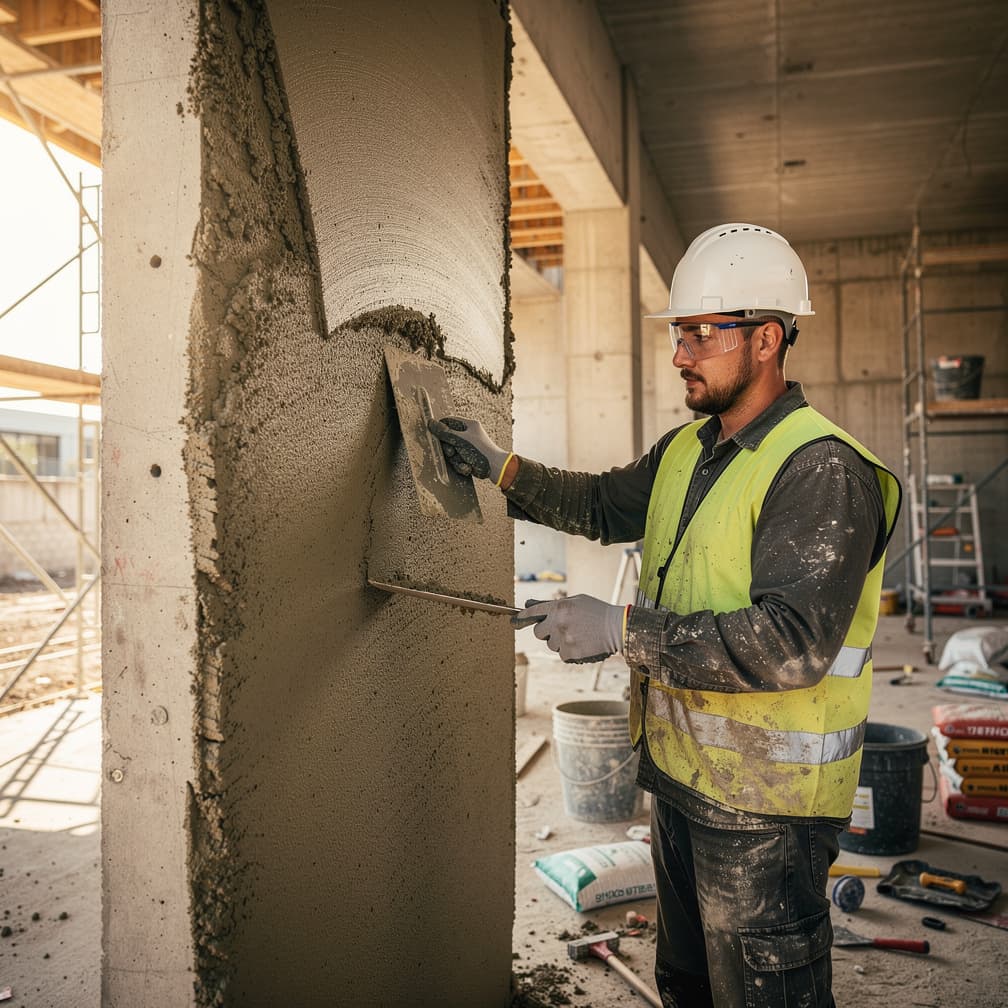
A plastering and stucco contractor in North Carolina deals with coastal weather, fast-moving storm systems, and jobsite conditions that shift from one county to the next. Your insurance needs to do more than satisfy a paperwork requirement. It has to actually work for this trade. The right policy should reflect exterior work on homes, townhomes, retail buildings, and multi-unit properties, plus the realities of hauling tools, staging materials, and keeping projects moving when rain or wind interrupts the schedule. That means preparing for the claims this trade sees most: slip and fall incidents, property damage, third-party claims, and legal defense when a project owner says the finish did not perform as expected.
If you work in Raleigh, along the coast, or in fast-growing suburban neighborhoods, your policy options may need to line up with county jobsite requirements, commercial lease proof-of-coverage requests, and the state's commercial auto and workers' compensation rules. Your quotes should reflect how your crew actually operates.
Climate Risk Profile
Natural Disaster Risk in North Carolina
Understanding climate-related risks helps determine appropriate insurance coverage levels.
Hurricane
Very High
Flooding
High
Severe Storm
High
Tornado
Moderate
Expected Annual Loss from Natural Hazards
$2.8B
estimated economic loss per year across North Carolina
Source: FEMA National Risk Index
Risk Factors for Plastering & Stucco Contractor Businesses in North Carolina
- North Carolina hurricane exposure can create building damage, storm damage, and business interruption concerns for plastering and stucco crews working on exposed walls, scaffolding, and exterior finishes.
- Flooding in North Carolina can lead to moisture damage, water intrusion, and property damage on stucco jobs, especially when materials are staged near ground level or work is underway during wet weather.
- Severe storm conditions across North Carolina can increase the chance of slip and fall incidents, third-party claims, and legal defense costs on active jobsites with ladders, mud, and unfinished surfaces.
- North Carolina’s high-risk weather pattern can raise the odds of vandalism and theft losses for plastering tools, pumps, mixers, and other jobsite equipment left on commercial or residential projects.
- Water intrusion claims from improper stucco application are a relevant North Carolina risk for plastering contractors, especially when coastal humidity and storm-driven rain affect exterior work.
- Vehicle accident exposure in North Carolina matters for crews moving between downtown projects, suburban neighborhoods, and multi-unit property jobs with trucks, trailers, and material deliveries.
How North Carolina compares with the national baseline
Uninsured drivers
7.4% vs 11.6% baseline
About 7.4% of North Carolina drivers are estimated to be uninsured, below the 11.6% average across states.
Fatal crashes per 100 million miles
1.52 vs 1.33 baseline
North Carolina sees about 1.52 fatal crashes per 100 million miles driven, above the national average of 1.33.
Property crime per 100,000 residents
2,590 vs 2,200 baseline
Property crime in North Carolina runs above the national average, at 2,590 vs 2,200 incidents per 100,000 residents.
Blue bar: North Carolina. Gray line: national baseline.
How Much Does Plastering & Stucco Contractor Insurance Cost in North Carolina?
Plastering & Stucco Contractor Insurance is a bundle of separate policies, priced separately. The ranges below are typical figures for North Carolina for each line, except workers compensation, which is rated per $100 of payroll; a quote prices each one against your own operations.
| Coverage | Typical range | What moves your price |
|---|---|---|
| General Liability Insurance | $200 - $650 per month | Industry and risk classification, annual revenue, number of employees |
| Workers Compensation Insurance | $0.75 - $2.74 per $100 of payroll | Employee classification codes, total annual payroll, experience modification rate |
| Commercial Auto Insurance | $170 - $550 per month | Fleet size and vehicle types, driver records and experience, coverage limits and deductibles |
| Commercial Property Insurance | $60 - $240 per month | Building value and construction type, roof age and condition, fire protection class |
Prices shown are general estimates, not guaranteed rates or quotes. Your actual premium will depend on the insurer, coverage selected, business details, location, claims history, and other underwriting factors. Learn about our pricing methodology.
What North Carolina Requires for Plastering & Stucco Contractor Insurance
Non-compliance can result in fines, loss of contracts, and personal liability:
- Workers' compensation is required in North Carolina for businesses with 3 or more employees, with exemptions for sole proprietors, partners, LLC members, and farm laborers.
- Commercial auto liability minimums in North Carolina are $50,000/$100,000/$50,000 (raised effective July 1, 2025), so contractor vehicles used for hauling tools, materials, or crews should be reviewed against those limits.
- Most commercial leases in North Carolina require proof of general liability coverage, which can affect storefront, warehouse, or yard space rental agreements.
- Plastering and stucco contractors should be ready to show insurance certificates to general contractors, property managers, and municipal permit offices when jobsite requirements call for proof of coverage.
- Coverage choices should be checked against North Carolina Department of Insurance rules and any contract-specific insurance wording requested for commercial projects, multi-unit property jobs, or residential stucco work.
- Policy limits, endorsements, and additional insured wording may be requested by landlords or project owners in North Carolina, so quote requests should account for those buying-process requirements.
| Requirement | What North Carolina law says |
|---|---|
| Auto liability minimums | $50,000/$100,000/$50,000 (bodily injury per person / per accident / property damage). These floors apply to personal and business vehicles alike; lenders and contracts often require more. |
| Workers compensation | Generally required once you have 3 or more employees. Some roles are exempt, so confirm current thresholds before you hire. |
| Where to verify | North Carolina Department of Insurance publishes current requirements, consumer guides, and license lookups. |
Get Your Plastering & Stucco Contractor Insurance Quote in North Carolina
Compare rates from multiple carriers. Free quotes, no obligation.
Common Claims for Plastering & Stucco Contractor Businesses in North Carolina
A crew finishes a stucco wall on a townhome exterior, but heavy rain follows before the surface cures, leading to moisture intrusion and repair demands tied to the completed work.
A subcontracted plastering team in Raleigh leaves tools and mixing equipment on-site overnight, and theft or vandalism results in a property damage claim and job delay.
During a commercial remodel, a passerby slips near a wet work area, which can trigger a third-party claim and legal defense expense for the contractor.
Preparing for Your Plastering & Stucco Contractor Insurance Quote in North Carolina
Be ready to share your business structure, number of employees, and whether workers' compensation applies to your North Carolina operation.
Have a list of the project types you take on, including residential stucco work, commercial projects in downtown areas, and multi-unit property jobs.
Gather vehicle details for trucks, trailers, and any hired auto or non-owned auto exposure used to move crews and materials.
Pull together any certificate of insurance, lease, or contract wording that asks for proof of general liability coverage or specific endorsements.
What Happens Without Proper Coverage?
Stucco claims have long memories. A wall system finished this spring can generate a moisture allegation two winters from now, and by then the dispute involves photographs, moisture readings, and opinions about flashing details no one documented. Meanwhile the immediate risks never pause: a visitor struck by falling material near a scaffold, a truck backing into another trade's equipment, a finisher hurt carrying material up a ladder.
That split personality is the core reason coverage decisions here deserve real attention. Active-jobsite losses and delayed workmanship allegations put stress on different parts of a policy program, and a setup tuned only for the first kind leaves the second exposed exactly when documentation is hardest to reconstruct. Keeping job files, substrate notes, and photos is not just good practice; it is what makes a defensible claim response possible years later.
Scale changes the math too. One experienced finisher out with a shoulder injury can stall a small company's entire schedule. A growing operation that adds seasonal crews, subcontract labor, or a second market can outgrow its payroll assumptions in a single busy quarter. Treat hiring waves, new vehicle purchases, and bigger contracts as checkpoints for reviewing limits, and bring recent proposals with you so the program is sized against the work you are actually winning, not the work you did two years ago.
Recommended Coverage for Plastering & Stucco Contractor Businesses
Based on the risks and requirements above, plastering & stucco contractor businesses need these coverage types in North Carolina:

General Liability
Essential coverage for every business, protect against third-party bodily injury, property damage, and advertising claims.

Workers Compensation
Help cover your employees' medical expenses and lost wages for work-related injuries and illnesses.

Commercial Auto
Protect your business vehicles and drivers with comprehensive commercial auto coverage.

Commercial Property
Safeguard your business property, equipment, and inventory against damage and loss.
Plastering & Stucco Contractor Insurance by City in North Carolina
Insurance needs and pricing for plastering & stucco contractor businesses can vary across North Carolina. Find coverage information for your city:
Insurance Tips for Plastering & Stucco Contractor Owners
Review your general liability insurance against the actual wall systems and repair scopes you perform, because patch work, full exterior finishes, and occupied property jobs can create very different claim patterns.
Keep payroll records organized by field and office duties so your workers compensation insurance quote reflects who installs finishes, who supervises jobs, and who only handles estimating or administration.
Check that every vehicle used for crew transport, material hauling, or tool movement is addressed in your commercial auto insurance review, including any pickup, van, or trailer used in daily operations.
Build an equipment and storage inventory before shopping commercial property insurance, because mixers, sprayers, scaffolding components, computers, and stored materials all affect how a loss interrupts your workflow.
Compare policy limits to the contract language you sign most often, especially if general contractors or property managers require higher limits before issuing a notice to proceed.
Document how you use subcontractors and how you collect certificates, because uninsured or loosely managed subs can complicate both workers compensation and liability issues after a jobsite injury or damage claim.
Bring recent job descriptions to the quote process so the underwriter sees whether your business focuses on new construction, remediation related repairs, tenant occupied work, or higher hazard exterior access conditions.
FAQ
Frequently Asked Questions About Plastering & Stucco Contractor Insurance in North Carolina
A typical policy usually combines general liability, workers' compensation when required, commercial auto, and commercial property. For North Carolina plastering and stucco contractors, the most relevant concerns are bodily injury, property damage, slip and fall incidents, third-party claims, and legal defense tied to exterior work.
Pricing varies based on crew size, project type, vehicle use, jobsite exposure, claims history, and the limits you choose. North Carolina market data shows an average premium range of **$158 to $633 per month**. That means most contractors land somewhere in that band, though your quote can move up or down depending on how your business operates.
Workers' compensation is required for businesses with 3 or more employees, and commercial auto must meet **North Carolina minimum liability limits of $50,000/$100,000/$50,000** effective July 1, 2025. Many commercial leases also ask for proof of general liability coverage, and project owners may request certificates before work starts.
North Carolina weather and exterior work can create real water intrusion concerns, so coverage should be reviewed carefully for moisture damage exposure. Your policy may include protection related to property damage and legal defense, but exact treatment depends on the policy terms.
Workers' compensation is the main coverage to review for on-site injury protection for your plastering crews. General liability can also respond to certain third-party injury situations on the jobsite, depending on the facts and policy language.
The core set is general liability, workers compensation, commercial auto, and commercial property. Which ones carry the most weight depends on whether you run employees, use business vehicles, store equipment, and sign contracts that require proof of coverage before work starts.
Because the trade produces both immediate and delayed claims. Accidental property damage can happen during installation, and cracking, staining, or moisture allegations can arrive long after completion; general liability is where both conversations start.
Subcontract labor does not remove the need; it complicates it. When certificates are missing or roles are undocumented, an injury on site turns into a dispute over who is responsible, so collect certificates consistently and put roles in writing.
Updated July 16, 2026