







































Updated July 16, 2026

Garage Keepers Insurance in Charlotte
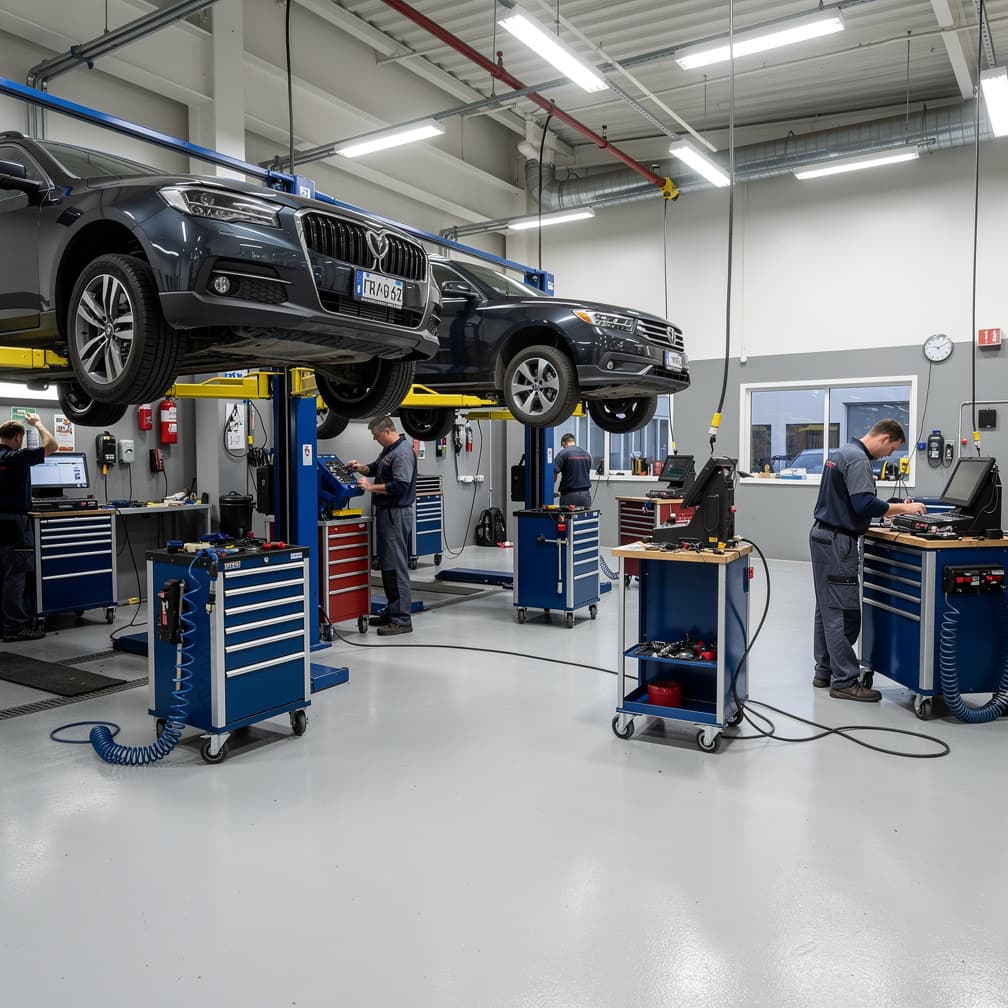
Mecklenburg County supports over 36,000 business establishments, which means customers, landlords, and fleet accounts around Charlotte expect a repair shop or service bay to look operationally tight before they hand over keys. Your exposure is concrete here, not theoretical. It shows up in how you intake vehicles, where you stage them during a busy week, and whether your lot setup matches the volume you actually handle. A shop near South End may deal with tighter parking and faster customer turnover, while an operation farther out toward University City or Pineville may have more room but more vehicles waiting on parts or pickup. In a market this dense, one damaged customer vehicle can affect more than a single claim. The fallout may ripple through your referral pipeline, your commercial account standing, and your overnight storage credibility all at once. A useful quote starts with your real workflow: who holds the keys, whether cars are kept inside or outside, how often employees reposition vehicles, and when customer units stay on site past closing.
Garage Keepers Insurance Risk Factors in Charlotte
Charlotte's local difference is **lot pressure**. In a dense service market, customer vehicles often sit in whatever space is available, not always in the ideal space for the type or value of the unit. If your operation regularly stacks work across a small front apron, side yard, fenced rear lot, or shared commercial parking area, you should review how vehicles are parked after hours and who is authorized to move them. North Carolina's broader weather hazards still matter as background, but the city-level buying issue is usually **concentration of vehicles under your care at one address**. The more units you hold between drop-off, diagnosis, parts delays, and pickup, the more important it is to match your garage keepers limit and storage assumptions to your actual peak count, not your average day.
North Carolina has a high climate risk rating. Top hazards: Hurricane (Very High), Flooding (High), Severe Storm (High), Tornado (Moderate). The state's expected annual loss from natural hazards is $2.8B, which influences garage keepers insurance premiums and may affect coverage availability in high-risk areas.
What Garage Keepers Insurance Covers
North Carolina buyers usually need to focus less on the basic definition and more on the situations that create disputes after a loss. A practical review starts with where vehicles spend time on your premises. If units sit in an open lot overnight, you should ask how the policy treats weather-related damage, falling objects, vandalism, and theft allegations tied to key control or perimeter security. If vehicles move between a service bay, overflow parking, and a fenced storage area, document that flow before you request terms.
This matters in North Carolina because the state sees several natural hazard patterns over the course of a year, and those conditions can affect whether vehicles are left inside, staged outside, or moved quickly before a storm. That does not change the core purpose of the policy, but it does change the questions an underwriter will ask about your lot layout, drainage, tree exposure, and overnight procedures. If your operation is near the coast, in a low-lying area, or in a corridor that sees severe weather, bring that up early so the quote reflects real storage conditions.
You should also review how your policy coordinates with the rest of your garage program. A claim can involve more than one issue at once, such as a customer vehicle damaged on site while your business also faces a separate premises allegation. Keep your application language consistent across garage liability, property, and any dealer or service-related coverages. Before binding, ask for a plain-language explanation of covered causes of loss, exclusions, deductibles, and whether your chosen basis fits how you want claims evaluated.
Coverage Included
Collision Coverage
Covers damage to customers' vehicles from collisions while in your care.

Comprehensive Coverage
Covers theft, vandalism, fire, and weather damage to customers' vehicles.

Specified Perils
Covers only specifically named perils at a lower premium.

Legal Liability
Covers damage you or your employees directly cause to a customer's vehicle.

Direct Primary
Pays regardless of fault, the broadest garage keepers coverage available.
Industries & Insurance Needs in Charlotte
Mecklenburg County's business mix leans toward professional, scientific, and technical services at 13.9%, health care and social assistance at 10.2%, and retail trade at 10%, so many local commercial customers depend on their vehicles staying available and presentable. For a garage operation, that changes the conversation from basic custody exposure to downtime sensitivity. A consultant's sedan, a home health vehicle, or a retail delivery unit can trigger a sharper customer response if damage keeps it off the road. That does not automatically change every premium, but it should change what you ask for in a quote review. If you serve business clients, tell the agent whether you handle fleet units, higher-use work vehicles, or customer cars that cannot sit for long. That helps frame limits, deductibles, and claims handling expectations around the kinds of vehicles your shop actually keeps.
What Makes Charlotte Different
The scale of surrounding activity creates a faster, more compressed operating environment for shops that take possession of customer vehicles. More nearby businesses usually mean tighter parking patterns, more frequent vehicle handoffs, and more customers who expect quick turnaround with clear documentation if something goes wrong. In this setting, your buying decisions should start with concentration risk: how many customer vehicles can be on site at your busiest point, where they are stored, and how often they are moved by staff. If your current policy was built around a smaller operation or a lighter overnight count, a fresh quote may reveal gaps before a claim does. The Charlotte difference is tighter scheduling and tighter lots, so your coverage review should focus on peak inventory, lot layout, and key-control procedures rather than a generic statewide template.
Our Recommendation for Charlotte
Start by counting your highest realistic number of customer vehicles on site at one time, including units waiting on parts, after-hours pickups, and cars parked off to the side because bays are full. Once you have that number, compare it against your limit and ask whether the policy assumptions still match what actually happens during your busiest week. If you serve higher-income households, Charlotte's median household income of $78,438 tells you something practical about the vehicles on your lot. The average repair bill on a late-model SUV can hit four figures before paint even dries, so your per-vehicle limit needs to reflect that reality. That makes intake photos, documented pre-existing damage, and written parking procedures more important, not just broader limits. If you lease space, confirm whether the landlord restricts where inoperable or overnight vehicles can be stored. When you request a quote, lead with your actual handling pattern rather than asking for a generic policy comparison.
Get Garage Keepers Insurance in Charlotte
Enter your ZIP code to compare garage keepers insurance rates from carriers in Charlotte, NC.
Business insurance starting at $25/mo
FAQ
Frequently Asked Questions
If your lot stays full or vehicles remain overnight, a policy that fit your operation twelve months ago may already be behind your current volume.
A tight site usually means more vehicle repositioning and less margin for staging mistakes. Every extra move is another chance for a backed-into bumper or a dropped mirror.
One customer-vehicle loss in a dense market can cost you a fleet contract you spent years building. The damage spreads fastest where shops compete for the same commercial accounts and landlords.
Shops that service business vehicles should say so during quoting. In Mecklenburg County, professional services, health care, and retail together account for roughly a third of the economy, which means a disabled work van from any of those sectors can idle an entire crew and trigger a loss-of-use claim you did not anticipate.
Bring a peak vehicle count, lot layout, key-control process, and intake documentation samples. **Solid records are your best defense when a customer disputes damage**, and those same documents help a participating provider match your policy to your actual operation.
Repair shops should strongly consider it whenever vehicles remain on site overnight, especially if units are parked outside or moved after hours. The key issue is your custody of the vehicle and whether your limits match the total value you could be holding.
Coastal weather can change how underwriters view outdoor storage, emergency relocation, and vehicle accumulation. If your lot is exposed to storm conditions, review how covered causes of loss, deductibles, and exclusions apply before you bind coverage.
Insurance questions are overseen by the North Carolina Department of Insurance. That matters if you want a state reference point while reviewing policy language, complaint options, or carrier responses during a disputed claim.
Sources
- 1.U.S. Census Bureau, County Business Patterns, Mecklenburg County(Mecklenburg County supports 36,081 business establishments.; Mecklenburg County's business mix leans toward professional, scientific, and technical services at 13.9%, health care and social assistance at 10.2%, and retail trade at 10%.)
- 2.U.S. Census Bureau, ACS 5-Year Estimates, table B19013(Charlotte's median household income is $78,438.)
Updated July 16, 2026





