







































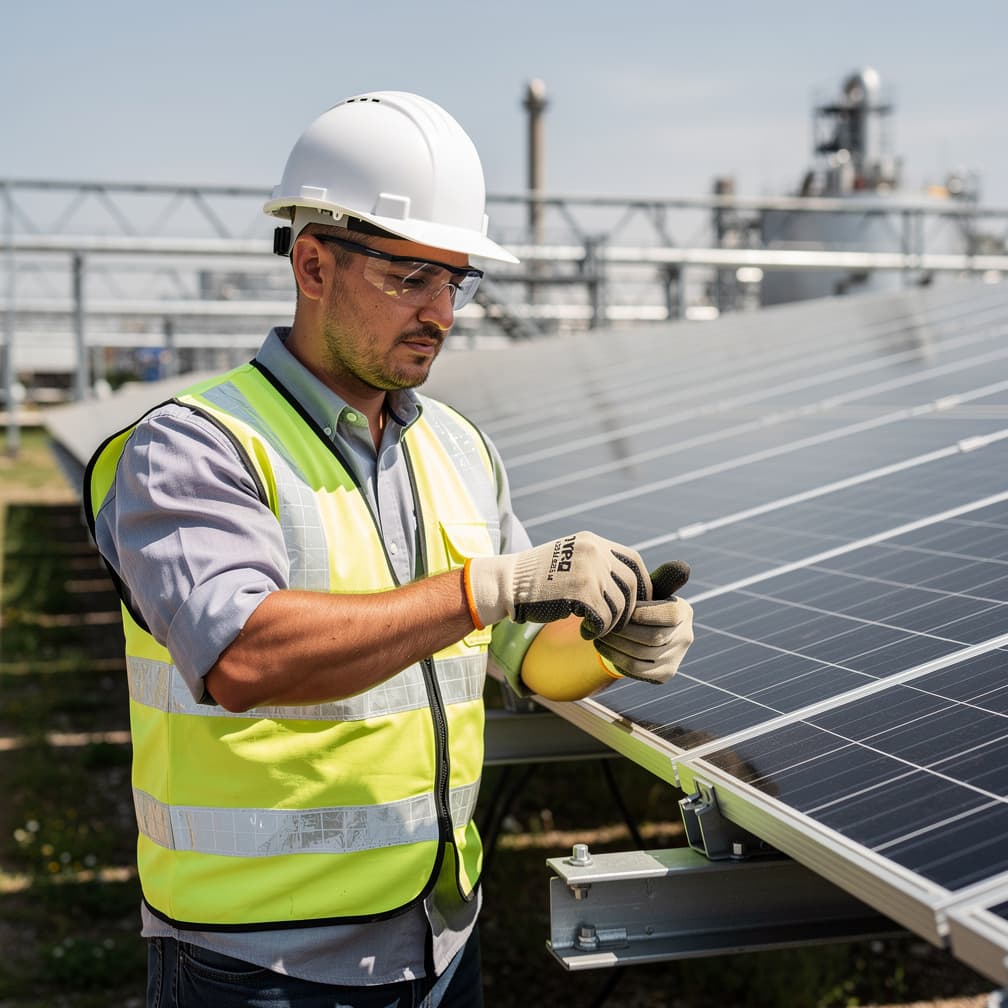

A rail slides off a shoulder during staging and gouges the shingles two courses below the array. That repair lands on your invoice before the system ever produces a watt. Roof and siding damage during a rooftop install drives solar contractor insurance in Fayetteville more than any brochure risk ever will. Modules get walked across finished surfaces, ladders lean on gutters, and a dropped panel can crack a skylight in one second. Your crew handles someone else's property every hour of the job, and a liability limit is what stands between a scuffed slope and a full tear-off. Deductibles, project limits, and how a carrier treats subcontracted labor all move the number you pay. Work out which of those levers you control before a homeowner in Fayetteville calls a roofer for a second opinion.
What Makes Fayetteville Different
Handshake jobs still create written obligations, because the utility interconnection form asks about your coverage anyway. A homeowner may never request a certificate, and the roof warranty company eventually will. Manufacturers void warranties on penetrations made by uninsured crews, and that voiding lands squarely on you. The customer then wants a new roof, and your policy is the only fund available. Informal markets shift the paperwork from the front end to the claim, which is far worse. Document the scope, the flashing detail, and the sign-off for every install inside Cumberland County. Photographs taken before you leave a roof settle disputes that arrive two years later. A quiet handshake is still a contract once the leak starts on a roof in Fayetteville.
Local Risk Factors in Fayetteville
Evacuation orders end work before the wind arrives, and the schedule you lose is not the part insurance addresses. What matters afterward is what the crews left behind: staged racking, an open roof penetration, and modules banded on a pallet in a driveway. An open penetration that lets water into a customer's home in Fayetteville becomes a workmanship argument quickly, and liability forms generally do not fund redoing your own work. Photograph every site before you shut down, and write the storm plan into the contract so responsibility is settled in advance instead of afterward. Confirm the details with the North Carolina Department of Insurance where requirements for North Carolina contractors are unclear.
What Coverage Does a Solar Contractor in Fayetteville Need?
General Liability
Roofs, driveways, and staging areas all belong to somebody else, and this is the line that looks at damage to their property and injuries to people who are not your employees. General contractors and building owners generally require proof of it before site access. Faulty workmanship on the array itself typically sits outside what it will answer.
Example: A crew hoisting rails drops a bundle onto a customer's gutter run and cracks two skylights on the way down. The resulting repair claim may fall to this line, subject to your deductible.
Workers Compensation
General contractors demand proof of it before a crew reaches the gate, and state rules about who must carry it vary enough that any blanket answer is worthless. It is rated against payroll rather than sold per policy, and it typically responds to medical costs and lost wages after a fall or a heat illness on the job. A hurt homeowner sits elsewhere.
Example: An installer slips on frost-covered decking, breaks a wrist, and misses eight weeks of the install season. Medical bills and a share of lost wages would typically run through this coverage.
Commercial Auto
A personal auto policy generally excludes business use, which leaves the truck hauling modules and crews as the gap most solar contractors carry without noticing. This line is rated per vehicle, per driver, and by how far you travel, and it can respond to damage and injuries arising out of a crash. What rides in the bed is usually a separate conversation.
Example: Your trailer of racking rear-ends a stopped car on the way to a site in Fayetteville, and the other driver reports an injury. Defense and settlement costs might sit here, depending on the policy.
Tools & Equipment (Inland Marine)
Where a building policy stops at the wall, this one follows property that moves: panel lifters, inverter testers, ladder racks, compressors, and the trailer they ride in. It is rated on the schedule you declare and settles against those declared values, so a stale list quietly shifts the loss back to you. Modules awaiting install are often treated as stock and fall outside it.
Example: A locked trailer is emptied overnight at a staging area, taking every hand tool and two panel lifters with it. The scheduled equipment could be replaced under this line, less the deductible you chose.
Professional Liability
A shade study, a string layout, a production estimate, or a permitting detail is advice, and advice that costs a client money creates a claim with nothing physically broken. That is the gap this line is intended for, since a liability policy generally reads on injury and property damage instead. Owners on commercial arrays in Fayetteville can require it by contract.
Example: Your estimate promises output the array never reaches once a neighboring building's shadow is properly accounted for, and the client wants the difference back. A dispute of that kind is what this coverage is meant to take on.
How Much Does Solar Contractor Insurance Cost in Fayetteville?
Solar Contractor Insurance is a bundle of separate policies, priced separately. The ranges below are typical figures for Fayetteville for each line, except workers compensation, which is rated per $100 of payroll; a quote prices each one against your own operations.
| Coverage | Typical range | What moves your price |
|---|---|---|
| General Liability Insurance | $170 - $575 per month | Industry and risk classification, annual revenue, number of employees |
| Workers Compensation Insurance | $0.75 - $2.74 per $100 of payroll | Employee classification codes, total annual payroll, experience modification rate |
| Commercial Auto Insurance | $240 - $675 per month | Fleet size and vehicle types, driver records and experience, coverage limits and deductibles |
| Inland Marine Insurance | $55 - $210 per month | Total insured value of the scheduled property, type and age of the equipment, where it is stored and how far it travels |
| Professional Liability Insurance | $100 - $340 per month | The services you actually perform, annual revenue or billed fees, limit and retention selected |
Prices shown are general estimates, not guaranteed rates or quotes. Your actual premium will depend on the insurer, coverage selected, business details, location, claims history, and other underwriting factors. Learn about our pricing methodology.
What Are the Insurance Requirements for a Solar Contractor in Fayetteville?
Workers' comp is generally required once you have 3 or more employees. North Carolina generally requires employers to carry workers' compensation at that point. Common exemptions include sole proprietors, partners, and LLC members. Confirm current thresholds with your state's workers' compensation agency before you hire.
State auto liability minimums apply to business vehicles. North Carolina's minimum auto liability limits are $50,000/$100,000/$50,000 (bodily injury per person / per accident / property damage). Contracts and lenders often require more than the state floor.
Where to verify licensing and coverage rules. The North Carolina Department of Insurance publishes consumer guidance and current insurance requirements for North Carolina businesses. When a contract or lease demands specific wording, the North Carolina Department of Insurance's guidance is the authoritative place to check.
Get Your Solar Contractor Quote in Fayetteville
Compare rates from multiple carriers. Free quotes, no obligation.
Operating in Fayetteville
- Battery installs put lithium storage on a customer's wall, and some carriers underwrite that work separately or decline it outright, so describing your operations vaguely on an application is how denials get built.
- Tools left staged on a roof overnight are easier to take than tools in a locked shop, and where the loss happened decides which policy is even part of the conversation.
- Trenching for conduit anywhere in Cumberland County puts you beside irrigation, gas, and fiber you cannot see, and the repair bill for a cut line arrives before anyone discusses whose map was wrong.
- Your estimator's production forecast is advice, and advice that misses badly costs a customer money without breaking anything, which is a very different claim from a cracked tile.
How to Buy: Advice for Fayetteville Owners
Underwriters price what you tell them, so assemble the facts before you ask anyone for a number. That means payroll split by role, annual revenue, a vehicle list with drivers, and a schedule of tools down to the trailer. Inland Marine gets rated on that schedule and settles against those declared values, so a stale list is a quiet self-insurance decision. Commercial Auto wants each vehicle identification number, your radius of operation beyond Cumberland County, and driving records you may not have looked at in years. Guessing at any of it produces a quote that changes at audit, which is the worst kind of surprise. The North Carolina Department of Insurance publishes consumer guidance on how commercial premiums get calculated, which makes the questions less mysterious. Hand participating carriers the same accurate packet through CPK and the comparison finally means something.
FAQ
Solar Contractor Insurance in Fayetteville: FAQ
Yes, and this is the exposure solar contractors underestimate most. A shade study or production estimate that misses badly costs the customer money without breaking anything, and a liability policy is generally built around bodily injury or property damage. Professional Liability is the line meant for advice, layout, and permitting errors. If you subcontract engineering, check their limit as well as your own.
General contractors, property managers, roof warranty companies, permit offices, and utilities approving an interconnection all can, and each may want different wording. A certificate that satisfied a job in Cumberland County last year rarely satisfies the next requester. Ask for the requirement in writing, then check that your policy already carries it instead of assuming. That document decides whether your crew gets on site.
Per-occurrence is the ceiling on any single claim; the aggregate is the ceiling across the entire policy term. One large roof claim can eat much of the aggregate, and the next claim inside that same term finds whatever remains. Nobody warns you when the aggregate is running low except your own records. Track paid claims the same way you track receivables.
Most work starts with somebody asking for proof. A homeowner may not, but a roof warranty company, a general contractor, or a utility approving an interconnection can. General Liability is the line those requests usually mean, and it is what a certificate names. Waiting until the request arrives adds a week you rarely have between award and mobilization, and nobody holds a crane day open for paperwork.
Nobody can quote you from a page. Premiums get built from payroll, the share of work done on pitched roofs, your vehicle count and radius, the value of your tool schedule, and three years of claims. Adding battery storage or trenching changes the picture again. Two underwriters reading the same submission can land in different places, which is why comparing several quotes from carriers in North Carolina is worth the hour.
Damage to someone else's property during an install is usually General Liability territory, subject to your deductible and your limits. If a rail gouges shingles or a dropped module cracks a skylight, that is third-party property damage. What the line generally will not do is pay to redo your own faulty workmanship on the array itself. That distinction catches more solar contractors than any other.
Sources
- 1.North Carolina Department of Insurance(North Carolina Department of Insurance publishes consumer guidance for insurance buyers.)


