







































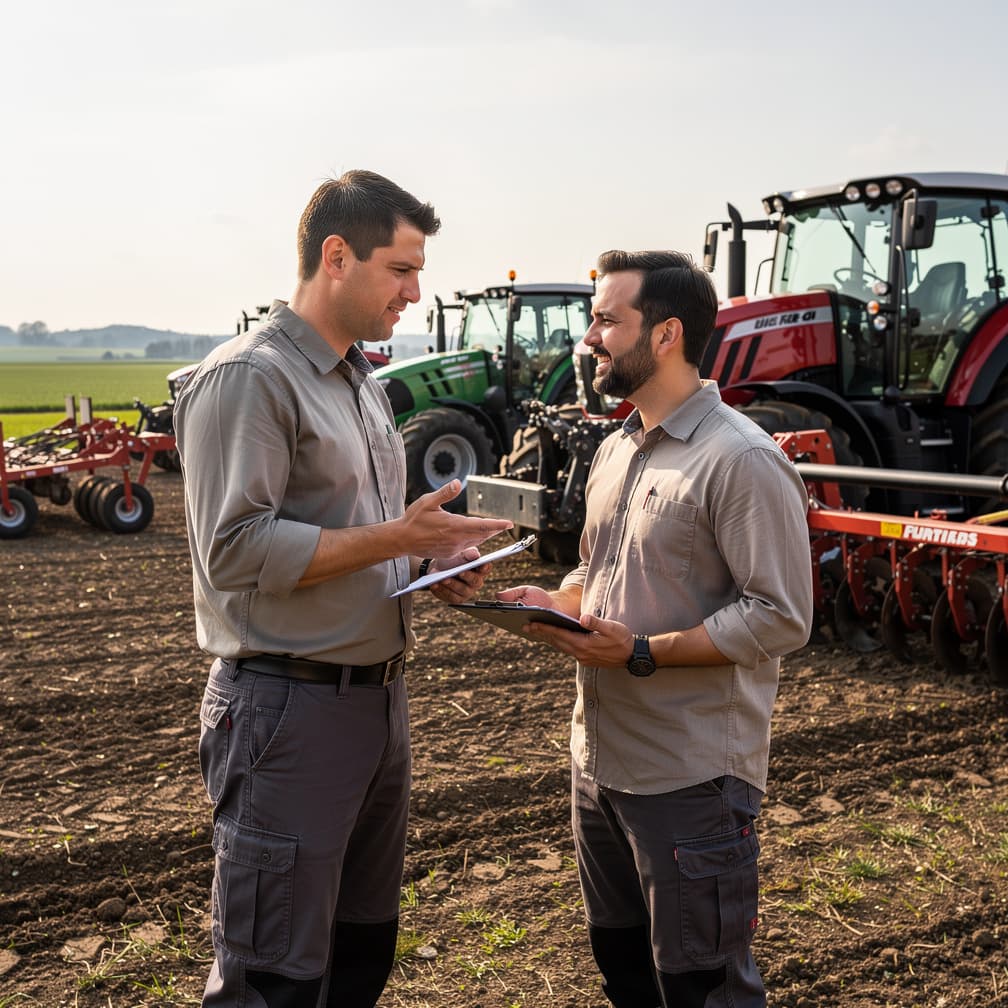

Loading a skid steer onto a trailer is where a lot of dealership claims begin: a strap lets go, the ramp shifts, and something expensive meets something else expensive. Agricultural equipment dealer insurance in Greensboro exists for that half hour and for the drive that follows it. Damage you do to a buyer's gate, driveway, or barn during delivery is third-party property damage, and it lands differently than damage to your own unit. Demonstrations create the same split, since the machine is yours and the field is not. Your techs meet a third version of the problem when a repair goes sideways on someone else's ground. Sorting which side of that line a loss falls on is what a Greensboro owner should settle at renewal, never during a claim.
What Makes Greensboro Different
Market size decides how much room you have to walk away from a renewal you dislike. Where several participating carriers want dealership business, a bad quote is an inconvenience rather than a corner. Where few do, that quote is the market, and your leverage is whatever the loss runs say. A dealership in Greensboro can find out which situation it is in by asking for more than one number. A count of about 14,500 businesses in Guilford County describes the economy around you, not who will write your class. Appetite for this class is narrower than any local business count, and it moves year to year. So test the market at a calm point in the season, before you need it. What you learn is worth more than the quote you collect.
Local Risk Factors in Greensboro
A soaked parts room is a slower loss than a fire but often a costlier one, because water ruins inventory, wiring, and records at the same time. Standing water in the yard can undercut where units sit and leave subsoil damage that surfaces weeks later. Deliveries stall while roads and field entrances stay impassable. The distinction that matters is that flood damage generally sits outside a standard commercial property form, which is meant for perils like fire and wind instead. Protection against rising water is usually arranged separately, so the yard is only as covered as that separate arrangement makes it. A dealership in Greensboro with iron staged low should map its exposure to North Carolina flood zones before committing to a limit.
What Coverage Does an Agricultural Equipment Dealer in Greensboro Need?
General Liability
When a customer slips at the parts counter or a bystander is struck during a demo, this is the line a claim usually starts on. It can help cover third-party bodily injury and property damage tied to your premises and operations, including damage you do on a buyer's ground during delivery. It generally does not extend to your own inventory or to your employees, which sit under other forms.
Example: A shopper climbs down from a display combine, catches a boot on the ladder, and breaks a wrist on the pavement. The injury claim and the legal costs behind it are the kind of loss this coverage may take on.
Commercial Property
The building, the parts inventory, the shop contents, and the units on your lot are what this line is built around. It may respond to fire, storm, theft, and vandalism damage to that property, whether it sits under roof or out in the yard, depending on how the form treats open-lot storage. Flood is the notable carve-out, typically excluded and arranged separately.
Example: A hailstorm rolls through overnight and dents every hood in the front row. Repair or replacement of the damaged units parked on the lot is the sort of claim this coverage can help absorb.
Tools & Equipment (Inland Marine)
Where a property form tends to stop at the edge of the lot, this line follows the machinery that moves. It might help cover units in transit between your yard, a customer site, and the service area, along with the portable shop tools and diagnostic gear your techs carry off-premises. What it typically does not address is faulty repair work itself, which is a separate exposure.
Example: A skid steer bound for a farm outside Greensboro shifts on the trailer when a strap fails, and the loader arm bends against the rail. Damage to that unit in transit is what this coverage is meant to answer.
Workers Compensation
The people most likely to get hurt at a dealership are the techs under the machines and the hands moving iron in the yard. This line is rated against payroll rather than headcount, and it can help cover medical costs and lost wages when an employee is injured on the job. It does not answer for a customer's injury, which belongs to the liability side instead.
Example: A mechanic straining to free a seized transmission wrenches his back and misses three weeks of the busy season. The medical bills and the wage replacement are what this coverage tends to pick up.
How Much Does Agricultural Equipment Dealer Insurance Cost in Greensboro?
Agricultural Equipment Dealer Insurance is a bundle of separate policies, priced separately. The ranges below are typical figures for Greensboro for each line, except workers compensation, which is rated per $100 of payroll; a quote prices each one against your own operations.
| Coverage | Typical range | What moves your price |
|---|---|---|
| General Liability Insurance | $110 - $450 per month | Industry and risk classification, annual revenue, number of employees |
| Commercial Property Insurance | $240 - $900 per month | Building value and construction type, roof age and condition, fire protection class |
| Inland Marine Insurance | $90 - $400 per month | Total insured value of the scheduled property, type and age of the equipment, where it is stored and how far it travels |
| Workers Compensation Insurance | $0.75 - $2.74 per $100 of payroll | Employee classification codes, total annual payroll, experience modification rate |
Prices shown are general estimates, not guaranteed rates or quotes. Your actual premium will depend on the insurer, coverage selected, business details, location, claims history, and other underwriting factors. Learn about our pricing methodology.
What Are the Insurance Requirements for an Agricultural Equipment Dealer in Greensboro?
Workers' comp is generally required once you have 3 or more employees. North Carolina generally requires employers to carry workers' compensation at that point. Common exemptions include sole proprietors, partners, and LLC members. Confirm current thresholds with your state's workers' compensation agency before you hire.
Flood damage is typically excluded from standard policies. Standard commercial property and builders-risk-type policies typically exclude flood damage. Flood exposure varies address by address, so check your premises in FEMA's Flood Map Service Center before deciding; if you sit in a mapped flood zone, a separate policy through the National Flood Insurance Program is the usual starting point.
Where to verify licensing and coverage rules. The North Carolina Department of Insurance publishes consumer guidance and current insurance requirements for North Carolina businesses. When a contract or lease demands specific wording, the North Carolina Department of Insurance's guidance is the authoritative place to check.
Get Your Agricultural Equipment Dealer Quote in Greensboro
Compare rates from multiple carriers. Free quotes, no obligation.
Operating in Greensboro
- A floor plan lender treats the iron on your Greensboro lot as its collateral, and it can ask for proof of coverage on that inventory before funding the next unit you order.
- Attachments walk before machines do. A loader bucket, a mower deck, or a set of tires can leave a yard in the back of a pickup, and the loss surfaces on a schedule nobody updated.
- Customers climb on equipment unsupervised. A buyer who wants to feel the seat height is up three steps before anyone at the counter looks over, which is where showroom injury claims tend to begin.
- A property manager behind a leased yard in Greensboro can hold the keys until a certificate naming the entity is on file, so a lapsed renewal stops occupancy rather than only paperwork.
How to Buy: Advice for Greensboro Owners
Ask what happens to your paperwork, because deal jackets, service records, and warranty files are the least glamorous total loss a dealership can take. A fire that spares the machines and takes the office still costs you every claim you cannot document afterward. Commercial Property forms often include some valuable papers coverage, though the sublimit tends to be small and worth confirming. Back the records up somewhere that is not the building. Ask the same question about your equipment schedule, since the schedule is what proves what sat on the lot. General Liability defense costs may sit inside your limit rather than outside it, which is another line worth reading closely. Check the North Carolina Department of Insurance's guidance before deciding what documentation to keep. Bring those answers to participating carriers in North Carolina and compare the wording next to the price.
FAQ
Agricultural Equipment Dealer Insurance in Greensboro: FAQ
Property belonging to others in your care is a distinct exposure, and it is not the same thing as your own inventory. Inland Marine forms often address customer property held for service, sometimes under a separate limit. What that limit should be depends on the most valuable combine you would ever have in the bay at once. Ask how the form treats damage caused by the repair itself, since faulty work is commonly excluded.
A certificate is a snapshot showing a policy existed on a given day. Landlords, lenders, and commercial buyers ask for one, and they may ask to be named on the policy behind it. The certificate itself grants nothing, which surprises owners the first time a risk manager rejects one over wording. Keep a list of everyone holding yours, and send a fresh copy at renewal before anybody chases you for it.
Per-occurrence caps what a policy may pay for one incident. The aggregate caps the total across the whole policy term. A dealership in Greensboro with a showroom fall in the spring and a delivery damage claim later that year can find the second claim meeting a ceiling the first one already lowered. Ask what your aggregate is and whether defense costs count against it, because that answer decides what the limit is really worth.
Loss history is one of the inputs an underwriter weighs, so a claim can affect the renewal. That is the practical argument for a deductible set high enough that you are not filing small property claims you could absorb yourself. It is no argument at all for sitting on an injury claim, which needs reporting immediately. Document losses the day they happen: photos, serial numbers, and what the yard looked like.
Off-premises work is where forms differ. Some treat operations away from the dealership exactly like work on your own ground, and some narrow it. The service agreement you signed can also shift responsibility onto you through an indemnity paragraph, which is a separate promise your policy has to be able to keep. Ask a carrier in North Carolina how its form handles work at a customer site before you rely on it.
Payroll split by job, revenue, an equipment schedule with serial numbers, the building's square footage and construction, and a plain description of what happens in the shop. If you rent the yard in Greensboro, bring the lease. If you carry a floor plan line, bring the financing agreement, since the lender's requirement is part of your specification. Guessing at any of it gets loaded into the price as uncertainty.
Sources
- 1.U.S. Census Bureau, County Business Patterns (2022), Guilford County(Guilford County has about 14,500 business establishments.)
- 2.North Carolina Department of Insurance(North Carolina Department of Insurance publishes consumer guidance for insurance buyers.)
- 3.FEMA / FloodSmart(Flood coverage is typically purchased separately; FEMA administers the National Flood Insurance Program.)


