







































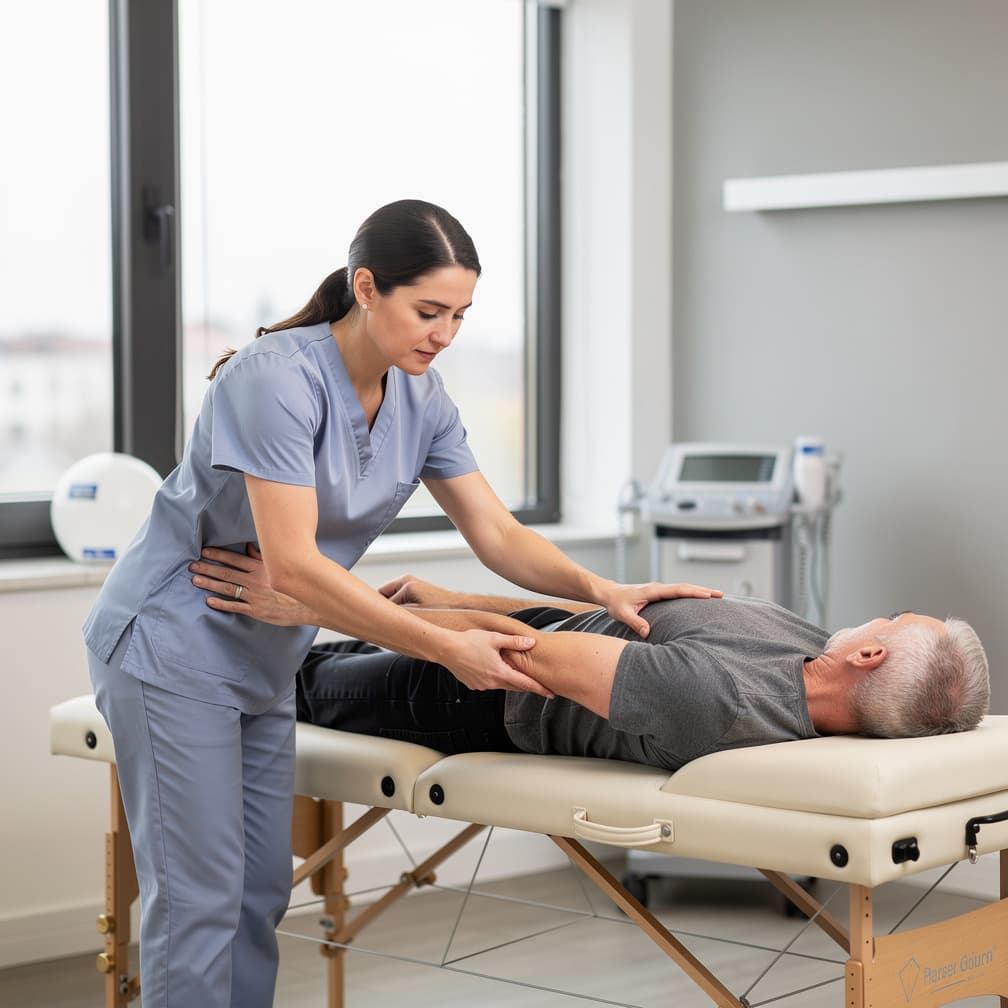

A patient lets go of the rail during a balance drill, catches herself hard, and later says the progression set her recovery back. The stumble is the smaller half of that day. The claim is the larger one, and it arrives asking whether the exercise was appropriate, whether anyone explained it, and whether anyone wrote it down. Physical therapy insurance in Raleigh starts at that third question, because Professional Liability gets priced off the answer. Documentation is the evidence that settles the file, and the notes get written months before anyone needs them. The lease behind a suite in Wake County can demand a certificate before anything is signed, and it will never ask what limit sits behind your clinical work. Answer that second question yourself, before a renewal answers it by default.
What Makes Raleigh Different
After a regional storm, every damaged building in Wake County calls the same contractors on the same morning. Scale is not on your side there, and a small clinic is a small job to somebody busy. About 33,000 businesses share that queue with you, and a treatment room does not get to jump it. Repairs stretch, the schedule stays empty, and the loss keeps running long after the damage stopped. That gap between damage and reopening is what a business income extension is meant to address. It carries a waiting period and a limit, and both deserve a question well before the season. A property claim in Raleigh settles on what you can prove you owned, so photograph the room. Do it now, because doing it afterward means reconstructing the room entirely from memory.
Local Risk Factors in Raleigh
Flooding closes a ground-floor clinic before it damages anything, since standing water on the approach ends the schedule for the day. When water does reach the suite in Raleigh, the treatment tables, mats, and modalities sitting on the floor are the first losses, and they are the losses you cannot treat around. Here is the part that catches clinics: a standard property form typically excludes flood, so Commercial Property may respond to a burst pipe and stay silent on rising water. Flood coverage gets bought and priced as its own decision, often through a separate program entirely. Drying a suite takes longer than fixing it, and patients booked for the week do not wait quietly. Ask which water losses your policy in North Carolina actually addresses before the season, because the answer is rarely what the word water suggests.
What Coverage Does a Physical Therapy in Raleigh Need?
Professional Liability
The allegation that treatment itself caused harm is what this line exists for: a progression a patient says set recovery back, a manual technique blamed for a worsened condition, a home program nobody documented. Defense costs commonly begin before anyone rules on merit. It typically does not answer a visitor's slip in the lobby, and it says nothing about your equipment.
Example: A patient tells her physician the balance drills left her knee unstable, then hires a lawyer; the defense bills arrive long before anyone rules on merit, and this is the line they are meant to run through.
General Liability
Landlords and referral contracts ask for this one by name, usually with an additional-insured endorsement attached. It is meant for bodily injury and property damage tied to your premises and operations: the visitor who trips, the spouse who slips on a wet entry. Claims about the treatment itself sit outside it, and so does damage to your own equipment.
Example: A patient's husband catches a foot on a cable near the gait bars in your Raleigh clinic and fractures a wrist; general liability is typically what answers the medical bills and his lawyer's letter.
Commercial Property
Flood sits outside a standard property form and gets priced as its own decision, which catches ground-floor clinics off guard. What is inside the form: tables, modalities, mats, computers, and the improvements you paid for, against fire, storm damage, vandalism, and theft. The building is usually the landlord's problem, and a worn-out compressor generally reads as maintenance.
Example: Someone forces the back door of your Raleigh suite overnight and leaves with two laptops and an ultrasound unit; whether the hardware and the software behind it get made good depends on your deductible and the limit you scheduled.
Workers Compensation
General Liability watches the people who visit your clinic; this line watches the people who work in it. Aides and therapists lift, transfer, and reposition patients all day, and an on-the-job back or shoulder injury runs through here. Rating keys off wages rather than headcount, so one new hire moves it before anything else does. Rules and thresholds vary by state, and the North Carolina Department of Insurance publishes the current requirements for employers.
Example: An aide catches a patient sliding off a treatment table and tears a shoulder; the surgery and the weeks away from the schedule are what workers' compensation exists to take on, priced off the payroll you reported.
How Much Does Physical Therapy Insurance Cost in Raleigh?
Physical Therapy Insurance is a bundle of separate policies, priced separately. The ranges below are typical figures for Raleigh for each line, except workers compensation, which is rated per $100 of payroll; a quote prices each one against your own operations.
| Coverage | Typical range | What moves your price |
|---|---|---|
| Professional Liability Insurance | $75 - $270 per month | The services you actually perform, annual revenue or billed fees, limit and retention selected |
| General Liability Insurance | $45 - $150 per month | Industry and risk classification, annual revenue, number of employees |
| Commercial Property Insurance | $50 - $180 per month | Building value and construction type, roof age and condition, fire protection class |
| Workers Compensation Insurance | $0.75 - $2.74 per $100 of payroll | Employee classification codes, total annual payroll, experience modification rate |
Prices shown are general estimates, not guaranteed rates or quotes. Your actual premium will depend on the insurer, coverage selected, business details, location, claims history, and other underwriting factors. Learn about our pricing methodology.
What Are the Insurance Requirements for a Physical Therapy in Raleigh?
Workers' comp is generally required once you have 3 or more employees. North Carolina generally requires employers to carry workers' compensation at that point. Common exemptions include sole proprietors, partners, and LLC members. Confirm current thresholds with your state's workers' compensation agency before you hire.
Flood damage is typically excluded from standard policies. Standard commercial property and builders-risk-type policies typically exclude flood damage. Flood exposure varies address by address, so check your premises in FEMA's Flood Map Service Center before deciding; if you sit in a mapped flood zone, a separate policy through the National Flood Insurance Program is the usual starting point.
Where to verify licensing and coverage rules. The North Carolina Department of Insurance publishes consumer guidance and current insurance requirements for North Carolina businesses. When a contract or lease demands specific wording, the North Carolina Department of Insurance's guidance is the authoritative place to check.
Get Your Physical Therapy Quote in Raleigh
Compare rates from multiple carriers. Free quotes, no obligation.
Operating in Raleigh
- Parking lots and shared hallways usually belong to the building, though a patient who falls there can still name your Raleigh clinic, and the certificate on file shapes how that conversation goes.
- Growth in caseload arrives long before anyone revisits the policy, so a full schedule can be running on limits that were set for a much slower year.
- A property manager in Raleigh can hold the keys to your suite until a certificate names the building owner as an additional insured, which turns an insurance errand into an opening-day deadline.
- Referral partners in Raleigh re-verify coverage on their own schedule, so a policy that lapses during a quiet month can stall your patient flow before anyone at the front desk notices.
How to Buy: Advice for Raleigh Owners
Certificates go stale, and a stale certificate is how a clinic learns its coverage lapsed. Put the expiration date on the same calendar as the lease renewal in Raleigh, because a landlord who asked for it once will ask again. Keep a copy of every contract that names a required limit, since General Liability limits get raised by other people's paperwork more often than by your own decisions. Professional Liability rarely appears on those certificates, which is exactly why it gets forgotten until a patient alleges the treatment caused harm. Before renewal, re-run the numbers: payroll changed, the equipment list changed, the caseload changed. Check the North Carolina Department of Insurance's guidance before deciding whether a change in your practice needs to be reported. Then take the fresh inputs to participating carriers and compare what comes back.
FAQ
Physical Therapy Insurance in Raleigh: FAQ
That is the usual reason to carry Professional Liability. Defense costs can begin the moment an allegation arrives, long before anyone rules on merit, and they are often the larger half of a small claim. Ask whether defense sits inside your limit or outside it, because inside means every legal bill shrinks what is left for a settlement. Merit gets decided late. The bills start early, and a clinic without the line pays them alone.
Sometimes, and the answer sits in the policy rather than in the brochure. Professional Liability generally follows the professional service, so a home visit or a session run at a gym may still be in scope. General Liability is tied more closely to premises and operations, and off-site work can need specific wording. Ask before you agree to a program that puts a therapist inside someone else's building.
You request it from whoever issued the policy, and it lists your coverages, limits, and effective dates. Turnaround varies by carrier, so start before the deadline rather than on it. The certificate is a summary: it adds no coverage and changes nothing the policy says. If a lease in Raleigh demands additional-insured status, that has to be endorsed onto the policy, not merely typed onto the certificate.
Generally not. A building owner's policy is written for the building, so your tables, modalities, and computers usually sit outside it. Commercial Property is the form for the contents you brought in, and it gets quoted from the inventory you provide. Leases sometimes push repair responsibility for interior improvements back onto the tenant as well. Check what your lease makes yours before assuming someone else insured it.
It can, and the effect depends on the line. Workers' Compensation reacts through experience rating over several years, and how that mechanism works in North Carolina is not how it works everywhere. Professional Liability reacts to the allegation itself, whatever the outcome, because carriers price the pattern rather than the verdict. Property losses tend to matter through frequency more than through any single event. Asking a carrier how it treats claim history is a fair question, and the answers differ more than the prices do.
Probably, because furnished rarely means insured. The tables, modalities, computers, and supplies you brought in are your property, and the landlord's policy is written for the building. Tenant improvements you paid for can land on your side of the line too, depending on the lease. Commercial Property could respond to fire, storm damage, vandalism, and theft reaching those items, though flood typically sits outside it. Read the lease before you skip the line.
Sources
- 1.U.S. Census Bureau, County Business Patterns (2022), Wake County(Wake County has about 33,000 business establishments.)
- 2.North Carolina Department of Insurance(North Carolina Department of Insurance publishes consumer guidance for insurance buyers.)
- 3.FEMA / FloodSmart(Flood coverage is typically purchased separately; FEMA administers the National Flood Insurance Program.)


