







































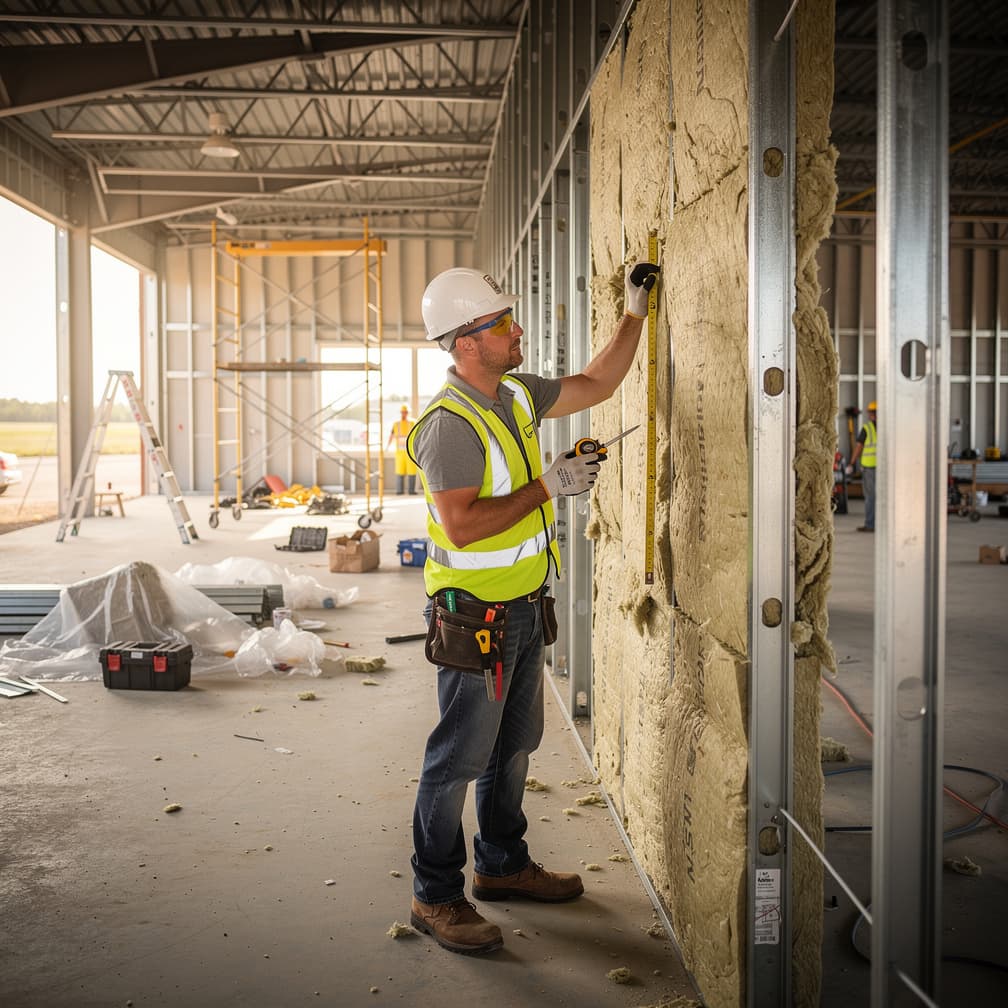

As an insulation contractor in Wilmington, you work inside occupied buildings, and that single fact shapes your whole insurance picture. Someone else's furniture, floors, and pets are in the room while your crew runs hoses up through the hatch. Third-party property damage in a lived-in home is the claim that shows up most, and insulation contractor insurance in Wilmington is bought against exactly that. A vacant new build forgives a smudge; an occupied house sends photographs. Your deductible decides which of those events you even bother to report. Small repeat claims can price you out at renewal faster than one large loss will. Settle where your reporting line sits before you need to find it.
What Makes Wilmington Different
A thin local market changes who fixes your losses, which is a stranger consequence than most owners expect. When a ceiling has to be replaced, the drywall and paint subs available in New Hanover County set the timeline. Fewer vendors means longer repair windows, and a longer window means an angrier customer and a bigger file. Independent adjusters can also be spread thin, so the inspection that starts your claim may wait several days. None of that changes the premium, and all of it changes what a claim actually feels like. Ask a quote how claims get handled and how fast an adjuster is assigned to a loss in Wilmington. Service is the part of the policy you experience, and it never appears on a price sheet. Compare that answer between quotes, because the number alone tells you nothing about it.
Local Risk Factors in Wilmington
Deductibles change shape when a named storm is involved, and many property forms in North Carolina apply a separate percentage deductible for hurricane damage. That number can dwarf the flat deductible you remember agreeing to, and it applies to your own shop rather than to a customer's home. Read where the clause sits before you need it. The other half of the aftermath is demand, since everyone in New Hanover County wants insulation replaced at once and material and labor get expensive while your contract prices stay fixed. That squeeze is a business problem rather than a coverage one. Ask what protective steps a policy expects from you before a storm, because compliance can shape a claim later.
What Coverage Does an Insulation Contractor in Wilmington Need?
General Liability
Builders, property managers, and permit offices ask for this one by name before a crew gets on site. It can help cover third-party bodily injury and damage your work does to somebody else's property, from a cracked ceiling to a scratched hardwood floor. Redoing your own faulty installation generally sits outside it, and that boundary decides most disputes.
Example: A hose drags across a homeowner's stair rail on the way to the attic and pulls it off the wall. The repair claim may fall to this policy.
Workers Compensation
Where liability coverage looks after other people, this line looks after your own crew. Medical treatment and lost wages tied to a jobsite injury, or to an illness linked to insulation handling, are typically what it addresses. It rates against payroll and gets audited at year end. Whether an owner is included depends on North Carolina.
Example: An installer working a summer attic goes down with heat illness and spends the night in a hospital. The treatment and the missed weeks are commonly handled here.
Commercial Auto
A pickup pulling a trailer of batts is doing business work, and a personal policy usually stops applying the moment it does. This line is meant for the vehicles you own or hire: liability after a collision, damage to the truck itself where that coverage was purchased, and the crew riding along. Mechanical breakdown typically sits outside it.
Example: Your driver misjudges a turn with a loaded trailer and clips a parked car outside a job in Wilmington. Repairs to both vehicles could be addressed under this coverage.
Commercial Umbrella
Limits, rather than gaps, are what this one addresses. It sits above General Liability and Commercial Auto and generally comes into play only once one of those has run out, which is why a subcontract demanding high limits often makes it the practical answer. Whatever the underlying form excludes, it usually excludes as well.
Example: A serious highway collision leaves injuries that run past the limit on your auto policy. The remainder might be picked up by the layer sitting above it.
How Much Does Insulation Contractor Insurance Cost in Wilmington?
Insulation Contractor Insurance is a bundle of separate policies, priced separately. The ranges below are typical figures for Wilmington for each line, except workers compensation, which is rated per $100 of payroll; a quote prices each one against your own operations.
| Coverage | Typical range | What moves your price |
|---|---|---|
| General Liability Insurance | $170 - $550 per month | Industry and risk classification, annual revenue, number of employees |
| Workers Compensation Insurance | $0.75 - $2.74 per $100 of payroll | Employee classification codes, total annual payroll, experience modification rate |
| Commercial Auto Insurance | $240 - $675 per month | Fleet size and vehicle types, driver records and experience, coverage limits and deductibles |
| Commercial Umbrella Insurance | $75 - $240 per month | Umbrella limit requested, limits carried on the underlying policies, loss history on those underlying policies |
Prices shown are general estimates, not guaranteed rates or quotes. Your actual premium will depend on the insurer, coverage selected, business details, location, claims history, and other underwriting factors. Learn about our pricing methodology.
What Are the Insurance Requirements for an Insulation Contractor in Wilmington?
Workers' comp is generally required once you have 3 or more employees. North Carolina generally requires employers to carry workers' compensation at that point. Common exemptions include sole proprietors, partners, and LLC members. Confirm current thresholds with your state's workers' compensation agency before you hire.
State auto liability minimums apply to business vehicles. North Carolina's minimum auto liability limits are $50,000/$100,000/$50,000 (bodily injury per person / per accident / property damage). Contracts and lenders often require more than the state floor.
Where to verify licensing and coverage rules. The North Carolina Department of Insurance publishes consumer guidance and current insurance requirements for North Carolina businesses. When a contract or lease demands specific wording, the North Carolina Department of Insurance's guidance is the authoritative place to check.
Get Your Insulation Contractor Quote in Wilmington
Compare rates from multiple carriers. Free quotes, no obligation.
Operating in Wilmington
- A homeowner who signed nothing remembers the job differently than you do. Without a written scope and photographs, an adjuster has two stories and no way to choose between them.
- If a property manager in Wilmington requires proof before granting building access, a lapsed policy is not a paperwork problem. It is a locked door and a crew standing in the lobby.
- Insulation disappears behind drywall the same week you install it. The complaint about it can arrive two years later, which is why completed operations wording matters more here than the monthly premium does.
- Certificates expire on their own schedule, and if a builder in New Hanover County audits the project file midstream, an expired one can stop your crew at the gate until a new document lands.
How to Buy: Advice for Wilmington Owners
Write down the three worst days this business can have, then buy against that list. A fall through a ceiling in an occupied Wilmington home, a collision on a call across New Hanover County, and an injured installer are not exotic events. General Liability, Commercial Auto, and Workers Compensation each answer one of those, and none of them answers another one's day. A single event can trigger two at once, which is why limits matter more than the monthly price. Price the list rather than the line, and ask what a serious version of each would draw. Doing that exercise once tends to end the habit of shopping on premium alone. Then bring the list to participating carriers and compare what each quote actually promises.
FAQ
Insulation Contractor Insurance in Wilmington: FAQ
Two separate claims can open from the same second. The injured worker is a Workers Compensation matter, running on its own reporting rules and its own clock. The wrecked ceiling and whatever sat under it is third-party property damage, which is a liability question. Different adjusters and different forms handle them, even though it was one boot and one joist. Report both promptly instead of waiting to see how the repair goes.
Usually not. An empty calendar is a business problem, and standard forms are built around physical damage and liability rather than lost scheduling. If bagged material got soaked or a trailer was damaged, that is a property question with its own answer. The canceled days themselves come out of your margin. Build float into your bids rather than expecting a policy to absorb the season.
A deductible is your share of every loss, so a repair smaller than it produces no payment and still creates a record once you report it. A low deductible makes it tempting to turn minor drywall repairs into claims, and a string of small claims can cost more at renewal than the repairs would have. Decide the number that makes a loss worth reporting, then hold to it.
That depends entirely on your state, and it is one of the few insurance questions with a genuine legal answer rather than a market one. Sole owners are treated differently across state lines, and the choice to include or exclude yourself changes both your premium and whether your own injury sits inside the policy at all. The North Carolina Department of Insurance publishes the current requirements for owner coverage elections in North Carolina.
Annual payroll broken out by role, gross receipts, a list of every vehicle and driver, and your loss runs for the last few years. Each of those prices a different piece, and a guess on any one of them produces a number that changes as soon as somebody checks it. Keep the insurance exhibit from your biggest contract nearby too, since it sets the limits you actually need.
No. Liability coverage exists for harm to other people and their property, and your own equipment is neither. A blower mounted permanently inside a truck is usually addressed on the vehicle side, while portable gear and staged material are a separate conversation with a separate form. Ask specifically about bags of material sitting at a Wilmington jobsite overnight, because that answer is rarely what owners assume.
Sources
- 1.North Carolina Department of Insurance(North Carolina Department of Insurance publishes consumer guidance for insurance buyers.)


