
Updated July 16, 2026

Commercial Crime Insurance in Winston-Salem
Retail trade leads the business mix in Forsyth County, with professional services and health care close behind, so your policy review often centers on everyday payment authority, refund handling, deposits, and vendor disbursements rather than on a single obvious theft scenario. If you run a storefront, a clinic office, or a small professional firm, one employee can touch receipts, bookkeeping, and online banking in the same week. Retail trade accounts for 15% of local establishments, professional and technical services 10.6%, and health care and social assistance 10.5%. That mix tells you your policy should be matched to who can initiate payments, reconcile accounts, issue refunds, or handle incoming checks. If your operation has grown informally, this is usually the place to slow down and test internal controls against the policy language. Before you request a quote, map out who can approve wires, change payee information, prepare deposits, and access accounting credentials, because those details tend to decide whether a policy fits your actual loss points.
About Commercial Crime Insurance in Winston-Salem, NC
A crime policy is designed to respond to financial loss from criminal acts. In North Carolina, the Department of Insurance regulates the market, but the exact insuring agreement still depends on the policy form and endorsements you choose. Coverage can vary by carrier and by whether you need protection for cash, checks, electronic transfers, or records used to authorize a transfer. Some policies may also include social engineering fraud, but that is endorsement-dependent rather than automatic. Pay close attention to how the policy defines "employee," "premises," "loss discovery," and "instruction" for transfers, because those definitions control whether a claim is paid. A policy may help cover theft by a trusted employee in one office, altered checks processed in another, or a fraudulent wire request affecting an accounting team, but the specific form and endorsements determine what is actually protected. Because many carriers compete here, endorsements and limits can differ more than many buyers expect. Review the policy against your payment volume, number of employees, and how often you move funds between locations.
Coverage Included

Employee Theft
Can help reimburse your business when an employee steals money, inventory, equipment, or other company property.

Forgery & Alteration
May cover losses when someone forges or alters your business checks, drafts, or other financial instruments.

Computer Fraud
Can help cover money or property stolen when a criminal uses a computer to fraudulently transfer it from your business.

Funds Transfer Fraud
May reimburse funds lost when a fraudster tricks your bank into transferring money out of your account with fake instructions.
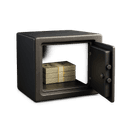
Money & Securities
Typically covers theft, disappearance, or destruction of cash and securities inside your premises or while being transported.
Commercial Crime Insurance Cost in Winston-Salem
Average Cost in North Carolina
$20 - $80
per month
Businesses in North Carolina typically see commercial crime insurance premiums of $20 - $80 per month, which tends to run 17% below the national range of $25 - $95 per month.
- Employees who handle money or inventory
- Internal controls and separation of duties
- Funds and securities on hand
- Limit and deductible on each insuring agreement
- Prior employee theft, forgery, or fraud losses
Contact CPK Insurance for a personalized quote.
Prices shown are general estimates, not guaranteed rates or quotes. Your actual premium will depend on the insurer, coverage selected, business details, location, claims history, and other underwriting factors. Learn about our pricing methodology.
Commercial crime insurance cost in North Carolina is shaped by the state's near-average premium environment and by the risk profile of your business. The typical range for the state is $20 to $80 per month, while the product-level average range is $25 to $95 per month, so the actual quote can move meaningfully based on limits, deductibles, and endorsements. A retail shop handling daily cash and card settlements may be priced differently from a professional office with limited cash exposure. Carriers also factor in claims history, location, industry or risk profile, and policy endorsements. That is especially relevant in a state with a large small-business base, because smaller firms often have fewer internal controls and more concentrated access to funds. If you operate in Healthcare and Social Assistance, Retail Trade, Manufacturing, Accommodation and Food Services, or Professional and Technical Services, underwriters may ask more questions about who can initiate payments, reconcile accounts, and handle deposits.
What Makes Winston-Salem Different
Industry mix is the main difference here. In a market tied to storefront transactions, client-service firms, and health care offices, crime exposure often sits in routine money movement instead of in a warehouse or manufacturing workflow. Forsyth County has 9,026 business establishments, which means your bookkeeper or office manager likely wears several hats at once. That scale means many local companies operate with lean accounting teams, overlapping duties, and owners who still approve payments between other responsibilities. This is usually where commercial crime buying gets more specific. You may need to review whether your controls separate deposit preparation from reconciliation, whether vendor changes require a second check, and whether front-desk staff, office managers, or bookkeepers can move funds without a second approval. Rather than buying every crime insuring agreement available, the goal is to find the spots in your operation where trust, access, and speed meet, then request limits and endorsements that fit those exact handoff points.
Our Recommendation for Winston-Salem
Start with your money map, not with a generic application. Trace every path where cash, checks, card refunds, ACH instructions, and wire requests enter or leave the business, and note who holds authority at each step. A retail owner should zero in on refund authority, deposit handling, and inventory-related dishonesty controls, while a professional office needs to scrutinize client payment instructions, bookkeeping access, and who can change vendor or payee details. Health care and social assistance operators should examine front-office collections, billing adjustments, and whether patient payments stay separate from account reconciliation. Keep the review practical by walking through a typical week and noting who opens mail, who posts receipts, who approves disbursements, and who can access online banking tokens or accounting credentials. Then ask for a quote built around those workflows, with clear discussion of employee theft, forgery, computer fraud, and funds transfer fraud where they actually apply.
Get Commercial Crime Insurance in Winston-Salem
Enter your ZIP code to compare commercial crime insurance rates from carriers in Winston-Salem, NC.
Business insurance starting at $25/mo
FAQ
Frequently Asked Questions
Winston-Salem area businesses with routine payment handling should review it first. In Forsyth County, retail trade accounts for 15% of establishments, professional and technical services 10.6%, and health care and social assistance 10.5%. That mix tells you the same three questions tend to come up regardless of sector: who can move money, who reconciles it, and who checks the work.
Forsyth County business mix matters because it points to how money moves. With 9,026 establishments in the county, many firms rely on small teams. In practice, one person may handle deposits, reconciliations, and vendor payments unless you deliberately separate those duties.
Winston-Salem retailers should gather a simple control checklist before quoting: who handles refunds, who prepares deposits, who reconciles accounts, and who can change vendor or payee information. That gives the quote a better chance of matching your actual theft and fraud exposure.
Winston-Salem professional and health care offices often need to review employee access to client or patient payments, bookkeeping credentials, and disbursement authority. Here, the exposure is usually tied to trusted staff roles and routine account activity, not a single large cash operation.
Depending on the policy form and endorsements, it may help cover employee theft, forgery, computer fraud, funds transfer fraud, money and securities theft, and sometimes social engineering fraud if the endorsement is included.
If a covered employee steals money, securities, or other covered assets, the policy may respond based on the insuring agreement, the discovery period, and the policy limits you selected.
Many small businesses do, because North Carolina is dominated by small firms and lean staffing can make internal theft, forgery, and fraud harder to detect.
The typical range for the state is $20 to $80 per month, but your quote can be higher or lower depending on limits, deductibles, industry, claims history, and endorsements.
Sources
- 1.U.S. Census Bureau, County Business Patterns, Forsyth County(In Forsyth County, retail trade accounts for 15% of establishments, professional, scientific, and technical services 10.6%, and health care and social assistance 10.5%.; Forsyth County has 9,026 business establishments.)
Updated July 16, 2026