







































Updated July 16, 2026

Snow Plowing Contractor Insurance in North Dakota
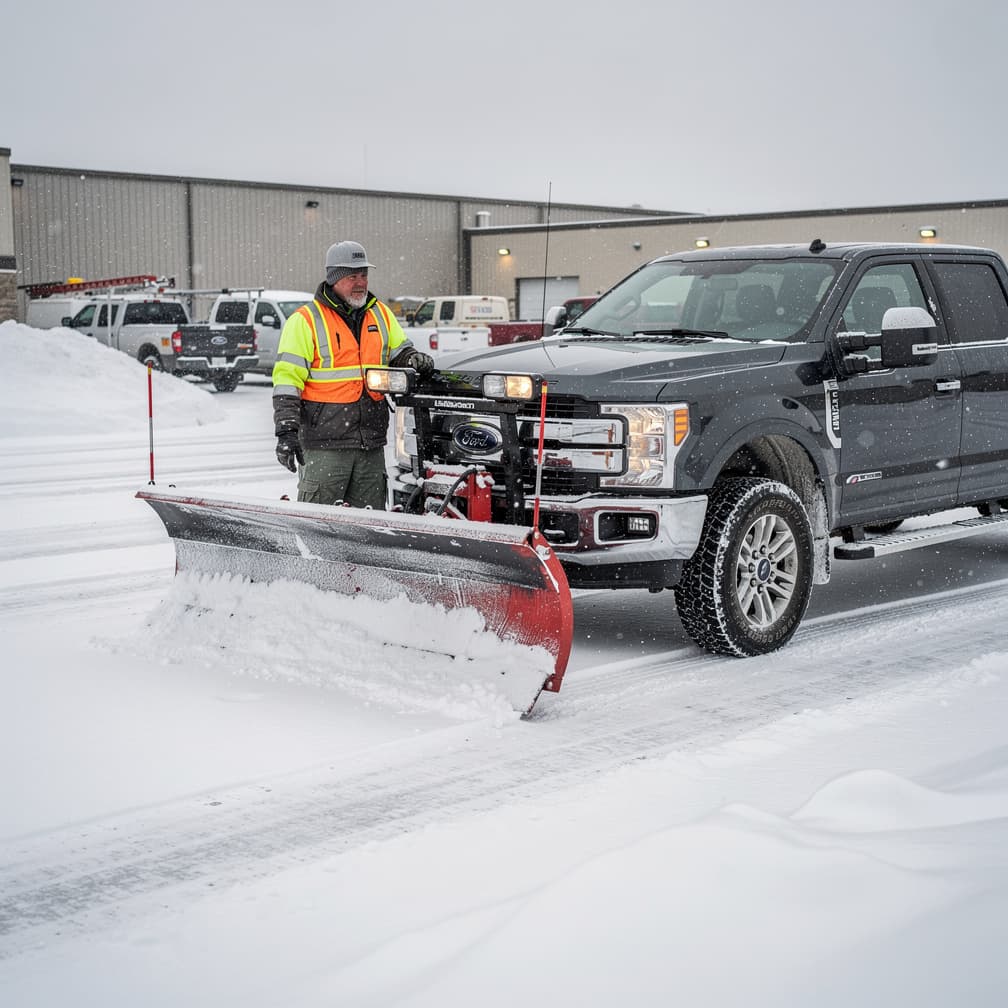
Running a snow removal business in North Dakota means winter weather is the job, not a side issue. Every route can bring liability exposure if a pedestrian slips, a curb gets hit, or a client says the site was left unsafe. North Dakota's commercial auto minimums sit at $25,000/$50,000/$25,000, meaning a single plow truck accident can exhaust those limits well before repairs are settled.
Your policy mix should match how you actually operate. Whether you run solo or with a crew, seasonally or year-round, your coverage has to track the parts of the business that shift fastest once the snow starts flying.
Climate Risk Profile
Natural Disaster Risk in North Dakota
Understanding climate-related risks helps determine appropriate insurance coverage levels.
Severe Storm
Very High
Flooding
High
Winter Storm
Very High
Tornado
High
Expected Annual Loss from Natural Hazards
$480M
estimated economic loss per year across North Dakota
Source: FEMA National Risk Index
Common Risks for Snow Plowing Contractor Businesses
- Slip and fall claims after clearing parking lots, sidewalks, or driveways
- Property damage from plow blades, salt spreaders, or backing into curbs and signs
- Vehicle accidents involving plow trucks on winter weather routes
- Third-party claims from customers, tenants, or pedestrians at commercial properties
- Legal defense and settlements after a lawsuit tied to snow removal work
- Workplace injury concerns for crews working long shifts in icy conditions
Risk Factors for Snow Plowing Contractor Businesses in North Dakota
- North Dakota winter storm conditions can create third-party claims when snow and ice are pushed onto parking lots, sidewalks, or driveways and someone slips and falls.
- Severe storm and flooding exposure in North Dakota can lead to property damage claims that interrupt snow plowing operations and affect equipment access at commercial properties.
- High winds and low visibility during North Dakota winter weather can increase the chance of vehicle accident claims involving plow trucks on service routes.
- Municipal contracts, commercial properties, and roadside service work in North Dakota can raise liability exposure if a client alleges bodily injury or property damage during snow removal.
- Seasonal salt spreading and repeated site visits across North Dakota can increase the chance of customer injury claims at entrances, loading areas, and sidewalks.
How North Dakota compares with the national baseline
Uninsured drivers
6.2% vs 11.6% baseline
About 6.2% of North Dakota drivers are estimated to be uninsured, below the 11.6% average across states.
Fatal crashes per 100 million miles
1.62 vs 1.33 baseline
North Dakota sees about 1.62 fatal crashes per 100 million miles driven, above the national average of 1.33.
Property crime per 100,000 residents
2,540 vs 2,200 baseline
Property crime in North Dakota runs above the national average, at 2,540 vs 2,200 incidents per 100,000 residents.
Blue bar: North Dakota. Gray line: national baseline.
How Much Does Snow Plowing Contractor Insurance Cost in North Dakota?
Snow Plowing Contractor Insurance is a bundle of separate policies, priced separately. The ranges below are typical figures for North Dakota for each line, except workers compensation, which is set by the state fund; a quote prices each one against your own operations.
| Coverage | Typical range | What moves your price |
|---|---|---|
| General Liability Insurance | $180 - $650 per month | Industry and risk classification, annual revenue, number of employees |
| Commercial Auto Insurance | $340 - $1,000 per month | Fleet size and vehicle types, driver records and experience, coverage limits and deductibles |
| Workers Compensation Insurance | Set by the state fund | Employee classification codes, total annual payroll, experience modification rate |
| Commercial Umbrella Insurance | $100 - $380 per month | Umbrella limit requested, limits carried on the underlying policies, loss history on those underlying policies |
Prices shown are general estimates, not guaranteed rates or quotes. Your actual premium will depend on the insurer, coverage selected, business details, location, claims history, and other underwriting factors. Learn about our pricing methodology.
Get Your Snow Plowing Contractor Insurance Quote in North Dakota
Compare rates from multiple carriers. Free quotes, no obligation.
What North Dakota Requires for Snow Plowing Contractor Insurance
Non-compliance can result in fines, loss of contracts, and personal liability:
- Workers' compensation is required in North Dakota for businesses with 1 or more employees, with exemptions for sole proprietors with no employees and partners in partnerships without employees.
- Commercial auto liability minimums in North Dakota are $25,000/$50,000/$25,000, so plow truck insurance should be reviewed against those limits before work begins.
- North Dakota businesses often need proof of general liability coverage for most commercial leases, so snow plowing contractor coverage should be ready for landlord or property manager review.
- Policies should be checked for hired auto and non-owned auto exposure if the business uses rented vehicles, borrowed trucks, or employee vehicles for service calls in North Dakota.
- Coverage limits should be confirmed for umbrella coverage or excess liability when a snow removal operation serves larger commercial properties or multiple locations in North Dakota.
| Requirement | What North Dakota law says |
|---|---|
| Auto liability minimums | $25,000/$50,000/$25,000 (bodily injury per person / per accident / property damage). These floors apply to personal and business vehicles alike; lenders and contracts often require more. |
| Workers compensation | Purchased from North Dakota Workforce Safety & Insurance (WSI), the state fund, rather than from private carriers. The rest of your business policies can still be shopped normally. |
| Where to verify | North Dakota Insurance Department publishes current requirements, consumer guides, and license lookups. |
Common Claims for Snow Plowing Contractor Businesses in North Dakota
A customer slips on packed snow near a Bismarck entrance, and the business faces a third-party injury claim plus legal defense costs.
A plow truck backs into a loading area curb, and the property owner disputes repair costs.
A route vehicle gets into a winter weather accident between job sites, and the contractor needs their commercial auto coverage to respond.
Preparing for Your Snow Plowing Contractor Insurance Quote in North Dakota
A list of the services you provide, including any municipal contracts.
Details on your vehicles, including any rented equipment or hired and non-owned auto use.
Your employee count and whether you need workers' compensation, since the state requires it for businesses with one or more employees.
Information about the properties you service, including whether you need proof of coverage for leases or contracts.
What Happens Without Proper Coverage?
The claim that defines snow work is the one that arrives after the route is finished. A lot gets plowed clean, temperatures swing, meltwater refreezes, and someone falls at dawn on a surface that was fine at midnight. The customer says the site was not maintained; the injured person says the hazard should have been treated or revisited. Whether that dispute resolves quickly turns on two things you control in advance: contract language that matches what you actually promised, and logs that show when trucks arrived, what they did, and when they returned.
Severity in this trade clusters around the vehicle. Long shifts, active weather, tight lots, pedestrians cutting between parked cars: one backing accident can outweigh a season of route revenue. Crews face their own version of the same pressure, since shoveling, salt loading, and plow mounting in icy conditions produce injuries exactly when replacement labor is hardest to find mid-season.
Insurance also gates the better accounts. Property management groups and municipal buyers hand route lists to contractors whose certificates, limits, and umbrella layers are already in order, and they do it weeks before the first storm. Review coverage in the fall while you can still adjust limits, vehicles, payroll, and contract language; by the first accumulation, you are servicing whatever program you have.
Recommended Coverage for Snow Plowing Contractor Businesses
Based on the risks and requirements above, snow plowing contractor businesses need these coverage types in North Dakota:

General Liability
Essential coverage for every business, protect against third-party bodily injury, property damage, and advertising claims.

Commercial Auto
Protect your business vehicles and drivers with comprehensive commercial auto coverage.

Workers Compensation
Help cover your employees' medical expenses and lost wages for work-related injuries and illnesses.

Commercial Umbrella
Extend your liability limits beyond your primary policies for extra protection against catastrophic claims.
Snow Plowing Contractor Insurance by City in North Dakota
Insurance needs and pricing for snow plowing contractor businesses can vary across North Dakota. Find coverage information for your city:
Insurance Tips for Snow Plowing Contractor Owners
Review general liability insurance against your actual service scope, especially whether contracts assign you plowing only, plowing plus deicing, or ongoing monitoring after the initial pass.
Match commercial auto insurance to every truck and route pattern you use, including mounted plows, spreaders, seasonal drivers, and travel between multiple properties during a single storm.
Describe employee duties carefully for workers compensation insurance, because a driver only operation presents different injury patterns than crews that also shovel sidewalks and handle salt manually.
Ask whether your larger commercial or municipal contracts require higher liability limits, then compare a commercial umbrella option before signing terms you may struggle to satisfy later.
Keep service logs, dispatch records, weather notes, and site photos organized, because claim disputes often turn on when you arrived, what work was completed, and whether you returned after changing conditions.
Review subcontractor arrangements before the season starts, and make sure your agreements and certificate requirements are consistent with how outside crews actually perform work under your name.
Compare quotes using the same contract assumptions and limit structure, because a lower premium can hide gaps if one option excludes part of the snow and ice work you routinely perform.
FAQ
Frequently Asked Questions About Snow Plowing Contractor Insurance in North Dakota
Most contractors start with general liability and commercial auto, then add workers' compensation if they have employees. If you work on larger commercial properties or multiple sites, umbrella coverage can help increase coverage limits for catastrophic claims.
Pricing depends on your vehicles, employee count, service area, contract type, and claims history. **Your cost can fall between $74 and $295 per month**, which puts most small operations in a manageable range for protecting their route and crew.
The state requires workers' compensation for businesses with one or more employees, along with commercial auto minimums. Many commercial leases also require proof of general liability coverage before you can begin servicing the property.
Yes. Seasonal and part-time operations can still request a quote, and the policy should be matched to how often you service properties during winter weather months.
Commercial auto is the starting point for vehicle accident exposure, while general liability can help with property damage and third-party claims tied to your work.
General liability, commercial auto, workers compensation, and commercial umbrella are the working set. The mix tightens or loosens based on whether you plow commercial lots, handle sidewalks and salt, employ crews, or sign contracts with specified limits.
It can, within policy terms and the facts of the claim. Contract scope, deicing responsibilities, service logs, and completed work details decide most slip and fall disputes, so the coverage review and the paperwork review belong together.
Because the truck is both the workplace and the biggest source of severity. Backing in crowded lots, traveling between accounts on uncleared roads, and maneuvering around snow-hidden structures produce the losses that define this trade.
Updated July 16, 2026