Updated July 16, 2026

On-Hook Towing Insurance in Fargo
Fargo towing work is about where you load, how often you load in tight commercial lots, and whether you are moving disabled vehicles between stores, job sites, clinics, and apartment complexes in the same shift. On-hook towing insurance can help cover damage to a customer vehicle while it is in your custody, and a local quote should reflect the denser traffic and frequent short-haul moves you handle in town.
On-Hook Towing Insurance Risk Factors in Fargo
Fargo's top risk factors include Severe weather, Property crime, Flooding, and Vehicle accidents.
North Dakota has a high climate risk rating. Top hazards: Severe Storm (Very High), Flooding (High), Winter Storm (Very High), Tornado (High). The state's expected annual loss from natural hazards is $480M, which influences on-hook towing insurance premiums and may affect coverage availability in high-risk areas.
What On-Hook Towing Insurance Covers
In North Dakota, the difference is usually not the basic idea of on-hook coverage. It is the situations that make a claim more likely to be disputed or more expensive. If your drivers work winter roadside calls, ditch pull-outs, or long-distance tows between smaller communities, you should review how the policy responds to damage allegations tied to securement, shifting during transport, low-visibility loading, and unloading on snow-packed or uneven surfaces. For example, if your call volume shows a high number of ditch recoveries after storms, your policy should reflect that specific exposure rather than a generic towing label.
A practical review starts with your service mix. A flatbed moving disabled pickups on open highways presents a different exposure from a wheel-lift unit handling tight apartment impounds or post-accident recovery in poor weather. If you do both, ask for each activity to be described clearly in the submission so the quote is built around real operations instead of a simplified label. That can help avoid surprises if a claim happens during a type of tow that was never explained well at binding.
You should also look closely at territory, vehicle types, and handoff points. North Dakota jobs can involve long travel distances, remote pickup locations, and transfers at repair shops, storage lots, or law enforcement-directed destinations. Those operational details matter because a claim often turns on exactly when the vehicle was attached, how it was being moved, and who had care, custody, or control at that moment. The North Dakota Insurance Department reviews and approves policy forms and rate filings, which means the language in your endorsement and the premium you pay have gone through a state regulatory process. That review gives you a formal complaint avenue if a claim dispute arises, so keeping your policy forms, endorsements, and claim reporting process organized lets you act on it quickly before you put a truck back on the road.
Coverage Included
Collision on Hook
Covers damage to towed vehicles from collisions during transport.
Comprehensive on Hook
Covers theft, fire, and weather damage to vehicles being towed.
Loading & Unloading
Covers damage during the process of loading and unloading vehicles.
Winching Coverage
Covers damage to vehicles during winching and recovery operations.
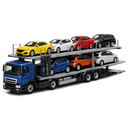
Multiple Vehicle
Covers all vehicles on multi-car carriers and rollback flatbeds.
Industries & Insurance Needs in Fargo
The county business mix is the practical difference here. In Cass County, the leading sectors by establishment share are construction at 12.5%, retail trade at 11.4%, and health care and social assistance at 10.3%, so local tow work often touches contractor pickups, customer vehicles in shopping areas, and cars moved from medical campuses or care facilities. Each setting changes how an on-hook claim can start.
A contractor unit may carry attached equipment or arrive with prior damage questions. A retail lot tow can involve tighter loading space, higher foot traffic, and more pressure to clear access quickly. A hospital or clinic pickup can require cleaner documentation around where the vehicle was taken, who released it, and what condition it was in before transport. That does not mean one class is automatically harder to insure. It means your application should separate the kinds of calls you actually run, instead of blending everything into generic towing. Pull dispatch records by account type and ask the quote to reflect those differences.
What Makes Fargo Different
What changes the calculus here is how often your drivers take possession of vehicles in controlled but busy environments. In a market with a broad base of businesses and mixed property uses, your exposure builds through repetition. The more your drivers pick up vehicles in cramped lots and hand them off to store managers, site supervisors, leasing staff, or medical office personnel, the more chances there are for a damage dispute. Your policy review should account for documentation, pre-tow condition notes, and loading space.
Fargo median household income is $66,029. In practical terms, a good share of the vehicles you hook up carry enough value that a low on-hook limit could leave you short after a total loss. A routine local tow can still involve a vehicle value that deserves a closer look at on-hook limits and deductibles. If your current file only describes you as a general towing operation, update it with your actual account mix and pickup patterns. Cass County has 5,923 business establishments, so expect to work around vendor parking rules, delivery congestion, and property managers who want clean certificates before granting access.
Our Recommendation for Fargo
Your dispatch history reveals more than your declarations page. Group your calls into private-property tows, retail and apartment calls, contractor work, dealer or fleet moves, and clinic pickups. That gives an underwriter a clearer picture of where loading, custody, and unloading exposures actually happen.
Take a close look at how your drivers document vehicle condition before hookup. In a city environment, small disputes over bumper damage, wheel condition, or attached accessories can turn into larger on-hook arguments if photos and release details are inconsistent. You should also check whether your stated operating radius and territory still match the way your trucks move now, especially if one unit handles most of the commercial accounts.
If a policy has not been revisited recently, ask for a line-by-line review of your on-hook limits and exclusions. Bring a sample week of tickets, your largest recent invoices, and the highest-value units you have transported so the quote reflects real work, not a generic towing profile.
Get On-Hook Towing Insurance in Fargo
Enter your ZIP code to compare on-hook towing insurance rates from carriers in Fargo, ND.
Business insurance starting at $25/mo
FAQ
Frequently Asked Questions
Local commercial towing creates repeated loading and unloading exposure in parking lots, apartment properties, and business sites. With 5,923 business establishments in Cass County, your quote should reflect frequent private-property and vendor-related calls, not just occasional roadside tows.
You usually should separate those call types if they make up meaningful dispatch volume. Retail lots, apartment complexes, and construction locations create different custody and damage scenarios, so clearer classification can lead to a more accurate on-hook review.
The local business mix can change what you disclose because construction is 12.5%, retail trade 11.4%, and health care and social assistance 10.3% of establishments. Those three sectors tend to generate pickups in tight, high-traffic spaces where loading room is limited and bystander vehicles are close, so your application should describe where vehicles are actually loaded and released.
Your limit selection should start with the highest-value vehicles you regularly transport, not an average tow. With median household income at $66,029, a typical local call can still involve a vehicle worth enough to justify a closer review of on-hook limits and deductibles before renewal.
Yes. Icy loading areas, ditch pull-outs, and reduced visibility can change claim severity, so disclose that work up front. A quote is more dependable when the carrier understands whether you handle routine roadside tows, difficult recoveries, or both.
Compare quotes on matching operational details, not premium alone. Use the same truck list, service types, territory, and driver information for each submission, then review deductibles, exclusions, and how the policy describes your actual towing work.
It can. Longer distances, remote pickups, and highway speeds may increase the time and conditions under which a customer vehicle stays in your care. That is worth spelling out before you bind coverage.
Usually, yes. Those jobs create different handling patterns and claim concerns, so listing them separately lets the underwriter price each exposure accurately instead of defaulting to the highest-risk interpretation of a blended description.
Sources
- 1.U.S. Census Bureau, County Business Patterns, Cass County(Cass County has 5,923 business establishments.; In Cass County, the leading sectors by establishment share are construction at 12.5%, retail trade at 11.4%, and health care and social assistance at 10.3%.)
- 2.U.S. Census Bureau, ACS 5-Year Estimates, table B19013(Fargo median household income is $66,029.)
Updated July 16, 2026