







































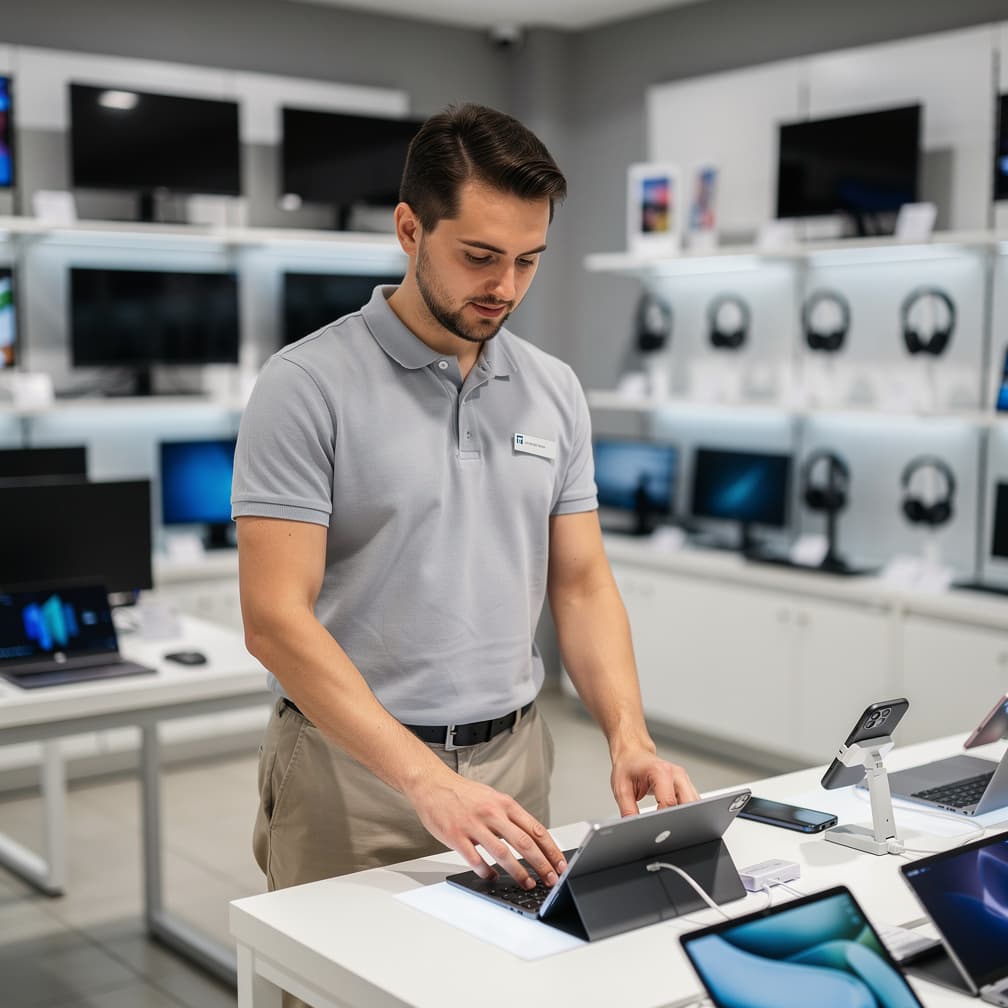

As an electronics store in Grand Forks, you hold two kinds of property that behave very differently in a claim: the stock you own, and the devices customers leave with you. The first is inventory. The second is other people's property in your care, and standard forms treat it as a separate question with its own small limit. Electronics store insurance in Grand Forks has to answer for both, or it leaves a hole exactly where the repair bench sits. A water leak that ruins a shelf of tablets and three customers' laptops produces one event and two arguments. Ask how property of others is handled and what the sublimit is. If the answer comes back vague, that is the answer. This page sorts the pieces so the vague parts stand out.
What Makes Grand Forks Different
A handshake lease in Grand Forks still creates written obligations the moment somebody asks for evidence of insurance. Small-market owners often skip the packet and send a one-line email asking for a certificate instead. That email is easy to satisfy and easy to satisfy wrongly, with the wrong entity named on it. An entity name that does not match the deed can void the value of the whole document. Ask for the exact legal name and address the owner wants on the form, in writing. The same care applies to a shop in Grand Forks that subleases a corner of somebody else's floor. Two businesses under one roof means two policies and one very interesting argument after a fall. Sort the naming before opening day, because a certificate reissued in a hurry repeats the error.
Local Risk Factors in Grand Forks
Tornado damage is binary in a way other weather is not: the block is fine and your roof is gone, or the reverse. For a store in Grand Forks, the loss that follows is rarely only the building. Debris and rain through an opened roof ruin sealed stock nobody will buy at any price, even where the box looks perfect. Commercial Property may respond to both the structure and the merchandise, though how stock is valued decides what arrives: replacement cost puts new phones on the shelf, actual cash value pays for used ones. Ask which basis a quote uses. Severe storm season in North Dakota also brings the smaller version: a cracked skylight, a leak over the accessory wall, a claim too small to fight over and too large to swallow.
What Coverage Does an Electronics Store in Grand Forks Need?
General Liability
Landlords, mall operators, and dealer agreements all ask for this one by name. For a store it is the line that answers when a shopper trips on a cord, a wall-mounted display comes loose, or a charger sold last month scorches a customer's desk. It typically excludes damage to a device you were repairing, and it does nothing for your own stock.
Example: A shopper backs into a demo table at a Grand Forks storefront, a tablet lands on her foot, and a lawyer's letter follows the hospital bill. Medical costs and defense may fall to this coverage.
Commercial Property
Flood, wear and tear, and anything damaged on purpose sit outside this one. What it does address is the building where you own it, the fixtures and locked cases, and the stock behind them: phones, tablets, laptops, and accessories lost to fire, burglary, or a burst pipe. Watch the sublimit on portable electronics, which can sit well under the headline limit.
Example: A back door gets pried open overnight and a case of handsets is emptied before anyone answers the alarm. The stolen inventory could be settled under this line, less the deductible and any sublimit.
Cyber Liability
Nothing on a property form addresses a stolen customer list. This one is meant for the digital half of a store: a breached card terminal, repair records pulled off a back-office machine, ransomware freezing the register on a busy afternoon. It commonly funds forensics, customer notification, legal advice, and sometimes the income lost while systems sit down.
Example: Someone slips malware onto the point-of-sale system and card data from a month of sales walks out the door. Notification costs, a forensic review, and the legal advice that follows might be picked up here.
Business Owners Policy
One package, two halves: the liability that answers for shoppers on your floor, and the property side covering stock behind the counter. Small retailers often buy it this way because a bundle can price better than separate lines. Cyber Liability is usually left out, and the theft sublimit still deserves reading before you sign anything.
Example: A pipe above the ceiling lets go, ruining a shelf of tablets and closing the floor for a week. Repairs, the ruined stock, and the interrupted income can each be handled inside the package.
How Much Does Electronics Store Insurance Cost in Grand Forks?
Electronics Store Insurance is a bundle of separate policies, priced separately. The ranges below are typical figures for Grand Forks for each line; a quote prices each one against your own operations.
| Coverage | Typical range | What moves your price |
|---|---|---|
| General Liability Insurance | $50 - $160 per month | Industry and risk classification, annual revenue, number of employees |
| Commercial Property Insurance | $120 - $390 per month | Building value and construction type, roof age and condition, fire protection class |
| Cyber Liability Insurance | $35 - $140 per month | Records held and how sensitive they are, annual revenue and industry, multi-factor authentication and backup practices |
| Business Owners Policy Insurance | $90 - $310 per month | Annual revenue and industry class, building and contents values, square footage and building age |
Prices shown are general estimates, not guaranteed rates or quotes. Your actual premium will depend on the insurer, coverage selected, business details, location, claims history, and other underwriting factors. Learn about our pricing methodology.
What Are the Insurance Requirements for an Electronics Store in Grand Forks?
Workers' comp is generally required once you have your first employee, through the state fund. North Dakota runs workers' compensation through a state fund: employers buy coverage from the North Dakota Workforce Safety & Insurance (WSI), not from private carriers. Common exemptions include sole proprietors with no employees and partners in partnerships without employees. Confirm current requirements directly with the fund before you hire.
Flood damage is typically excluded from standard policies. Standard commercial property and builders-risk-type policies typically exclude flood damage. Flood exposure varies address by address, so check your premises in FEMA's Flood Map Service Center before deciding; if you sit in a mapped flood zone, a separate policy through the National Flood Insurance Program is the usual starting point.
Where to verify licensing and coverage rules. The North Dakota Insurance Department publishes consumer guidance and current insurance requirements for North Dakota businesses. When a contract or lease demands specific wording, the North Dakota Insurance Department's guidance is the authoritative place to check.
Get Your Electronics Store Quote in Grand Forks
Compare rates from multiple carriers. Free quotes, no obligation.
Operating in Grand Forks
- A landlord in Grand Forks can hold the keys until a certificate lands with the right entity named and the right endorsement attached, so a wrong form costs opening days you never get back.
- Shopping centers set the hours, and a lease in Grand Forks can require you to stay open through the weekend, when foot traffic and floor accidents both run highest.
- A merchant agreement signed once, years ago, decides who pays for forensics after a card compromise at a shop in Grand Forks, and nobody reads it until that day arrives.
- Rain turns an entry into a liability question. The mat, the wet-floor sign, and whoever remembers to mop are the difference between a near miss and a claim file.
How to Buy: Advice for Grand Forks Owners
Photograph the floor while nothing is wrong. A dated set of images showing the display layout, the cord runs, the entry mat, and the locked cases is the most useful claims file you will ever build. When a shopper falls, that record answers questions an incident report cannot. General Liability claims turn on what the floor looked like, and memory makes a poor witness months later. Do the same for stock: a photographed, dated inventory makes a Commercial Property claim shorter after a break-in. The North Dakota Insurance Department publishes consumer guidance on documenting a loss. With the file ready, compare quotes from participating carriers knowing you can prove what you told them about a shop in Grand Forks.
FAQ
Electronics Store Insurance in Grand Forks: FAQ
Rarely by default. A Business Owners Policy typically packages property and liability for a small retailer, and cyber exposure usually arrives as an endorsement or as its own policy. Where something is bundled in, the sublimit can be small enough to fund a phone call and little else. Ask what the cyber limit is, in size and in scope, before assuming the package handles a breach.
A sublimit is a smaller cap that applies inside your overall property limit to one category of goods, and portable electronics attract them. A policy showing a healthy total limit can still cap stolen phones at a fraction of that figure. For this trade the sublimit is often the real limit, since theft is the loss most likely to actually happen. Read it before you read the premium.
No. Losses caused by your own staff are usually handled under employee dishonesty coverage, a separate grant with its own limit that is sometimes missing altogether. A burglary by a stranger and inventory walking out with a worker are two different claims under most forms. Ask which one your policy addresses, because a shop with a stockroom needs an answer to both.
Usually, and the real question is whether the trade fits your losses. A shop whose typical event is a missing tray of accessories may absorb those anyway to keep a clean record, which makes a higher deductible cheap money. A shop that files often is buying the opposite. Look at what a storefront in Grand Forks actually lost over three years, then set the number against that.
Most commercial leases make it a condition, and the landlord decides that, not the state. The insurance exhibit typically names a liability limit, asks that the owner be added as an additional insured, and wants a certificate before handover. A shop in Grand Forks that shows up without one waits. Read the exhibit first and buy to it, since rewriting a policy after signing costs more than getting it right once.
Stock value leads. A back room of laptops and phones prices differently than a floor of low-value accessories, and carriers ask for the figure. After that comes security: alarms, cameras, locked cases, and where stock sits after closing. Foot traffic, opening hours, and whether you repair devices all move the number. Your own three-year claims history usually matters more than any of it.
Sources
- 1.North Dakota Insurance Department(North Dakota Insurance Department publishes consumer guidance for insurance buyers.)
- 2.FEMA / FloodSmart(Flood coverage is typically purchased separately; FEMA administers the National Flood Insurance Program.)


