







































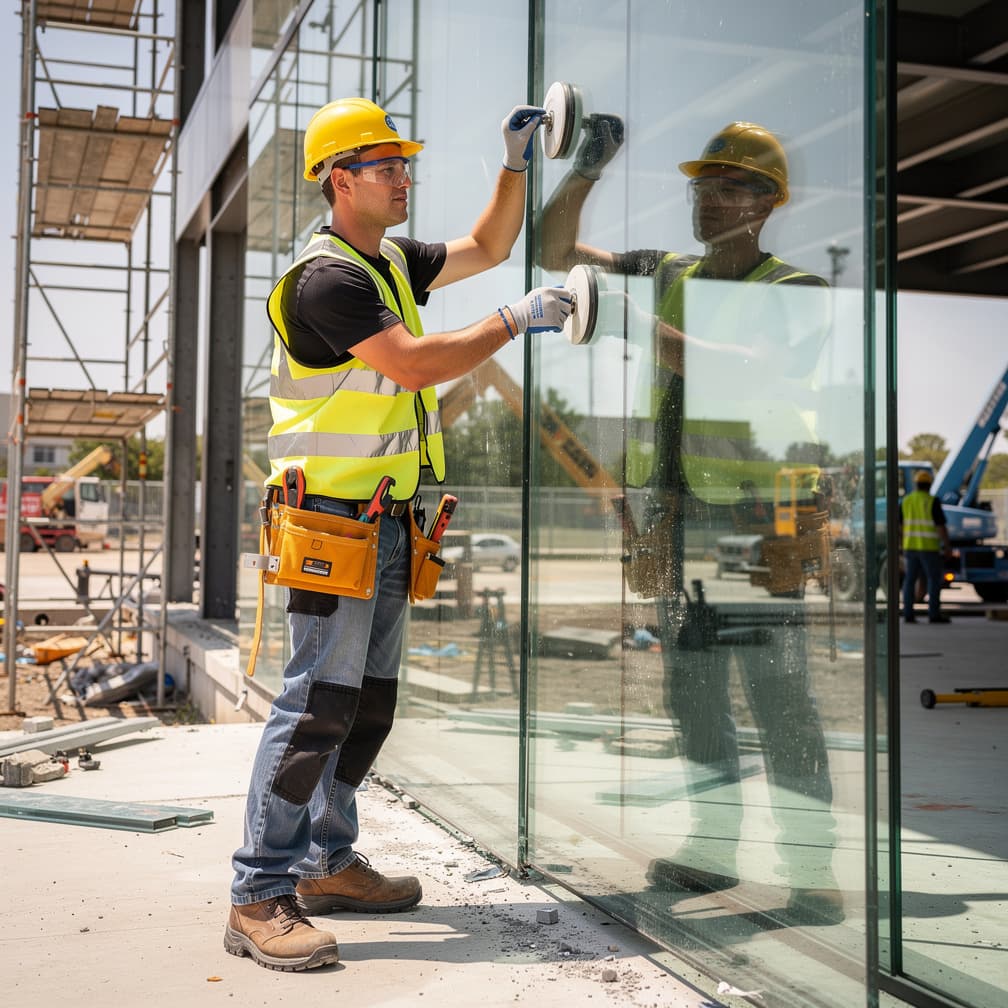

Work as a glazier in Akron moves between a shop, a truck, and somebody else's job site, sometimes all before lunch. Glazier insurance in Akron has to follow that movement, because your risk changes address several times a day. Stock and hardware sitting at the shop face one set of problems; the same material strapped in a truck faces another; the crew installing it faces a third. Insurance is sold in separate lines for exactly that reason, and the seams between those lines are where uncovered losses hide. A pane that survives the shop, the drive, and the lift can still break on the last inch of a set. Ask each quote where its coverage stops and the next line starts, then compare offers from participating carriers on the answers.
What Makes Akron Different
Additional insured is a status, and status is what the contract is actually buying from you. Naming an owner as additional insured extends your policy's defense to them for your work. That is a real concession, and it is why the wording matters more than the limit. Blanket wording can extend to whoever your contract requires; a scheduled endorsement reaches only the names typed on it. If the owner behind an Akron job changes management companies, a scheduled endorsement goes stale. Nobody notices until a claim arrives and the new manager is not on your paper. Ask which version you are quoting, because the price difference is small and the gap is not. Contracts in Ohio are written by lawyers who have read more policies than you have.
Local Risk Factors in Akron
Deciding how much emergency work to take is the real storm-season question for a glass shop. The calls come faster than a two-truck operation can answer, and every one you accept is a night job on damaged property under unfamiliar conditions. Turning some of them down is a legitimate risk decision, and it costs less than a serious injury or a failed board-up. If you do take the surge, add the helpers to payroll while they are working and put the rented truck on the policy the day it arrives. The Ohio Department of Insurance publishes the current requirements for reporting mid-term changes on commercial policies in Ohio. Storm work in Akron pays well and prices badly when nobody told the carrier it happened.
What Coverage Does a Glazier in Akron Need?
General Liability
General contractors and building owners are the ones who insist on this line, and the contract usually names the limit. It can help cover third-party injury and property damage arising out of your work: a passerby hurt near a work zone, a customer's floor wrecked by a dropped unit. The pane you damaged yourself is typically excluded as your own workmanship.
Example: A carried pane clips a display case in an occupied lobby and the retailer's stock goes with it; general liability is generally where that claim lands.
Commercial Property
Flood is left out of this form, and so is ordinary wear on your racks and cutting tools. What remains is the shop itself: stock, hardware, suction cups, and the equipment that would stop your work if it burned or walked out the door overnight. Coverage may respond to fire, theft, and vandalism, subject to the deductible you picked.
Example: Someone pries the shop door overnight and leaves with the suction cups, the tools, and half the staged hardware; a property claim could put the shop back to work.
Workers Compensation
A pane slips on a stairwell landing and an installer's hand is cut to the tendon. Medical bills and lost wages from that injury are what this line is meant for, and it prices against payroll rather than at a flat monthly rate. Contracts commonly demand it, and thresholds vary, so the Ohio Department of Insurance publishes the current requirements.
Example: An installer overreaches on a lift setting an upper-floor unit and tears a shoulder; workers compensation is typically the line that handles the treatment and the missed weeks.
Commercial Auto
Your truck is the piece that moves everything else, which is why this line is written against a schedule of vehicles rather than against your business generally. It may help cover liability and damage from an accident while hauling panes, hardware, and crews between sites. The units strapped to the rack are cargo, and cargo is often a separate question.
Example: A loaded rack shifts during a hard stop on the way to an Akron job and the truck ends up in a guardrail; commercial auto may pick up the vehicle side of it.
How Much Does Glazier Insurance Cost in Akron?
Glazier Insurance is a bundle of separate policies, priced separately. The ranges below are typical figures for Akron for each line, except workers compensation, which is set by the state fund; a quote prices each one against your own operations.
| Coverage | Typical range | What moves your price |
|---|---|---|
| General Liability Insurance | $160 - $500 per month | Industry and risk classification, annual revenue, number of employees |
| Commercial Property Insurance | $95 - $310 per month | Building value and construction type, roof age and condition, fire protection class |
| Workers Compensation Insurance | Set by the state fund | Employee classification codes, total annual payroll, experience modification rate |
| Commercial Auto Insurance | $200 - $575 per month | Fleet size and vehicle types, driver records and experience, coverage limits and deductibles |
Prices shown are general estimates, not guaranteed rates or quotes. Your actual premium will depend on the insurer, coverage selected, business details, location, claims history, and other underwriting factors. Learn about our pricing methodology.
What Are the Insurance Requirements for a Glazier in Akron?
Workers' comp is generally required once you have your first employee, through the state fund. Ohio runs workers' compensation through a state fund: employers buy coverage from the Ohio Bureau of Workers' Compensation (BWC), not from private carriers. Common exemptions include sole proprietors, partners, and LLC members. Confirm current requirements directly with the fund before you hire.
State auto liability minimums apply to business vehicles. Ohio's minimum auto liability limits are $25,000/$50,000/$25,000 (bodily injury per person / per accident / property damage). Contracts and lenders often require more than the state floor.
Flood damage is typically excluded from standard policies. Standard commercial property and builders-risk-type policies typically exclude flood damage. Flood exposure varies address by address, so check your premises in FEMA's Flood Map Service Center before deciding; if you sit in a mapped flood zone, a separate policy through the National Flood Insurance Program is the usual starting point.
Where to verify licensing and coverage rules. The Ohio Department of Insurance publishes consumer guidance and current insurance requirements for Ohio businesses. When a contract or lease demands specific wording, the Ohio Department of Insurance's guidance is the authoritative place to check.
Get Your Glazier Quote in Akron
Compare rates from multiple carriers. Free quotes, no obligation.
Operating in Akron
- A property manager in Akron can hold your gate access until the certificate of insurance is on file, so a lapsed renewal can idle a crew that is already loaded and parked outside.
- Glass arrives when the supplier says it arrives, and a unit damaged in the shop before install can push a storefront opening back by weeks with no way to hurry the replacement.
- The truck is your warehouse for most of the working day, so a smash-and-grab in an Akron parking lot can take out your hardware, your suction cups, and tomorrow's schedule at once.
- Occupied buildings are the hardest job sites: you carry a heavy pane past tenants, coffee cups, and children, and every one of them is a third party with a potential claim.
How to Buy: Advice for Akron Owners
Tools and glass stock are the loss most glaziers never plan for, and they are also the easiest to document. Photograph the shop, the racks, the suction cups, the cutting table, and the truck load, then keep a written list with values. Commercial Property is what can respond when the shop is broken into overnight, and the claim moves faster when the list already exists. Ask specifically what happens to material sitting in a locked truck, because that answer varies and the truck is where your inventory spends the day. Ask the same about stock staged on a job site before install. The other half of that question is liability: staged glass that falls on somebody is General Liability territory rather than a property claim. The Ohio Department of Insurance publishes consumer guidance on documenting commercial property claims. A glazier in Akron with photos and a list argues from a stronger position, and comparing participating carriers on those specific answers beats comparing the monthly figure.
FAQ
Glazier Insurance in Akron: FAQ
In practice, yes. Contractors and property owners routinely require proof of coverage before a glass sub touches an opening, and the requirement lands in the contract rather than in the law. Expect the exhibit to name a limit, ask for additional-insured status, and demand a current certificate. Showing up without it is how a start date slips, because the work order sits until the paper clears.
Cost tracks a handful of drivers rather than a flat rate. Payroll and how each person is classified matter most, since a shop hand and an installer rate differently. After that come your vehicle list, the height you work at, your claims history, and the limits your contracts demand. The cost table on this page shows the published ranges; your own number in Akron comes from those inputs.
Usually not, and this surprises people. The unit you damage while working on it is your own workmanship, and standard liability forms typically exclude the thing you were working on. What can respond is the collateral damage: the customer's floor, the frame, or the display case the pane went through. Ask any quote to walk that distinction through a real scenario before you buy.
Anyone paying you or letting you onto their property. General contractors, building owners, property managers, tenants opening a new storefront, and sometimes a permit office. A landlord in Akron can hold your keys or your gate access until the certificate is on file. The certificate is evidence rather than the policy itself, so what matters is whether the coverage behind it is genuinely in force.
It extends your policy's defense to your client for claims arising out of your work. Owners want it because it moves the first line of defense onto your paper instead of theirs. Two versions exist: blanket wording that reaches whoever your contract names, and a scheduled endorsement that reaches only the names typed on it. Scheduled endorsements go stale when management changes, so ask which one you are quoting.
The vehicle and the cargo are usually two different questions. Commercial auto is generally written around liability and physical damage to the truck itself. The units strapped to the rack are your property, and property in transit is often handled under a separate form or endorsement. Ask directly what happens when a sudden stop takes out a full order, because the answer varies by policy.
Sources
- 1.Ohio Department of Insurance(Ohio Department of Insurance publishes consumer guidance for insurance buyers.)
- 2.FEMA / FloodSmart(Flood coverage is typically purchased separately; FEMA administers the National Flood Insurance Program.)


