







































Updated July 16, 2026

On-Hook Towing Insurance in Akron
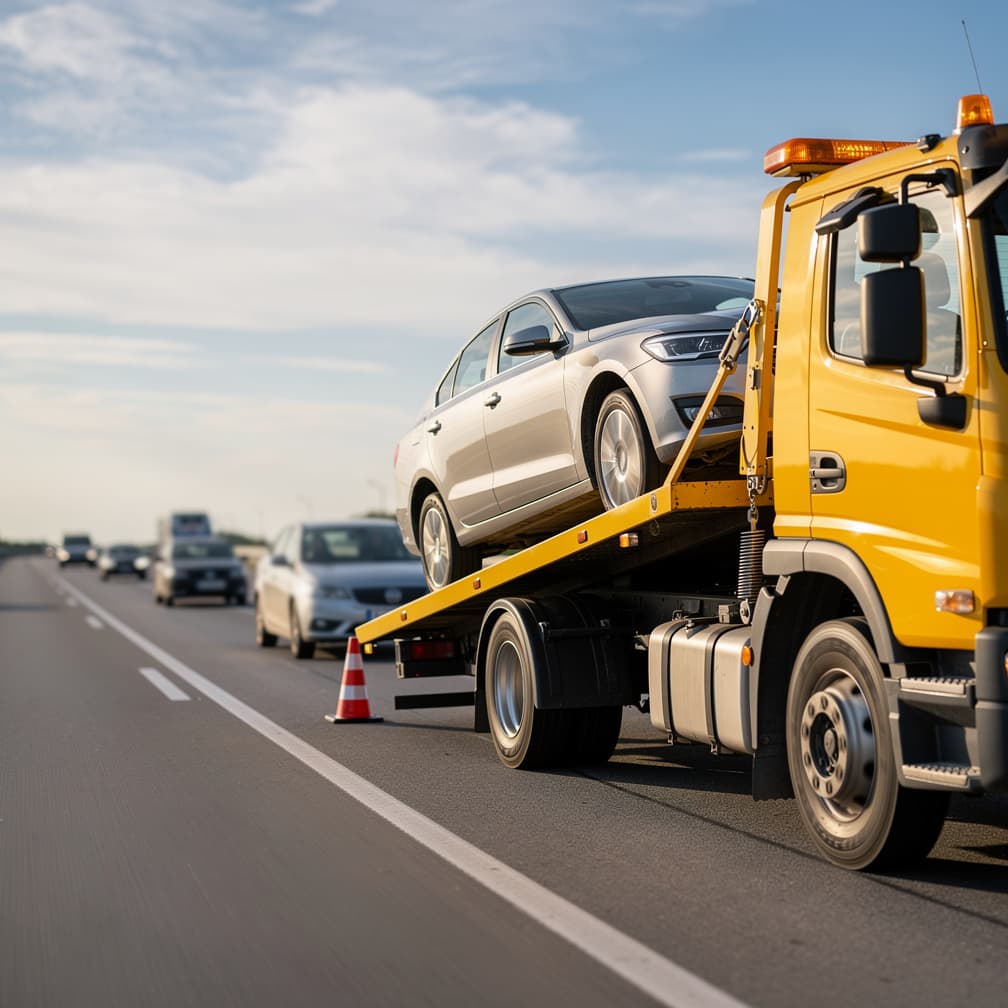
A disabled SUV loaded for a weekend errand run is halfway onto your rollback near a busy retail corridor when traffic compresses, the strap angle shifts, and the owner is standing close enough to watch every move. On-hook towing insurance in Akron is built for exactly that moment: a customer vehicle in your care during a short, visible, high-pressure transfer. Here, a lot of towing work touches everyday consumer traffic and business parking lots rather than long, isolated hauls. Summit County has roughly 13,400 business establishments, which means towers often move vehicles for stores, offices, medical sites, and property managers who expect clean paperwork and a clear chain of custody before release. In practical terms, that volume means your next disputed claim is more likely to come from a retail lot than a highway shoulder. You want limits that match the value of the vehicles you actually pick up, and you want the application to describe your real mix of private property tows, shop-to-shop moves, roadside recoveries, and after-hours calls. If your operation also serves household customers across Akron, a disputed damage claim can land hard on both sides, so ask how the insurer investigates allegations and what evidence they expect from you at the scene.
On-Hook Towing Insurance Risk Factors in Akron
Local exposure here is about **handoff density and visibility**. A tow is more likely to happen in front of a customer, store manager, security guard, or office staff member who notices pre-existing damage, loading technique, and where the vehicle is released. In Summit County, retail trade accounts for 12% of establishments, health care and social assistance 11.9%, and professional, scientific, and technical services 11%, so a meaningful share of assignments can involve crowded lots, time-sensitive pickups, and vehicles that need to be moved without disrupting business access. That does not automatically change every policy, but it should change how you present your operation. Ask your agent to classify the kinds of locations you service most often, note whether you handle dealer work, apartment enforcement, or medical-office removals, and review how **on-hook limits** line up with newer SUVs, work vans, and customer expectations around condition reports.
Ohio has a moderate climate risk rating. Top hazards: Severe Storm (High), Tornado (High), Flooding (Moderate), Winter Storm (Moderate). The state's expected annual loss from natural hazards is $1.4B, which influences on-hook towing insurance premiums and may affect coverage availability in high-risk areas.
What On-Hook Towing Insurance Covers
In Ohio, the useful question is not the basic definition of on-hook coverage. It is where your operation creates the most realistic claim scenario once a vehicle is in your care during the tow. For many towers, that exposure begins with loading and unloading on uneven pavement, narrow residential streets, parking decks, gravel lots, and crowded commercial properties. If a vehicle has low ground clearance, prior body damage, modified suspension, or limited rolling ability, the way your drivers document condition and choose equipment matters as much as the limit itself.
You should review how your policy terms respond to the kinds of vehicles and assignments you actually accept. A flatbed handling dealer or auction moves may need a different conversation than a wheel-lift unit taking disabled vehicles from apartment complexes, accident scenes, or private lots. If your drivers regularly winch vehicles out of ditches, mud, snow, or tight spaces, ask where the line sits between ordinary towing activity and higher-hazard recovery work. That means jobs involving steep embankments, water, heavy extrication, or unstable ground where the risk of vehicle damage or personal injury rises sharply. Crossing that line can affect whether a loss is treated as contemplated operations, meaning work the insurer understood you would be doing when the policy was issued.
Ohio weather and road conditions can also change the exposure during the same route. Rain, snow, ice, and debris increase the chance of shifting, scraping, or contact during loading and transport, especially when a vehicle already arrives damaged or inoperable. Review whether your procedures require photos before hookup, written condition notes, signed releases when available, and clear destination instructions. Those details help you match coverage to the work and defend the file if a customer later disputes when the damage happened.
Coverage Included

Collision on Hook
Covers damage to towed vehicles from collisions during transport.

Comprehensive on Hook
Covers theft, fire, and weather damage to vehicles being towed.
Loading & Unloading
Covers damage during the process of loading and unloading vehicles.
Winching Coverage
Covers damage to vehicles during winching and recovery operations.
Multiple Vehicle
Covers all vehicles on multi-car carriers and rollback flatbeds.
What Makes Akron Different
Parking-lot towing is the local difference that changes the buying calculus. In a market where a large share of assignments can start at retail centers, medical properties, office sites, and mixed commercial lots, your on-hook exposure is not just about miles traveled. It is about the loading moment itself, because witnesses, documentation gaps, and the condition disputes that follow a short move all cluster around that single point. Frequent handoffs between property owners, managers, dispatchers, and vehicle owners create more chances for someone to question what happened to a bumper or a wheel. A thin application creates problems later for exactly that reason. If your quote request only says "towing" and leaves out impounds, private property work, or shop transfers, the insurer may not be pricing the same operation you run every week. Before you compare options, sit down with your last few months of tow tickets and group them by assignment type, location, and vehicle class.
Our Recommendation for Akron
Having real numbers in front of you makes the conversation about limits concrete instead of speculative. If a meaningful share of your work comes from shopping areas, medical offices, apartment complexes, or office parks, ask how the policy responds to damage allegations tied to loading, unloading, and short-distance repositioning. You should also review whether your procedures support the coverage you are buying: timestamped photos before hookup, signed release logs, dispatch notes, and a consistent condition checklist. Because household budgets can be tight in Akron, even minor visible damage can escalate into a serious dispute, so claim handling matters almost as much as the limit itself. Request a quote that reflects your actual routes, your most common vehicle classes, and the properties that send you the most work.
Get On-Hook Towing Insurance in Akron
Enter your ZIP code to compare on-hook towing insurance rates from carriers in Akron, OH.
Business insurance starting at $25/mo
FAQ
Frequently Asked Questions
Every hookup in a commercial lot is a witnessed event, and that changes what you need from a policy. Clear on-hook limits, condition photos, and accurate descriptions of private property and commercial-lot work are essential to getting coverage that actually matches what you do.
Your quote should spell out whether you handle retail lots, office properties, medical sites, or shop transfers instead of using a generic towing description. Akron operators who run impound routes for apartment complexes near Chapel Hill Mall or service calls along Market Street face different loading conditions than someone working Interstate 77 recoveries, and the application needs to reflect that distinction.
Your assignments can involve everyday household vehicles, work vans, and customer SUVs moving through busy commercial areas. Review your most common tows and ask for limits that fit the vehicles you actually load, not just the smallest units on your schedule.
Retail trade is 12% of establishments, health care and social assistance 11.9%, and professional, scientific, and technical services 11%. Add those together and roughly a third of your potential clients operate in busy commercial settings where bystanders and lot cameras turn every hookup into a witnessed event.
Akron household budgets can shape how a damage complaint unfolds. When a customer is already stretched, a scratch or dent becomes a financial problem, not just an inconvenience, and that affects how aggressively they pursue a claim against you.
Both settings carry the same core risk: once a vehicle is loaded and moving, any scratch or dent can come back to your business. Dealer transfers often involve newer cars where even minor damage draws scrutiny. Private impounds frequently involve vehicles that already have wear or prior issues, which makes pre-tow documentation especially important. Review your policy terms against each service type before taking on mixed dispatch work.
Snow, ice, rain, and poor loading surfaces can trigger more underwriting questions because those conditions raise the likelihood of shifting, scraping, or contact during hookup. Be ready to explain how your drivers handle weather-related calls, what equipment adjustments they make, and whether you decline certain jobs in bad conditions.
Provide a truck list, service breakdown, operating territory, driver information, and examples of your pickup and drop-off documentation. The more specific you are, the more accurately the quote can reflect your actual towing mix instead of a broad assumption about the whole fleet.
Sources
- 1.U.S. Census Bureau, County Business Patterns, Summit County(Summit County has 13,400 business establishments, so towers often move vehicles for stores, offices, medical sites, and property managers who expect clean paperwork and a clear chain of custody before release.; In Summit County, retail trade accounts for 12% of establishments, health care and social assistance 11.9%, and professional, scientific, and technical services 11%, so a meaningful share of assignments can involve crowded lots, time-sensitive pickups, and vehicles that need to be moved without disrupting business access.)
- 2.U.S. Census Bureau, ACS 5-Year Estimates, table B19013(If your operation also serves household customers in a city with median household income of $48,544, a disputed damage claim can land hard on both sides, so documentation and claim handling deserve a close review before you bind.)
Updated July 16, 2026





