







































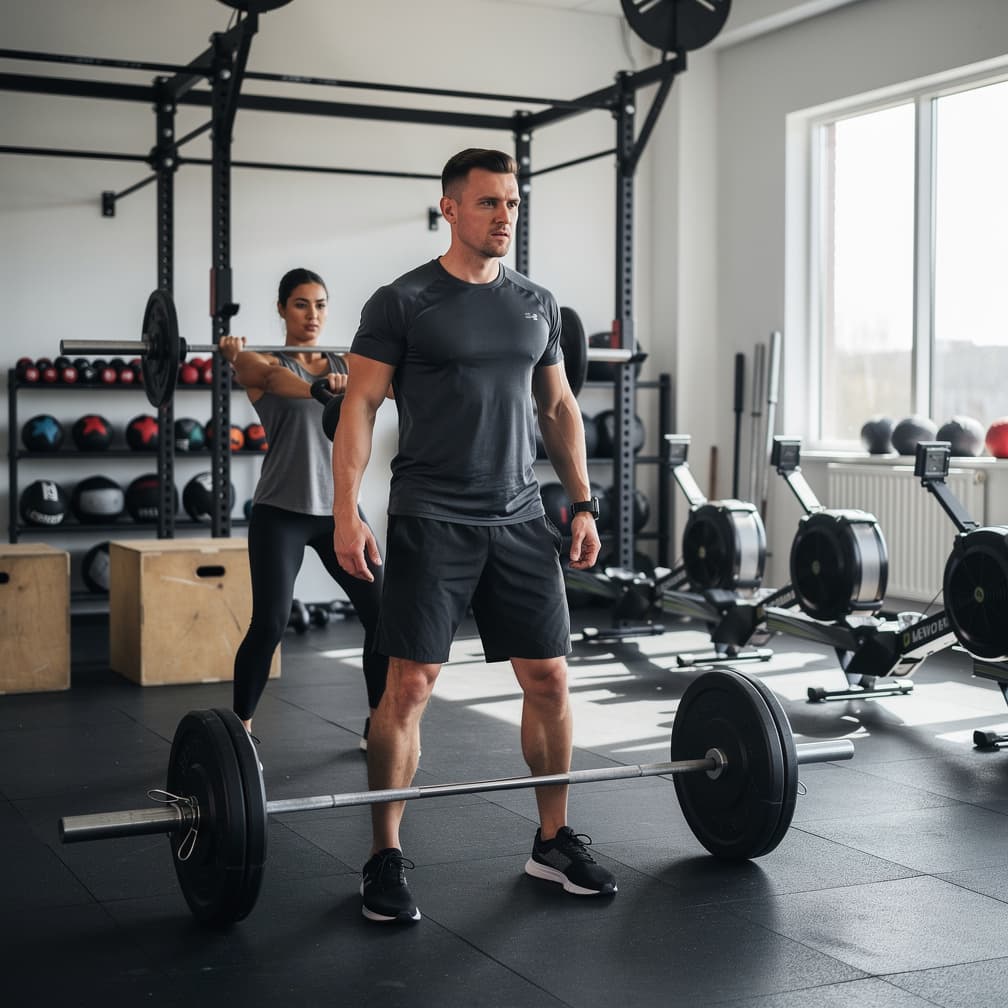

As a CrossFit coach in Cleveland, every class you run puts a dozen strangers under load in a room you probably do not own. That arrangement is where the claims come from: the shoulder, the shin against a plyo box, the slip near shared equipment, and the argument afterward about whose fault it was. CrossFit coach insurance in Cleveland answers that argument, or fails to, depending on what you bought. In a market the size of Cuyahoga County, facilities carry their own counsel and their own insurance requirements, so your policy gets read by someone whose job is finding the hole in it. Match the wording to the agreement rather than to a generic checklist. The pages below show what the lines run and what each one leaves out.
What Makes Cleveland Different
Bigger facilities run insurance reviews the way they run background checks: automated, and unimpressed. The reviewer wants limits at a stated number, your legal name matched exactly, and dates covering the term. One mismatch between your business name and the certificate can bounce the whole file. Coaching under a personal name while the agreement names an entity is the common version of that mistake. Fix the naming before you fix the limits, because limits are negotiable and a name is not. A Cleveland operator running three venues can send three different requirement sheets for the same coach. Nothing stops those sheets from conflicting, and your policy has to satisfy the strictest one. Plan for the strictest sheet when you compare quotes in Ohio, because mid-term changes are the slow kind.
Local Risk Factors in Cleveland
Decide now what a canceled week actually costs you, because that number is what severe storms take. Coaching revenue is earned per session and does not accrue while the doors are shut, so a week of warnings is a week you cannot bill. Equipment damage is the visible loss and usually the smaller one. Property wording may respond to what the wind broke, subject to the deductible and the cause of loss, while the schedule stays your problem. Ask what a policy in Cleveland says about interruption, and check the Ohio Department of Insurance's guidance before deciding whether that wording earns its premium.
What Coverage Does a CrossFit Coach in Cleveland Need?
General Liability
Facility owners, event organizers, and employers ask for General Liability by name before they let you coach on their floor. It is the line built around third-party bodily injury and property damage: a member's fall near the rig, a visitor hurt in the entryway, a wall dented while you loaded equipment in. What it typically does not answer is a claim that your coaching advice itself was wrong, which belongs to Professional Liability.
Example: A member steps off a plyo box, catches the edge, and goes down hard in front of the class in Cleveland; general liability can help cover the medical claim and the defense that follows.
Professional Liability
A client says the cues, the scaling, or the program you wrote is what hurt her, and now the argument is about your judgment rather than a wet floor. That is what Professional Liability is meant for, and it is a separate question from a fall on the premises. Coverage generally responds to allegations arising out of your coaching services, subject to the wording, while intentional acts sit outside it.
Example: Six weeks into a program you built, a client's back gives out and she argues the progression was reckless; professional liability may respond to the claim and to the cost of defending it.
Commercial Property
Flood is left out of a standard property form, and so is wear and tear, which is worth knowing before you assume Commercial Property handles everything in the closet. What it does reach, subject to the peril, is equipment you own: bars, bumpers, rowers, rigs, and gear stored at the address on the policy. Theft, fire, vandalism, and storm damage are the usual triggers.
Example: A break-in over a long weekend empties the storage closet of specialty bars and both rowers; commercial property is often the line that answers for replacing them.
Business Owners Policy
Buying liability and property separately works; bundling them into a Business Owners Policy sometimes prices better and always leaves you one renewal date instead of two. For a coach that usually pairs the injury exposure on the floor with the equipment in storage, and some forms add income interruption wording. Not every operation qualifies, and the wording varies enough to read rather than assume.
Example: A storm takes the roof over your rented floor and classes stop for a month in Cleveland; a business owners policy could pick up both the damaged gear and part of the lost income, depending on the form.
How Much Does CrossFit Coach Insurance Cost in Cleveland?
CrossFit Coach Insurance is a bundle of separate policies, priced separately. The ranges below are typical figures for Cleveland for each line; a quote prices each one against your own operations.
| Coverage | Typical range | What moves your price |
|---|---|---|
| General Liability Insurance | $65 - $180 per month | Industry and risk classification, annual revenue, number of employees |
| Professional Liability Insurance | $40 - $130 per month | The services you actually perform, annual revenue or billed fees, limit and retention selected |
| Commercial Property Insurance | $50 - $160 per month | Building value and construction type, roof age and condition, fire protection class |
| Business Owners Policy Insurance | $90 - $260 per month | Annual revenue and industry class, building and contents values, square footage and building age |
Prices shown are general estimates, not guaranteed rates or quotes. Your actual premium will depend on the insurer, coverage selected, business details, location, claims history, and other underwriting factors. Learn about our pricing methodology.
What Are the Insurance Requirements for a CrossFit Coach in Cleveland?
Workers' comp is generally required once you have your first employee, through the state fund. Ohio runs workers' compensation through a state fund: employers buy coverage from the Ohio Bureau of Workers' Compensation (BWC), not from private carriers. Common exemptions include sole proprietors, partners, and LLC members. Confirm current requirements directly with the fund before you hire.
Flood damage is typically excluded from standard policies. Standard commercial property and builders-risk-type policies typically exclude flood damage. Flood exposure varies address by address, so check your premises in FEMA's Flood Map Service Center before deciding; if you sit in a mapped flood zone, a separate policy through the National Flood Insurance Program is the usual starting point.
Where to verify licensing and coverage rules. The Ohio Department of Insurance publishes consumer guidance and current insurance requirements for Ohio businesses. When a contract or lease demands specific wording, the Ohio Department of Insurance's guidance is the authoritative place to check.
Get Your CrossFit Coach Quote in Cleveland
Compare rates from multiple carriers. Free quotes, no obligation.
Operating in Cleveland
- The certificate a facility keeps on file has to name the building owner exactly as the lease spells it, and one wrong initial can slide your start date by a week.
- The theft that hurts is rarely the rig: a break-in at a shared closet in Cleveland takes the specialty bars and the rowers, the things that fit in a hatchback.
- Members sign in on a tablet nobody reviews, so the first real record of who was in the room during an incident is often the workout log you wrote by hand.
- A landlord in Cleveland can require notice of cancellation sent directly to its office, which means your insurer has to be told about the request, not only you.
How to Buy: Advice for Cleveland Owners
The loss that ends a coaching business is a serious participant injury, so price that first and work down from it. Ask each quote what its per-occurrence limit is, then ask what the aggregate is, because a year of classes can exhaust the second one quietly. General Liability is the line most agreements are asking about, and it is a different conversation than damage to a rented rig. If you store racks, rowers, and bars anywhere, Commercial Property is the line that might respond when fire, theft, or a storm gets to them. Get the deductible on paper for both. Check the Ohio Department of Insurance's guidance before deciding what limits make sense for an operation in Ohio. Then put two or three quotes side by side at identical limits, from participating carriers, and read what each one excludes rather than what each one costs.
FAQ
CrossFit Coach Insurance in Cleveland: FAQ
That is a bodily injury claim, and General Liability is the line usually pointed at it. If the member also argues your programming or your cues caused the injury, the claim can reach into Professional Liability territory instead, which is a different policy answering a different question. Plenty of coaches carry both for that reason. What a policy does in practice depends on its wording, the limits behind it, and what the incident report says.
Yes, and it is routine. Being named as an additional insured means the facility can be defended under your policy for claims arising out of your work there. It is usually added by endorsement, which means it has to be requested rather than assumed. A certificate showing your policy exists is not the same as one showing that endorsement, and a facility in Cleveland can bounce the file over exactly that difference.
Per-occurrence is the ceiling for one claim; aggregate is the ceiling for everything in the policy year. A single member's injury claim tests the first number. A year of classes across several floors can test the second one without any individual claim looking dramatic. Ask whether defense costs come out of those limits too, because when they do, the money left for the claim itself shrinks while the lawyers work.
Not automatically, and it is worth asking before you break something. Property you own gets scheduled on your own policy, while property you rent or borrow may need specific wording, and liability for damaging it can sit somewhere else again. Tell the quote form what you rent, from whom, and how often you do it in Cleveland. The gap between what you assumed and what the form says tends to surface the day a rower stops working.
A slip and fall near the entry, the rig, or shared equipment is the classic General Liability claim, and nobody has to be lifting at the time. Who ends up paying depends on who controlled that floor and what your agreement with them says. Both of you can be named in the same demand. Document the conditions the day it happens, because that record is what gets argued over later.
That depends on the insurer, so ask before you need one. What you control is the file: the exact legal name on the policy, the current renewal date, and whether the additional-insured endorsement the venue wants is already on the form. Missing endorsements are the usual delay, not the certificate itself. Ask what changes cost and how they get requested, and keep the requirement sheet from the Cleveland venue where you can find it.
Sources
- 1.Ohio Department of Insurance(Ohio Department of Insurance publishes consumer guidance for insurance buyers.)
- 2.FEMA / FloodSmart(Flood coverage is typically purchased separately; FEMA administers the National Flood Insurance Program.)


